What, If Anything, Is The Ethical Response To This Trump Derangement Victim’s Letter To “The Ethicist”?

I came so close to not finishing this pathetic lament from someone who has been lied, gaslighted and manipulated to the edge of madness. I’m not going to even bother to read Prof. Appiah’s answer: I thought he had finally stopped picking crazy Trump Derangement inquiries for his weekly column to pander to the Grey Lady’s warped reader base, but he’s back at it with this one.

She wrote, [Gift link! Merry Christmas!]

Continue reading

A Sociopath Asks “The Ethicist” For Advice

This was weird; I wonder if The Ethicist (his friends call him Kwame Anthony Appiah, or just “Professor”) just felt like slapping down someone despicable. When I read the creepy question posed, I immediately thought, “Who needs an ethicist to answer this?

“Name Withheld” (that guy writes an awful lot of questions to The Ethicist) wrote in part,

Continue reading

“They’re Here!!!” How Do People Get This Way, And Why Do They Now Think It’s To Their Benefit To Display Their Malady?

I usually keep a watchful eye on advice columns, especially “The Ethicist,” Carolyn Hax and a few others, but have been a bit lax of late. Thus I missed this astounding letter sent to “Ask Amy,” which was bought to my attention by loyal reader and frequent commenter Jeff.

Hold on to your heads or erect signs nearby warning others that they are in a potential head-explosion zone…

Continue reading

“Dear April: No, Don’t Have Children. Your Letter Proves You Are Too Dumb To Be A Responsible Parent”

That would be my entire response to this recent query from “April” to Kwame Anthony Appiah, the ethics scholar whom the New York Times dubs “The Ethicist”(hold on to your skull; it almost blew mine):

I have always loved babies and children. I babysat throughout high school and college, and do so even now as a full-time engineer. My fiancé was drawn to me because of how much he appreciated my talent with and love for children. We have many little nieces, nephews and cousins whom we love but don’t get to see often. We also have always been clear with each other that we would try to have biological children soon after getting married.

That being said, my fiancé and I, who are both Generation Z, care deeply about the planet and painfully watch as scientists predict that the earth will reach 1.5 degrees Celsius of warming by the 2030s. Is it selfish to have children knowing full well that they will have to deal with a lower quality of life thanks to the climate crisis and its many cascading effects, like increased natural disasters, food shortages, greater societal inequity and unrest?

We realize that a child’s very existence adds to our carbon footprint, but as parents we would do our best to foster an environmentally friendly household and try to teach our children how to navigate life sustainably. My fiancé says that because we are privileged as two working engineers in the United States, we can provide enough financial support to keep our children from feeling the brunt of the damage from climate change. Is it OK to use this privilege?

Continue reading

On “Correct Pronouns,” Part 2

I began this inquiry two days ago, intending to complete it forthwith, but then a sick, broken, psychopathic teen in Texas murdered his grandmother, children and teachers with an AR-15 with the predictable Ethics Train Wreck gathering steam once again. Let’s finish up before something else goes wrong.

Ann Althouse is at fault: she flagged Roxane Gay’s New York Times advice column “Work Friend,” focusing on this question from the ubiquitous “Anonymous”:

In the past six months, my organization approved the optional inclusion of pronouns in email signatures. I learned that one of my team members uses nonbinary pronouns. In my written communication and conversation about that team member, I now use those pronouns, but I notice that no one else has made the adjustment. As the supervisor of this team, how can I fix this situation?I feel like the longer I wait to address it, the more disrespectful and complicit I’m being. I can’t police people’s language, but I would call someone out for other kinds of behavior I interpreted as disrespectful. (For what it’s worth, I don’t suspect anyone of being intentionally disrespectful by not using their colleague’s preferred pronouns.) The nonbinary colleague has not said anything to me about this being a problem, but I have to assume it feels dismissive. I feel I owe them an apology, but what I really owe them is better leadership. What would you do?

The advice columnist whose record of often obnoxious woke certitude ended up eating the issue sufficiently to require two parts to the intended post, responded,

“Thank you for asking this question. Everyone deserves to be treated with respect and part of that is using people’s correct pronouns.”

“Correct pronouns?” Doesn’t correct mean “factual and true”? The requirement that individuals and groups get to demand and enforce what is correct is, I think, one more manifestation of the Left’s slide into a totalitarian mindset, and the tendency of the easily subjugated, weenies and the “oh. well, if they care so much, why fight it?” crowd to let societal freedom die a death of a thousand cuts. Ann quoted one of Gay’s commenters, who wrote,

I am really curious about this pronoun business in business communication. Who decided that the new law of the land is that everybody gets to pick their pronouns however misaligned they may be to their publicly visibly persona, and everybody else needs to learn this and memorize? Who has time for this?

Of course, it is not a matter of time, but a matter of ethics. It is an ethics conflict, in fact, one that involves a clash of manners, consideration, principles, respect, fairness, responsibility, and the abuse of power. It is ethical—fair, respectful, caring—to agree to call a friend, colleague or acquaintance by whatever name they wish to be called, within reason. Not all names are appropriate in all settings, however: a boss that asked to be called “Love Bug” or “Sex Machine” in the workplace is engaging in sexual harassment. Unethical. Would one have to call someone by her “correct” name if she insisted on the title, “Your Majesty”? That’s getting closer to the issue here. Such demands (a request is a demand if one will encounter negative consequences for rejecting it) are a power play; one relevant ethics question is whether the conduct is justifiable. I object to jumping through hoops on command: Ethics Alarms will capitalize the “b” in Black when the stars turn cold, just as I rejected the abomination “of color” the first time it raised its colorful head.

Writing about the pronouns issue a year ago, Althouse, who has raised the question a lot, ended one post, “Personally, I feel that anyone who feels the need to announce their pronouns is childish and rude, and I treat them as such.” That discussion covered whether requiring/demanding/requesting that someone adopt one’s counter-factual, eccentric or debatable choice of pronouns is forcing others to adopt an ideology they do not share.

Of course it is. That’s the whole point. Continue reading

Fick Sighting In Advice Column Land

leroy-fick

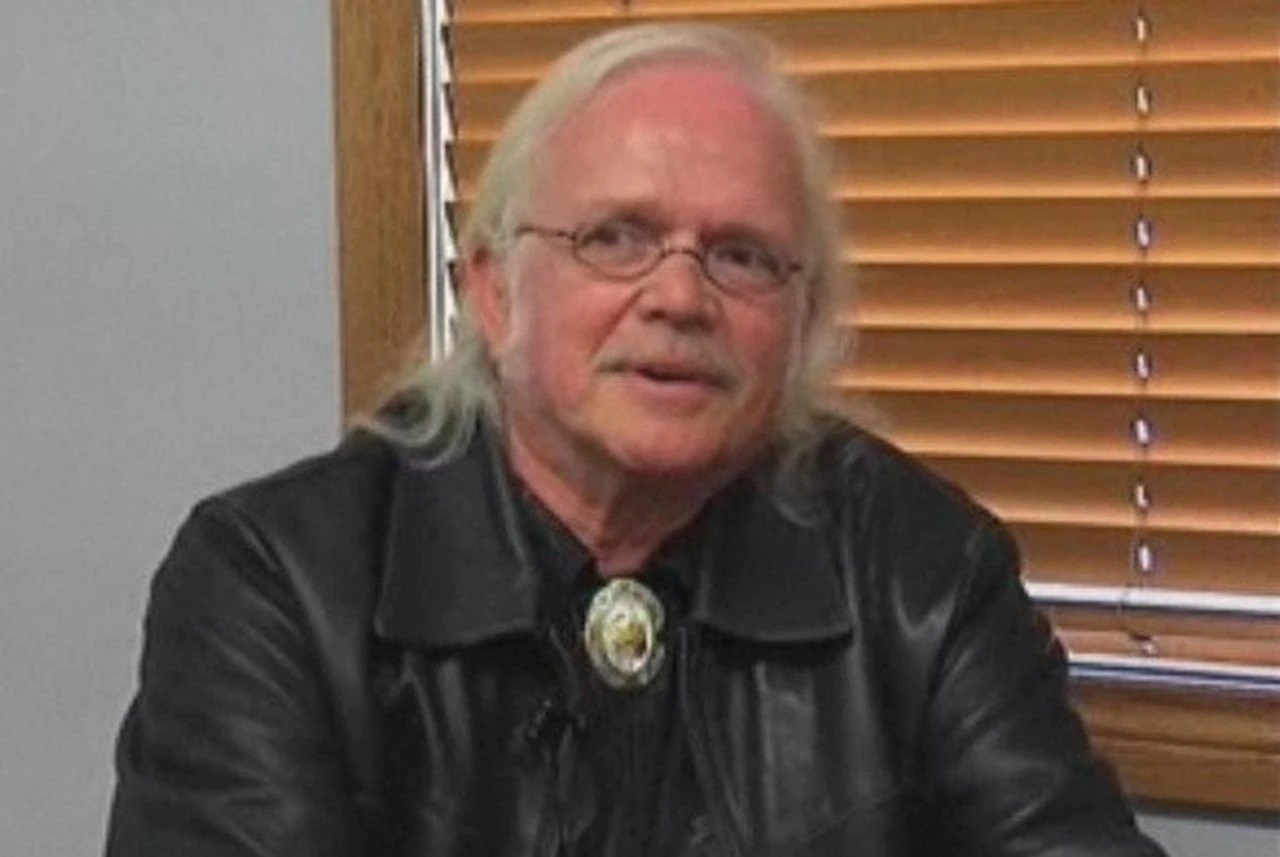
Leroy Fick died in June, but not before gaining a small measure of ethics immortality by giving his name to an Ethics Alarms term of art. In 2011, Leroy happily admitted that he had continued to collect public assistance after winning $2 million dollars in the Michigan lottery because a loophole in the law allowed him to do so. Thus his name was originally attached to those guilty of especially despicable, anti-social conduct. Eventually, the definition was refined to mean “unethical people who openly and blatantly violates social norms of responsibility, honesty or fairness without shame or remorse.”

That’s Leroy in the photo above. Ficks lack ethics alarms, so it will not surprise you to learn that many of them end up in jail. Leroy did.

Now comes Bennett Madison, writing on the repeatedly ethically inert site Gawker, boasting about deceiving advice columnists and their trusting reader in an article titled, “Help! I Couldn’t Stop Writing Fake Dear Prudence Letters That Got Published.” Fick.

He writes,

Continue reading

Someone Please Explain What’s Going On Here Before This Question Kills Me

jackheadexplosion

Once again, I have read something in print that I don’t understand at all, and I’m concerned that, like comedian Lewis Black’s routine about over-hearing someone say, “if it wasn’t for that horse, I wouldn’t have spent that year in college” and obsessing over what it could possibly mean, the statement will fester in my brain until, like an aneurysm, it explodes and kills me.

This time the potentially deadly passage came from Phillip Gallane’s New York Times advice column, “Social Q’s.” I stopped caring what Gallanes thought after he revealed himself to be a standard-issue left-biased, Trump Deranged social justice warrior, but a Times Sunday Styles section was just sitting there next to the toilet, and now my life is endangered.

Here is what I read as the first question in his column: “Wife” wrote,

Continue reading

The Name Game

It’s “racist” to get someone’s name wrong now?  What will the grievance bullies think of next?

The latest irritating aspect of life that has been appropriated to serve as a “microaggression” and proof of the U.S.’s “systemic racism” is people mispronouncing names. The complaint has gotten a boost from mispronunciations of Kamala Harris’s name, although I’ve never heard one. (I just call her “that phony” or “the jerk” and largely avoid the problem.) This is a continuation of the current trick: if something bad happens to a “POC,” like, say, getting shot while resisting arrest, it’s racism; if the exact same thing happens to a white person, that’s just bad luck, or the dude deserved it, or “Who cares?”

Admittedly, I am especially unsympathetic to the name game. My parents both were terrible at pronouncing names; it was a running joke between my sister and  me. It wasn’t just people’s names either. There was an ice cream store on Cape Cod called “Emack and Bolio,” and we used to ask Mom about it just to hear her say “E-MACK-a-Bowlee.” Because my mother was Greek, all ethnic names magically became Greek names to her. A Boston Red Sox infielder named Gutierrez became “Gouttarras.” My father mispronounced names like he mispronounced many words, and it didn’t matter how many times he was corrected. He thought, for example, that the words “fiasco” and “fiesta” were the same word, “fiesca.”

But in the New York Times weekly column “Work Friend,” this phenomenon was used for race-baiting, aided by the new narcicsism in which everyone’s name is some kind of badge of honor. “Call me what you want, just don’t call me late for dinner!” Dad would say when the misnaming issue came up. Of course, that Jack Marshall, like this one, went through life being called “John” and seeing his name spelled with only one “L.” He didn’t take it personally. He knew that what matters in life is what you do, not what you are called while doing it. Continue reading

The Ethicist Apparently Endorses Discrimination As Ethical

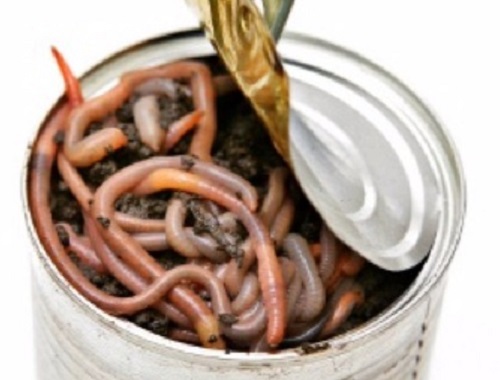
, the New York Times Magazine’s ethics columnist, just opened a can of metaphorical worms, and I’m going to spread them around a little. It may get messy.

A woman—actually, now that I re-read the post, we don’t know it’s a woman— wrote to be reassured that he or she wasn’t a bad person for wanting to dump a man she had engaged in a nascent romantic relationship after discovering that he had Crohn’s Disease. “I know I’m being selfish, but is it unethical to not date him because of it?” she wrote. ” I don’t know what to do to support him, and I am worried about the future. He said it’s very likely his intestinal issues could get worse, and his life expectancy may be shorter. I want to shield myself from the pain, but I also feel like a terrible person for even thinking about it.”

Hey, don’t feel bad,  sayeth “The Ethicist”:

“Once someone is truly a friend or a lover, you have all kinds of responsibilities to them that you didn’t have before. So for example, it would be deplorable to abandon a spouse because he or she has become seriously ill. That’s part of what’s meant by saying a marriage is to endure “in sickness and in health.” Of course, this can turn out to be a promise someone can’t keep. But precisely because a partnership is for the long term, you can appropriately consider what your lives together would be like before you enter into one. When a potential partner is already seriously ill, committing to this person may be committing to a life as a caregiver. (The specific condition you mention has a wide range of severity; it can be mild and well controlled or genuinely debilitating.) You don’t owe it to anyone to accept that burden; indeed, if you think you don’t want such a life, you have a good reason not to enter into the relationship. It doesn’t make you a terrible person to think about the issue. The terrible thing would be to make the commitment and then to be unable to keep it.”

Oddly for “The Ethicist,” he ducked the main question that was asked, and instead answered what he thought was an easier one.   The questions he answered were ” Is it wrong to reject a commitment to someone because that commitment may be too burdensome?,” and “Is it wrong to think about the issue?” (It isn’t wrong to think about anything, regardless of what Black Lives Matter says. They should see what I think about them.)

What the inquirer was asking, however, is whether she should end a casual relationship—she had only known the guy through Zoom, after all—because he had Crone’s Disease, before she could form an attachment to him and might decide that he was worth the trouble…make that  potential trouble.

I see no distinction between what she wants to do and invidious discrimination in any other relationship, like employment. Discrimination is when you treat someone worse than someone else because of who they are and  features they have no control over, rather than what they do, have done, or “the content of their character.” It is also discrimination to make judgments about someone based on assumptions about people “like” them—profiling, essentially. “I don’t want to date him, even though I really like him, because he has a handicap” is,  as I see it, indistinguishable from saying, “I don’t want to hire her because she has a handicap/ is likely to become pregnant/ is old/ is black.”

That’s discrimination, and that’s wrong. Continue reading

Ethics Quiz And Poll: The Nurse Practitioner’s Dilemma

Sure.

It is seldom that I strongly disagree with NYU philosophy professor Kwame Anthony Appiah, “The Ethicist” of the New York Times Magazine’s long-running advice column. A month ago I did, and emphatically so.

The question posed to him involved a professional ethics dilemma, and “The Ethicist” was so certain he had the correct answer that he was uncharacteristically terse about it. I’m pretty certain about the answer too, except that my certainty is that he’s wrong. But I have some doubts, based on my ethical positions in related situations.

The inquirer was a a nurse practitioner working at a primary care clinic for low-income patients. She said that a 16-year-old patient told her that she had stopped coming by the clinic to have her birth control pills replenished because she and her partner were trying to have a baby together. She had been having unprotected sex for  a while, and she was concerned that she might have some physical problem preventing her from conceiving. The nurse practitioner asked,  “Would it be ethical for me to steer her away from trying to get pregnant? …Or, as her health care provider, do I have an ethical duty to try to help her conceive?”

Appiah doesn’t see any wiggle room. He says,

“You’re her health care provider. You should certainly tell her about the medical consequences of pregnancy. But the social and economic consequences don’t fall within your professional competence. An intervention about her life choices may seem moralizing and intrusive to her, and it could drive her away; and then she’d be losing your guidance on the things you are trained to help her with.”

Really? Continue reading