Ethics Train Wreck Warning: Affirmative Action for the Hideous

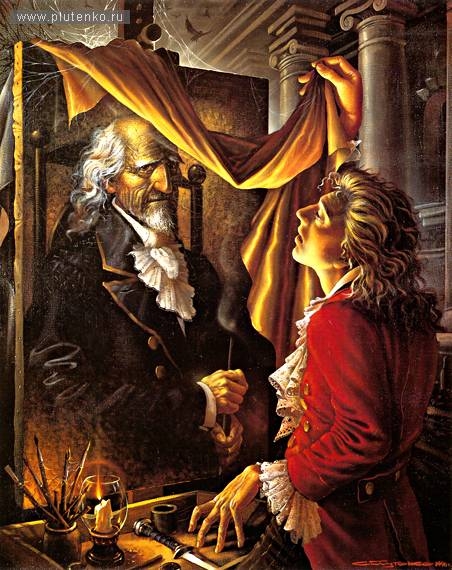
You won't need that portrait any more, Dorian...the Americans with Disabilities Act has you covered!

It is rare that an ethics train wreck of culture-wide proportions can be prevented with a firm, “Shut up, and go away!” This appears to be one of those times, however, and if anyone is reluctant, I hereby volunteer for the job.

Daniel S. Hamermesh, a professor of economics at the University of Texas, is shilling for his book, “Beauty Pays,” in which he proves the unremarkable fact that being attractive is an advantage in society , and being unattractive is an impediment. He recently hit the op-ed pages of the New York Times, writing, among other things, this:

“Why this disparate treatment of looks in so many areas of life? It’s a matter of simple prejudice. Most of us, regardless of our professed attitudes, prefer as customers to buy from better-looking salespeople, as jurors to listen to better-looking attorneys, as voters to be led by better-looking politicians, as students to learn from better-looking professors. This is not a matter of evil employers’ refusing to hire the ugly: in our roles as workers, customers and potential lovers we are all responsible for these effects.”

“How could we remedy this injustice?”

Whoa! There it is, the magic words that open the door for ham-handed social architects to do what they always to do, try to remedy the results of natural human proclivities and preferences with laws. Continue reading

The Folly of Sacrificing Integrity to Kindness in Competitions

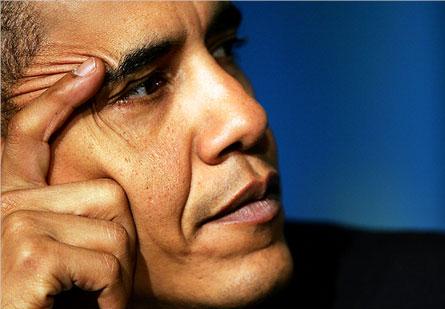
"Great idea, Mandy! Let's elect President Obama our school Homecoming Queen! He could use a a boost."

Integrity. 

Violate it at your peril. This is especially true if you are running a competition, no matter how trivial it might be.

Not only may a momentary waiver of integrity for what seems like an admirable cause permanently render a competition and the honor of winning it meaningless, it well may inspire the well-meaning and misguided to stretch the questionable logic of your decision to the breaking point.

Almost everyone has seen the heart-tugging TV ad from the mysterious Foundation for a Better Life, in which a high school girl with Down Syndrome is crowned Homecoming Queen. (“True Beauty. Pass it on!”) It bothered me the moment I saw it—at least after I wiped the tear from my eye. Based on a real incident in Missouri in 2008, the spot illustrates an ethical conflict between kindness and caring on one side and fairness and integrity on the other.

Of course this was a nice thing to do. It was undeniably kind, and the student involved will surely regard it as a high point in her life. But what does the Homecoming Queen title mean now, once it has been awarded for purposes completely divorced from its original purpose? If there is another Down Syndrome student in future years who doesn’t get a crown, will this indicate to her that she is less deserving of the award, and somehow lacking, since, after all, a girl like her won in a past year? Continue reading

Colbert King, Obama Abuse, Bias and Double Standards

Washington Post columnist Colbert King is an around-the-clock Ethics Hero, a relentless journalist investigator and critic of government corruption in Washington. D.C. He has an impeccable sense of right and wrong, as well as intolerance for public betrayal by elected officials. Yet this undeniably ethical, fair man, who eschews rationalizations at all costs while applying rigorous ethical analysis, cannot see a double standard when it is staring back at him from his own computer screen. His is a frightening tale of the power of bias.

In today’s Post, King expresses fury and pain over last week’s despicable birther drama, feelings that I share. He is revolted at the racist undertones of the “joke” photo e-mailed to friends by an Orange County Republican official as am I. He is horrified by the high percentage of Republicans polled who question Obama’s religion and national origin, as indeed he should be And without any sense of irony, King writes… Continue reading

The SATs: Flat Learning Curve=Unfair Questions

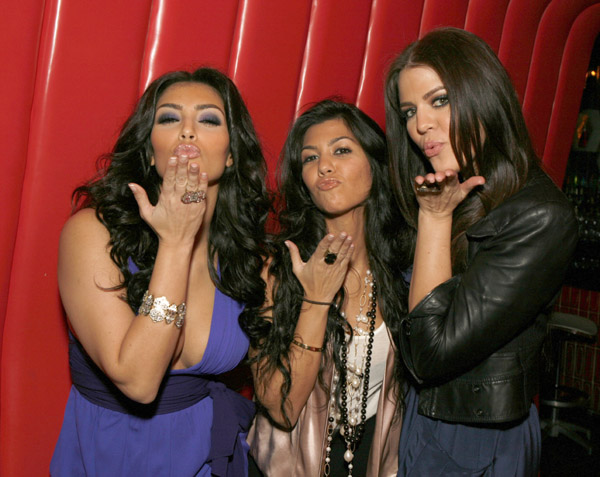
The secret to acing your SATs? Know your Kardashians!

After all the anger, debate and controversy in the Sixties over affirmative action and the Scholastic Aptitude Tests, with the case finally being made to the public’s satisfaction that including test questions  based on cultural references likely to be unfamiliar to African-Americans or lower-income students (such as, famously, questions about yachting) negatively affected their test scores, wouldn’t you think that it would have been thoroughly understood by the people who make up the SAT scores that questions with a cultural bias were inherently unfair and incompetent questions?

Here is the prompt for the essay question in the SAT test given to high school students across the country last week : Continue reading

The Comment of the Day: Another On “The White Male Scholarship”

John-Baptiste Clamence reacts to yesterday’s post with a crucial point (that I happen to agree with) about the role of law in setting cultural values and societal ethics. Here is his Comment of the Day, on “The White Male Scholarship”:

“It’s a hard line to draw sometimes; the line between your right to have the wrong opinion, and how much the law should push you to have the right opinion.
In the UK, since 1996 it has been illegal for B&Bs to refuse rooms to gay couples. These are private businesses – should they have the right to offer their services in a discriminatory way also?

“The situation you describe is, in my view, unethical for the reason that it perpetuates the idea in society that racial discrimination for an academic award is OK. The sooner and stronger the message given by the law is, then the sooner the views of society change.

“To paraphrase Cesar Millan: Change the behaviour, change the thoughts.”

The Comment of the Day: “The White Male Scholarship”

Tim LeVier defends the controversial white male scholarship, as well as other scholarships determined by race and gender. Here is his Comment of the Day, in response to my post, “The White Male Scholarship”:

“…This is actually a subject that I feel passionate about for exactly the reasons you state. I’ve mentioned on this blog (in the comments) before about how I feel with regards to student groups that support every student except the straight white male. What’s a guy like me to do when everyone’s at their meetings? The names of their groups suggest exclusion of others and create an unwritten rule that you should only attend if you meet the qualifications.

“With regards to student groups, I think your post would be more accurate. I think there’s more opportunity for all individuals to flourish in mixed student groups plus it spreads awareness of your “race-based” goals when you aren’t just ‘preaching to the choir.’

“However, for scholarships, surprisingly, I have to take the opposite approach. I think it’s because I believe that with scholarships, it’s about providing opportunity, whereas with student groups it’s about taking opportunity. Continue reading

The White Male Scholarship

Does he really need a scholarship?

Colby Bohannan, president of the Former Majority Association for Equality, has set up a scholarship program for white males. To qualify, you have to be at least a 25 percent Caucasian, have demonstrated a commitment to education, achieved at least a 3.0 grade average, show financial need, and document a positive contribution to the community. Bohannan’s official reasoning is that white males are the only group that doesn’t have a scholarship dedicated to them. He is, he says, righting an injustice. Continue reading

The Dilemma of the Legless High School Pitcher

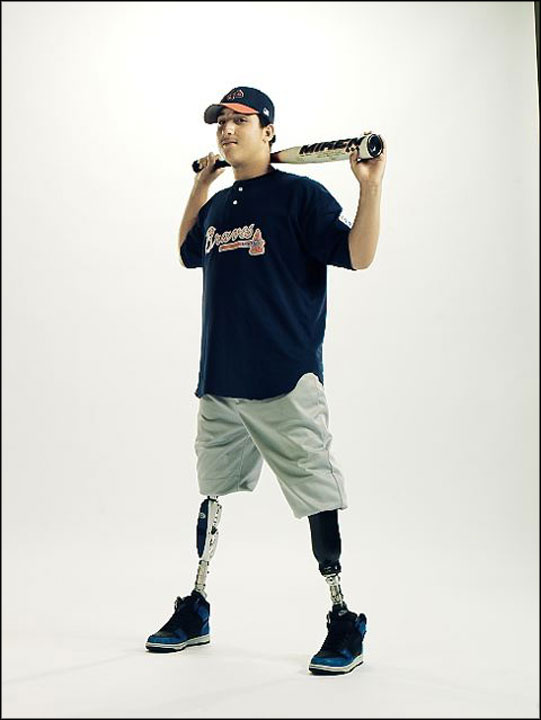
Seemingly an inspirational movie in the making, Anthony Burruto is a student at Dr. Phillips High School in Orlando, Florida. He has been playing baseball since he was 8 years old, despite the inconvenience of having both of his legs amputated when he was an infant. He plays the game on prosthetic legs that are all he has ever known, and does it well as a pitcher who can throw a mean curve and a fastball that has been clocked at 80 mph. This is Anthony’s sophomore year, and his goal was to play on Dr. Phillips High varsity baseball team this spring.

After two days of try-outs, Coach Mike Bradley cut him. Anthony’s metal legs, adept as he was at using them, made him too slow off the pitching mound when he had to field a bunt, said the coach, and teams would take advantage of his inability to jump off the mound quickly.

Sorry, kid.  Continue reading

Note to the EEOC: “Fairness” Must Not Require The Suspension of Common Sense

In the  rich and annoying category of “Official Statements and Actions That Guarantee The Death Of Affirmative Action,” we have the recent warning by the Equal Employment Opportunity Commission that companies using criminal records to screen out job applicants might run afoul of anti-discrimination laws and be illegal because such a policy would have the effect of disproportionately disqualifying blacks and Hispanics. Continue reading

Ethics Quote of the Week

“One of my students this year has a vaguely Hispanic name but is literally the whitest girl you’ve ever met. Her mother straight out asked, ‘If we mark she’s Latino on the application, is that something that they would ever challenge?’ I told her honestly my best guess, which was no. And, if early admissions are any indication, it seemed to work.”

—-A  guidance counselor (and former Ivy League admission officer) at a private school in the South, quoted by Kathleen Kingsbury in her report for The Daily Beast on dubious college admission tactics.

This, of course, is completely unethical for both the student and the counselor, who is exactly like a tax attorney or accountant who lets a client know that his fraudulent return will almost certainly not be audited by the I.R.S. Both of those professionals violate their ethics codes by aiding and abetting such conduct, and the quoted counselor is just as bad.

What should the counselor have said? Continue reading