Oscar Ethics Post Mortem: The Academy Just Guaranteed That Whatever Artists Win Oscars Next Year, They Will Have No Credibility Whatsoever

Good job, everybody!

Good news, Sipke! The fix is in: if you make a movie this year, no matter how crappy it is, you'll get a nomination. Happy now?

Good news, Sipke! The fix is in: if you make a movie this year, no matter how crappy it is, you’ll get a nomination. Happy now?

Thanks to an extended public self-flagellation by the Academy of Motion Picture Arts And Scientists last night, any future Oscar nominations or awards to black performers, designers, writers and directors will be regarded by the public and the Hollywood community itself with justifiable suspicion, doubts and cynicism. Last night’s ceremony, from Chris Rock’s all-race monologue to the choice of the music over the credits, was a tacit commitment by the Academy to henceforth and forever name sufficient minority nominees and winners regardless of the merits of their work or the comparative merits of their work to any white artists. Diversity is officially more important than merit. By hook or by crook, there will now be prominent honors to Hollywood blacks….even if some of the honored work is crap.

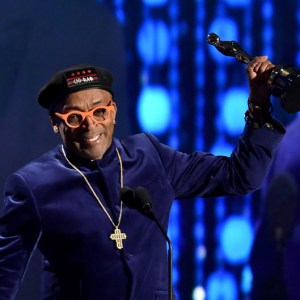
Not surprisingly, given its traditional and intellectually wan reflex liberalism, Hollywood painted itself into an affirmative action and quotas mandate. After last night, the voters won’t dare fail to nominate a whole bunch of blacks, so Spike Lee will come to the ceremony.  This does put pressure on black artists to actually turn in some outstanding, or at least plausibly decent, work to avoid making all those guaranteed nominations and awards look as phony and rigged as they will be. If the 2017 Oscars include nominations for Samuel L. Jackson playing Samuel L. Jackson, a lifetime achievement award for Sydney Poitier and a gift nod to James Earl Jones for a charming cameo as a crusty old hermit in “The Sandlot, Part 3,” it’s going to be even more obvious what’s going on. Continue reading

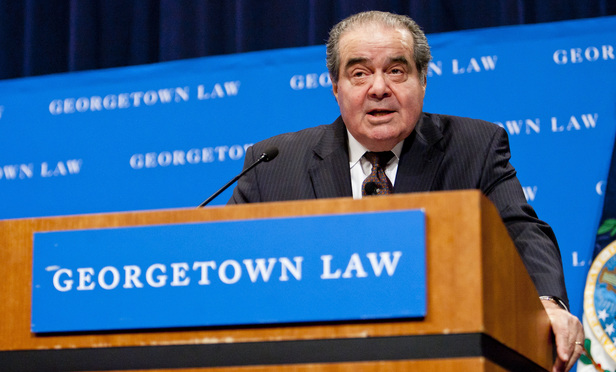
Ethics Observations On Georgetown Law Center’s Scalia Foofarah

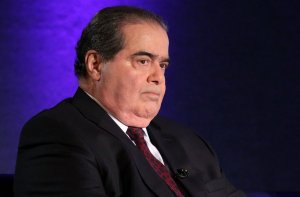
Scalia-Georgetown

I am a Georgetown University Law Center grad, as well as a former administrator there. I also know and have personal relationships with several members of the faculty. None of this especially informs my ethical analysis of the community argument there that arose from a rather innocuous official expression of respect and mourning in the wake of Justice Scalia’s death, but if anyone wonders why I’m posting about this rather than many other ethics issues nipping at my heels, that’s part of the reason. The other reason is that this academic dust-up raises interesting ethics issues, and has received national publicity.

Observations on the tale as it has unfolded:

1.  Georgetown Law Center issued a press release mourning the death of Antonin Scalia, including a statement from Dean William M. Treanor that read:

Scalia was a giant in the history of the law, a brilliant jurist whose opinions and scholarship profoundly transformed the law. Like countless academics, I learned a great deal from his opinions and his scholarship. In the history of the Court, few Justices have had such influence on the way in which the law is understood. On a personal level, I am deeply grateful for his remarkably generous involvement with our community, including his frequent appearances in classes and his memorable lecture to our first year students this past November. The justice offered first-year students his insights and guidance, and he stayed with the students long after the lecture was over. He cared passionately about the profession, about the law and about the future, and the students who were fortunate enough to hear him will never forget the experience. We will all miss him.”

[Note: In the original post, I missed the first line, and kept missing it. Don’t ask me why. The text has been finally, after a couple botched attempts, been revised to include it.]

Is there anything inappropriate about the dean’s statement? Not in my view. This is nothing but a traditional expression of professional respect on behalf a prominent institutional member of the legal community. There is nothing in the statement, save for the last sentence, that anyone could argue is untrue. Countless academics, as well as Scalia’s more liberal colleagues, did learn “a great deal from his opinions and his scholarship.” He was an influential and significant figure on the Court. Scalia was generous with his time and passion as a teacher, and by all accounts he was a good one.

The opening statement,  “Scalia was a giant in the history of the law, a brilliant jurist whose opinions and scholarship profoundly transformed the law,”  seems to be what rankled Scalia critics. It shouldn’t have. At worst it is standard memorial puffery. But calling Scalia a giant “ in the history of the law” seems fair whether you agree with his jurisprudence or not: he is certainly among the 20 or so most quoted, most debated, and most provocative justices. The rest shouldn’t be troubling to anyone who isn’t suffering from Scalia-phobia. A Justice can be brilliant and transformational while being wrong.

None of the reports of the controversy ignited by this standard issue sentiment mention it, but Georgetown Law Center isn’t on the Georgetown campus. It has its own campus that is a 15 minute walk from the Supreme Court. Law students regularly attend oral arguments; I did: it was one of the great advantages of studying law there. More than any law school, the Law Center has good reason to feel a special affinity to the Court and all its justices.

2.  What about the last sentence? Is it appropriate for Treaner to speak for the law school community and say that “We will all miss him”? He was reasonable and fair to assume that.  Unfortunately, in today’s vicious partisan divide where opinions and sincere positions reached after thought and research are too often treated as proof of consort with Satan, and ion which even lawyers, who are trained not to take legal arguments personally, are frequently unable to respect a colleague for a well-reasoned argument that they may still think is completely wrong, it was not a safe assumption. Pillory the dean, then, for giving all members of his community the benefit of the doubt, and assuming they are capable of grace, compassion, fairness, professional respect and civility.

It’s still not unethical to assume one’s colleagues have some class.

3. They all don’t, unfortunately. Law Center professors Gary Peller and Mike Seidman (I know Mike, never met Gary) then used the Campus Broadcast system, usually used for event announcements, invitations and policy changes, to send a message  to all members of the student body titled, “Responses to Dean Treanor’s Press Release Regarding Justice Scalia.”  Peller’s statement reads,

Like Mike Seidman, I also was put-off by the invocation of the “Georgetown Community” in the press release that Dean Treanor issued Saturday. I imagine many other faculty, students and staff, particularly people of color, women and sexual minorities, cringed at headline and at the unmitigated praise with which the press release described a jurist that many of us believe was a defender of privilege, oppression and bigotry, one whose intellectual positions were not brilliant but simplistic and formalistic….That ‘community’ would never have claimed that our entire community mourns the loss of J. Scalia, nor contributed to his mystification without regard for the harm and hurt he inflicted.”

This was partisan grandstanding of the worst kind. The professors, of course, have a right to proclaim their opinions to the student body any time they want to, but their complaint here was petty and mean-spirited. It also models behavior that is poisonous both to the legal profession and the culture as a whole. The are saying, in essence,We don’t mourn him, we won’t miss him, and we’re glad to be rid of him, because his legal theories aren’t our legal theories, and we are on the side of the angels while he was an uncaring villain.” Such a message accomplishes nothing positive, and much that is destructive. The professors engaged in demonizing, when their profession and their duty is not to denigrate but reason. If they really think they can prove that Scalia was a defender of privilege, oppression and bigotry, they can make that case in a scholarly paper: I doubt that they can. Scalia often defended the rights to engage in conduct that he did not personally support, as well as some he did: the sloppy rhetoric of Seidman and Peller echoes the legally ignorant who accuse criminal defense attorneys of defending robbery and murder. Continue reading

Comment of the Day: “Unethical High School Assembly Video Of…What? The Month? The Year? Eternity?”

race

I must admit: I thought the “unequal opportunity race” video that was the subject of my post to be so outrageously simplistic, exaggerated, insulting to white Americans and discouraging to minority Americans that nobody would defend it. The lively debate that the post sparked proved that the white privilege deflection has seeped into mainstream thinking far more than I had previously understood, and that the position the progressive movement wants to communicate to African Americans is that absent aggressive, government-executed hobbling of present day white citizens as they pursue their own ambitions and dreams, and opportunities for their children, black Americans are doomed to comparative failure, cursed to be victims of traps, gaping craters and metaphorical sharks.

Late in the debate, commenter Chris Bentley, himself an African American, provided a different perspective in two long posts. I am combining them as his Comment of the Day, on the post ,Unethical High School Assembly Video Of…What? The Month? The Year? Eternity?.

To which I say b.s. (as a black man). I have no doubt, no doubt whatsoever, that I have succeeded (and failed at times) solely based on my merit, talents, and desire. I have not been unemployed for even a second, since the age of 18 (I am 37). I have applied to many, many jobs that I have desired, and been hired for many of those jobs. I have been accepted and attended 8 (8!) different colleges, earning 3 different degrees. I have spent the last 20 years working in education, from ECE to college, and spent 3 years as a preschool director (a black male preschool director is about as rare as a unicorn that poops gold).

None of this is meant to be taken as bragging, as my story is no more successful than anyone else on this blog. Nor am I more successful then any average black man, who grew up with loving, educated parents, who forced me to have a good head on my shoulders, taught me the importance of education, and did not teach me to be distrustful of whites, or to blame shift my failures elsewhere. I find it patronizing to be told that individual merit is not enough for me to succeed, when compared to whites; that if I truly want to compete on an even playing field, I need those same whites to level the field.

No. I. Don’t.

Continue reading

Unethical High School Assembly Video Of…What? The Month? The Year? Eternity?

This video, purportedly a defense of affirmative action, was mandatory viewing for students at Glen Allen High School in Henrico, Virginia:

This isn’t education. This is anti-American, race-baiting indoctrination, political in intent and orientation, and absolutely irresponsible for use in a high school. This school, of course, has students of both races, so the video also encourages racial distrust, divisions, and hate.

Naturally, many parents object, though I doubt any are objecting more than I would.

The school was unapologetic:

“The students participated in a presentation that involved American history and racial discourse. A segment of the video was one component of a thoughtful discussion in which all viewpoints were encouraged. As always, we are welcoming of feedback from students and their families, and we address concerns directly as they come forward.”

A classic of  double-speak spin from incompetent, power-abusing educators. You don’t teach children about complex issues by reducing them to simple-minded cartoon agitprop, but then, education, however, is not the objective. The clear motives are racial spoils, white guilt, black entitlement, and partisan advantage.

Ethics Observations On The Academy’s Pro-Diversity “Fix”

Chris-Rock-Backstage-at-Oscars

Apparently panicked by the negative reaction to its all-white 2016 Oscar nominations,  and determined not to give MC Chris Rock more ammunition than he already has, the Academy of Motion Picture Arts and Scientists has rushed into place new voter qualifications for next year’s awards. Under the new rules, members who have not worked over the past 30 years  will lose the right to cast Oscar ballots unless they have been nominated for an Oscar themselves.

What’s going on here?

1. Is this substituting real bias for unfairly assumed bias?

Sure it is.

As one soon to be disenfranchised voter told the Hollywood Reporter, “The Motion Picture Academy, in the spirit of Affirmative Action (which has worked so well in our universities), is determined to take the Oscar vote away from the Old White Guys…Personally, I wish they’d examine their complex preferential ballot procedure which clearly isn’t working right. But no, blame the Old White Guys.” Others noted that to assume older voters, many who were at their peak during the rebellious Sixties and the Civil Rights Era, weren’t voting for black artists was foolish. The new rules seem to be an obvious attempt to stigmatize and penalize older voters.  The seniors, said one dissenting Academy member, are often “perfectly vibrant and very much with it and, while they may be retired, it doesn’t mean they aren’t functioning on all cylinders. They have earned the privilege of being in the Academy through their work and just because they’re no longer active doesn’t mean that they can’t be a good judge of what they’re looking at.” Former actress Delores Hart, who gave Elvis Presley his first screen kiss and who was the top-billed star of “Where the Boys Are?,” was direct, saying,  “It’s age discrimination.”

Of course, Hollywood has long-accepted age-discrimination, and Saturday Night Live would never skewer the Oscars for that. Continue reading

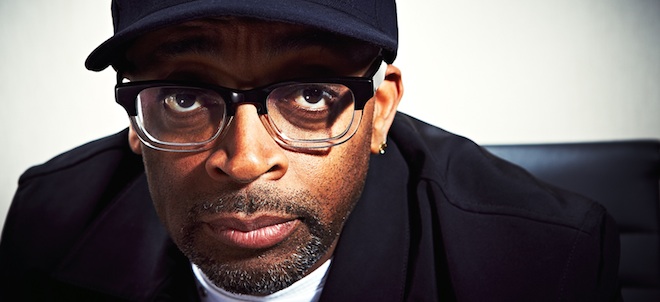
How Unethical Is Spike Lee’s Oscar Boycott?

SpikeLee

Short answer: Incredibly unethical.

Spike Lee, ground-breaking black director, social commentator, Knicks fan and hot-head, announced that he’s boycotting the Oscars because its 2016 nominations list did not meet diversity mandates, and posted this rant/manifesto on Instagram:

“Again. I Would Like To Thank President Cheryl Boone Isaacs And The Board Of Governors Of The Academy Of Motion Pictures Arts And Sciences For Awarding Me an Honorary Oscar This Past November. I Am Most Appreciative. However My Wife, Mrs. Tonya Lewis Lee And I Will Not Be Attending The Oscar Ceremony This Coming February. We Cannot Support It And Mean No Disrespect To My Friends, Host Chris Rock and Producer Reggie Hudlin, President Isaacs And The Academy. But, How Is It Possible For The 2nd Consecutive Year All 20 Contenders Under The Actor Category Are White? And Let’s Not Even Get Into The Other Branches. 40 White Actors In 2 Years And No Flava At All. We Can’t Act?! WTF!! It’s No Coincidence I’m Writing This As We Celebrate The 30th Anniversary Of Dr. Martin Luther King Jr’s Birthday. Dr. King Said “There Comes A Time When One Must Take A Position That Is Neither Safe, Nor Politic, Nor Popular But He Must Take It Because Conscience Tells Him It’s Right”. For Too Many Years When The Oscars Nominations Are Revealed, My Office Phone Rings Off The Hook With The Media Asking Me My Opinion About The Lack Of African-Americans And This Year Was No Different. For Once, (Maybe) I Would Like The Media To Ask All The White Nominees And Studio Heads How They Feel About Another All White Ballot. If Someone Has Addressed This And I Missed It Then I Stand Mistaken. As I See It, The Academy Awards Is Not Where The “Real” Battle Is. It’s In The Executive Office Of The Hollywood Studios And TV And Cable Networks. This Is Where The Gate Keepers Decide What Gets Made And What Gets Jettisoned To “Turnaround” Or Scrap Heap. This Is What’s Important. The Gate Keepers. Those With “The Green Light” Vote….”

Now let me list as many of the ways Lee’s boycott is unethical (I may stray into why it is stupid as well),  as I can before my fingers get tired and nausea overwhelms me: Continue reading

Diversity vs. Integrity: The 2016 Oscar Nominations

All white Oscars

When I began to watch the televised announcement of the Oscar nominations, I was prepared for a wave of minority nominations. After all, the Academy for Motion Pictures Arts and Sciences was lambasted last year for the absence of African American nominees, and with the Academy stuffed with knee-jerk, left-wing, Democratic donors, I assumed that last year’s criticism would prompt the voters to place an affirmative action thumb hard on every scale. To my amazement, I was wrong! For the second year in a row, all 20 nominees in the acting category were white. The only  nonwhite nominee was for Best Director (Alejandro G. Iñárritu).

This tells me that the Academy Awards, though they may be influenced by so many biases that the final awards—except in rare cases where a performance was so outstanding that nobody could argue with the choice without looking silly—are meaningless as credible determinations of merit, have integrity. They are not “fixed.” The Academy, whose chair is a black woman, would have loved to have a large, or even a small group of black nominees to be able to show more  diversity. The awards, however, are supposed to be based on artistic merit, not EEOC targets. It looks like the Academy’s members voted that way. Good for them.

Oh, naturally, Chris Rock (the Oscar night host—do you really think the Academy would have engaged his services if it didn’t want and assume plenty of black nominees?) has been launching verbal grenades, and Al Sharpton, the renowned film auteur, is calling for a boycott (“when the only tool you have is a hammer…”).  In the end, however, the complaint of black activists is self-defeating and hypocritical Continue reading

Update: Some Perspective On Justice Scalia’s “Racist” Question About Affirmative Action

Big fish, meet small pond...

Big fish, meet small pond…

Ethics Alarms recently discussed the unfair attacks on Justice Scalia, now even extending to calls for his resignation, for his legitimate question in oral argument about whether black students accepted into elite schools via affirmative action might be better off being able to excel in less competitive institutions. The question was not racist, reflecting common sense, nor was it necessarily Scalia’s position, as it was an argument raised in one of the briefs on the case. Never mind: much of the media still characterizes the query as outrageous, and social justice warriors are trying to make the episode out to be smoking gun evidence of Supreme Court bias in anticipation of a negative ruling in the case regarding affirmative action.

As the Daily Beast reveals, however, there is a much better explanation than racism for why Scalia might find the argument powerfully supported by the research of Richard Stander and Stuart Taylor in their book “Mismatch” compelling. Young Nino Scalia was a star in elementary school, but failed the entrance exam for the Jesuit High School in Manhattan. His father told him that he might ultimately be better off at a less competitive school where he could shine, and that’s what happened.  Scalia later graduated first in his class at a less prestigious high school. Then he was rejected again when he applied to Princeton University.  Again he took a step down, attended Georgetown University instead, and was first in his class. Continue reading

Race-Baiting Scalia (For Doing His Job)

Ignore them, Nino.

Ignore them, Nino.

As is often the case with topics here, I heard about the uproar over Justice Antonin Scalia’s controversial question during oral argument on the latest challenge to affirmative action accidentally, when a Facebook friend re-posted a furious message from his friend calling Scalia a moron and a racist. Even reading a second hand account of what somebody read that Scalia said (the transcript hadn’t been released, but never mind: that was enough for my friend’s African-American friend to call a Supreme Court Justice a racist and for my friend, who is a liberal-minded professor, to endorse it), I could tell that the attack was unfair and worse, outright race-baiting.

What Scalia was alleged to have asked a lawyer was whether affirmative action actually hurt blacks by putting them in “more advanced” institutions, that they “don’t belong” in elite schools. I knew, no matter what Justice Scalia really said, that he was talking about some blacks, not all blacks. That’s obvious: if an African American student can be admitted to an elite school without the “thumb on the scale” of affirmative action, obviously he or she is qualified and belongs there. But more importantly, I knew from personal experience that being admitted to a top school when the student’s credentials wouldn’t normally warrant it could be disastrous.

I worked in the administration of Georgetown Law Center in the late seventies and early eighties, as the school was trying to increase its percentage of black students. I was involved in the process sometimes, and was stunned by its unfortunate revelations: for example, some of the black students we accepted from elite colleges lacked basic reading, writing and critical thinking skills. I remember one Yale grad in particular who could not write a comprehensible sentence.

Georgetown Law set up a special class for these minority students (and a couple of  white “legacy” admits who were sons of wealthy alums, one of which I had specifically told his father could not possibly graduate, based on his college grades and test scores.) Then the school was sued by one of the affirmative action students, who claimed that making him take the remedial class was demeaning and racist. Of course he would have been better off in a less demanding law school. Affirmative action did none of these students any favors. In my opinion then and now, their welfare, confidence and self-esteem was  sacrificed so Georgetown could look progressive, and to the dubious objective of diversity for diversity’s sake.

It wasn’t just my Facebook friend’s friend that was bashing Scalia as a racist. It was much of the news media. “Justice Scalia Suggests Blacks Belong at ‘Slower’ Colleges” reported Mother Jones. “Scalia: Maybe black students belong at ‘less-advanced’ schools” reported The Hill. MSNBC’s slur was Justice Antonin Scalia floats ‘lesser schools’ for black students.  A New York Times editorial—the paper has, it appears, lost its mind– said that Scalia raised an “offensive premise which has not gotten such a full airing at the Supreme Court since the 1950s.” The New York’s Daily News  headlined“SUPREME DOPE” over a photo of Nino. Continue reading

Entry For “Unethical Headline Of The Year”: Mother Jones

mother-jones-3

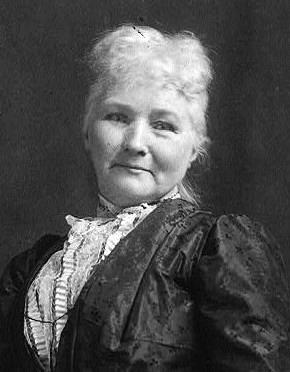
The real “Mother Jones”

A headline is a declarative statement, and ethical headlines are factual—not teases, not bait and switches, not lies, not deceit, but factual. Misleading headlines have become increasingly common on the web (click-bait, you know), and if this one from Mother Jones is any indication, the election season is going to be ugly as well as confusing.

The headline is “Republicans Hate Planned Parenthood but Want to Put One of Its Backers on the $10 Bill,” and it is quite an achievement: almost every word is a lie or intentionally misleading.

Let’s begin with “Republicans,” who, according to the headline, both “hate” Planned Parenthood and “want” to put a Planned Parenthood “backer” on the ten. “Republicans” implies all Republicans. Do all Republicans “hate” Planned Parenthood? Gee, I am married to a Republican who served on the board of the local  organization affiliate. There are many Republicans who oppose one of Planned Parenthood’s signature activities, abortion, but that does not mean all Republicans hate Planned Parenthood. Many headline writers, including the one that wrote this one, are lying, manipulative partisan hacks, but a headline that said, “Headline Writers Are Lying, Manipulative Partisan Hacks” would be unfair and misleading.

As for the second part of the sentence, which states Republicans want to put one of Planned Parenthood’s “backers” on the ten dollar bill, it is even more inaccurate regarding Republicans. The article under the headline refers only to the CNN candidate’s debate, and only to three of the eleven Republicans on the stage. Since eight of the Republicans did NOT choose to place the “backer’s” face on the ten, using the article’s own deceitful employment of the term “Republicans,” the article could also be titled “Republicans Hate Planned Parenthood And Don’t Want to Put One of Its Backers on the $10 Bill.” That, of course, wouldn’t convey the impression that Republicans have no integrity, are hypocritical and ignorant, which was really the purpose of the headline and the article. A headline, however, that is less accurate than the opposite of the headline is a really misleading headline. Res ipsa loquitor! Fairer and more honest still would have been a version of the headline that read “Three Republicans Want to Put One of Planned Parenthood’s Backers On The $10 Bill,” but even that would be misleading.

Oh, I’ve just gotten started, for this is some terrible headline. Continue reading