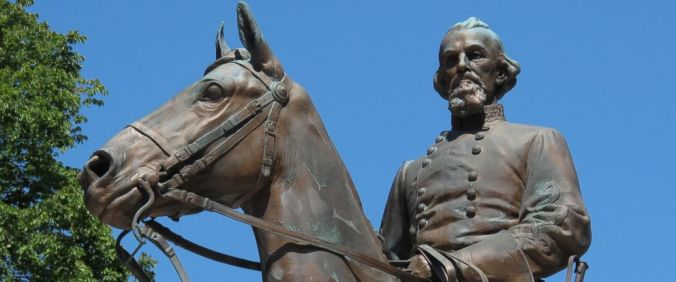
From “The Ethics Incompleteness Principle” Files: Memphis, Tennessee’s Confederate Statues

A better application of the Ethics Incompleteness Principle would be difficult to find than the decision by Memphis, Tennessee to remove a huge monument to Jefferson Davis, the president of the Confederacy, and an even larger heroic equestrian statue (above) of Nathan Bedford Forrest, swashbuckling Confederate general and (allegedly) the first Grand Wizard of the Ku Klux Klan,  from two public parks.

As we have discussed here in great detail, I am unalterably opposed to the current mania among our Left-leaning friends and neighbors  of tearing down statues, monuments and memorials honoring  past historical figures because their lives, beliefs and character do not comport with current day standards or political norms.  This primitive exercise in historical censorship has been especially focused on famous and notable figures from the Confederacy, although recent efforts have targeted George Washington, Thomas Jefferson, Andrew Jackson and even Theodore Roosevelt. Of the attacks on memorials to Confederate figures, I wrote,

[ Union veterans]  didn’t think of the former Confederates as traitors, or racists, or slavery advocates. They, like the Union veterans, were just men of their times, caught up in a great political and human rights conflict that came too fast and too furiously for any of them to manage. They were caught in the same, violent maelstrom, and knew it even 50 years earlier. Soldiers on both side wrote how they admired the courage of the enemy combatants they were killing, because they knew they were, in all the ways that mattered, just like them. It was the Golden Rule.  After the war, these soldiers who had faced death at the hands of these same generals, officers and troops, did not begrudge them the honor of their statues and memorials, nor their families pride in the bravery of their loved ones.

Yet now,  self-righteous social justice censors who never took up arms for any cause and in many cases never would, employ their pitifully inadequate knowledge of history to proclaim all the Civil War’s combatants on the losing side as racists and traitors, and decree that they should be hidden from future generations in shame. We have honored men and women for the good that they represent, not the mistakes, sins and misconduct that are usually the product of the times and values in which they lived. In doing so, we leave clues, memories, controversies, differing views, and stories for new generations to consider and better understand their own culture and society, and how it came to be what it is.

Those who want to tear down monuments to the imperfect, whether they know it or not, are impeding knowledge, perspective, wisdom, and understanding. They want only one view of history, because they will only tolerate one that advances their ideology and values—just as the Americans of the past believed in their values. Foolishly, I suppose, they trusted future generations to act on their own ethical enlightenment without corrupting the historical record.

I feel strongly about this, as the tone of that post, far from my first on the subject, shows.

But… Continue reading
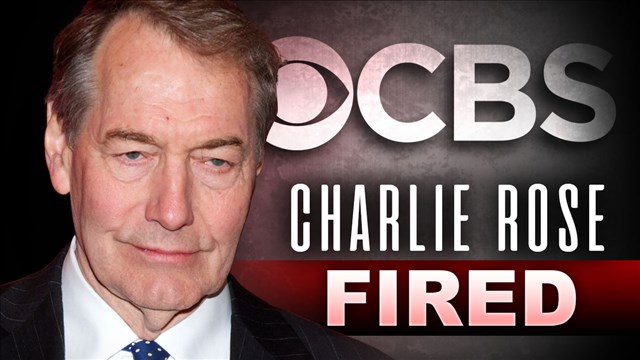
Ethics Dunce: The Walter Cronkite School of Journalism and Mass Communication

The Walter Cronkite School of Journalism and Mass Communication has boarded the Harvey Weinstein Ethics Train Wreck.

Is the body of Charlie Rose’s work as a journalist less impressive, valuable, expert, enlightening and professional because we have learned that he is an abusive, sexist, gross, harassing pig? Of course not.

That being the case, why is The Walter Cronkite School of Journalism and Mass Communication revoking the Walter Cronkite Award for Excellence in Journalism it bestowed on him in 2015? Let’s have the school’s explanation, shall we?

In the words of Dean Christopher Callahan:

We give the award each year based on the knowledge we have of a recipient at that time. When new information about a recipient surfaces, the question we ask is not whether the award would be given again with a new set of facts, but whether the transgressions are so egregious that they demand nothing less than a reversal of history.

I believe Mr. Rose’s actions of sexual misconduct reported by The Washington Post and other media outlets, which are largely unrefuted, rise to that level. The damage caused by Mr. Rose’s actions extends far beyond the news organizations for which he worked. The actions victimized young women much like those who make up the overwhelming majority of Cronkite students – young women who deserve to enter workplaces that reward them for their hard work, intelligence and creativity and where they do not have to fear for their safety or dignity. In rescinding this award, we hope to send an unequivocal message that what Mr. Rose did is unacceptable, and that such behavior – far too common in not just media companies but many organizations – must stop.

So now you know why. The school, and its dean, and everyone else involved in this decision, is craven, hell-bent on virtue-signalling, bereft of integrity, hypocritical, and intellectually dishonest. The school has never withdrawn an award or honor: are we really supposed to believe that there is an established procedure for considering whether or not one should be revoked in an instance of “new information” that has nothing whatsoever to do with the reason the honor was bestowed? Rose’s shame hardly did any lasting harm to the news organizations he worked for beyond the inconvenience of replacing him. He discriminated against women? Being the biggest cheese in William Paley’s all-male news room, Walter Cronkite’s treatment of women during the “Mad Men” error probably wouldn’t pass muster today, though I can’t picture Uncle Walter parading naked in front of female colleagues. (Fortunately I can’t picture Charlie doing that either). If Walter’s Juanita Broaddrick, reading about the slap-down of Rose, comes out with a credible accusation against the icon, will the Arizona State-based institution change its name to the Dan Rather sch…no, it can’t do that. Continue reading

Ethics Dunce: Christ Church In Alexandria, Virginia

I’m sorry, George. You know. Morons.

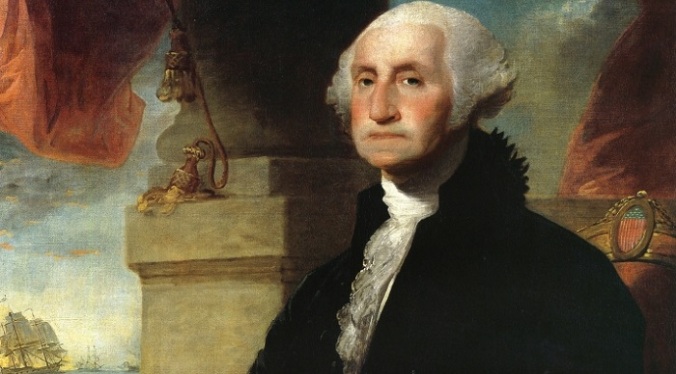
Christ Church in Alexandria, Virginia—the city where I and my family live— announced that it will take take down a memorial plaque  marking the pew where Washington sat with his family.

“The plaques in our sanctuary make some in our presence feel unsafe or unwelcome,” church leaders said. “Some visitors and guests who worship with us choose not to return because they receive an unintended message from the prominent presence of the plaques. Many in our congregation feel a strong need for the church to stand clearly on the side of ‘all are welcome- no exceptions.”

The unspoken but implied rationale is that George Washington was a slave-holder, and that this outweighs everything else. Never mind that the entire white population when he was alive believed that blacks were a lower breed of human. Never mind that it would have been literally impossible to grow up in agrarian, slavery dominated Virginia as a member of the plantation class without embracing slavery. Never mind that Washington continued to ponder the injustice of the practice, and eventually decided never again to buy or sell another slave while advocating slavery’s eventual abolition.  In his will, Washington left directions for the emancipation after Martha Washington’s death, of all the slaves who belonged to him.  Never mind that.

Never mind that without George Washington’s courage, leadership, aversion to excessive power and astonishing charisma and trustworthiness, there would be no United States of America. Continue reading

Morning Ethics Warm-Up, 10/19/2017: Gwyneth’s Mom, Harvard’s Airbrush, Salon’s Favorite Conservatives

Yes, I KNOW it’s Thursday, but I meant to use this song yesterday, but didn’t, because I thought it was Tuesday…

GOOD MORNING!

1 We have several Ethics Train Wrecks barrelling along. The Harvey Weinstein Express is still picking up expected passengers, like Harvard University’s Hutchins Center for African and African American Research. The Executive Committee unanimously voted to award Weinstein the 2014 W.E.B Du Bois medal for contributions to African and African-American culture. In the midst of complaints by the African American community that Hollywood was slighting black artists and themes in its films, Weinstein’s Miramax studio had stood out as a notable exception.

The same professors voted Tuesday night to rescind the honor in the wake of the Weinstein’s (long-known but only recently publicly exposed) sexual predator proclivities, announcing in a statement: “We have voted unanimously to rescind the Du Bois Medal awarded to Mr. Weinstein in 2014. We stand with the women who have courageously come forward to fight for themselves and indeed for all of those who have experienced similar abuse.”

Wrong, and cowardly. What does sexual harassment have to do with African American culture? The mania among progressive missions groups to insist that only those who satisfy all broad progressive agenda mandates are worthy of any honor is why the nation’s continued celebration of Jefferson, Washington and other founders is hanging by a thread. Did Weinstein deserve the award in 2014? Yes, I assume. Has anything changed regarding the producer’s contributions to black culture through his movies? No.

I covered this substantially identical situation here, in 2015. Continue reading

Morning Ethics Warm-Up, October 10, 2017: Post-Columbus Day Edition

Good Morning.

1 The rhetoric against celebrating Columbus Day is at bottom an attack on American values and the nation itself,  making the case that the culture should bask in eternal guilt and shame for the crime of existing. It has always been thus: I heard the counter-Columbus claims when I was a kid and living in Boston, where you can’t throw a spitball without hitting an Italian or a Catholic. Then, however, there were sufficient numbers of responsible elected officials who put those ignorant and warped arguments in their place—the trash. Now, the path of least resistance reigns.

We celebrate Columbus because he brought European culture and civilization to the New World, making our nation possible. He was the butterfly flapping his wings in the Amazon, in Chaos terms: without Columbus, everything might be different. One thing that would not be different, however, is that the stone age cultures that lived in the Americas would not have prevailed, thrived and survived. Blaming Chis for the inevitable destruction of primitive cultures when more advanced and ambitious ones arrived, as they were going to with or without Columbus, is scapegoating of the worst kind.

We also celebrate Columbus because of the good and important things his first voyage symbolizes: mankind’s constant search for knowledge; the bravery of explorers; the visionary who dares to challenge conventional wisdom.

We have not, so far at least, renamed Martin Luther King Day as Victims of Adultery Day. Columbus was a man of his time, working for a brutal regime. He did many things that were wrong even by the standards of the time. Irrelevant. He opened the door  from the Old World to the New, and made the United States of America possible.

That’s worth celebrating.

2. Robert E. Lee  High School in San Antonio wins some kind of weasel award for responding to pressure to de-honor that racist slave-owner Robert E. Lee by renaming it LEE High School, with LEE being an acronym meaning Legacy of Educational Excellence High School. Pretty impressive, that: managing to be cowardly, irresponsible, and deceitful, all at once. Capitulating to the Left’s statue-toppling, historical airbrushing mania is wrong; doing so while not really doing it is worse. Keep recognizing the General, or don’t.

Who wants people like this teaching their children?

3.  ESPN  didn’t think it was necessary to suspend  anchor Jemele Hill  for tweeting that the President of the United States was a white supremacist, but when she dared to suggest that advertisers boycott NFL teams that forbade the kneeling stunt currently killing NFL  fan loyalty, ratings, ticket sales and popularity, that really crossed some lines. The network suspended Weeks after she expressed outrage at the ownership of the Dallas Cowboys and Miami Dolphins for making a “No-knee” policy for its players.

“Jemele Hill has been suspended for two weeks for a second violation of our social media guidelines,” ESPN said in a statement. “In the aftermath all employees were reminded of how individual tweets may reflect negatively on ESPN and that such actions would have consequences. Hence this decision.”

Ethics Alarms is on record as holding that Hill should have been disciplined for the anti-Trump tweet, but I sympathize with her here. She had every reason to believe that she had received special dispensation to air her progressive, resistance, Black Lives Matter advocacy using her ESPN visibility as a platform, especially after Disney’s CEO admitted that she hadn’t been disciplined because she was black.

ESPN’s standards are as incoherent as the cause of the kneeling players. They send mixed signals to employees and viewers, satisfying no one, and creating a chaotic culture undermining their own business, which is, remember, covering sports. Continue reading

Morning Ethics Warm-Up, 9/17/17: My Ethics Gig For The Boy Scouts, Dallas Heads Down The Slippery Slope (I Told You So!), More Sign Language Follies And Misbehaving Marshalls

GOOD Morning!

1 In an earlier Warm-Up, I criticized the needlessly distracting signers for the deaf who stood by gesticulating and mugging as various officials communicated safety measures for the public as hurricanes approached. Belatedly I ran across a YouTube entry from 2012, in which the poster happily commented that “Interpreter Lydia Callis steals the show during Hurricane Sandy press conference.” Interpreters are not there to “steal the show,” and the fact that so many of them think they should compete with the main speakers for audience attention proves my point.

They should stand off-camera, and in the venue, away from the podium.

Then there’s this guy:

From the Times:

As Hurricane Irma charged toward Florida, officials in a county on the state’s west coast held a news conference to inform residents of mandatory evacuation orders for those most at risk. “We just need you to be safe,” Robin DiSabatino of the Board of County Commissioners in Manatee County said at the Sept. 8 briefing. She urged those in low-lying areas and flood zones to seek higher ground and consider staying at shelters.

But for residents who were deaf or hard of hearing, the message was quite different: “Pizza,” the interpreter appeared to sign. Then, “Bear monster.”…

“It was atrocious,” said Howard A. Rosenblum, the chief executive of the National Association of the Deaf. Mr. Rosenblum, who is deaf, said through an interpreter in a phone interview that the association considered what happened a violation of the Americans With Disabilities Act. “We believe that Manatee County failed to provide information to the deaf and hard-of-hearing community to the same extent that it provided to all others,” he said….

The interpreter, identified by the county as Marshall Greene, could not be reached for comment.

Nicholas Azzara, a spokesman for the county, said in an email that Mr. Greene, who is a lifeguard for a county-run beach, has a brother who is deaf. Mr. Greene was asked to sign because there was little time to find an interpreter before the news conference.

It’s not unusual for family members of the deaf to have only a rudimentary understanding of American Sign Language, said Beth Barnes, a certified sign language interpreter who has several deaf family members, including her parents.

No, but it is unusual for a signer who agrees to translate crucial information for deaf viewers to not know what the hell he is doing. Greene defenders, quoted this morning on HLN, said that he was just trying to help out, and host Robin Meade, not having one of her smart days, muttered that the “poor guy” wasn’t doing a bad job “intentionally.”

Oh! That’s all right, then!

The ethical values being breached are trustworthiness, responsibility and competence. Greene is the passenger who volunteers to fly the airliner with a stricken crew and flies the plane into the ground nose first. Good intentions don’t matter. He volunteered for a job he was incapable of performing competently.

2. I don’t spend a lot of time saying I told you so, but it would be gratifying to receive some “I shouldn’t have doubted you” notes from all those readers who mocked me for suggesting last year that the slippery slope created and smoothed by the historical cultural airbrushing mobs on the Left would eventually lead to Founders like Washington, Jefferson and Madison.

Here is a Facebook post  from Dallas School District member Dustin Marshall, no relation to Marshall Greene (I will be applying to change my last name accordingly, probably to “Lee”…) Continue reading

Accumulated Ethics Notes On The Charlottesville Riots, The Statue-Toppling Orgy and The Confederate Statuary Ethics Train Wreck, Part 3 Of 3: Potpouri! [Continued]

  • Grandstanding as always, Nancy Pelosi proclaimed that all of the Confederates honored in the Capital Gallery should come down. How odd that this never occurred to her when she was Speaker of the House and the Democrats held the Senate and the White House.

The Gallery is exactly the kind of enclosed public space for display that the statue-topplers argue should house the controversial statuary, places where their context can be considered outside of the public square. They don’t mean it, though. They want the statues hidden away, so nobody will see then without searching for them like Indiana Jones.

  • It was nice of Duke to show just how calculated and hypocritical this sudden eruption of horror at long-standing monuments is. While the school is capitulating to students by removing another statue of Lee from its chapel, there seem to be no plans to tear down the statue of George Washington Duke  a Confederate soldier and a slave owner. Duke’s son, Buck, gave a large endowment to  what was then called Trinity College, and in appreciation, the school changed its name to Duke University. And this happened in the twenties, which proves that the real objective was to salute Jim Crow—or so we are being told now.

Duke was named after a confederate soldier and a slave owner, meaning that by the Left’s logic the entire school is a memorial to white supremacy and slavery. But the students who happily agreed to have his name appended to their life forever are traumatized by a campus statue of General Lee. Continue reading

Accumulated Ethics Notes On The Charlottesville Riots, The Statue-Toppling Orgy and The Confederate Statuary Ethics Train Wreck, Part 3 Of 3: Potpouri!

The Charlottesville  fiasco combined several ethics train wrecks, as I mentioned before, creating The Perfect Ethics Train Wreck. We have the airbushing away historical figures now out of favor ETW, the progressive anti-free speech ETW, the long-running 2017 Post Election ETW, which involves the news media’s determination to blow up any word or deed by the President, large, small, ambiguous or insignificant, into a justification to remove him. We have the burgeoning “pro-violence as long as it is against the far right caboose,” and the “Let’s figure out what the motives were behind specific statues, regardless of whether they were legitimate heroes or admired historical figures in the times in which the lived” cattle car. And, of course, the intensifying assault on free expression locomotive, bolstered by the guilt by association diesel engine.

What a mess. It is made worse by the fact that many of these rooted in fascinating and nuanced ethics problems, but being discussed on line and elsewhere by  single-minded, narrow-view, partisan, doctrinaire, hypocrites and  fools.

I’m going to root through some of the wreckage now…

  • Former African American NBA star and freelance social commentator Charles Barkley weighed in on the controversy by saying, “Who the hell cares about Confederate statues?” Of course, the vast majority of Americans don’t: it’s like the Washington Redskins. The controversy is driven by small, intense minorities forcing people to take sides over issues that they never thought about before. Adds conservative blogger Allahpundit:

“Remember, 62 percent told Marist that statues honoring leaders of the Confederacy should remain in place as historical symbols. That includes a plurality of blacks (44/40). If you nudge people to state an opinion on whether CSA monuments should stay or go, you’ll get a divide but one that leans strongly towards leaving them in place. If you include a “there are more important things to worry about” or “eh” option, the numbers that are effectively in favor of the status quo can only rise. Most people, I suspect, just don’t care much either way. In the end, to Barkley and to many, many others, we’re arguing about scenery.”

But apathy and ignorance don’t mean that important principles are not at stake, or that we are not facing a dangerous slippery slope. The blogger continues,

There’s peril in that, though, if you believe firmly in leaving the statues in place. The number of people who feel passionately about smashing monuments may be small but they’re motivated and have a defensible argument that these are tributes to white supremacy more than to the Confederacy or “gallantry” or whatever. If they succeed in pressuring local governments to remove them, the “eh” contingent (which includes Barkley) will flip the other way: “Now that they’re gone, there’s no sense obsessing over them anymore. What’s done is done.” The politics of “what done is done” are slippery here, easily mutating potentially from justifying the pro-statue position to the anti-statue one. Which, I guess, is why we’re destined for a big public argument over it despite wide apathy towards the subject across the population. Dedicated believers in leaving the statues alone know that if they don’t push back diligently, the tear-’em-down contingent will prevail through sheer agitative will.

Cultures can take tragic and destructive turns when a radical minority steers the ship after the majority shrugs and says, “Oh, let them have their way.” Freedom of thought, expression and communication often die by millimeters. Continue reading

Accumulated Ethics Notes On The Charlottesville Riots, The Statue-Toppling Orgy and The Confederate Statuary Ethics Train Wreck, Part 2 Of 3: Amy Alkon Loses Her Mind

Part One is here.

Perhaps the scariest capitulation to the Confederate statue hysteria is Amy Alkon, the usually astute and level-headed blogger, advice columnist and political correctness foe (her book is called “Good Manners For People Who Sometimes Say Fuck“). I often quote her and cite her blog, which in some ways is similar to Ethics Alarms.  Tragically, this issue has both lobotomized and hypocritized her:

Not “Foolish” To Remove Confederate Statues From Public Squares — It’s What We Do To Be Decent Human Beings And Fellow Americans To Black Americans

That “so foolish” remark is how the President put it — and, as usual — as John McWhorter pointed out on CNN, it comes from an impulse appropriate to a 12-year-old boy.

There’s the argument some are dragging out that Jefferson owned slaves (so shouldn’t we yank his statues and pictures, too?). I’m disgusted by that; however, it’s a side note to what he was to this country — to all he gave to this country. So, no, I’m not for going around the country and doing searching background checks on all the subjects of monuments and pulling them down.

Having monuments to confederate leaders in public squares, however, is like naming a school “Hitler Junior High.”

It’s a horrible slap in the face to black citizens and it makes me sadder than any of the stuff that we’ve seen in the news lately.

Yes, disgustingly, people are actually fighting to have monuments up that glorify people who believed blacks to be inferior and fought to the death to protect that view and the shameful capture and enslavement of other human beings that went with it….

What? What hysterical, historically ignorant social justice warrior has a cocked gun at Amy’s head, making her type crap like this? Let’s see:

1. It is foolish…short sighted, destructive, presentist, hysterical, knee-jerk—to remove “Confederate statues” by which Suddenly Stupid Amy really means “Individuals who at some point in their career performed bravely or ingeniously in the Confederate army, or on the side the Confederacy.” Are monuments to President John Tyler, who served in the Confederate cabinet, Confederate monuments? Tyler is the one who decided that the Vice President should become President, not just acting-President, when a President dies in office. I’ve visited his home in Virginia; we honor him on President’s Day.

If Tyler hadn’t made his stand for the continuity of government, Lyndon Baines Johnson, the masterful liberal Democrat who moved heaven and earth to pass the Civil Rights Act, would almost surely never have been President at all. Every American should raise their eyes heavenward in thanks to Tyler’s statues and monuments, especially African Americans. Were his honors raised to emphasize Jim Crow? Hardly. Jefferson Davis was a distinguished statesman based on his public service before the civil war, just as Pete Rose was a record-setting baseball player before he got himself thrown out of baseball for gambling. Pete’s statue is justified for his on-field achievements, just as Davis’s honors can be justified by his that had nothing to do with the Confederacy.

2.The President’s words are typical of a twelve-year old. Those criticizing him for properly standing up for his nation’s historical record, complex human beings and major figures in our history who are not just good or bad but an amalgam of influences, upbringing, the times and regions in which they lived and the circumstances under which they made crucial choices, and for seeing immediately the perils of forced cultural amnesia may be more articulate—it isn’t hard—but have failed a test of citizenship that he has passed with flying colors.

3. The fact that Thomas Jefferson was not only a slaveholder but one who repeatedly raped a slave who did not have the power to say “no” while he was extolling her “inalienable rights” is no “side issue.” How breezily Alkon, a fierce feminist, abandons her values so she can oppose Donald Trump!

Yechh.

Alkon is taking the “No True Scotsman” fallacy in her teeth. “We must pull down the statues and memorials of supporters of slavery because they are insults to African Americans, but Jefferson isn’t really a supporter of slavery.” No, he was also a moral coward, a liar, a thief, and perhaps the biggest hypocrite in American history.  Forced to choose, I’ll take Robert E. Lee over Jefferson for character every time. However, Tom wrote our mission statement as a nation, defined our values in his words (though not his conduct), and managed to pull off the Louisiana Purchase.

Those achievements are worth every honor we have given him. The thesis behind the statue assault, however, is that only the bad stuff recognized in hindsight matters. Amy’s rebuttal to those who rightly recognize the unethical nature of that assertion consists of shouting “That’s ridiculous!” She doesn’t have a legitimate rebuttal. There isn’t one. Continue reading

Accumulated Ethics Notes On The Charlottesville Riots, The Statue-Toppling Orgy and The Confederate Statuary Ethics Train Wreck, Part One

As an introduction, I have to say that this episode, which has quickly turned into an ethics train wreck of sweeping and perhaps catastrophic proportions, frightens me as few issues do. It has become a danger to free speech, to cultural diversity, to liberty, education, historical fairness, cultural cohesion and  common sense. It appears to be the metastasis of all the demonizing rhetoric, self-righteous pandering and virtue-signaling, and totalitarian-minded efforts to remold the past in order to control the future. The level of contempt, hate and intimidation being focused on those who—like me—are attempting to keep the issues in perspective by analyzing complex and emotional ethical components in context is causing the fervor involved to approach  that of unthinking mobs. The damage done by the worst mobs of the past, however, were mostly confined to a restricted region, or, like The Terror in France or the Red Scare here, were immediately repudiated one the fever broke. I’m not sure that this fever will break, at least not before it breaks us. It is the perfect storm of self-righteous fanaticism, as the anti-Trump hysteria collides with Obama era race-baiting and victim-mongering, both of which have run head on into the mania for air-brushing history to remove any mention of events, movements, attitudes or human beings that “trigger” the perpetually outraged of today.

Social media has magnified the intensity of this already deadly storm, by allowing once intelligent people to throttle their brains and judgment into mush by confining their consideration of the issues to partisan echo chambers. Daily, I am embarrassed and horrified by what I read on Facebook by people who I know—I KNOW—are capable of competent critical thought but who have completely abandoned it to be on the “right” side, where facile, half-truths and lazy conclusions are greeted by a myriad “thumbs up” and “hearts.”

And I am angry–contrary to popular opinion, I’m not usually emotionally involved in the issues I write about; like Jessica Rabbit, who isn’t really bad (she’s just drawn that way), I’m not usually as intense as I seem. I just write that way—that I am so tangential and impotent that what see so clearly has little persuasive power at all, because I’ve frittered away my opportunities to be influential in a thousand ways.

I have never allowed futility to stop me, though, because I have spent a lifetime banging my head against walls.

Here are the ethics observations I’ve been accumulating since the first torches were lit in Charlotte:

  • Please watch this video, from Ken Burn’s “The Civil War”:

I was moved when I first saw this, which was in the documentary’s final chapter, and I am moved still. The old Union soldiers moaned when they saw the men who had tried to kill them, and who had killed their friends and comrades, re-enacting their desperate open field march into deadly artillery. Then they dropped their arms and met their former foes, and embraced them.

These men didn’t think of the former Confederates as traitors, or racists, or slavery advocates. They, like the Union veterans, were just men of their times, caught up in a great political and human rights conflict that came too fast and too furiously for any of them to manage. They were caught in the same, violent maelstrom, and knew it even 50 years earlier. Soldiers on both side wrote how they admired the courage of the enemy combatants they were killing, because they knew they were, in all the ways that mattered, just like them. It was the Golden Rule.  After the war, these soldiers who had faced death at the hands of these same generals, officers and troops, did not begrudge them the honor of their statues and memorials, nor their families pride in the bravery of their loved ones.

Yet now,  self-righteous social justice censors who never took up arms for any cause and in many cases never would, employ their pitifully inadequate knowledge of history to proclaim all the Civil War’s combatants on the losing side as racists and traitors, and decree that they should be hidden from future generations in shame. We have honored men and women for the good that they represent, not the mistakes, sins and misconduct that are usually the product of the times and values in which they lived. In doing so, we leave clues, memories, controversies, differing vews, and stories for new generations to consider and better understand their own culture and society, and how it came to be what it is.

Those who want to tear down monuments to the imperfect, whether they know it or not, are impeding knowledge, perspective, wisdom, and understanding. They want only one view of history, because they will only tolerate one that advances their ideology and values—just as the Americans of the past believed in their values. Foolishly, I suppose, they trusted future generations to act on their own ethical enlightenment without corrupting the historical record. Continue reading