
I don’t think I agree with this comment regarding the post about how a photograph of Senator Obama smiling next to Louis Farrakhan came to be hidden from public view until now, and how its reappearance has launched speculation on the Right that Obama was elected by a public unaware of his radical, anti-white proclivities. It is a very interesting comment, though, and raises several excellent issues about how actions, motives and truth interact. I may author a detailed rebuttal in the comments, but the core question this raises is this: To what extent does the fact that an action was taken to hide something serve as material evidence that there that something that needed to be hidden?
The results of the Ethics Alarms poll asking what the photo proved, incidentally, was that 86% of those voting believed that it proved nothing regarding Obama’s feelings to toward Farrakhan at all.
Here is johnburger2013‘s Comment of the Day on the post, The Obama-Farrakhan Photo:
Methinks our faithful ethics blogger is being, according to our friends across the pond, a bit “cheeky”, hoping to inspire a lively debate, knowing fully well that a photo of Trump with David Duke would be conclusive evidence that the present Chief Executive Officer of the US is merely waiting for his hood to come back from the cleaners so that he can don it and go out for a fun night on the town.
For me, the real ethics issue is not the photo, but that Congressional Black Caucus leaned on a journalist to kill its publication and the journalist capitulated. Other Bill, VPJ and Charles Marschner are correct: publication of the photo (probably) would not have changed the 2008 election results.
But, let’s ask the bigger question: Why kill it?
First, who is Askia Muhammad? According to Wikipedia, he is a poet, journalist, radio producer, commentator, and a photojournalist. He has served as the editor of Muhammad Speaks and as the head of the Washington office of The Final Call, the official newspapers of the Nation of Islam, which incidentally, is the organization headed by the right-honorable Louis Farrakhan, from Chicago, IL. (Who else was from Chicago? Might it have been a little-known senator but rising star in the Democrat party? Hmmm.) Continue reading
 Ethics Alarms
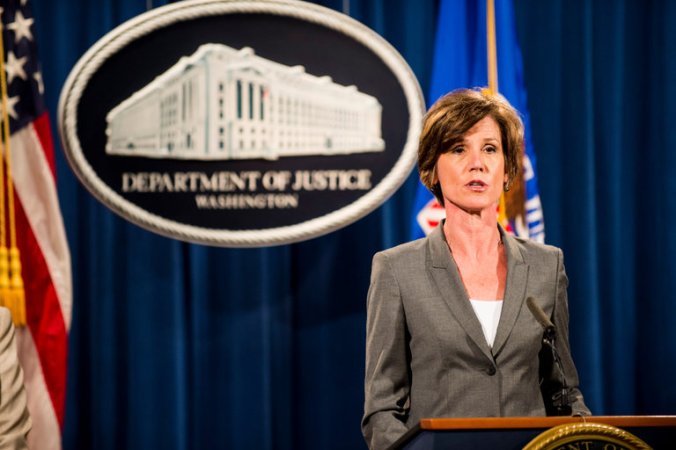
With so much loose talk about impeachment going around (and by “loose” I mean “inexcusably ignorant”), texagg04’s review of the Constitutional standard for the removal of a President is a gift to readers of Ethics Alarms, and one of the most interesting and informative comments ever to appear here.
He was reacting to a New York Times op-ed, cited by another commenter, by political scientist Greg Weiner (no relation) titled, “Impeachment’s Political Heart,” in which the author concluded,
Having studied the issue myself, I immediately rejected Weiner’s analysis (which still is worth reading in its entirety) on the ground that a constantly evolving standard of what is a “high crime and misdemeanor” simply means that Presidents can be impeached for behaving, or governing, in ways that enough members of Congress, the news media and the public don’t like. That is what is being advocated now, and that approach would undermine our democracy, the power of elections, and the office of the President.
My gut response, however, is wan and insubstantial compared to tex’s masterful historical review and astute analysis, which (whew!) reaches a similar conclusion.
Here is texagg04’s fascinating Comment of the Day on the post, “Reluctant Additional Ethics Notes On A Manufactured “Crisis”: The Comey Firing Freakout”…I’ll have one brief comment afterwards: