Unethical Quote Of The Month: Wonkette Writer Rebecca Schoenkopf

juanita

I can absolutely see Bill Clinton doing this (then, not now) and not even thinking of it as rape, but thinking of it as dominant, alpha sex. I can see a LOT of men doing that during that time period, before we started telling them in the ’80s, “hey, that is rape, do not do that.” I can see YOUR NICE GRANDPA doing that, back then…I think good men can rape, and be sorry, and not do it again. This is very bad feminism…To sum up, I think Bill Clinton could very well have raped Juanita Broaddrick; that it doesn’t make him an evil man, or irredeemable (I’m Catholic; we’re all forgiven, if we’re sorry, and Broaddrick says Bill Clinton personally called her up to apologize). It doesn’t even necessarily make him a bad feminist — you know, later, once he stops doing that.

  Rebecca Schoenkopf, writing in the progressive blog Wonkette, talking about Juanita Brodderick’s rape accusation against Bill Clinton

Broaddrick’s claims are back in the news, now that it was noticed that the Hillary Clinton website quietly pulled its statement about the victims of sexual assault having “the right to be believed,” Clinton’s jaw-dropping assertion—given her despicable role in silencing and discrediting Bill’s various victims—that Ethics Alarms discussed when it was first made.

I awoke to multiple rightish blogs, and Ann Althouse, who is dead center, going bonkers over this piece, and rightly so. My initial query is, why only right wing and moderate blogs? Is the left this corrupted by Bill and Hillary? (Okay, that’s rhetorical: the answer is “Damn right they are.”) When did it become progressive to argue that “good men can rape”?

I thought that was a misogynist pig position scrawled on the walls of a troglodyte’s cave.

Good men do NOT rape. Ever. Rape—do I really need to say this?—is signature significance. It was in the 80s, it was in the 60s, it has always been. If you rape (and if you defend rape), you’re not good, you’re not ethical, and you’re not trustworthy. And–do I really have to say THIS?–you’re not just a bad feminist, you’re a phony feminist. (By the by way, you gotcha-masters out there: I am not saying that there is anything wrong with a lawyer defending an accused rapist, like Hillary Clinton did. That is not defending rape itself.)

So why aren’t the indignant, politically correct, feminist, war-on-women-deriding left-leaning web sites, commentators and bloggers collectively retching at the Wonkette post? Explain that to me, someone. Explain why it isn’t evidence that integrity hasn’t died in their skulls, and is stinking up their ethics like a dead rat under the floor-boards. Continue reading
How People Rationalize Being Close-minded: A Case Study

close_minded

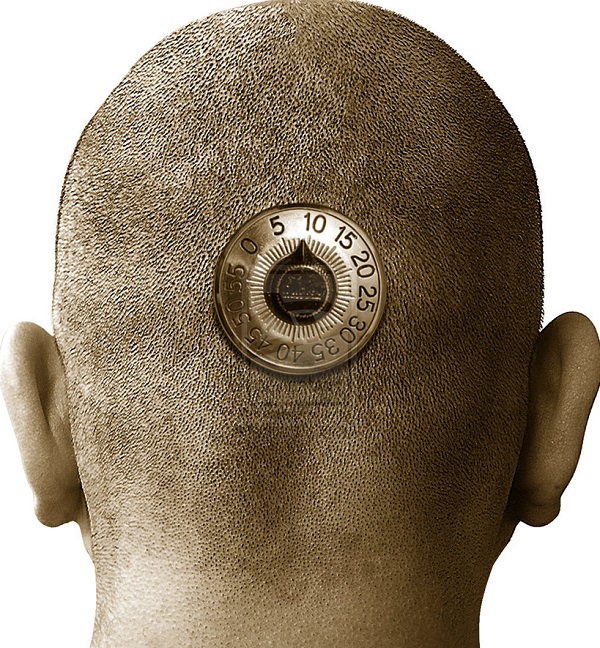
For “close-minded,” you can substitute ignorant, knee-jerk partisan, misguided, arrogant, stupid, reckless,naive, easily-manipulated, or just stubbornly wrong.

I owe Ethics Alarms expatriate Barry Deutsch for pointing me to this; on weekends I often check out the blogs and websites, and sure enough, on his own blog Alas! Barry was once again discussing the issue that was in part responsible for his contentious departure here—the issue of how comfortable on-line forums should be for participants. Though Barry has his own—typically nuanced, too-equivocal for my tastes—views on the topic, the post I want to feature is one he linked to, a blog called Apophemi. In a post about why the blogger avoids participating on the so-called “rationalist” forum “Less Wrong,” which appears to be a major source for the writers of “Big Bang Theory,” he argues for, as translated by Barry and others—he needs a translator—“safe places,” meaning web forums where certain ideas, topics and positions will not or cannot be discussed. He writes (I warned you, remember);

“I am reasonably confident (insert p value here) that this attitude is self-replicating among people who are accustomed to being at risk in a specific way that generally occurs to marginalized populations. (I cannot speak for people who may have a similar rhetorical roadblock without it being yoked to a line of social marginalization, other than that I suspect they happen.) This would mean that rewarding the “ability” to entertain any argument “no matter how ‘politically incorrect’” (to break out of some jargon, “no matter how likely to hurt people”) results in a system that prizes people who have not been socially marginalized or who have been socially marginalized less than a given other person in the discussion, since they will have (in general) less inbuilt safeguards limiting the topics they can discuss comfortably. In other words, prizing discourse without limitations (I tried to find a convenient analogy for said limitations and failed. Fenders? Safety belts?) will result in an environment in which people are more comfortable speaking the more social privilege they hold. (If you prefer to not have any truck with the word ‘privilege’, substitute ‘the less likelihood of having to anticipate culturally-permissible threats to their personhood they have lived with’, since that’s the specific manifestation of privilege I mean. Sadly, that is a long and unwieldy phrase.) Environments for discourse which do not allow/encourage what I’m calling “discourse without limitations” are frequently (that I have seen) trash-talked in the context of environments which do allow/encourage that type of discourse.”

I guess this would be “trash-talk,” then: Apophemi is rationalizing echo chambers, close-minds and intellectual laziness. Continue reading