 The smoking gun Bill Cosby deposition took place over four days in September 2005 and March 2006, during which time the comedy icon answered questions in a lawsuit alleging sexual assault filed by Andrea Constand, a former basketball operations manager at Temple University. Cosby settled the case, we now know, to avoid the testimony of several women who were prepared to back Constand with similar stories of being sexually assaulted. The deposition did not become public until it was revealed this month by the Associated Press and the New York Times.
Here is a fascinating exchange from that deposition:
Constand’s lawyer: Do you feel that you are a good person?
Cosby: Yes.
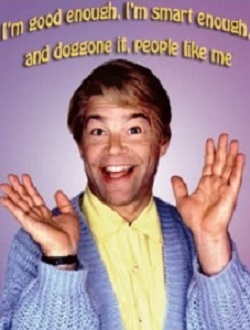
With this, Bill Cosby illustrates one of the more common and troubling rationalizations, #14 on the Ethics Alarms list, Self-validating Virtue:
A corollary of the Saint’s Excuse is “Self-validating Virtue,” in which the act is judged by the perceived goodness of the person doing it, rather than the other way around. This is applied by the doer, who reasons, “I am a good and ethical person. I have decided to do this; therefore this must be an ethical thing to do, since I would never do anything unethical.” Effective, seductive, and dangerous, this rationalization short-circuits ethical decision-making, and is among the reasons good people do bad things, and keep doing them, even when the critics point out their obvious unethical nature. Good people do bad things sometimes because they are (or were) good people, and because of complacency and self-esteem begin with a conviction, often well supported by their experience, that they are incapable of doing something terribly wrong.
All of us are capable of that, if our ethics alarms freeze due to our environment, emotions, peer pressure, and corrupting leadership, among many possible causes. At the end of the movie “Falling Down,” the rampaging vigilante played by Michael Douglas, once a submissive, law-abiding citizen, suddenly realizes what he has done. “I’m the bad guy?” he asks incredulously. Indeed he is. All of us, no matter how virtuous,are capable of becoming the bad guy…especially when we are convinced that we are not.
Very few people can admit that they are not good people. Public polls suggest that over 90% of Americans think they are the most ethical people they know. I am certain Cosby was sincere in his answer. His complete absorption by this rationalization explains the apparent astounding hypocrisy between his words, public image and private life. Cosby doesn’t believe he has done anything wrong. How could he? He’s Bill Cosby, and Bill Cosby is good.
Indeed, Cosby embodies the kind of person described by Michael (Jeff Goldblum) in “The Big Chill”:
“Nobody thinks they’re a bad person. I don’t claim people think they do the right thing.They may know they do dishonest or manipulative things……but think there’s a good reason for it. They think it’ll turn out for the best. If it turns out best for them, it is by definition what’s best.You also come up against a question of style. My style may be too direct. Perhaps given my style I seem more nakedly……opportunistic or jerky or… – Whatever. All that’s happening is I’m trying to get what I want. Which is what we all do, but their styles are so warm……you don’t realize they’re trying to get what they want. So my transparent efforts are more honest and admirable….Don’t knock rationalization. Where would we be without it? I don’t know anyone who can go a day without two or three rationalizations. They’re more important than sex.”
Well, let’s say that for Bill Cosby they are exactly as important as sex.
 Ethics Alarms