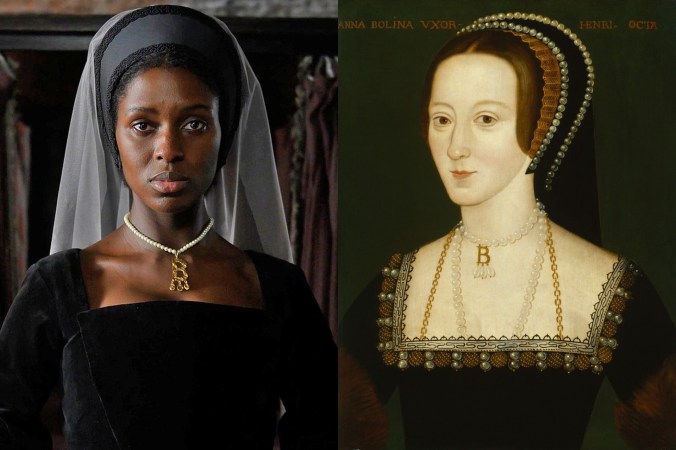
Oh, I just love this Comment of the Day by Curmie, who was AWOL from the ethics comment wars for far too long, and whose return recently has made my heart soar like a hawk. I love it for many reasons, including, of course, the fact that it is well written and enlightening, far more so than my post that prompted it, which focused narrowly on the double standard of applauding the having a performer of one race portray another, but only when it’s the “right” races involved.
As with my posts about ethics issues in another lifetime passion, baseball, I know that many readers nod off when the framework is theater. But the conceit of Ethics Alarms is that the ethics issues and process of analysis are often universal regardless of where the dilemmas and conflicts pop up. As it happens, baseball and theater happen to be two realms that I know a lot about.
But not as much as Curmie, at least as far as theater is concerned. I had hoped that he would weigh in on the casting of a black actress as Anne Boleyn, and he did.
Here is Curmie’s Comment of the Day on the post, Casting Ethics: “Anne Boleyn” And Discriminatory Double Standards.
***
Literally two minutes after reading this post, I saw that Katori Hall had been awarded the Pulitzer Prize for Drama for her play The Hot Wing King. I don’t know the play—its Off-Broadway run was cut short by COVID, and as far as I can tell it hasn’t been published.
I do, however, recognize her name as the playwright of The Mountaintop, in which the two characters are Martin Luther King, Jr. and an employee of the Memphis hotel in which he is spending what he doesn’t know is his last night on earth. (Spoiler alert: she’s really an angel preparing him for what is to come.) It is a good, borderline great, play: by turns moving, humorous, and incisive. But what comes immediately to mind is the production by a student group at Kent State University, in which a white actor was cast as King. The director, of course, claimed the casting decision wasn’t a gimmick. (Newsflash: it was a gimmick.)
The original idea was to alternate the role between a white and a black actor to be, in the director’s words, “a true exploration of King’s wish that we all be judged by the content of our character and not the color of our skin.” The black actor had to drop out of the production, and the white one played the role throughout the run.

 Ethics Alarms