Ethics Quote of the Week: James W.Hudson

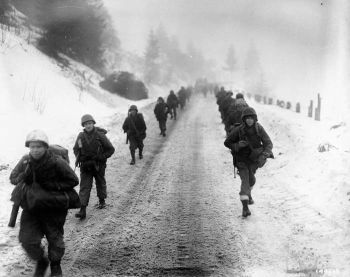
Who ARE those guys?

“Tell the world about your guy in the rocking chair who was once gung ho, climbing mountains and dodging a ruthless enemy bent on his torture and destruction. Climb on his knee yourself, if you must, but get his story.”

—-James W. Hudson, as quoted by the Washington Post in his obituary today. Hudson, 93, was an OSS operative during World War II who was dropped behind German lines to set up an intelligence network and disrupt supply networks.

James Hudson was one of those guys for sure. Continue reading

Comment of the Day: “The Death of Ryamond Zack”

The story about the Alameda firefighters and police, as well as many citizens, standing useless on the shore as a suicidal man slowly drowned continues to receive  outstanding commentary. Here is the most recent, from Peter, doing some follow-up and pointedly critical analysis: 

“ABC asked Alameda Fire Division Chief Ricci Zombeck  whether he would save a drowning child and he said: “Well, if I was off duty I would know what I would do, but I think you’re asking me my on-duty response and I would have to stay within our policies and procedures because that’s what’s required by our department to do.”

“This quote essentially makes any indefensible defenses, or apologetics for how big and scary the victim was, moot. Perhaps they should make off-duty the new on-duty by assigning first responders to permanent off-duty roles. At least then they would go in after a drowning child. Continue reading

Flashback: “What Hugo Alfredo Tale-Yax Can Teach America”

The Late Hugo Alfredo Tale-Yax

[Not many people were checking in on Ethics Alarms when I wrote this post in response to yet another example of bystanders choosing to do nothing when a human being was in peril. Some of the comments to the Alameda post, those making excuses for the 75 faint-hearted or apathetic citizens in that city who would rather gawk at a tragedy than try to stop it,  caused me to recall the essay, which explores related issues.  I wrote it, but I had nearly forgotten about the story; when I re-read it today, I got upset all over again.Here, for the second time, is “What Hugo Alfredo Tale-Yax Can Teach America.”]

The one with the premium-grade ethics alarms bled to death on the sidewalk. The people who never had theirs installed at all took pictures. Is this the way it’s going to be? Continue reading

The Death of Raymond Zack: No Heroes, Only Bystanders

50-year-old Raymond Zack waded into the surf on an Alameda, California beach and stood calmly in the 54-degree water, apparently waiting to die. His suicide took nearly an hour, but eventually he drowned, with no rescue attempts from any of the 75 San Franciscans who gathered on the shore to watch the entire tragedy.

Why didn’t anyone try to rescue the man?

Apparently it was because nobody was paid to do it. You see, stopping Zack from killing himself wasn’t anyone’s job.

The media’s focus in reporting yet another disturbing incident with echoes of the murder of Kitty Genovese has been exclusively on the inert Alameda police and firemen who witnessed Zack’s suicide. “Fire crews and police could only watch,” wrote the Associate Press.

What does the AP mean, “they could only watch”?  Were they shackled? Held at gunpoint? Were all of them unable to swim? They didn’t have to watch and do nothing, they chose to watch and do nothing, just like every one of the bystanders who weren’t police or firemen chose to be passive and apathetic when saving a life required action and risk. Continue reading

OH NO! Political Correctness Got Me!

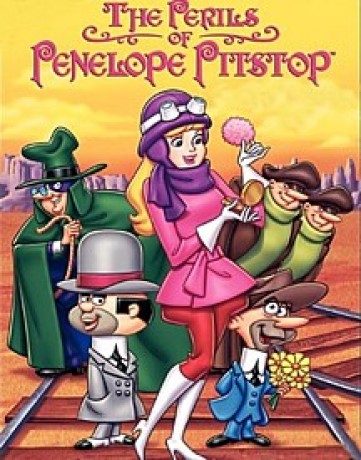
Late last night as I was battling worry and insomnia, my TV remote transported me to the Cartoon Network where I encountered, for the first time  in 40 years, a minor Hanna-Barbara animated series called “The Perils of Penelope Pitstop.” Like all Hanna-Barbara shows, but especially the Saturday morning variety, “Penelope” was crudely drawn and aimed its humor at the lowest common denominator: compared to it, Woody Woodpecker is Faulkner. Drawn in by the comforting sounds of great vocal artists of the era like Mel Blanc and Paul Winchell, however, I watched about ten minutes of the show and realized, to my horror, that I now found it offensive…and not for the reason that I found it annoying in 1970 (it is, after all, moronic).

The plot of  every episode of “The Perils of Penelope Pitstop” (a spin-off of H-B’s more successful but just as repetitious and silly “Wacky Racers”) was the same. A female auto racer who is also a blonde, helpless bimbo with a Southern accent is stalked by a villain called “The Hooded Claw,” voiced by the great Paul Lynde.  The Hooded Claw, for no discernible reason,  concocts elaborate plots to kill Penelope, but is foiled, at the last second, every time. The cartoon is an obvious riff on “The Perils of Pauline,” the famous Pearl White silent movie cliffhanger serial in which each segment ended with the heroine tied to a railroad track or falling to earth dragging a collapsed parachute. Yet I found it impossible to appreciate the cartoon’s meager charms because of the loud clanging of  ethics alarms in my brain. Why is the only woman in the show portrayed as a walking, talking Barbie Doll? And why are kids being encouraged to laugh at a woman being stalked by a homicidal maniac? Because he’s an inept homicidal maniac? What could possibly be funny about stalking, an insidious phenomenon that every year leads to multiple murders?

“Oh my God,” I thought. “I’m politically correct!Continue reading

Flashback: “Ethics Test at McDonald’s”

Background: The McDonald’s beating and video story reminded me of another ethics essay arising out of a McDonald’s incident, one that I was personally involved in. This post first appeared on The Ethics Scoreboard in 2006, and reading it again, I realized it was one of the first times that I used the ethics alarms imagery that became the basis for this blog. The incident that inspired the essay still troubles me. I wish I could blame McDonald’s for the callousness that my 2006 experience and last week’s incident in Maryland exposed, but unfortunately, our problem relates to the Golden Rule, not the Golden Arches. Here is “Ethics Test at McDonald’s”:

Life gives ethics tests like pop quizzes. You often get no warning, and if you’re thinking about something else, you might not even realize the test is going on. Continue reading

Are Citizens of Warring Nations “Innocent”?

No.

“Innocent” and “civilians” apparently go together like a horse and carriage, if one is to believe the cliché used with increasing regularity by journalists, bloggers and even elected officials. The instance that finally provoked me to write about the irresponsible acceptance of this falsehood was the gratuitous appropriation of it by a sportswriter, who, if I understand him correctly, feels the United States has no standing to object to baseball star Barry Bonds’ lying and cheating because it dropped atom bombs on “innocent civilians” in Hiroshima and Nagasaki. (The sportswriter neglects to mention that these act occurred during wartime; perhaps he doesn’t know.) The exoneration of civilian citizens for the acts of their governments is a relatively new phenomenon, one happily endorsed by the habitually politically correct. It is untrue, and it is time to blow the whistle. Ethics foul. Continue reading

Child Abuse, Animal Abuse: Why We Must Judge

Ignorance, fear and a lack of inherent respect for living things is a disastrous combination, as demonstrated by a horrible story out of  Toombs County, Georgia.

At the end of January, animal rescue personnel were alerted that Alice, a 6-year old dog, was living in a 5’x8′ box, constructed of wooden boards and tin. The only sunlight that the dog could receive came through the slats and the chicken wire that covered the box from above.
Her food–mostly white bread, buns, and the occasional table scrap, was dropped in from above, as was her water. The floor of the box was caked with years of feces and urine.

The owner of the home told the rescuers that the Alice had been placed in this box because she was one of “those mean kind of dogs.” A pit bull. Continue reading

Ethics Scoreboard Flashback: “Death on Everest”, a Real Life “What Would You Do?”

[ The discussion in the earlier post today regarding ABC’s revolting “What Would You Do?” convinced me that I should re-post this essay about a real-life “What Would You Do?”tragedy, which originally appeared on The Ethics Scoreboard in 2006.  Entitled “Death on Everest,” It has been lightly edited to bring it up to date.]

As 34-year-old mountaineer David Sharp lay near death on Mount Everest, over 40 other climbers trudged past him on their march to the peak. All had oxygen with them, and a few even stopped briefly to give Sharp a few breaths. But still they climbed on, and Sharp perished. His demise on May 15, 2006 has gone into ethics lore alongside the infamous death of Kitty Genovese on March 13, 1964. Genovese was murdered outside her apartment building in Queens while thirty-eight neighbors watched and did nothing.
The two incidents stem from very different causes, however. While Genovese’s death was fueled by urban fear and apathy, a mass failure of courage and the willingness to assume responsibility in a crisis, Sharp was the victim of that universal ethics-suppressant, the powerful non-ethical consideration. Continue reading

The Facebook Founder’s Sinister and Unethical Hundred Million Dollar Gift

When is a hundred million dollar gift to help schools unethical?

It is unethical when it represents the power of money taking control of government. It is unethical when it induces politicians to breach their duty to obey the law. It is unethical when it demonstrates that the principles of democracy and law can be bought, sold, and distorted for a price.

In a shocking development last week that received very little thoughtful or critical coverage from the news media, Facebook mogul and co-founder Mark Zuckerberg gave the Newark schools $100 million in return for dictating how the schools are run. Zuckerberg, backed by Oprah Winfrey, another billionaire, who put the school governance sale on her TV show,  wants Newark Mayor Cory Booker to run them.  New Jersey Governor Chris Christie, who also appeared on the strange Oprah segment, has agreed in principle to make Booker the overseer of his city’s infamously bad school system. As for the fact that a New Jersey statute doesn’t allow the governor to put the mayor of a city in charge of its schools once the state has taken over control of them, well, money, not the law, rules in New Jersey, and that appears to be just dandy according to the state’s governor, Zuckerberg, Oprah, Republicans, Newark parents, news editors and citizens.

Meanwhile, that whirring sound you hear is Thomas Jefferson spinning in his grave. Continue reading