Tech And Terrorism Ethics: Apple Is Right. The Government Is Wrong.

FBI-APPLE

If, in some future nightmare scenario come true, the FBI needs to break the encryption on a private i-phone to find the secret code to defuse the Doomsday Machine  President Donald Trump set up after his mind finally snapped and he thought he was the Stay-Puft Marshmallow Man, I assume that Apple won’t stand on principle and will do what needs to be done to save the world. The current dilemma, however, is not that dire.

Although President Obama announced last year that he had decided not to pursue legislation requiring tech companies to give law enforcement access to users’ encrypted data, he proved once again that if you don’t like Obama’s promises, just wait a minute.  For last week, the FBI persuaded a judge to order Apple to create software that would help federal investigators crack into the iPhone 5C that terrorist Syed Rizwan Farook was using before he and his wife slaughtered guests at his company Christmas party in San Bernardino last December. Apple has vowed to defy the order.

Good. Continue reading
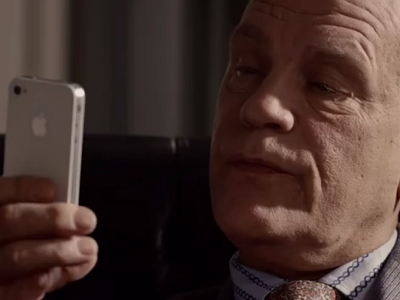
Watch Out, John Malkovich…You Can’t Trust Siri!

NO, JOHN! SIRI’S A SPY!!!!!

Wired reports that IBM has banned Siri, iPhone’s voice-activated digital assistant, its headquarters network. Employees trying to use John Malkovich’s new friend will be foiled. Why? IBM CIO Jeanette Horan told MIT’s Technology Review that the company worries that conversations with Siri might be stored somewhere. And indeed they are. Siri relays everything she hears to an Apple data center in Maiden, North Carolina. What happens to it then is anybody’s guess. Continue reading

Gizmodo and Gawker: Guilty, Greedy, and Unethical

Count Ethics Alarms with those who hope Gawker and its affiliated gadget site Gizmodo get as many books thrown at them as possible if the iPhone theft case gets to court.

As is always the case with Gawker, a completely ethics-free operation that has snickered about its participation in other outrages—such as its “Gawker Stalker” feature allowing people to alert the world to the exact location of any celebrity who is out, you know, trying to live—the sites management is crowing about doing wrong. “Yes, we’re proud practitioners of checkbook journalism,” tweeted Nick Denton, founder of Gawker Media. “Anything for the story!” Anything including fencing stolen goods, it seems. Nicely, the law often has a way of making unethical people wish they were more ethical, and this should be an example of that.

If you have somehow missed the story all the gadget geeks are tweeting about, Gawker released a scoop photo spread on Apple’s yet-to-be-released iPhone after an Apple engineer stupidly, carelessly and unethically left a prototype that he was entrusted with in a bar. It was found by someone who understood its value and who it belonged to, and who also had no more scruples than, well, Gawker. That meant that this California law applied… Continue reading

Ethics and Valleywag’s Apple Tablet Scavenger Hunt

Today is the day Apple will unveil its long-awaited tablet device, destined to be the most culture-altering advancement since, well, the Segway or something. Apple’s excited about it, anyway, and as is usual for that company, it has fiercely guarded against premature leaks regarding its newest innovation. In the process, it threatened to sue the proudly sleazy website “Gawker,” which had one of its misbegotten offspring, the Silicon Valley gossip site “Valleywag,” announce the “Apple Tablet Scavenger Hunt,” which dangled cash prizes for anyone who would uncover and leak tablet information to the website before January 27. Saying said it had “had enough of trying to follow all the speculation,” Valleywag published a bounty list describing what it would pay for and how much, ranging from $10,000 for photos to $100,000 for anyone who could put the tablet in its editors hands.

Apple’s lawyers responded with a cease and desist letter, saying that the scavenger hunt scheme violated trade-secret law and induced others to breach their confidentiality agreements with the company. Naturally, Gawker cried “First Amendment!”

It appears that the lawsuit won’t go forward, since the tablet announcement date is here; a pity, because a lawsuit couldn’t happen to a more deserving operation, and because a court decision would have clarified an interesting issue. We all know the media happily acts as information-launderers, accepting documents and secrets from lawyers, government officials and corporate whistleblowers who could be fired, disciplined, sued or prosecuted for leaking them, and publishing the illicitly acquired information with self-righteous pride, not to mention confidence, since the Constitution says the press can print anything. The issue is this: if the media can publish such leaks, can it also induce them directly with cash? Continue reading