Ethics Quiz: Peeps Ethics

peeps winner

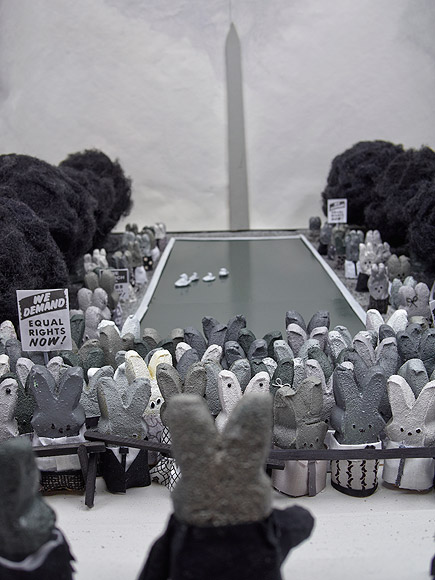
I collect sentences that can safely be said to have never been uttered before in the history of mankind, and encountered one this morning in a letter of complaint to the Washington Post. It read…

“To take a sacred and historic event in our nation’s history and depict it using marshmallow candy is highly insulting and offensive to the legacy of the Rev. Martin Luther King Jr. and to all those who worked, and continue to work, for racial justice in this country.”

Like all of the sentences in my collection, my favorite being my sister’s immortal, “That fish looks so good, from now on I think I’ll wear my bra on my head,” this one requires some context. The Post holds an annual contest for its readers around Easter, challenging them to submit the best diorama of a scene, using marshmallow peeps. This year’s winner was created by Matthew McFeeley, Mary Clare Peate, and Alex Baker, and involved meticulously painting the colorful bunny stand-ins for King and his throng  at the 1963 March on Washingtonian eight shades of gray to evoke the black-and-white photographs of the event.

Your Ethics Alarms Ethics Quiz, in the sadly neglected field of peeps ethics, is…

Is it unethical to use marshmallow candy as a medium to portray serious, solemn, or other events that many feel deserve respect and reverence?

I know my answer, but this time, I’ll hold my fire until I hear from readers. I’d also be interested in whether any events—Gettysburg…JFK’s assassination…the Lindbergh baby kidnapping…the Crucifixion…Pearl Harbor…9-11…  are ethically off-limits for peeps creativity as inherently offensive, or if this is just  an unappetizing mixture of “ick,” art, humor, and candy.
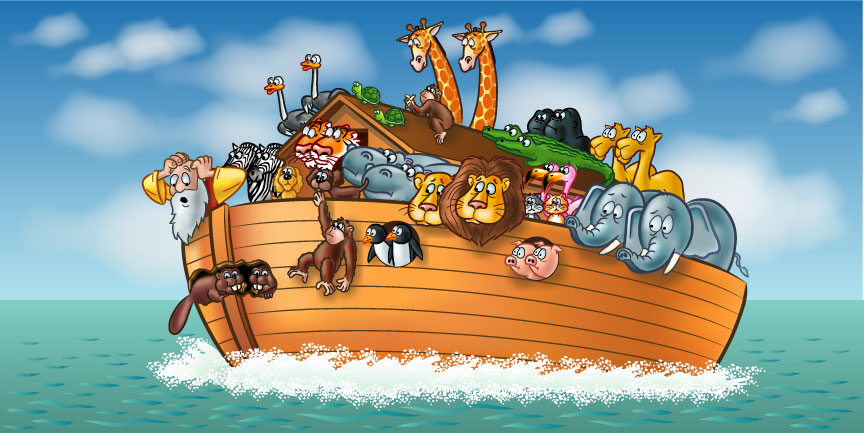
Comment of the Day: “Noah” Ethics

noahs-beaver-problem

Patrice, the Ethics Alarms resident Catholic theologian (and a dear friend), weighs in on the “Noah” controversy, in the this Comment of the Day on the post, “Noah” Ethics:

My undergraduate theology degree is indisputably from a Catholic perspective, although many of the scholars we studied were not Catholic, nor even Christian. I was required to take only 4 semesters of biblical literature, but even those few academic hours of biblical studies taught me enough about biblical analysis to understand how “The Bible” (which, as I’m sure you know, is just a mutually-agreed upon canon of literature which omits as much as it includes) came to be. I often think that it is a shame that true knowledge about biblical literature mostly seems to reside only in academia. Unfortunately, most of the zealots out there would and probably do regard biblical scholarship as an attack on God. The battles over the centuries over biblical inerrancy/infallibility/literalism are merely unread footnotes to most people. Continue reading

“Noah” Ethics

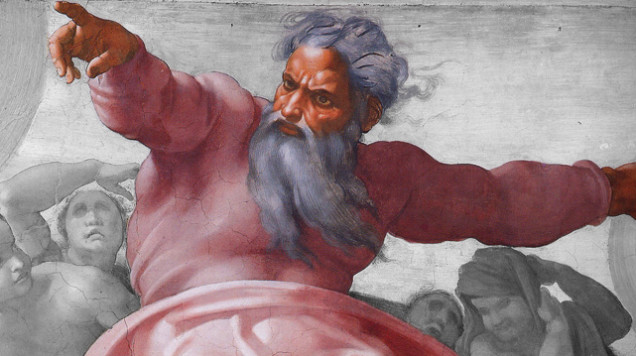
God

There is nothing unethical about “Noah,” the biblical spectacular that harkens back to the grand old days when Cecil B. DeMille reigned supreme. I haven’t seen the movie, and yet I can say that with absolute certainty. The reason I can say it that there is no way on earth that a movie about Noah and the Ark, in this day and age, could possibly be unethical. Even if the Old Testament were literal fact, which it is not, cannot be and in all likelihood was never intended to be, “Noah” couldn’t possibly be unethical, because it is a movie.

Never mind that of all the Biblical fables, with the possible exception of Adam and Eve, the tale of Noah is perhaps the most obviously impossible. The movie is art—of one kind or another—and does not represent itself as a documentary or make any factual assertions whatsoever. Thus it can be distinguished from a truly unethical film like Oliver Stone’s “JFK,” which intentionally misrepresented recent historical facts to “prove” a theory of the Kennedy assassination that was irresponsible and almost certainly false. Is “Noah” dishonest? It is impossible to be dishonest about a presumptively non-historical event about which there is no direct evidence whatsoever, and when there is no intention to deceive. Is it disrespectful? Art has no duty to be respectful. Is it fair? Fair to who? An artist’s stakeholders are those who appreciate his or her art. Does it do harm, or intend to? No. Continue reading

Ethics Dunces: Conservative Supporters Of Self-Appointed Censor Mom, Judy Cox

Judy Cox, saving America one T-shirt at a time...

Judy Cox, Wacko, saving America one T-shirt at a time…

Conservatives just can’t help themselves, it seems.

They can’t avoid undermining their historically vital role in counterbalancing the process of societal entropy and the degrading of individual liberty by central state control, by periodically making themselves and their philosophy look so hypocritical and ridiculous that their power to persuade is crippled. One traditional way conservatives ensure that they will be reviled and mocked by anyone under the age of 50, even when the are right, is their addiction to celebrating censorious wackos who seem to have been only recently unfrozen from the glaciers that have imprisoned them since around 1954.

This afternoon I watched with my jaw agape as a panel of “experts” on Fox cheered the ridiculous actions of Judy Cox, who was horrified to see T-shirts sale for in a Utah college town store  that sported the images of winsome women in scanty attire—you know, like one can see on television every hour of every day, but more dignified.  Judy, who was concerned for the sensibilities of her 18 year-old son (also known as “an adult”) and those like him whose morals will be permanently warped by such images, promptly had a cow:

“Cox said she complained about the window display to a store manager and was told the T-shirts couldn’t be taken down without approval from the corporate office. She then bought all 19 T-shirts in stock, for a total of $567. She says she plans to return them later, toward the end of the chain store’s 60-day return period. The shirts cost about $28 each on the website for PacSun, which sells beach clothes for teenagers and young adults.“These shirts clearly cross a boundary that is continually being pushed on our children in images on the Internet, television and when our families shop in the mall,” Cox said in an email to The Associated Press.”

That’s not all: Continue reading

Ethics Quiz: Smashing The “Million Dollar Vase”

Miami performance artist Maximo Caminero walked into the Pérez Art Museum in Miami, entered a special exhibit of sixteen ancient Chinese vases painted over in bright colors by celebrated Chinese dissident artist Ai Weiwei, picked up one of them, and immediately after a security guard instructed him not to touch the exhibit, allowed the vase to fall from his hands, shattering into bits. Some strange and interesting details of the incident:

  • He did not say “Oopsie!”
  • In fact, he admitted that smashing the pottery was intentional, and was his protest against in support of local artists like himself whose work is not exhibited at the museum while the art of international artists like Weiwei is.
  • The painted vase the 51-year-old artist destroyed is said to be valued at a million dollars. Each of vases used in the exhibit  are about 2,000 years old, dating back to China’s Han Dynasty. The artist often uses ancient  artifacts in his work, and has drawn criticism that his art consists of  defacing the original work or another artist.
  • Caminero says he thought the vases were cheap pottery purchased at Home Depot, and never suspected that they were so old or valuable. (And yet he still didn’t say “Oopsie!” Or “Doh!”
  • The museum HAS exhibited local artists.
  • He broke the vase directly in front of a series of larger-than-life photos of  Weiwei dropping and destroying another Han Dynasty vase.
  • He says that he interpreted the photos as a fellow artist’s provocative statement, encouraging him to break the vase.
  • Caminero was charged with criminal mischief, which is not a trivial charge. At very least, he would be required to pay for the destroyed item.
  • The news reports say that the museum is assisting police in the investigation. What investigation? The entire episode on video.

No, you can’t make this stuff up.

And our Ethics Alarms Ethics Quiz is this:

Should the justice system treat Caminero’s act  more leniently than any other act of deliberate vandalism resulting in the destruction of a million dollars worth of property?

To me, the answer is a resounding “no”:

  • The fact that the vandalism is a protest? It doesn’t matter why he destroyed the vase. It wouldn’t mitigate the crime even if he had something legitimate to protest, which he did not.
  • The fact that he didn’t mean to break a a million dollar vase, just a cheap one? Too bad. You break it, you’ve bought it.
  • The fact that the photo display behind him showed the artist doing exactly the same thing? Completely irrelevant. The artist was breaking his own vase.
  • The fact that the art that Caminero was destroying was itself created by a destructive act? Oh, there are a number of bad rationalizations he can use in his defense, and I wouldn’t be surprised if he uses them all. The protest was performance art, and punishing it severely infringes on free artistic expression! Punishing him is the ultimate hypocrisy, as he was calling attention to Weiwei’s own vandalism! He started it! Tit for Tat! It’s for a good cause! All ethically invalid.

Someone this stupid, irresponsible, self-centered and reckless is a danger to the community. His next protest may harm more than a vase.

I hope they throw the book at him.

________________________________________

Pointer: CNN

Sources: Miami Herald, C News

Funny! But Unethical: The “Fuck You!” Spite Statue

 FU statue

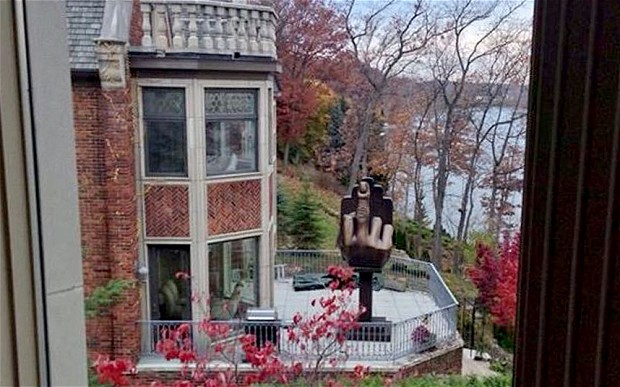
Lea Tuohy is suing her ex-husband, a wealthy Detroit strip club entrepreneur named Alan Markovitz, to force him to remove his idea of “karma.” This would be his 12-foot bronze statue of a hand with its middle finger extended, which he bought specifically so it could be positioned on his backyard balcony  to face the neighboring mansion where Tuohy lives with the man who (according to Markovitz) broke up their marriage.

Markovitz seems to have deftly avoided the specifics of Michigan’s public nuisance law, which  law professor Jonathan Turley discusses here. The artwork is carefully positioned so that nobody else in the neighborhood has to see it, just his hated next door neighbors, when they look out their window. It is quiet art, not obtrusive noise, or even a giant sign that says “Fuck you, Lea, and the guy you moved in with!” But in all honesty, there really is no question that this is the message he intends to convey, and is conveying, in a clever, under-stated, expensive and fanatical way. This, in itself, makes the message–which could also be translated as “I really, really hate you people!”—even more intense. Imagine buying a lakefront mansion and a $7000 bronze middle-digit just to make someone else miserable. Now that’s a grudge.* Continue reading

Is It Ethical To Take, Display and Publish Photos Of Sleeping Sunbathers Without Their Permission?

That’s what Tadao Cern did for his his art project, entitled Comfort Zone, to “explore how different surroundings can affect people’s behavior and inhibitions.”

When someone takes a photo of you in such circumstances, you suddenly find yourself in a gallery in front of  a giant photo of this, while your husband busts a gut:

Sunbather art

Of course it’s not ethical!

If you need some more hints as to why, read the tags below.

________________________

Pointer: Althouse

Source: The Guardian

Why Photographer Arne Svensen Is An Unethical Creep

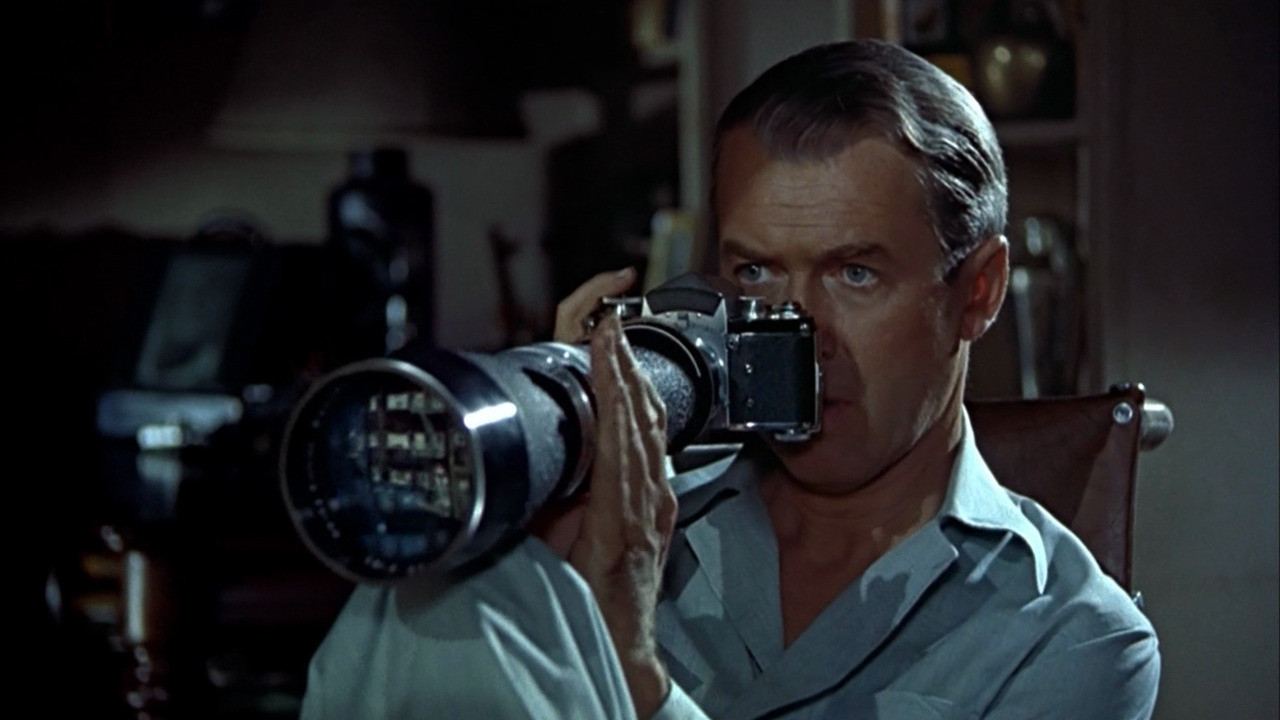
Photographer/artist/ Peeping Tom Arne Swenson as played by Jimmy Stewart in "Rear Window."

Photographer/artist/ Peeping Tom Arne Swenson as played by Jimmy Stewart in “Rear Window.”

“For my subjects there is no question of privacy; they are performing behind a transparent scrim on a stage of their own creation with the curtain raised high. The Neighbors don’t know they are being photographed; I carefully shoot from the shadows of my home into theirs.”

Believe it or not, this is how photographer Arne Svensen justifies his wildly unethical photographic peeping Tom excursions into his neighbor’s bedrooms for his own profit. This artist has provoked a controversy by 1) stalking the people who live in the New York apartment building across from his, 2) keeping a camera lens on them when they dare not to keep their windows shuttered as if they were vampires, 3) shooting photographs of whatever he sees that tickles his artistic sensibilities, fetishes or perversions, 4) choosing photos that do not show the faces of his subject victim, and 5) exhibiting and selling the results as artwork.

Amazingly, his neighbors object!

Let me cut to the chase here and be direct, because any minute now we are likely to find out that President Obama’s EPA has been secretly causing coal mine cave-ins and assassinating oil execs to forestall global warming, and that the President is outraged and just heard about it when we did, and will take strong action by telling the officials involved that they have to sit in the back during the next White House concert, and I’ll be distracted. Continue reading

Coming To A Ballot Box Near You: “The Naked Senator Principle”?


Go Ashley!

Go Ashley!

Ashley Judd, the accomplished Hollywood actress-feminist (and the non-singing sister in the singing Judd family), is seriously contemplating a run for the Kentucky Senate as a Democrat against Senate minority leader Mitch McConnell. There is a potential problem, however, implies the conservative “Daily Caller.” Judd will become the first serious contender for high national office who has appeared on screen numerous times in various degrees of nudity. The blog’s entertainment editor has done her research with no less an authority than MrSkin.com, and reports that Judd went topless for 1996′s “Normal Life” and went topless and bottomless in 1999′s “Double Jeopardy.” Meanwhile, in both 1996′s “Norma Jean and Marilyn” and 1999′s “Eye of the Beholder,” Judd went full frontal while also baring her comely tush. Ashley had a lesbian sex scene in 2002′s Oscar-nominated “Frida,” and “Mr. Skin”  categorized nine other scenes as “sexy,” and if you can’t trust him on such matters, whom can you trust?

We have learned that former porn stars can’t be middle school teachers or beauty queens, that art teachers can’t be seen painting pictures with their butts (even with paper bags over their heads) and that “the Naked Teacher Principle” decrees that those we entrust with the the shaping of young minds cannot be trusted to do the job if their naughty bits are just a mouse click away. Doesn’t it follow that there is a “Naked Senator Principle”? Surely internet nudity that was previously available at the Multiplex is a disqualification for Congress. Isn’t it? Shouldn’t it be? Continue reading

Yes, Putting Underpants on Michaelangelo’s “David” Is Unethical.

japan-David

So is putting a bikini on the Venus de Milo, in case you’re wondering.

The issue has been raised because a huge replica of the nude male statue was unexpectedly donated to a Japanese town, where it is unsettling some people and frightening others. Clothing “David” in a big Speedo or something has been suggested as a way to make the artwork more viewer-friendly.

Uh, no. Not all art will be welcome in every culture, and it may be that a mega-“David” in a Japanese park was a mistake. It is a work of visual art, however, and it is wrong for anyone other than the artist to alter or censor that artist’s creative work, especially when such a change renders the work of art risible. Putting underwear on “David” is as unfair and disrespectful as putting Groucho glasses on the “Mona Lisa.”

The town of Okuizumo has precisely two ethical choices, and no more: remove the statue and give it to someone else who will take care of it and appreciate it, or leave it alone.

Fruit of the Loom is not an option.

________________________________

Pointer: Lianne Best

Facts and Graphic: News.com.au