Richard Cohen, National Interests, and the Ethical Duties of the US to the World

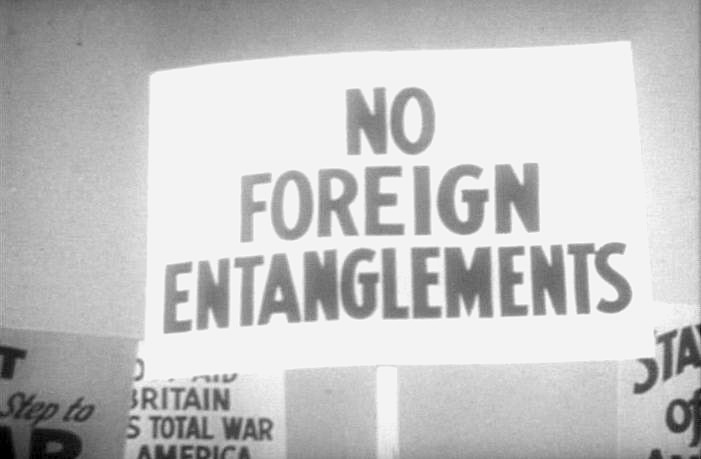
There used to be no columnist who infuriated me more consistently than Richard Cohen. Those were the hazy, golden days before I discovered E.J. Dionne, Paul Krugman and Harold Mayerson, however, whose rigid ideology virtually precludes objective analysis. Cohen isn’t biased, he’s just wrong more often than not. But he is also capable of bursts of moral and ethical clarity. Today was an example, as he took on the isolationist voices on the left and the right that make up a large component, if not the majority, of our elected leadership today.

Cohen begins by recounting a section from  Erik Larson ‘s book,“In the Garden of the Beasts,” about how the American foreign policy establishment in the Thirties resisted efforts by William Dodd, then ambassador to Germany, to protest the Hitler government’s increasing persecution of Jews. Humanity, and the U.S., paid a steep price for its inward-turning perspective after World War I, as we abdicated our traditional role as defender of liberty, freedom, democracy and human rights on the world stage. Continue reading
Unethical Quote of the Week: U.S. Secretary of State Hillary Clinton

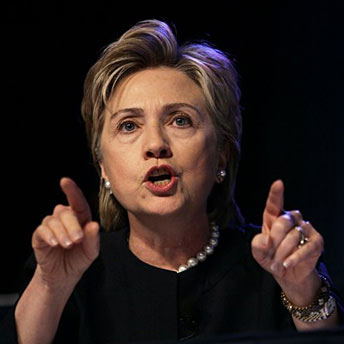
Hillary said something unethical? I'm shocked! Shocked!

“But the bottom line is, whose side are you on? Are you on Qadhafi’s side or are you on the side of the aspirations of the Libyan people and the international coalition that has been created to support them? For the Obama Administration, the answer to that question is very easy.”

—–Obama Administration Secretary of State Hillary Clinton, responding in a press conference to Congressional objections that the U.S. continued participation in attacks on Libya violates the War Powers Resolution—which it undoubtedly does.

Most of the objections to Sec. Clinton’s comments focus on her apparent hypocrisy; after all, this is the same woman who as a U.S. Senator in 2003 objected to “are you with us or against us” rhetoric from the Bush Administration regarding the Iraq war by saying,  “I am sick and tired of people who say that if you debate and you disagree with this administration somehow you’re not patriotic. We should stand up and say we are Americans and we have a right to debate and disagree with any administration.” But this isn’t necessarily hypocrisy: Hillary has a right to change her mind. What is unethical about her statement on Libya is that it is manipulative, unfair and dishonest. Continue reading

Exceptionalism and the United States of America’s Grand Ethical Dilemma

Today’s morning headlines were full of violence in Syria, Bahrain, Libya, and the threat of new conflict in Egypt, as popular uprisings against entrenched dictatorships continue to grow. As the U.S. tries to somehow avoid a lead role in the international intervention in Libya, the question looms regarding its responsibility to other nations whose people yearn to be free—or at least freer. As important as what America ultimately decides to do will be for the futures of these nations, the U.S. economy, and foreign relations, something far more important is at stake. These difficult choices once again challenge the United States to affirm or reject its ideals, the very essence of what has made America what it is.

We have come to these crossroads four times before. Continue reading