The Most Unethical 2017 Super Bowl Ad Is Yet To Be Revealed, But The Prize For The Most Shameless Is A Lock

http://www.youtube.com/watch?v=G6u10YPk_34

Of course, all Super Bowl TV ads by definition are horribly unethical, exploiting for commerce a professional blood sport that renders healthy young men brain-damaged for a drooling public’s coarse amusement. To Hell with all the ads I say. Still, some are worse than others.

History suggests that the obnoxious Audi commercial above won’t be the worst, but it nicks a wider range of ethical breaches than the typical Super Bowl ad. For that it deserves, at very least, a hardy Ethics Alarm Bronx cheer, or “raspberry”…

to wit…

Continue reading

[Update] Mission Accomplished, NPR: Classic American Folk Song Censored

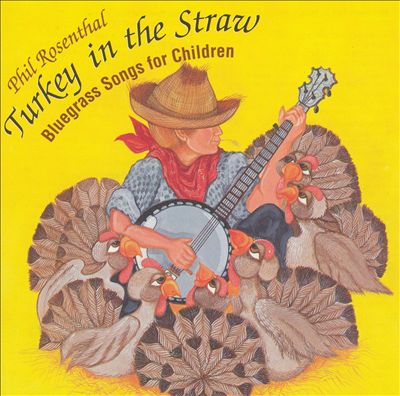
turkey in the straw

In May, National Public Radio carried an essay arguing that the old American folk tune “Turkey in the Straw,” long the melody of choice for ice cream trucks, was really “horribly racist.” Of course, a tune can’t be racist unless it is intended to communicate a racist message, which is impossible if nobody who hears the music discerns racial animus. NPR took care of that in a hurry. As soon as that new bit of imaginary racism surfaced, I knew that this grand old tune, a standard for square dances, country fiddlers, blue-grass bands and of course, the Good Humor truck, was on the way to oblivion. I wrote..

“You know the next step, though, because it is so familiar. Some race-huckster…will seize on NPR’s piece, and organize a Good Humor boycott, and the weak and principle-free corporate executives will fold immediately, issue an apology, and change the tune played by the trucks…”

Shortly after the appearance of the NPR piece and its progeny, Audi began running a TV ad that involved an ice cream truck playing…”Turkey in the Straw.” Someone, I don’t know who, maybe my predicted race-huckster, maybe some internal political correctness watch-dog, maybe an NPR fan, intervened, and now, “Turkey in the Straw” is gone, replaced by  the melody of “Pop Goes the Weasel.”

Mission accomplished, Race Grievance Hit Squad, NPR, Cultural Censors! American musical culture heritage is diminished, and a piece of music that entertained Americans of all races for centuries is on the way to extinction. You must be so proud.

I’m curious: what’s next on your hit list, “Huckleberry Finn”?
The Doritos Super Bowl Commercial

So obsessed was I with the Tebow Super Bowl ad that I temporarily forgot that there usually are one or more product ads that inflame the culture wars.  Sure enough, this time there were two: Audi’s “Green Police” commercial, which has political implications but no ethical ones that I can see, and the Doritos ad, chosen by post-game polls as one of the best and most popular. That one did raise some ethical issues, recently collected by conservative columnist and radio host Dennis Prager.

The spot begins with an attractive woman greeting a date at the door, and asking him inside as she gets ready to leave. She has a young son, four or five years of age, who is snacking on a bowl of Doritos. We ( and the child) see the male date’s face express some combination of excitement, lust and pleasure at the sight of the woman’s comely derriere as she walks into her bedroom. He then sits on the sofa, smiles at the boy, attempts to make pleasantries, and starts to munch on a Dorito. The child sternly slaps the man across the face, and says to him, menacingly, “Put it back,” referring to afore-mentioned Dorito chip. “Keep your hands off my mama…keep your hands off my Doritos,” he continues to the shocked date, getting nose to nose with him in the process. All the actors in the spot are African Americans.

Television commercials can be culturally damaging and irresponsible if they appear to approve, encourage, or endorse wrongful behavior and attitudes. Was this such an ad? Prager thinks so. Let’s examine his objections individually: Continue reading

Internet on the Dashboard: When Ethics is Impossible

What rationalizations does a computer company use to justify the development of a new dashboard device that is certain to cause accidents and take lives? The same ones, I suspect, that are employed by auto manufacturers to justify selling cars with the feature. Continue reading