
Hilary Swank Gets Nelly Furtadoed. And It’s Still Wrong

What's that, Mr. Kadyrof? You want me to give you a private ethics seminar for a half-million bucks? What!!! I am outraged! I spit on your filthy lucre! KIDDING!!!!!

I seriously considered taking the Ethics Alarms post on singer Nelly Furtado posted here in March and substituting actress Hilary Swank’s name for Furtado, and Chechen despot Ramzan Kadyrov for now-deceased Libya dictator Muammar Gaddafi. It is the same controversy and issue with the same result: an American performing artist sells her performing talents to a brutal foreign leader, and is bullied and shamed by human rights advocates and media critics into apologizing profusely and donating the large fee ( a million dollars in Furtado’s case, a reported half-million for Swank) to charity.

This was wrong in March, and it’s wrong today.

Earlier this month, Swank and other celebrities attended Kadyrov’s birthday bash in Chechnya. She was working. But while every other corporation and contractor, as well as the United States itself, can do business around the world without being held to the impossible standard of only accepting morally exemplary customers, Swank, like Furtado, Mariah Carey and others before her, was targeted for not doing the bidding of human rights activists and sacrificing her livelihood to be their billboard. The bully in this case in the Human Rights Foundation, which unethically brutalized Swank to achieve publicity for its own mission—a worthy one to be sure, but not so worthy that it justifies a PR mugging with a $500,000 loss to its victim. Continue reading

The Ethics of Singing For Muammar

Sing, Nelly---and charge him through the nose.

Singer Nelly Furtado has been attacked recently for accepting a million dollars in 2007 to entertain Muammar Gaddafi and his family. The idea seems to be that, as ringingly put by screenwriter Mark Tapper,

“It is quite simply willful blindness to claim that there is no moral dimension in the choice to perform privately for a monster like Gaddafi, and in being paid exorbitantly from funds no doubt stolen from his own people, or misappropriated from foreign aid or dirty deals.”

Furtado isn’t the only one who crooned for the Libyan dictator, apparently. Mariah Carey, Usher, Lionel Richie, Beyoncé and other performers also accepted big bucks to give Muammar and his family a good time.Furtado is donating her fee to charity in the wake of criticism like Tapper’s and Beyoncé has also donated the million that she received to charity, apologizing profusely. Mariah Carey is begging for forgiveness.

I’m glad that the stars are giving their money to worthy causes, and no doubt it is a good public relations move in a society where half-baked ethical notions become conventional wisdom before much thought has been applied to them. Nevertheless, Furtado and the rest did nothing wrong by entertaining Gaddafi. Continue reading

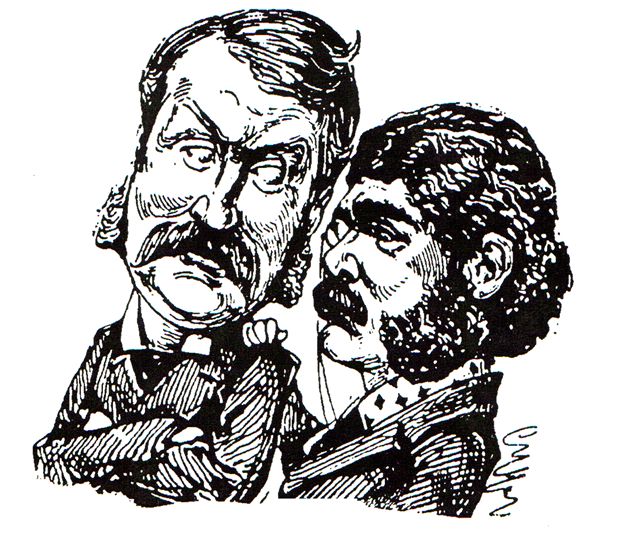
“Finishing the Hat”: Sondheim, W.S. Gilbert, and Expert Malpractice

Stephen Sondheim’s “Finishing the Hat” is a fascinating reflection on a remarkable career and the craft of making musicals by the greatest living master of the form. In the course of recounting his formative years, triumphs, failures, and duels with producers, authors and composers, Sondheim also critiques the lyrics of his predecessors, contemporaries and role models—as long as they are dead. In a nod to gentility or cowardice, the only living lyricist he subjects to his expert critiques is himself.

Sondheim is a tough judge, as one might expect from a composer/lyricist who meticulously measures each vowel sound and stressed syllable for maximum effect. He is also, by virtue of both his reputation and technical expertise, an influential one. The lyricists he grades highly in the book, such as Frank Loesser, Cole Porter and Dorothy Fields, are likely to have their reputations burnished by his praise, and those he slams, like Lorenz Hart and Noel Coward, will suffer by comparison. Because of this, Sondheim had an obligation, as a respected expert in his field, to make each case carefully and fairly. To his credit, Sondheim seems to recognize this, and all of his critical discussions of an individual lyricist’s style and quirks include specific examples and careful analysis. We may disagree with Sondheim as a matter of personal taste, but it is difficult to argue with his specific points, because they are backed up by examples, technical theory, and the weight of his authority.

It is therefore surprising and disappointing to see Stephen Sondheim slide into expert malpractice when he undertakes, clearly half-heartedly, a critique of the lyrics of W.S. Gilbert, of Gilbert and Sullivan fame. Continue reading