Laser Pointer Abuse: Why Ethics Gets Complicated

laser pointerThis month, the FBI announced that it was expanding a program rewarding anyone who reports an incident of an individual aiming a laser pointer at an airplane with $10,000. ( This use of the cheap lasers is a federal crime.) The bounty was previously offered in a handful of cities, but because it seems to have reduced the number of laser strikes on planes, it is being expanded nationwide.

Wait…is this really a problem? It’s several problems, in fact. The main problem is that laser pointers can, if the wielder of one gets “lucky,’ bring down an airplane. The related problem is that this country is littered with so many unbelievable assholes that we even have to discuss this….and imagine what other stupid, dangerous, irresponsible things they do when they aren’t trying blind pilots thousands of feet in the air.

Incidents where laser pointers interfered with the operation of commercial airliners have increased a ridiculous 1000% rate since 2005, when federal agencies started compiling statistics. Last year, there were 3,960 laser strikes against aircraft reported, an average of almost 11 incidents per day.

Some ethics-related thoughts:

1. There is no way around it: sociopaths, who are essentially ethics-free, are a constant threat and blight on society. Aside from the children involved, whose conduct can be chalked up to immaturity and flawed reasoning, the people who would aim a laser pointer at an airplane just for the hell of it are kin to those who set fires, vandalize buildings, create computer viruses and generally make life ugly and dangerous for the rest of us because they can. You can’t educate them or give them a sense of right and wrong. All you can do is make laws with harsh punishment for the stupid, destructive conduct these individuals engage in to give themselves a sense of power and importance. Ethics is irrelevant; their ethics alarms can’t be repaired, because they don’t exist. The laser-abusers  illustrate the maxim often quoted here that “When ethics fails, the law steps in.”

2. Anyone who uses a laser pointer this way and who is aware of the potential results is capable of much worse. This is signature significance, don’t you think? It is tempting to use such a crime as a justification for pre-crime: anyone who would do this is too stupid or too inherently anti-social to be trusted in a free society. Pre-crime, however, is a concept too prone to abuse, a slippery slope that the Constitution wisely precludes. I would, however, see no reason not to require a conviction of this crime to be disclosed to every potential employer, for all time. Nobody should trust someone who even once would risk causing an airplane to fall out of the sky because it would be cool, and I don’t care if the reason for the act was the lack of brain cells, IQ points, the sense God gave a mollusk or a missing conscience. I don’t want you in my neighborhood, near my family, or in my workplace. I don’t trust you. and I never will. Does this place a burden on you, if others feel as I do? Good, and too bad for you. Don’t try to shoot 757s out of the sky for laughs, and you won’t have the problem. Continue reading

Kids On Leashes: Final Hypotheticals

kids on leashes2

Not to beat a dead dog, but while conversing about this surprisingly contentious issue (here, and here) on Facebook with the ever-thoughtful and provocative Lianne Best (Ethics Alarms congratulations go to Lianne for being honored by NARAL as an Outstanding Advocate For Choice), I realized that I should have posed one more hypothetical for the enthusiastic child-leashers to chew on, to wit:

“Have you ever seen anyone in public with both a kid and a dog on leashes simultaneously?”

Would you do that? And if you wouldn’t, why would having a child on a leash without the dog be any better?

To which Lianne countered with an even better hypothetical:

“How about a parent walking in public with the child on a leash but the dog walking along without one?”

____________________

Spark: Lianne Best

Graphic: Baby Cottage Gifts


On Liberals, Dignity, Dogs, Signature Significance and Toddlers On Leashes

But they LIKE it!

But they LIKE it!

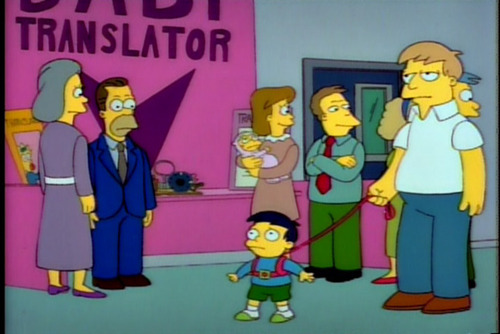
The damndest essays ignite furious debates here. I raised CNN’s mid-day quiz about parents walking children on a leash-–did I mention it featured a video of one mother dragging her prone harnessed child through a store like the kid was a sack of potatoes? I should have—-primarily because 1) it reminded me of “The Simpsons,” 2) because I was struck by the fact that ethics was never brought into a conversation that I would deem as concerning an ethics issue, and 3) because it was notable that CNN wasn’t talking about sunken Malaysian airplanes.

Still, I have been enlightened by the unexpectedly lively discussion, if not encouraged. In particular, this never struck me as an ideological issue, but it certainly seems to be one. Upon reflection, I should have predicted it, though this is not flattering to liberals.

I’ll return to this in a bit.

The defenses of the demeaning practice have been mostly pragmatic, which involves a utilitarian argument: “It works, and the ethical violations either don’t exist, or are too small to care about.” The most annoying defense so far has required  intentionally taking a statement in my post literally that also has an important figurative message, as well as misstating even the literal meaning, all to make it easier to dismiss the intended point. That’s some kind of record for straw men. Or would that be straw dogs? No, I think that’s something else.

The phrase in question was “whether it was fair, kind, respectful or right to treat your child like a cocker spaniel…” To make it easier to attack, my critic has changed that to “…to treat your child in a manner associated with the treatment of dogs.” Sneaky. It is true that dogs are typically kept on a leash, but that is only half the message, as fair readers will acknowledge. The term “treated him-her-them like a dogs/dogs” means, and has meant for a very long time, treating a human being in an inhuman, demeaning, humiliating, unkind, unfair fashion showing a lack of respect and making the human being in question miserable. The description has been used to describe both treatment that is seen in the treatment of actual dogs—such as substandard living conditions, lack of autonomy, domineering oversight, feeding of food not fit for human consumption, and in this case, use of a leash in public, as well as used to describe treatment that would never be literally possible with real dogs, such as too many typing assignments, refusal to give credit or bonuses for effective research, not allowing a family member a sufficient allowance, forcing a child to dress in old, outdated or unattractive clothes, etc. In the current case, both meanings apply, and focusing on just one is intentionally misrepresenting the issue.

As to whether the use of leashes on human children is demeaning, try this thought experiment: Would any white nanny dare to walk in public with two black children on a leash? How about the mother in a mixed marriage, in which the mother is blonde and the children are black? Would not the imagery of whites leashing blacks be inherently distasteful, regardless of the age of the African-Americans involved? Continue reading

Child Care Ethics And Leashes For Toddlers: CNN and Its Viewers Flunk An Ethics Alarm Test

Kids on leashes

It is constantly amazing to me that journalists so seldom identify obvious and critical ethics issues in the topics and events they cover. The rest is mixed emotions: this absence of ethics awareness is a serious culture-wide problem; then again, were this not so, I’d probably be in a different, and less stimulating profession.

Today I sat down to lunch as CNN engaged in a breathless discussion of whether using leashes on toddlers and even older children was a good idea, as it is either a growing trend among parents, or CNN was having a slow news day. The phone lines were open, and many viewers weighed in, with the primary camps expressing the following positions:

1. “If it makes children safer, then there is no reason not to do it. Safety is everything. Kids have been killed running into the street.  A leash will prevent that.”

2. “This shows the decline of child-rearing skills in the United States. If you can’t control your kid better than this, you are the problem.”

If the question of whether it was fair, kind, respectful or right to treat  your child like a cocker spaniel occurred to anybody in this discussion (I know the CNN staff never considered it), I saw and heard no evidence of this. Yet that is the central question, and it is an interesting one to consider. The fact that matters of human dignity, responsibility, respect, fairness, autonomy, kindness, proportion and prudence need to be balanced to answer the question at hand never came into the discussion, and those debating the issue demonstrated neither awareness of the competing ethical values, nor the ability to know how to employ them. Continue reading

A Futile Ethics Request To Anti-Gun Activists: Don’t Exploit Richard Martinez

Richard Martinez

Richard Martinez

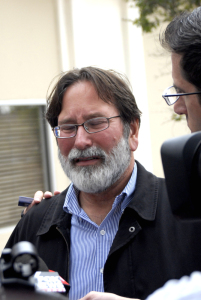
I am certain that plans are already in the works to trot out Richard Martinez, the grieving father of one of the victims of killer Elliot Rodger in his murderous rampage at the University of California in Santa Barbara, for service in hearings, at rallies, for fund-raisers, at protests and in anti-gun ads. The emotionally distraught father provided a ready-made media sound chomp in his CNN rant against anyone and anything that have, in his mind, prevented radical restrictions on guns, those who, in his view, contributed to the death of his son.

“What has changed? Have we learned nothing? These things are going to continue until somebody does something, so where the hell is the leadership? Where the hell are these people we elect to Congress that we spend so much money on? These people are getting rich sitting in Congress, what do they do? They don’t take care of our kids.My kid died because nobody responded to what happened at Sandy Hook. Those parents lost little kids. It’s bad enough that I lost my 20-year-old, but I had 20 years with my son, that’s all I’ll have. But those people lost their children at six and seven years old. How do you think they feel? And who’s talking to them now? Who is doing anything for them now? Who is standing up for those kids that died back then in an elementary school? Why wasn’t something done? It’s outrageous!”

I don’t blame Martinez for how he feels, but I will blame those who exploit him, and I know there is no chance that they won’t.

In 2013, we all saw how every Sandy Hook parent who was sufficiently enraged and camera-worthy fueled the shameless drive to use fear-mongering and exaggeration in the push to finally gut the Second Amendment, as anti-gun activists have so long wanted to do. Martinez is perfect, just as Cindy Sheehan, destroyed because her soldier son died in a war, was custom-fit for pacifists and anti-war advocates, just as a brain-damaged Gabby Giffords was ideal to have recite child-like generalities against firearms in Congress. Continue reading

Bergen Community College Shows Us Why Justin Carter Is Being Persecuted

Can't have this. Terrifying. Dangerous.

Can’t have this. Terrifying. Dangerous.

Remember Justin Carter? Last I checked, he was being tried for making a joke on Facebook, because of the culture of fear and speech monitoring created by the irresponsible hysteria over guns and terrorism.  He faces prison time. That this is a freedom-suffocating societal illness that threatens any and all of us is chronicled in Ken White account, and accompanying commentary, on the astonishing mistreatment of Bergen Community College Professor Francis Schmidt by the school, which was sent into a frenzy of terror because he posted to Google+ “a cute picture of his young daughter wearing a Game of Thrones t-shirt in a yoga pose next to a cat.”  Inside Higher Ed reports what happened next: Continue reading

Autonomy: The Ethics Alarm That Obamacare Should Be Setting Off, But Isn’t

fire_alarm

Autonomy. This is the ethical value, a sub-set of the “respect” section of the Josephson Institute’s Six Pillars of Character, that is suddenly absent from the value set of the New American Left. This is cause for concern to say the least, because autonomy is the very value that was the impetus for the nation’s founding, and that is at the core of the Bill of Rights as well as the “inalienable rights” that introduce Mr. Jefferson’s mission statement for our strange experiment in self-governance. Beginning back in Bill Clinton’s administration, advocates of a nationalized health care system, including President Clinton himself, began floating the historical and logical nonsense that Jefferson and the Founders would have enthusiastically supported national health care. This is, of course, a cynical lie if one is educated (as it was in Clinton’s case) or proof positive of complete unfamiliarity with, oh, everything about the Founders, their political philosophy, and political philosophy generally. Whatever the value of a national health care program, the idea that the government would presume to dictate how one managed something so personal and intimate as one’s own health would have horrified  every signer of the Declaration, from its author to Button Gwinett.

That Mr. Jefferson’s supposed followers—he is the Original Democrat, by most lights, would reach the point of maintaining that the public’s beliefs, opinions and attitudes must be bent to their will is a development that threatens the existence of United States society and culture as we know it. The recent flare in this emergency arrived via the mugging of Brandon Eich, ex-CEO of Mozilla, who was deemed by the liberal elite as unworthy of keeping his job (though Mozilla is an internet company and he is an innovator in the field) because he was not convinced of the rightness of same-sex marriage by the elite’s newly determined, and well past,  deadline—a deadline that such progressive icons as Barack Obama and Hillary Clinton also missed, but never mind. Conformity to Progressive Truth has become the order of the day, and woe be to any good citizen who dares to oppose it. Does this sound like freedom to you? “Choice,” to use a popular rallying cry in the protest against the “War against Women?” It doesn’t sound like freedom to me. Continue reading

Incompetent Elected Officials Of The Month: Chicago City Council

Rugby, my pure Jack Russell Terrier (though "pure" is an oxymoron with Jacks)

Rugby, my pure Jack Russell Terrier (though “pure” is an oxymoron with Jacks)

Laws affect our lives too much to be concocted by dolts. If elected officials are going to restrict our freedom, they have an obligation to do so only with good cause, careful consideration, precision, and after making certain that unintended consequences will be minimal.

On the other hand, elected official could just say “What the hell, let’s see how this turns out,” and be like the Chicago City Council, which passed an ordinance banning the sale of pure breed dogs.

This is as nice an example of good intentions gone stupid as we are ever likely to see. The intent is to cut off the supply of dogs from s0-called puppy mills, which are rightly regarded as too often cruel and irresponsible. However, in pursuit of that elusive goal, the city council didn’t bother to craft a law that addressed the problem effectively, or that even made sense.

Continue reading

Ethics Blindness: The Pro-Abortion Ethical Disconnect

To anyone who is capable of compassion and objectivity, the abortion controversy represents a classic ethics conflict: two ethically defensible positions based upon undeniable ethical principles that are in opposition. Both factions have their absolutist wings which would deny the other side’s interests, holding that either the life of the unborn ( abortion opponents) or a woman’s autonomy (abortion advocates)  is such a societal priority  that nothing should be permitted to compromise its primacy in any way. Yet the best solution to most ethics conflicts, if possible, is balancing, resulting in acceptance of a  reasonable middle position that acknowledges the validity of both interests.

Recent comments from prominent pro-abortion advocates are ethically troubling, because they suggest a complete denial that any valid interests on the other side exist at all. This signals a retreat from reason and fairness into zealotry and fanaticism, and it makes balancing not merely more difficult, but unimaginable.
In an interview on the cable station Fusion, Planned Parenthood president Cecile Richards had this revealing exchange (video above): Continue reading

Ethics Dunces: Conservative Supporters Of Self-Appointed Censor Mom, Judy Cox

Judy Cox, saving America one T-shirt at a time...

Judy Cox, Wacko, saving America one T-shirt at a time…

Conservatives just can’t help themselves, it seems.

They can’t avoid undermining their historically vital role in counterbalancing the process of societal entropy and the degrading of individual liberty by central state control, by periodically making themselves and their philosophy look so hypocritical and ridiculous that their power to persuade is crippled. One traditional way conservatives ensure that they will be reviled and mocked by anyone under the age of 50, even when the are right, is their addiction to celebrating censorious wackos who seem to have been only recently unfrozen from the glaciers that have imprisoned them since around 1954.

This afternoon I watched with my jaw agape as a panel of “experts” on Fox cheered the ridiculous actions of Judy Cox, who was horrified to see T-shirts sale for in a Utah college town store  that sported the images of winsome women in scanty attire—you know, like one can see on television every hour of every day, but more dignified.  Judy, who was concerned for the sensibilities of her 18 year-old son (also known as “an adult”) and those like him whose morals will be permanently warped by such images, promptly had a cow:

“Cox said she complained about the window display to a store manager and was told the T-shirts couldn’t be taken down without approval from the corporate office. She then bought all 19 T-shirts in stock, for a total of $567. She says she plans to return them later, toward the end of the chain store’s 60-day return period. The shirts cost about $28 each on the website for PacSun, which sells beach clothes for teenagers and young adults.“These shirts clearly cross a boundary that is continually being pushed on our children in images on the Internet, television and when our families shop in the mall,” Cox said in an email to The Associated Press.”

That’s not all: Continue reading