The Worst Humanitarian Award Winner of the Year

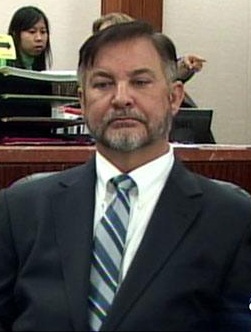
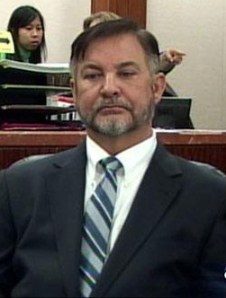
Michael Brown---wife-beater, humanitarian.

Michael Brown founded Houston’s Brown Hand Center, which specializes in the treatment of carpal tunnel syndrome. He is now on trial for assault, after being arrested last year for attacking his his wife, twisting her arm behind her back and, among other things, hurling his 2010 Joanne King Herring Humanitarian Award at her.

I have often thought that those who give out humanitarian awards for specific instances of good conduct have an ethical obligation to make sure that recipients conform to the definition of “humanitarian” in their overall conduct. One of the definitions of humanitarian is “ethical.” Official pronouncements that an individual is ethical can be very effective false advertising for the character of someone who is anything but. Mr. Brown illustrates my concerns.

By 2010, when Brown received his award, he had already pleaded no-contest in 2002 to aggravated assault for beating then-pregnant wife, Darlina Brown, with a bed post. Call me a stickler, but I think there should be an automatic “Beating a pregnant woman with bedpost” disqualification provision for humanitarian awards. Then, in 2006, Dr. Brown’s medical license was revoked after he tested positive for cocaine use. So to summarize, at the time he was deemed worthy of the honor of being the 2010 humanitarian of the year, Brown was already an admitted wife-beater and an ex-doctor found unfit for the continued practice of medicine.

What a guy!

How about a rule that if you try to kill someone with your humanitarian award, it is automatically revoked?

Too strict?


Integrity Check: Obama’s Embarrassing Transparency Pledge

President Obama is getting a mixture of ridicule and contempt from some pundits over the revelation yesterday that he accepted an award for transparency in secret. From Forbes:

“President Obama was scheduled to receive an award from the organizers of the Freedom of Information Day Conference, to be presented at the White House by “five transparency advocates.” The White House postponed that meeting because of events in Libya and Japan, and it was rescheduled…That meeting did take place – behind closed doors. The press was not invited to the private transparency meeting, and no photos from or transcript of the meeting have been made available. The event was not listed on the president’s calendar…Nor is the award mentioned anywhere on the White House website, including on the page devoted to transparency and good government. Were it not for the testimony of the transparency advocates who met secretly with the president, there wouldn’t seem to be any evidence that the meeting actually took place.”

I can guess why the President didn’t want to publicize the meeting: the same day, he had to go on television and explain why he hadn’t been transparent to the U.S. Congress about his military plans in Libya. Or perhaps he knew that the news was about to leak that the Fed had secretly sent billions in loans to foreign banks during the financial crisis, not telling the public because it would make them worried and angry. Or maybe it was the just the dawning realization that transparency in government is often neither wise nor safe, and that he was sick of being embarrassed by awards that only point  up the yawning chasm between Obama’s idealistic words and reality. (See: 2010 Nobel Peace Prize) Continue reading

Ethics Lessons From the Helen Thomas Meltdown

“The leaders of Wayne State University have made a mockery of the First Amendment and disgraced their understanding of its inherent freedom of speech and the press,” said 90-year-old ex-journalist Helen Thomas, when told that her alma mater, Wayne State, was ending the Helen Thomas Spirit of Diversity Award in response to her most recent anti-Semitic remarks. “The university also has betrayed academic freedom — a sad day for its students.”

A few lessons with ethical overtones can be gleaned from this latest development in the sad coda to Thomas’s long career: Continue reading

Dishonoring Honors: Tina Fey, Derek Jeter and the Death of Award Integrity

We should have seen this coming. Once the most prestigious award of all, the Nobel Peace Prize, was bestowed on President Obama because, to paraphrase Sally Field, “They liked him! They really liked him!,” it was clear that the whole concept of maintaining the integrity of awards was being abandoned. More dispiriting proof arrived yesterday in the fields of comedy and baseball, when the Mark Twain Prize, given to artists who have made major and significant contributions to American comedy, was awarded to Tina Fey, and the Gold Glove Award for the American League’s best fielding shortstop went to New York Yankees shortstop Derek Jeter. Continue reading

Ethics Quote of the Week: Alessandra Stanley

“The rule that newer shows need a break should be bent in one case: Conan O’Brien’s ill-fated stint as the host of “The Tonight Show” wasn’t the best of the year, by a long shot. His nomination for outstanding variety, music or comedy series is a little like President Obama’s Nobel Peace Prize — political, premature and meant mostly as an affront to his predecessor.”

New York Times TV critic Alessandra Stanley, properly tweaking the Emmys for nominating “The Conan O’Brien Show” for reasons that have nothing to do with its quality, which was spotty at best. Continue reading

The Ethics of Helen Thomas Awards

When does an honor start honoring the wrong values? This tricky ethical problem is now in the spotlight thanks to the sudden self-destruction of Helen Thomas, who blurted anti-Semitic sentiments to a Rabbi, on camera, in an impromptu interview.

There are journalism awards named after Thomas, including The Helen Thomas Award for Lifetime Achievement given by the Society for Professional Journalism. Now that Thomas has included among her life time achievements a demand that the Jews “get the hell out of Israel” and go back to Germany and Poland—you know: “where they belong,” what does her name on the award mean to future recipients? Is accepting it a tacit endorsement of her views? Or should individuals be assessed on the totality of their careers, and not solely identified with their inevitable missteps. no matter how reprehensible? The latter was a common theme of eulogizers at President Richard Nixon’s funeral. Continue reading

Rep. Kirk’s False Award

Thanks to Republican U.S. Rep. Mark Kirk’s revelation that he has been knowingly misrepresenting (or “lying about”) the nature of a military honor on his official biography for years, following close on the heels of the Richard Blumenthal scandal, we must answer the question: how much dishonesty should the public tolerate in candidates for the U.S. Senate?

How about “none”? Continue reading