Unethical Bank of the Month: Merrick Bank

Not feeling smurfy this morning, but I have to get a few issues covered with dispatch. First up….

The Merrick Bank is incompetent. (Just my informed opinion, now! Don’t sue me!) For reasons irrelevant to this post, I recently acquired a Merrick Bank credit card, and now have my first bill to pay. After an absurdly involved registration process (including a glitch in the programming that I already registered a complaint about—the website registration asks for a first and a last name, but not a middle initial or a suffix. However, the application for the card DOES include spaces for middle initials and suffixes. So to register to use the “convenient website” to manage one’s account, entering what is asked for, first and last names, results in an error message.

After 25 minutes of fighting with the automated Merrick phone zombie, I finally reached a human being who explained that I was supposed to include my middle initial in the “First Name” space and the “Jr” suffix where it asked for my last name. “Oh. And how was I supposed to know that?” I asked. “I can understand your frustration, sir…” Yeah, bite me. FIX IT, assholes.

After deciphering the stupid system (which included deciding on three secret questions) I got to my current charges page. It stated that I owed $645.60 and asked if I wanted to pay “entire amount owed.” However, there seemed to be no way to learn what the charges were that totaled up to that amount. All I could get was the record of $67.00 in charges.

Again I went through automated phone zombie hell and eventually asked of the human representative who appeared after my being on hold for ten minutes the simple question, “I want to pay the entire amount owed. How do I discover on your ‘convenient’ website what those charges are? What’s the secret link?”

First, the guy had a virtually impenetrable accent. He spoke like Balki Bartokomous (Bronson Pinchot) from “Perfect Strangers” trying to do an impression of Bill Dana’s José Jiménez character imitating Curly Howard in the Three Stooges’ Maharaja routine. Repeatedly I asked him to slow down and speak clearly, which he couldn’t do. On top of this, he couldn’t give me a straight answer to my question. Finally I gave up and ask to speak to Balki’s supervisor.


Continue reading

Ethics Dunce: Wells Fargo

I received the notice above in my email inbox two days ago. Wow! That deal looks almost too good to be true!

It was. When I examined the terms, I discovered that the bank had made a teeny mistake. It didn’t take a deposit of just 25 dollars to earn the $525 bonus. It required a deposit of 25 THOUSAND dollars.

Details, details.

That’s a three decimal point error. It doesn’t exactly engender trust in the bank’s staff, its management, or it quality control procedures, does it?

Wells Fargo has a notable dossier on Ethics Alarms, notably here, but also here, here and most recently here. And the hits just keep on coming: this was an item from yesterday: Wells Fargo Accused of Draining Customers’ Accounts Without Notice or Authorization in ‘Blatant Disregard’ of Consumer Loan Protections: Class-Action Lawsuit.

Yeah yeah, anyone can make a typo (don’t I know it!) but a bank’s business is getting numbers right. I would think that especially after its terrible publicity over the past several years, Wells Fargo would check and triple check a mailing that goes out to all of its depositors to make absolutely certain no unnerving mistakes are in the copy.

I would think that, and apparently I would be wrong.

Being a helpful, responsible customer, I sent a screen shot of the botched email to my banker at the local branch. I got no reply; I also never received any error acknowledgment from the bank.

They probably are still sending that promotion out.

The Surprise Return Of The Ethics Scoreboard, And “The Bank of America Teller and the Thumbless Customer”

Ethics Scoreboard

The Ethics Scoreboard was my first ethics website. It began operation in February of 2004, and became an archive on November 1, 2009, when Ethics Alarms took its place. For many years now—frankly, I’ve lost count—it has been unavailable on the Web because of an incompetent hosting service that took my money, took it down, and doesn’t permit any direct customer service contact. Last time I checked, the domain was unclaimed. I stopped looking for the Scoreboard because it depressed me, and I had hit a dead end in my efforts to get it back up.

Well, it’s back up, and I have no idea why or how. What a happy 2021 surprise! I suspect the original webmaster, my old friend Lauren Larson, is responsible, but if so, she never told me: I don’t even know how long the site has been live again. I learned about the resurrection from a wonderful man whom I met through the Scoreboard, Alek O. Komarnitsky, who sends out a holiday letter. This year, he wrote, “I am still on the Ethics Scoreboard!” and sure enough, there at the link was the last article I wrote about Alek.

There is a lot of material on the Scoreboard, some of which I am very proud of, and I thought it was all lost in cyberspace. For me, this is like finding a treasure trove of old family photographs in the attic. Thank you Lauren, thank you Alek, thank you incompetent hosting service, thank you whoever it was that did this! I will eventually get to the bottom of the mystery, but for now, I’m afraid to pinch myself to see if it’s a dream.

In celebration of the Return of the Prodigal Website, I now present one of the Scoreboard’s last posts, “The Bank of America Teller and the Thumbless Customer.”

Welcome back, Ethics Scoreboard! I really missed you.

Continue reading

Morning Ethics Shout-Out, 10/28/2020: “And Tyler Too…”

I am ashamed: when I listed my anti-depression playlist, I somehow managed to leave out one of the best and most exhilarating songs of the group: The Isley Brothers’ “Shout.” I apologize profusely.

1. Self-delusion is not ethical. When Ben Ferencz, the last surviving lead prosecutor at the Nuremberg trials, finally leaves us (he’s in his nineties now and still going strong), I will make him an Ethics Hero Emeritus. As the new Netflix documentary about his astounding and ethics-focused life makes clear, few have devoted the time and energy to the cause of human rights and justice any more intensity or longevity than Ferencz. My admiration of him is only marred by his advocacy for pacifism, which the last portion of the film highlights. Ferencz was instrumental in the creation of the World Court, a kind of standing extension of the Nuremberg Trials which the U.S. has, wisely, refused to participate in. The legal scholar speaks passionately for the  cause of eliminating war by substituting law and international tribunals. The idea is delusional on its face, and also cynically exploited by those who know the idea is impossible, but who support it as a way to impose world government, and the concomitant reduction in individual liberty that would necessarily entail.

As Ethics Alarms has discussed many times, one great weakness of ethics as a discipline is its drift toward utopianism, and its persistent destruction of its own credibility by advocating goals and standards that cannot be achieved, indeed, that defy history and common sense. Has anyone asked Ben Ferencz if he really believes that Nazi Germany, Imperial Japan, the USSR or current day North Korea and Iran would voluntarily submit to the edicts of a World Court? If he has, it did not make the documentary. One can understand why a man who has seen and experiences why Ferencz has during his long life would cling to the hope that some day war will be eradicated and peace will reign forever, but rejecting reality for comforting idealism does not, and never has, advanced the cause of ethics.

2. This would seem to be an easy topic for a bipartisan bill. (Why isn’t it?) Democrats introduced legislation making it illegal for banks and other financial firms to discriminate against their customers because of their race, religion, sexual orientation and other characteristics. I thought this was illegal already, but the absence of any mention of financial services constitutes a loophole in the Civil Rights Act. Thus “The Fair Access to Financial Services Act,” introduced a week ago by members of the Senate Banking Committee, would explicitly outlaw discrimination against bank customers. Right now, it is legal for banks and other financial businesses to treat some customers differently based on race as long as the services aren’t denied entirely. Banks can legally use racial profiling to delay customer transactions, or require extra steps to prove their legitimacy.

Continue reading

Wuhan Virus Ethics Updates, Part 1

1. Why keep calling it the Wuhan virus? Because the largely successful news media and political correctness assault on the completely legitimate (and non-racist) label continues to bolster Chinese Communist propaganda and blame-shifting, and because the effort emerged as yet another use of Big Lie #4: “Trump Is A Racist/White Supremacist.”

As for me personally, I will keep using the term because I resent being told that what cannot possibly be racist is racist, especially when my capitulation enables similar political correctness bullying. See the Third Niggardly Principle.

2. Because it’s so darn difficult to maintain social distancing while playing tennis... About  200 yards from my home in Alexandria, Virginia, the public tennis courts have their nets removed by another proto-fascist. Yesterday, I saw two people playing on one of the courts using a self-rigged net.  Good for them.

3. The problem is, you can’t force bank employees to come to work. Our bank, a large national chain, has all of its offices closed in this area, Banking is certainly an essential  service, but the fact is that you can’t do banking completely remotely, though the bank is pretending you can. Its website asks for a social security number at the same time as scammers are sending out fake emails that lead you to an authentic-looking clone of the bank’s site so they can steal your personal data. Try to call to clarify or address any problem, and you get a message about how wait times are longer than usual. I’ll say they are: to try to get a fraudulent $4000 charge to our account cancelled, I had to wait for an hour and 40 minutes, then be transferred to wait another 35 minutes, then be cut off when a transfer failed.

Meanwhile, the bank’s on-hold music is played at an unbearable volume, and is an endless loop of some hellish arrangement of a melody that would have been rejected for a theme park ride. I am certain that the recording is designed to make you hang up, or, in the alternative, go crazy and run into the street naked.  It is exactly like the deliberately uncomfortable seats and garish color schemes fast food outlets use to ensure you vacate the premises the second you finish eating. I swear that there cannot be a single person on the globe who would find this music anything but torture. The genre is “loud, abrasive, repetitious semi-music,” and there is no market for that. It makes hip-hop seem like Chopin.

Banks are essential, and rather than stopping stores from selling “non-essential” items, the government ought to require really essential services to have open outlets to serve depositors and bank customers experiencing their own emergencies. If a 7-11 clerk can come to work, so can a bank employee. Banks have my property within their control, and in exchange for the privilege, they are obligated to respond when I need service related to that money. Continue reading

Final ‘Week Before Christmas’ Ethics Shopping, 12/16/2019: Joy, Obama, And JPMorgan

Inspiring Christmas lyrics of the week:

Oh, the world is your snowball, see how it grows
That’s how it goes, whenever it snows
The world is your snowball just for a song
Get out and roll it along

1. That this kind of thing could happen at a major bank in 2019 is inexplicable and disgusting. Jimmy Kennedy, a nine-year NFL veteran,  earned $13 million during his nine-year career and had been told that he would be accepted as a “private client” at JPMorgan Chase, an elite designation with perks like travel discounts, exclusive event invitations and better deals on loans. When he went to  his local JPMorgan branch in Arizona to determine why he had not been accepted into the cataegory, he was told by his representative, who is black, “You’re bigger than the average person, period. And you’re also an African-American. We’re in Arizona. I don’t have to tell you about what the demographics are in Arizona. They don’t see people like you a lot.”

Kennedy recorded the conversation, and after pulling most of his money out of JPMorgan,  complained to the bank as well as an industry watchdog agency. The bank sent him a letter saying, “You stated that Mr. Belton informed you that our firm was prejudiced against you and intimidated by you because of your race. We found no evidence to substantiate your allegations.”

He also sent the recording to the New York Times, which wrote about Kennedy’s experience. A few days later, Jamie Dimon, the chairman and chief executive of JPMorgan Chase, sent a memo telling employees that such behavior “does not reflect who we are as a company and how we serve our clients and communities every day.”

That’s the Pazuzu Excuse: “It wasn’t me!” Sorry, chief, but if you have employees treating African Americans like Kennedy was treated, that is who you are as a company, and as CEO, you’re responsible. Continue reading

Comment Of The Day: “Comment Of The Day, From The Epic Commenter Donnybrook In This Week’s Open Forum”

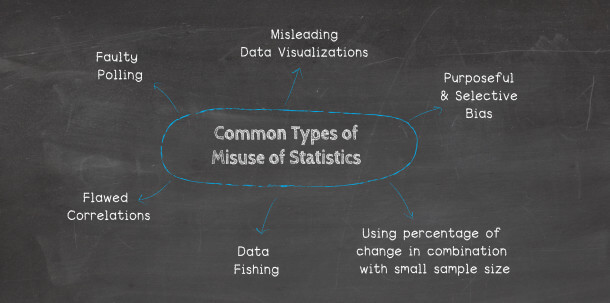
The other primary combatant in the comment donnybrook referred to in the title (Humble Talent was the one noted in the previous COTD post) was Steve Witherspoon. In his Comment of the Day he references the crux of the dispute without actually referencing the dispute itself. His ever-green topic: the misuse of statistics:

Here is another reason that I dislike the use, or better yet the misuse/abuse, of statistics.

As we all likely know banks are routinely audited by outside sources to check for accuracy. Yesterday I got a piece of mail from a company that I’ve never done business with and I’ve never heard of. The mail was sent from a non local city that I wouldn’t be expecting mail from because I don’t know anyone who lives there and I don’t do business with any company from there. I opened it and found a single piece (3½” X 8½”) of paper with the printed logos from our local bank and the following statement on the top…

“Our Auditors have selected the following account for verification. Please review the information shown below and furnish details of any discrepancy to: [company name and address]. If information is correct, no action is needed.”

Then the paper included our home mortgage account number, interest rate, maturity date, and current balance as of a specific date that was mid month between payments. I read it a couple of times to confirm what I read, then I looked at my wife and said “These people are idiots.” Continue reading

Incompetent Elected Official Of The Month: Rep. Maxine Waters (D-Ca)

When did you first realize Maxine Waters was an idiot? I remember when I did. She was involved in the Block For Bill efforts by House Democrats during the hearings on potential impeachment for then-President Bill Clinton.  Maxine made many jaw-droppingly stupid statements but the best was when she said that we had to do something about “all these young women” tempting male law-makers and leaders, referring to Monica Lewinsky.

You know, the people of Watts have enough problems. They don’t need the added burden of a fool as their representative in Congress. On the other hand, who keeps voting for Maxine, term after term, decade after decade?

But I digress.

The latest display of Maxine’s intellectual limitations and lack of diligence and seriousness occurred to tried to engage in some anti-bank grandstanding sure to cheer the anti-capitalist Democratic base. Waters is the chairwoman of the House Financial Services Committee , which regulates banks. Nancy Pelosi gave her the post. Think about this next time your favorite Democrat mocks one of Donald Trump’s appointments.

During a hearing on the practices of  the nation’s biggest banks, Waters pointed an accusing rhetorical finger at a panel of seven bank CEOs  because, she said, “more than 44 million Americans that owe … $1.56 trillion in student loan debt…Last year, one million student loan borrowers defaulted, which is on top of the one million borrowers who defaulted the year before.” Continue reading

Morning Ethics Warm-Up, 2/27/18: “Mrs. Miniver” Ethics, “Ick!,” And A Poll

Rugby in the morning

1 One of my favorite Hollywood ethics scenes. I watched “Mrs. Miniver” again last night, the 1942 WWII drama starring the magnificent Greer Garson. It has a wonderful ethics moment late in the film, when Lady Beldon, the wealthy town battleaxe (and the grandmother Mrs. Miniver’s recently minted daughter-in-law, soon to die tragically) presides over the English village’s annual flower show, in which she has won the coveted “Best Rose” prize every year. But beloved old stationmaster Mr. Ballard has developed a magnificent new rose (named after Garson’s character) and desperately wants to win as well. The Minivers tease their elderly relative about the near certainty that she will win as always regardless of the relative merits of her entry and “The Miniver” entered by Mr. Ballard, since the judges are terrified of her, and Lady Beldon has made it clear to all that she regards the annual prize as a virtual entitlement. After all, the prize is even called “The Beldon Challenge Cup.” Sure enough, the judges, who seemed to be having a harder time than usual concluding that Lady Beldon’s rose deserved the award, hand her a slip that places her rose in first place, and Mr. Ballard’s in second.

Lady Beldon shows the slip to Mrs. Miniver with an air of triumph.

MINIVER: This is really important to you, isn’t it?

LADY BELDON: Yes. It’s stupid of me, but there it is. I’ve won that cup for as long as I can remember.

MINIVER: Mr. Ballard’s terribly keen too.

BELDON: Well, he’s had his chance. Hasn’t he? You have such a way of looking at people. What do you expect me to do? Reverse the judges’ decision?

MINIVER: I wouldn’t put it past you. If you happened to disagree with it.

“But I don’t!” she harrumphs. She keeps looking at the two competing roses, though, and also at old Mr. Ballard (played by Henry Traverse, later to portray Clarence the Wingless Angel”in “It’s a Wonderful Life.” His look of anticipation and hope approximately mirrors the expression of a six-year-old on Christmas morning. And when it comes time to announce the winner, Lady Ballard pauses, looks at the two roses again, ponders,  crumples up the judges’ slip, and announces that “The Miniver” wins the prize.

Dame May Witty, one of the best character actors England ever produced, shows us with her face that she realizes she did the right thing as soon as she sees Ballard’s reaction to winning. And the assembled crowd gives her an even louder ovation than they give the winner. They didn’t even have to see the slip like the Minivers: they know what she did. And she knows they know.

I had a Lady Beldon moment many years ago, before I had even seen the movie. Continue reading

Morning Ethics Warm-Up, 9/5/17: “Close Encounters,” A Bad Bank, A Jaw-Dropping Tweet, Sentimentalizing DACA, And More

GOOD MORNING!!

1. A remastered “Close Encounters of the Third Kind” is in theaters now, and I have mixed feelings about the fact that it is not attracting many ticket-buyers. Spielberg is incapable of making a bad movie, and even his most annoying films (like this one) are thought-provoking and entertaining compared to most of the junk we are getting from Hollywood now. But “Close Encounters” is an unethical movie that bothers me more every time I see it.

The film celebrates hippy spiritual fanaticism for no good reason. Why does everyone get all misty-eyed over these angelic, long-armed  aliens who think they have leave to kidnap human beings, including babies, take them away from their families and disrupt their lives, and then dump them off in another place and time? Why is Richard Dreyfus smiling about that, the idiot? Meanwhile, his character has forgotten about his own wife and kids, never giving them a second thought once he goes E.T. hunting. (And why is Terri Garr treated so badly in her movies by alleged protagonists? Dustin Hoffman used her as a door mat in “Tootsie,” too.)

2. As an addendum to the previous post about DACA ethics, consider this example of how the news media sentimentalizes and propagandizes illegal immigration: the Washington Post’s heart-tugging and misleading story with the headline, “He was brought to Virginia as a toddler, deported at 19. He died in an overheated tractor-trailer trying to return.

“He” was an illegal immigrant, though the Post uses the deceitful “undocumented immigrant” euphemism, as if he lost his library card or something. His name was Frank  Fuentes, and he was quite rightly deported a year after he pleaded guilty to assault and battery as well as grand larceny­/pickpocketing in 2016. He died trying to break the law, and while dealing with the criminals who smuggle people into the U.S. in trucks. The fact that Fuentes didn’t deserve to die is waved by the Post like a crimson flag to distract from the fact that he had no right to be in the U.S., and no right to sneak back in.

Ah, but he was a good man at heart, who “loved skateboarding and music.”  “We all make mistakes,” the post quotes a friend as saying, not noting that this is the go-to rationalization for every law-breaker from Billy the Kid to Joe Arpaio. “He wanted to be better for his family and his mom . . . that’s all he cared about.”

What the Post is doing  isn’t reporting. It is selective, manipulated sentiment designed to obscure the real issues in illegal immigration. This kind of coverage is why polls about “dreamers” reflect shallow emotion-based reflex, not serious, informed consideration.

3. Sam Stein, formerly the Huffington Post’s senior politics editor now writing for  The Daily Beast, tweeted,

Discuss.

4.  The president of the Cleveland Police Patrolmen’s Association, announced that the police union’s members will refuse to hold the American flag as planned at the NFL’s Cleveland Brown’s home opener, after nine Browns players took a “Kaepernick” and knelt during the national anthem in a pre-season game with the New York Giants.

“It’s just ignorant for someone to do that,” Steve Loomis told reporters. “It just defies logic to me. The fact that management was aware of what they planned on doing, that’s as offensive as it can get.”

Good for the union. The NFL has been cowardly and irresponsible by not confronting and ending these demonstrations against the United States in general and police in particular, starting with its non-action when the St. Louis Rams performed a “Hands up! Don’t shoot! display in 2014. Kaepernick specifically had said, in his various vague posturings, that police were among the  targets of  his kneeling stunt, making the ignorant statement that officers in police-involved shootings should not collect a salary while investigations were pending (unlike, say, the many NFL players who have been suspects in criminal investigations).

Among the many functions of professional sports teams is to bring communities together, not divide them. Players are free to express their political positions, however ill-informed, off the field if they are willing to take responsibility for them, which may involve negative team action and fan anger. Cleveland, where 12-year old Tamir Rice was shot by an incompetent cop, is an especially sensitive place for an anti-police demonstration to take place.

The comments on the article at the link are depressing, as in knee-jerk and foolish. Continue reading