Bud Selig Is The Barry Bonds Of Baseball Commissioners…So Why Was He Just Elected To The Hall Of Fame?

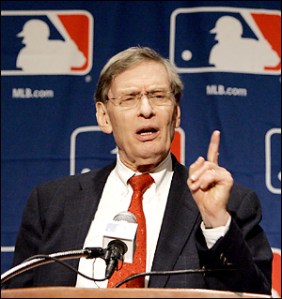
Bud. I had a more descriptive caption, but decided that it wasn't professional...

Bud Selig. I had a more descriptive caption, but decided that it wasn’t professional…

Let me state my bias up front: I detest Bud Selig.

He became Major League Baseball’s first non-Commissioner Commissioner when baseball’s owners decided that Fay Vincent was doing the job of independent, uncorrupted overseer of the game’s welfare and integrity too literally for their tastes, fired him, and installed one of their own. That was Selig, a wealthy auto sales impresario who owned the Milwaukee Brewers and never saw a dollar he wouldn’t debase himself for.

The owners suspected that Vincent, a smart and decent man, might use his power to block the looming baseball labor-management impasse, benefiting the players. They dumped him just in time to give the job to an “independent overseer” who had the Mother of All Conflicts of Interest in the upcoming war: he was management. . Sure enough, under Bud’s fair and balanced leadership, the most devastating work stoppage in baseball history arrived in 1994. It stopped the season late and wiped out the World Series. It killed the Montreal Expos, for all intents and purposes, crushed the baseball card and memorabilia industry (it still hasn’t completely recovered), and nearly sent the sport itself into a death spiral. Baseball was saved, not by Selig, but by a combination of luck, the inherent greatness of the game, and Cal Ripken, who broke Lou Gehrig’s consecutive game streak (I was there to see it!) in the season after the strike to remind fans and the nation of baseball’s glorious past and why they cared about it.

From that point, Selig oversaw explosive growth in the game’s revenues, exposure, merchandising, player salaries and popularity, He shattered a lot of traditions to do it: the elimination of any real distinction between the leagues, expanded play-offs, wild card teams (which I hate, since they allow second place teams to become champions over the teams that defeated them during the season, but then there was the 2004 World Champion Boston Red Sox…) inter-league play, instant replay, penalties for big-spending teams, baseball in November, and more. If you are an ends justifies the means fan, Selig’s your man. He ended his more than two decades as the sport’s top executive with the game stronger and richer than ever.

He did this, however, despite and in part because he quietly enabled the scourge of steroid use among players, permitted cheating to go on right under his nose, and was shocked…shocked! to discover that all those players who began topping their previous best seasons at advanced ages when virtually all athletes go into decline, and all those players who turned up at spring training 25 pounds heavier and looking like Lou Ferrigno, and a few of those players breaking career and season records that hadn’t been approached in decades, were using illegal and banned performance enhancing drugs.  When this dawned on him, two steroid users, Mark McGwire and Sammy Sosa, had shattered Roger Maris’s record for home runs in a season in the same year—what a coinkydink!—and another, the grotesquely inflated Barry Bonds, had not only broken the new record but was on the road to surpass Hank Aaron’s career homer record. Continue reading
The Wrenching Problem Of David Ortiz, The Human Slippery Slope

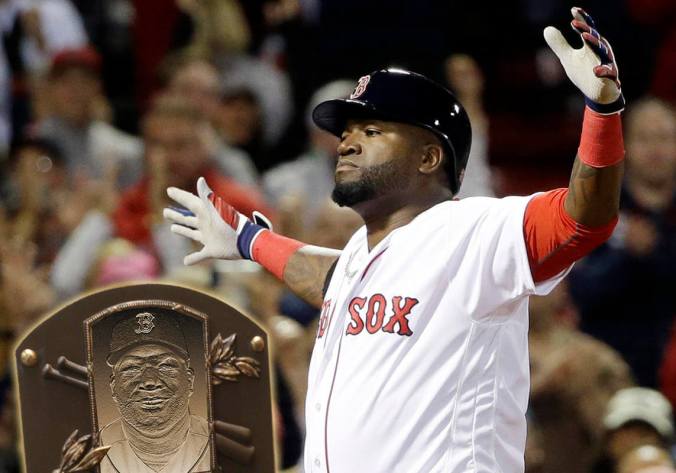
papi_fame

Ethics conflicts force us to choose when multiple ethical principles and values point to diametrically opposed resolutions.  Often, a solution can be found where the unethical aspects of the resolution can be mitigated, but not this one. It is a tale of an ethics conflict without a satisfactory resolution.

I didn’t want to write this post. I considered waiting five years to write it, when the issue will be unavoidable and a decision mandatory. Today, however, is the day on which all of Boston, New England, and most of baseball will be honoring Red Sox designated hitter David Ortiz, who will be playing his finale regular season game after a 20 years career.  His 2016 season is quite possibly the best year any professional baseball player has had as his final one; it is definitely the best season any batter has had at the age of 40 or more. Ortiz is an icon and a hero in Boston, for good reason. Ortiz was instrumental in breaking his team’s infamous 86-year long “curse” that saw it come close to winning the World Series again and again, only to fail in various dramatic or humiliating ways. He was a leader and an offensive centerpiece of three World Champion teams in 2004, 2007, and 2013. Most notably, his record as a clutch hitter, both in the regular season and the post season is unmatched. You can bring yourself up to speed on Ortiz’s career and his importance to the Red Sox, which means his importance to the city and its culture, for nowhere in America takes baseball as seriously as Beantown, here.

That’s only half the story for Ortiz. Much of his impact on the team, the town and the game has come from his remarkable personality, a unique mixture of intensity, charm, intelligence, generosity, pride and charisma. After the 2013 terrorist bombing of the Boston Marathon, which shook the city as much as any event since the Boston Massacre, Ortiz made himself the symbol of Boston’s anger and defiance with an emotional speech at Fenway Park. Then he put an exclamation point on his defiance by leading the Red Sox, a last place team the year before, to another World Series title.

Performance-based arguments against electing Ortiz to baseball’s Hall of Fame are, at this point, untenable. Entering his final game, Ortiz had 541 home runs, (17th all-time), 1,768 RBI, (22nd), and 632 doubles, (10th).  He is only the third player in history to have more than 500 home runs and 600 doubles.  He ranks among the greatest post season hitters in baseball history with 17 home runs, 60 RBI and 21 doubles. His postseason average is .295 with an on base percentage of .409, a slugging percentage of .553 and a .962 OPS (the sum of the two.) Most great players did worse in the post season than during the regular season, for the obvious reason: the competition was better. Ortiz was better, which informs regarding his character and dedication.

The one lingering argument against admitting Ortiz to the ranks of Ruth, Williams, Aaron, Mays, Cobb, Hornsby, Griffey and the rest is that he has spent most of his career as a designated hitter, the American League’s 1973 invention, much reviled by National League fans and baseball traditionalists, designed to allow real batters relive fans from watching pitchers make fools of themselves at the plate. This makes him “half a player,” the argument goes. No designated hitter has ever been elected to the Hall, so that argument has prevailed so far. It was always a weak one—how did being lousy fielders like so many Hall of Fame sluggers make them greater players than one who never hurt his team at all with his glove? Now that a designated hitter has shown himself to be in the elite ranks of all the greatest batters, the argument sounds more like hysterical anti-DH bias than ever.

I should also note, before getting to the main point of this post, that I love Ortiz. I am a lifetime Red Sox fan, Boston born, bred and marinated, and Big Papi is special. He is one of the most interesting and admirable sports figures of my lifetime, and what he has meant to my city and my favorite sport is beyond quantifying. Few great athletes demonstrate persuasively that they are also great and admirable human beings. Ortiz is one of them.

Nonetheless, it is crucial that David Ortiz not be elected to the Hall of Fame when he becomes eligible five years from now, and that he never be admitted. On the matter of assessing the fitness for baseball honors of those who defiled the game by inflating their statistics, changing the outcome of games and harming players who abided by the rules, David Ortiz is a human slippery slope. Ortiz deserves to be in the Hall based on all admission criteria, including character and sportsmanship, but his admission will open the doors wide for players who are unfit, polluting the Hall of Fame and baseball’s values forever.

It’s not worth the trade off. This is the ethics conflict: one cannot be fair and just to “Big Papi” without doing widespread harm to the sport, and I would argue, the entire culture. Continue reading

Major League Baseball Cares About Integrity And I Wish This Proved It…But It Doesn’t

I know this will be a shock, Henry, but there's forest here, not just trees...

I know this will be a shock, Henry, but there’s forest here, not just trees…

On Baseball Prospectus, one of the scholarly baseball sites, Henry Druschel has a provocative, inspiring and ultimately silly post pointing out that if baseball teams were only concerned with winning, they would forfeit games for strategic purposes, yet they literally never do. He writes…

“Teams are almost certainly harming their long-term win rates in a meaningful way by playing until every out of every game has been recorded. For example, the Red Sox encountered a grueling quirk of the schedule on Wednesday night, when they were scheduled to play the Orioles at 7:05 p.m. before traveling to Detroit and playing the Tigers at 1:10 p.m. the next day. When it began to pour in Baltimore at roughly 9:00 p.m., the Red Sox were leading 8-1 after six innings, but imagine if the situation was reversed, and Boston was instead trailing 8-1 with three innings to go. Their odds of coming back to win such a game would be something like 0.5 percent. In such a scenario, they could either wait in the clubhouse until the game was either resumed or officially cancelled, or they could forfeit as soon as the rain began, and head for the airport and Detroit right away. In the non-hypothetical game, the rain delay lasted about 80 minutes before the game was officially called; it seems obvious that an extra hour and a half of rest before the next game would add more to a trailing Boston’s total expected wins than remaining in Baltimore and hoping for a miracle would. That might seem like a corner case, and truthfully, it is; I bring it up to note that no one would even consider a forfeit in such a scenario, despite the strategic logic of the move. This isn’t limited to corner cases, however; every time a position player enters a baseball game as a pitcher in a blowout, teams are harming their long-term expected win totals by not forfeiting instead….”

The writer concludes:

Given that forfeitures would be win-maximizing in certain cases, and given that teams choose never to strategically forfeit regardless, there are two possible conclusions. One: Teams are behaving irrationally. Given the immense value even a single win can have to a franchise, I feel confident stating that this is not the case. That leaves the second conclusion: There is something the team values more than winning as much as possible. There is a societal norm that places something—a competitive ideal, maybe, or just completion—over winning, a norm that would be violated by a strategic forfeit, and a norm that teams invariably follow.

As someone who values other things over winning, this excites me…

Don’t get too excited, Henry.

Yes, I believe that baseball teams take considered actions sometimes that do not maximize their chances of winning. I was roundly pilloried in baseball circles for an article I wrote in 2008 (for another scholarly baseball site)  which argued that Barry Bonds, the shameless steroid cheat and home run champion who was suddenly a free agent and who could, based on his recent exploits, still hit though well past 40, would not be signed by any team—not even the Yankees!—because doing so would signal to that team’s fans, city, players and organization that the team endorsed flagrant dishonesty as well as a willingness to disregard fairness, integrity and sportsmanship for a few extra wins. I was on a MLB radio show where the host laughed at me. “Of course he’ll be signed! You’re crazy!” were his words. “Just wait,” I said. “If he isn’t signed, it will mean that baseball colluded against him!” he said. “Just wait,” I said.

Bonds, who said he was dying to play, that he was healthy, that he’d play for the Major League minimum, that he’d sue MLB if someone didn’t sign him, never swung a bat in anger again. There was no collusion, either. It was pure cognitive dissonance, you see. Remember the scale? Continue reading

Alex Rodriguez Announced That He’s Retiring As A Baseball Player. He Could Have Been Fair And Ethical About It. Nah!

alex-rodriguez

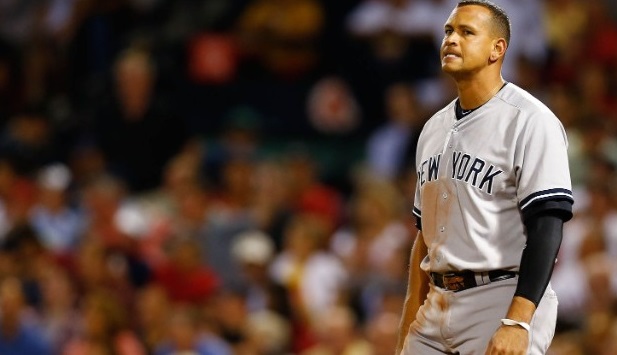
New York Yankee Alex Rodriguez, a three time MVP, 14-time All-Star and one of the most talented and controversial players in baseball history—and the epic Ethics Corrupter  who has been criticized on Ethics Alarms more than any other sports figure!—  announced that he will play his final major league game next Friday. For his 20 million dollar  salary this year, “A-Rod” is hitting only .204 with nine home runs and 29 RBIs in 216 at-bats. He can’t play in the field anymore, and any normal player of his age (41) and diminished skills would have been released long ago. (Indeed, any normal player of  his age and diminished skills would have quit.) The team, however, is obligated to pay Rodriguez’s 20 million annual salary not only this year, but also the next. This makes him untradeable as well as too expensive to release.

Of course, if a player voluntarily ends his relationship with a team by retiring, he waives the rest of his contract. Many players have done that when they reached the point in their careers where they were no longer helping the team, taking the place of a better young player on the roster, and embarrassing themselves. None of those players, however, would be forfeiting 27 million dollars, the current tab the Yankees are contractually obligated to pay A-Rod as the final lap of a $275 million, 10-year contract that was baseball’s largest in 2007.

Nevertheless, forfeiting the money is what an ethical player should do. He’s not earning it. Rodriquez has made more than a half-billion dollars in his career, not counting various endorsement fees and bonuses. His two children are guaranteed to be tycoons many times over. He has lots of money, but very little accumulated good will or respect, as a confessed steroid cheat (he was suspended for the entire 2014 season for PED use and a cover-up) and is one of the most disliked players in any sport. Retiring as a straightforward admission that he is no longer able to play and has been hurting his team and team mates would have been the ethical course—a sacrifice, but not much of one.

Nah. Continue reading

The Cheater’s Rationalizations

cheatingI was in Boston recently, and naturally the topic of Tom Brady and Deflategate came up often. I kept hearing the same defenses of Brady with a growing sense of déjà vu. Yes, many of the rationalizations on the Ethics Alarms Rationalizations List raised their ethically-muddled heads in Beantown, all-purpose classics like “Everybody does it,” “It’s a bad law/ stupid rule,” and “No harm, no foul,” but there were others that clearly came out of some secretly published “Cheater’s Handbook.”

These are going to enter the list as a group, like #6,The Biblical Rationalizations. They will be trotted out for other purposes, no doubt, but no set of excuses better defines the unethical mindset of a cheater’s defenders than these three.

59. The Cheater’s Rationalizations Continue reading

Ethics Dunce: Miami Marlins Manager Don Mattingly

stabbed-in-the-back

When new Miami Marlins manager Don Mattingly chose Barry Bonds as his batting coach, it was considered a bold move. Bonds, after all, is simultaneously baseball’s all-time home run champion, holding both the single season and career records, and its biggest cheat, having achieved both records while being secretly, illegally and unethically assisted by steroids. In addition to knowing how to cheat, Bonds undeniably knows how to hit (he was a great hitter before he decided to mutate himself), so this was a chance at redemption for Barry, as well as an opportunity to soften some of the sports media antipathy toward his conduct and character which has so far kept him out of the MLB Hall of Fame.

Asked this week how Barry Bonds was doing as batting coach, Mattingly replied,

“Him getting used to the coaching part of it is a work in progress from a standpoint of the amount of time and the preparation. You see [assistant hitting coach Frankie Menichino] still doing a lot of the prep work. Barry is still getting into the routine of the ugly side of coaching — being here at 1, and studying video, and studying on the plane and you don’t get a chance to watch movies, and things like that. It just depends how good you want to be as a coach. If you want to be a really good coach, you’ve got to do the work.”

Translation: “So far, Barry’s been lazy and isn’t doing his job. His assistant is doing it for him. The job requires a lot of hard, tedious work, and Barry hasn’t shown that he’s willing to do it. At this point, he not a good coach.”

Ethics foul. Mattingly was a fool to hire Bonds, and MLB is wrong to let this sport-wide ethics corrupter set foot in a clubhouse. Bonds is a living, breathing advertisement for the proposition that cheating pays, and should not be trusted not to promote that proposition to young players. Having hired Bonds, however, Mattingly still is obligated to treat him fairly and professionally.

It is not fair and professional to make a negative job review public by communicating it to the news media. Mattingly gave a critique of Bonds’ performance that should have passed from him to Bonds, and only from him to Bonds, in private. Attacking Bonds—and it was an attack, if a passive aggressive one—in the press is unfair, irresponsible, disrespectful, a betrayal of trust, and also cowardly.

Mattingly’s job is called “manager,” and this is atrocious, unethical management. He owes Bonds an apology, and if I were Marlins management, I would be thinking very hard about whether Don Mattingly is qualified for his job.


Ethics Dunce And Unethical Column Of The Month: Univision Anchor Jorge Ramos

Who is the traitor, Jorge?

Who is the traitor, Jorge?

There are some positions in some controversies that I really cannot manage to respect, because no matter how much I try to understand the points of view, they seem so obviously wrong and ethically indefensible. On “The View” yesterday, for example, alleged comedian Joy Behar, in discussing the character of Bill and Hillary Clinton, stated without joking that she would vote for a proven rapist for President, as long as he or she was a Democrat. This is the kind of position I’m talking about.

Yesterday, the Hall of Fame voting results were announced. Mike Piazza and Ken Griffey, Jr. were elected to the Hall by the baseball writers, and equally welcome to this ethicist-baseball fan was the fact that Barry Bonds and Roger Clemens, both unrepentant steroid cheats, were not elected, and their still paltry vote totals suggest that they may never be. Yet several baseball pundits, reporting on the voting results, preceded this aspect of the news with “Unfortunately.”

I don’t understand that attitude toward cheating at all. I have written about as much about Barry Bonds as any ethics topic on Ethics, and  the case against him is air-tight, with the only defenses ever put forth being invalid rationalizations, easily rebutted. Nevertheless, otherwise intelligent people keep repeating them, hoping to outlast reason and reality by perseverance and repetition. (Sadly, this often works, as “77 cents on the dollar,” “Bush lied” and “Hands Up! Don’t Shoot!” tragically prove.) In the last 24 hours, I have heard Clemens and Bonds called “great players” so many times that my teeth have been ground down perceptibly. Cheaters are never great, as I explained in one of my favorite posts of 2015.

I was preparing to once again swat down the cultural poison being peddled by the Bonds and Clemens defenders when another of the issues that I believe has no respectable “other side” again raised its uglier than ugly head, so I changed course. That issue is illegal immigration, as in “immigration that occurs in direct violation of U.S. law, making it illegal.” Those who engage in illegal immigration are immigrants, and because their manner of immigration is illegal, they are illegal immigrants. Those who insist on calling them merely immigrants are lying; those who favor euphemisms like “undocumented workers” are engaging in intentional deceit. No, I have no respect for their rhetorical dishonesty–their smug and falsely sanctimonious rhetorical dishonesty—and it should not be tolerated by any U.S. citizen who wants transparent debate on a crucial national policy issue.

The ethics violator in the immediate case is serial offender Jorge Ramos, who uses his position as a broadcast journalist—unethically, since his duty is to report the news accurately, not to spout propaganda—to advocate  unrestricted immigration by Hispanics and Latinos into the United States. It is a logically, historically, demographically, economically, politically and legally irresponsible, outrageous position, but he managed to exceed previously established depths in promoting it by writing, in a column for Fusion, that GOP candidates Ted Cruz and Marco Rubio are engaging in betrayal by “turning their backs on immigrants,” who, he says, just got here a little later than they did. Continue reading

The Unethical Tom Brady Conduct He Isn’t Being Punished For

This isn't the graphic for this post for the reason you think it is...

This isn’t the graphic for this post for the reason you think it is…

The NFL surprised me a little yesterday—but pleasantly— by hitting New England Patriots quarterback Tom Brady and his team with something approaching an appropriately tough penalty for cheating in a playoff game, lying about it, obstructing the NFL’s investigations, and then acting as if the whole mess was a joke. The NFL suspended Brady for four games, stripped the Patriots of their first-round draft pick in 2017 and a fourth-round pick as well, and fined the team $1 million for Brady’s  “conduct detrimental to the integrity of the NFL” and for “failure to cooperate in the subsequent investigation.”

Exactly. It wasn’t the infraction alone that made this serious; it was the suggestion, magnified by Brady’s smug attitude, that cheating in an NFL play-off game is no big deal and nothing to be upset or ashamed about. The team also had to be punished, in part because cheating has long been the Patriots’ MO, and the team’s continued success at winning championships, without some negative consequences, is a neon sign advertisement for cheating in games, in school, in business, in life.

Finally, the draft choices were a crucial element, because taking away those really hurt the team. Otherwise it would have been just an affordable fine: Brady doesn’t need the millions he’ll lose by not playing four games, and the Patriots are more than a one-man team; they might still win all four. As for team owner Robert Kraft, he won’t even notice that the million dollars is missing. The draft choices the team will notice. Good.

But there is another injustice here that isn’t getting as much attention as the suspending of New England’s smirking, cheating star. Continue reading

Now We Know: Patriots Quarterback Tom Brady Is A Fick*

Yechhh.

Watch, if you can, this smirking, wink-wink-nudge-nudge exhibition by Tom Brady yesterday in front of his drooling, cheering, bleating, sheep-brained and ethically corrupt fans, as he mocks, in every expression, tone of voice and gesture, the idea that he should be even slightly ashamed of  the NFL’s finding that he cheated to ease his team’s path to the Super Bowl, and that finding’s implication that Brady lied about it, blatantly and repeatedly:

If, after this intentional poke in the eye to anyone who believes sports contests should be played with fairness, honor and integrity,  the NFL doesn’t give Brady a major suspension, and nothing less than half a season will qualify as major, fine the Patriots, fine Coach Belichick, and take some action to permanently label the team’s division and league championship as rotten, then we should declare pro-football a dangerous cultural menace, promoting cheating, lying and rule-breaking rather than sportsmanship to our youth. Continue reading

No, Craig, Barry Bonds Wasn’t A “Great” Baseball Player. Bernie Madoff Wasn’t A “Great” Investment Manager, Either

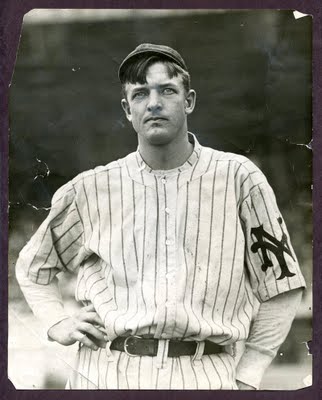
Christy Mathewson, a genuine hero. Barry Bonds would have made him want to throw up.

Christy Mathewson, a genuine hero. Barry Bonds would have made him want to throw up.

I like and admire Craig Calcaterra, who blogs entertainingly and perceptively about baseball on the NBC Sports website. I suppose I’m a bit jealous of him too: he’s a lawyer who now earns his living blogging about something he loves.

But Craig has always been a bit confused about how to regard baseball’s steroid cheats (they are cheats, which should answer any questions, but somehow doesn’t for a lot of people), and predictably, I suppose, he couldn’t resist reacting to the early results of Major League Baseball’s “Franchise Four” promotion, in which fans vote (until mid-May) for “the most impactful players who best represent each Major League franchise” as well as some other categories, including “Four Greatest Living Players.” The early results have Hank Aaron, Willie Mays, Sandy Koufax and Tom Seaver leading in the “Greatest Living Players” category, so Craig snarked that this is sad, because “it must mean Barry Bonds has died in a tragic cycling and/or Google Glass accident and no one thought to tell me.”

No, Craig, this is what someone failed to tell you: cheaters in any profession are not “great” by definition. Great baseball players, like great lawyers, writers, doctors, scientists and Presidents, bring honor on their profession, don’t corrupt everyone around them, don’t force people who admire them to embrace unethical conduct and turn them into aiders and abetters, and accomplish their great achievements while obeying the law, following the rules, and serving as role models for everyone who follows them. Barry Bonds was not a great baseball player. He had the ability to be one, but not the character.

Hank Aaron, Willie Mays, Sandy Koufax and Tom Seaver never once disgraced their game while they wore a uniform, and indeed made baseball stronger and better while they played. Good choices all.

The disgrace is that San Francisco fans voted Bonds as one of that team’s “Franchise Four,”  dishonoring great Giants of the past like Juan Marichal, as well as New York Giants greats like Christy Mathewson, Bill Terry, Carl Hubbell, and Mel Ott, Hall of Famers  and lifetime Giants who played with honesty and sportsmanship. But Giants fans warped values are among the casualties of Bonds’ career…and one more reason he can’t be rated anything but a great villain.