Baseball Has A Cheating Problem That Is Old, Was Supposedly Addressed Decades Ago, And Is Strangling The Game. It Is Relevant To More Than Baseball (Part 3: The Crackdown)

Before the 2021 season started, Major League Baseball claimed that it was about to start enforcing the rule against applying foreign substances to the baseball. Why. one might wonder. As Part I described, baseball has been casual about this rule for a long time, and the pattern goes back even longer than when Ethics Alarms first discussed it. In 1920, the game, trying to clean up its tarnished image in the wake of 1919 Black Sox scandal, banned the spitball as well as other “trick pitches” that involved altering the ball itself a few pitchers who were regarded as “spitball specialists” were “grandfathered” meaning that they were allowed to keep throwing the otherwise illegal pitch while others were not. This is not the way to make a rule against cheating, and the ambivalence about the spitball continued well into the 1980s. Baseball, and especially sportswriters, seemed to think this particular kind of cheating was cute. Only a few pitchers could throw a spitball, and those who did, notably Gaylord Perry, now in the Hall of Fame, were only occasionally caught and punished. Baseball finally made a rule that a pitcher couldn’t bring his fingers to his mouth; if he did, an automatic ball was called. Meanwhile, umpire searches of a suspected pitcher using other substances like K-Y jelly, usually hidden in a cap, became the stuff of comedy, as in the famous sequence from “The Naked Gun” above.

MLB became lax about enforcement, and predictably, some pitchers, and eventually most pitchers, took what was accepted as a “little” pine tar to get a better grip on the ball and, aided by modern chemistry, began using so-called “sticky stuff” to get higher rates of spin on the ball than they could with their natural talents. This development accelerated after 2018, when home runs became more common than ever before. When the rate of homers reached absurd levels in 2019, breaking the rules against putting foreign substances on the ball was viewed as a matter of professional survival. Pitchers experimented, trying Tyrus Sticky Grip, Firm Grip spray, Pelican Grip Dip stick and Spider Tack, a glue intended for use in World’s Strongest Man competitions and whose advertisements show someone using it to lift a cinder block with his palm. Some combined several of those products to create their own personal “sticky stuff.” Their clubs used Edgertronic high-speed cameras and TrackMan and Rapsodo pitch-tracking devices to see which version of the glue worked best.

Continue reading

Baseball Has A Cheating Problem …It Is Relevant To More Than Baseball (Part 2): Unethical Quote Of The Week: Boston Red Sox Manager Alex Cora

Cora

“I come from suspension and I know how embarrassing that is and how tough that is, not only on you as a person but your family, your friends and the people that love you. Ten games, a year, two years, three years, it doesn’t matter. Being suspended is hell and you don’t want to go through that. I was very open to them and hopefully they understand that.”

—Boston Red Sox manager Alex Cora on Major League Baseball’s threat of 10 game suspensions for pitchers  caught cheating by using sticky substances on baseballs , a practice that has been against the rules  for a hundred years.

Almost exactly a year ago, I wrote that Alex Cora, then serving a one year suspension from Major League baseball, didn’t “get it,” it being why cheating is wrong, what ethics is, and why it is important to act ethically in all aspects of life. He still doesn’t get it. Cora (you can catch up here) was suspended because he engineered and oversaw a  season long sign-stealing scheme as bench coach in 2017 for the Houston Astros, who used it to inflate their offense and ultimately win the World Series. When it was finally discovered, Cora was the acclaimed manager of the Boston Red Sox, who succeeded the Astros as World Champions in 2018. The Red Sox had been cheating in their triumphant season too, though not as extensively, and  an investigation blamed it all on a low-level coach., not Cora, though Cora was his supervisor, and the whole thing seemed oddly reminiscent of Cora’s cheating in Houston. Continue reading

Baseball Has A Cheating Problem That Is Old, Was Supposedly Addressed Decades Ago, And Is Strangling The Game. It Is Relevant To More Than Baseball (Part 1: Introduction)

Baseball sticky

Since about four other readers pay any attention to my baseball ethics posts, let me say right up front why this a mistake. Baseball’s current pitchers using foreign substances on the ball problem is, ethically, exactly the same as our nation’s election cheating scandal, or the illegal immigration crisis. It arises from the same dead-headed rationalizations, intellectual laziness, and self-serving deception. We can and should learn from it. But we won’t.

If you want to ignore the latest baseball ethics scandal as a niche problem unrelated to greater ethics principles, be my guest. You will be missing an important and still developing lesson.

Baseball’s hitting is way down this year, and pitching is more dominant than it has been since the mid-1960s. There is a reason: almost every pitcher is using some kind of sticky substance on the ball. This increases “spin rate,” which before computers and other technology was impossible to see, much less measure. The faster a pitcher can make a ball spin, the more it moves, curves and dives at higher speeds. Sticky substances allow a pitcher to do that. Using them is against the rules; it’s cheating. But for years now, the same kind of ethics-addled fools who allowed Barry Bonds and other cheats to use illegal steroids and wreck the game’s home run records as long as they lied about it have let pitchers illegally doctor the ball.

This week, the whole, completely avoidable ethics train wreck became an engine of destruction for the National Pastime.

Unfortunately, one has to understand the context to comprehend what is going on now, and that means looking backwards, in this case, to 2014. Here, with some edits, are two Ethics Alarms essays that provide the context. The first was titled “The Abysmal Quality of Ethical Reasoning in Baseball: A Depressing Case Study.” The second, Pineda-Pine Tar, Part II: Baseball Clarifies Its Bizarro Ethics Culture, appeared 13 days later. Yes, what is happening now was foretold by conditions that were evident seven years ago. The remaining parts of this series will bring you, and the train wreck, up to date.

***

What happened was this: During last night’s Red Sox-Yankee game in Yankee Stadium, the Boston broadcasting team of Don Orsillo and Jerry Remy noticed a glossy brown substance on New York starting pitcher Michael Pineda’s pitching hand. It was very obvious, especially once the NESN cameras started zooming in on it.   “There’s that substance, that absolutely looks like pine tar,” play-by-play man Don Orsillo said. “Yeah, that’s not legal,” color commentator and former player Jerry Remy replied.

Indeed it isn’t.  According to rule 8.02(a)(2), (4) and (5), the pitcher shall not expectorate on the ball, either hand or his glove; apply a foreign substance of any kind to the ball; [or]  deface the ball in any manner.

The Red Sox, who probably knew about the gunk on Pineda’s hand, didn’t complain to the umpires, and just went about their merry way, losing the game. Asked about the stuff on his hand, Pineda demonstrated the full range of body language indicating that he was lying his head off. “It was dirt,’ he said. Later, when the ick appeared to be gone,  Pineda explained, he had just sweated his hand clean. Right. Whatever was on his hand—beef gravy, crankcase oil, chocolate syrup…the majority of pundits think pine tar—it wasn’t “dirt.” Pineda’s manager, Joe Girardi, was brazenly evasive.

The Yankee pitcher was cheating. This isn’t a major scandal, but cheating is cheating: sports shouldn’t allow cheating of any kind, because if a sport allows some cheating, however minor, it will encourage cynical, unscrupulous and unethical individuals on the field, in the stands, and behind keyboard to excuse all other forms of cheating, from corked bats to performance enhancing drugs. Cheating is wrong. Cheating unfairly warps the results of games, and rewards dishonesty rather than skill. Cheating undermines the enjoyment of any game among serious fans who devote energy and passion to it. Any cheating is a form of rigging, a variety of lying.

And yet, this clear instance of cheating, caught on video, primarily sparked the sports commentariat, including most fans, to cite one rationalization and logical fallacy after another to justify doing nothing, and not just doing nothing, but accepting the form of cheating as “part of the game.” I’ve been reading columns and listening to the MLB channel on Sirius-XM and watch the MLB channel on Direct TV since this episode occurred. Here are the reactions:

Continue reading

Morning Ethics Warm-Up, 6/3/2021

I like to use this clip to start the day at least once a month….I’m also trying to overcome my cognitive dissonance regarding the film it’s from, in my view the greatest film musical ever made (no better one is likely to appear in the future), and the fact that the man it was made to honor, songwriter Arthur Freed who also ran MGM’s musical division during its “Golden Age,” exposed himself to a teenaged Shirley Temple when she was considering a move to that studio after her singing and dancing tot career at RKO had been ended by hormones. That information, which I only discovered this year, really has made “Singin’ in the Rain” hard to watch for me, much as O.J. Simpson’s presence almost ruins “The Naked Gun.”

1. Speaking of movie clips, this one is apt:

Actor John Cena posted a video to Sena Wiebo, China’s Twitterish social media platform, apologizing to Chinese fans—in Mandarin!– for calling Taiwan a “country” in his recent interview promoting “F9,” the latest installment of the “Fast & Furious” franchise. What a weasel. There may be diplomatic reasons that justify apologies to China, but an American citizen kowtowing to this Evil Empire (that just recently gave its citizens permission to have up to three children) is despicable. China maintains that it has dominion over Taiwan, a self-governed democracy that maintains its own sovereignty, while China is, in essence, a totalitarian regime. Cena grovelled because Chinese ticket sales are an essential part of most Hollywood movies’ profit, but apparently he did not grovel enough for China, and too much for Americans.

Ticket sales for “F9” in China have crashed, according to the Hollywood Reporter, because Cena was supposed to say that Taiwan is part of China. They have crashed in the U.S., because the kinds of Americans who are likely to go to “Fast and Furious” films tend not to appreciate actors who suck up to a genocidal, pandemic-spreading international menace.

2. Regarding Donald Trump, please refer to everything I wrote about him prior to November, 2016. His latest fiasco, the one-month blog that was just pulled down with all of its posts deleted, is signature significance. Trump doesn’t have sufficient respect for his followers, his party or the world in general to plan, be responsible, appear trustworthy, or to do or say anything but what pops into his head at a given moment. If he cared about the nation, he would be working to find a younger, less polarizing figure. Ideally, this individual would be blessed with charisma and ability, and could hold on to Trump’s supporters while appealing to NeverTrump conservatives and those disgusted with the Biden administration. That should be just about everybody who doesn’t advocate repealing the Bill of Rights. Instead, he’s on his usual ego trip, giving the news media constant opportunities to use his nonsense to keep the Trump Hate pandemic raging, and the public distracted from real problems, like…

Continue reading

Memorial Day Ethics Warm-Up, 5/31/2021…

It will be interesting to see if the news media discusses the Tulsa Race Massacre of 1921 any more this May 31 than it has in the past. Discussing this horrible mass murder of blacks in Oklahoma over Memorial Day weekend has always been seen as sufficiently tasteless that the story has suffered the equivalent of a historical airbrushing. When did you first learn about it? I didn’t encounter the episode in elementary school, high school, college or law school. I was 50, and furiously researching the life of Clarence Darrow so I could churn out a one man show (that was already in rehearsal) after Leslie Nielsen pulled the rights we had paid for on the Darrow show performed on Broadway by Henry Fonda. I was looking for the context of Darrow’s epic closing argument in the Sweet case (1925), in which he referenced examples of white mob violence against blacks. That was my introduction to the tragedy. How was this possible? I was and am a voracious consumer of American history, movies, and television. Yet the facts of the Tulsa Race Massacre never entered my consciousness.

Here’s one useful resource…there are many others available online. A brief summary: After World War I, Tulsa’s African American community was notable for its affluence. The Greenwood District was known as “Black Wall Street.” But on May 30, 1921, an incident between a white woman and a black man on an elevator—nobody knows exactly what happened—was reported in the Tulsa newspapers as an attempted rape. The young African-American, Dick Rowland, had been arrested, and members of the community believed that he might be lynched. When an angry white mob gathered in front of the courthouse, a group of over 70 back men, some of them World War I veterans with weapons, confronted them. A gun went off in a struggled, and chaos descended on Greenwood. A white mob of thousands overran the Greenwood District, shooting unarmed black citizens in the streets. It burned an area of some 35 city blocks, and more than 1,200 houses, numerous businesses, a school, a hospital and a dozen churches. It is estimated that 300 people were killed in the rampage, though official counts at the time were much lower. 300 is the same death toll as the 1871 Chicago fire. I knew about that tragedy by the time I was 8.

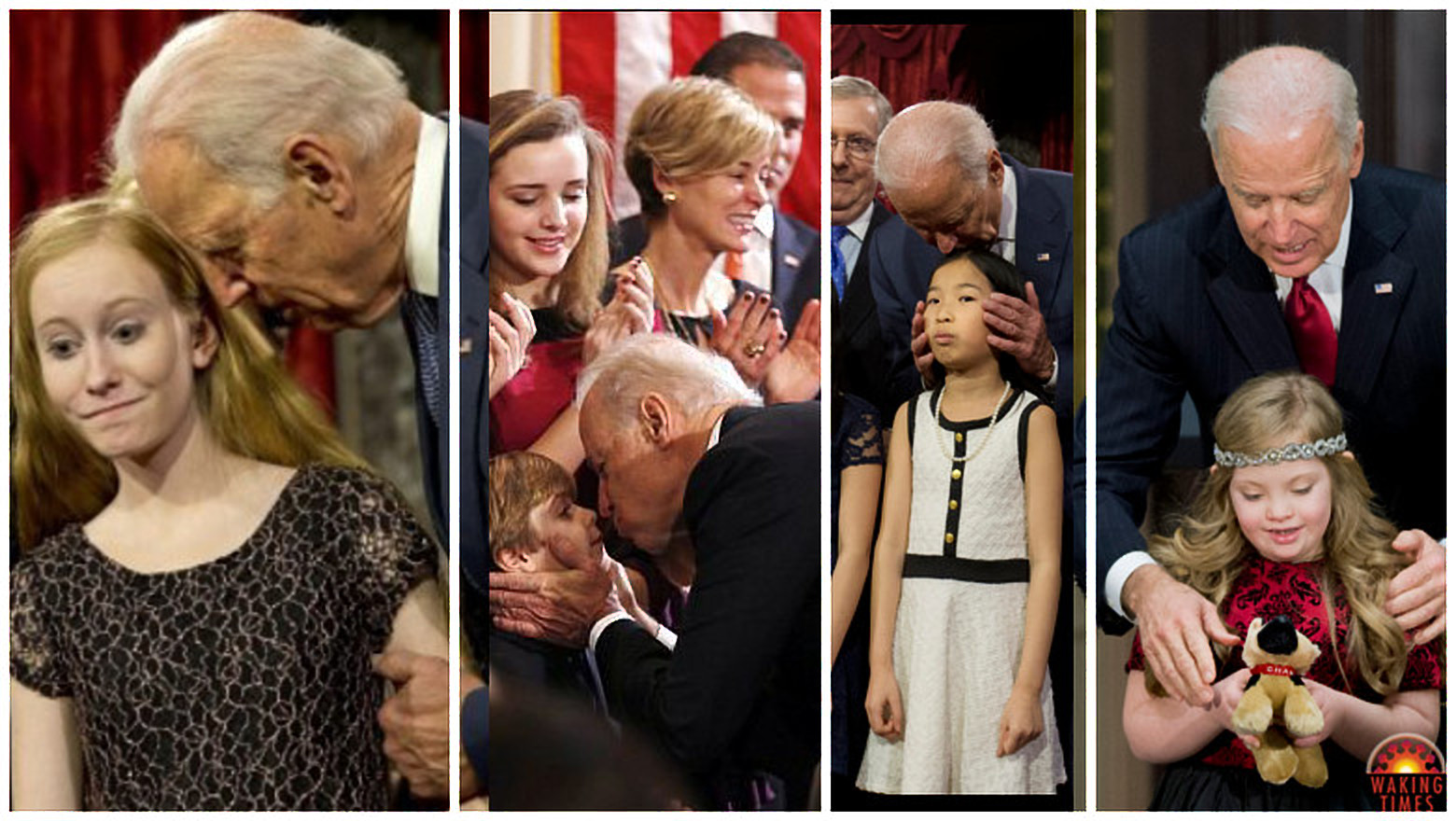
1. IIPTDXTTNMIAFB! That’s short for “Imagine if President Trump did X that the news media is accepting from Biden…”, introduced here. The current example: during a speech at Joint Base Langley-Eustis in Langley,Virginia two days ago, President Biden began spontaneously complimenting a pre-teen girl who had joined her parents and two older brothers on the stage after her mother had introduced Biden to the crowd. Biden said, inappropriately and creepily, “ I love those barrettes in your hair, man. I tell you what, look at her. She looks like she’s 19 years old sitting there like a little lady with her legs crossed.” Republicans pounced, as the MSM cliche goes whenever Democrats are legitimately criticized. The episode was barely mentioned by the media dedicated to propping up Biden—that is, almost all of it—at all. IIPTDXTTNMIAFB…and President Trump didn’t even have a photographically preserved series of encounters like this:

Creepy-Joe-Biden-President

2. AHHHH! It’s a virus ! Get a gun!!! The headline on the front page of the NYT website yesterday read, “Pandemic Fuels Surge in U.S. Gun Sales ‘Unlike Anything We’ve Ever Seen.'” Incredible. People bought guns for the first time because rioting was going on all over the country, and in many places the police were doing little or nothing to stop it. Buildings were burning and being looted; citizens were being threatened. Who gets a gun to fight a pandemic? (There was never any threat of the kind of civic breakdown from the virus like that portrayed in the movie “Contagion.” Toilet paper riots?)

The degree to which the Times—the “paper of record’!—continues to distort reality to mislead the public and warp public opinion is astounding. Later in the same article, the Times said, “While gun sales have been climbing for decades — they often spike in election years and after high-profile crimes — Americans have been on an unusual, prolonged buying spree fueled by the coronavirus pandemic, the protests last summer and the fears they both stoked.”

Continue reading

When Ethics Alarms Don’t Ring: Lounge Toppling In Chicago

Lounge

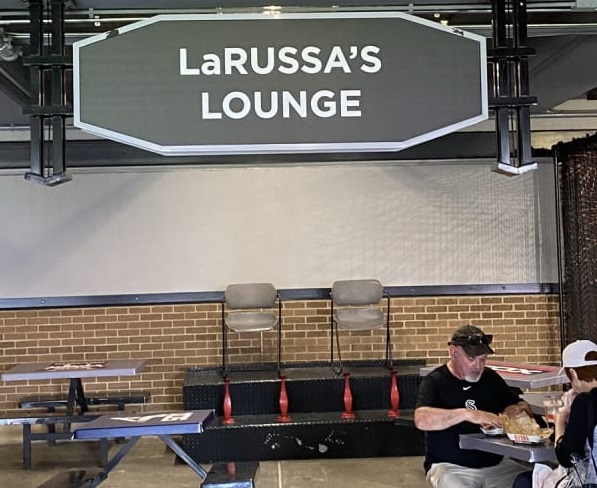
Loretta Micele had begun working concessions for the Chicago White Sox in 1945, at the old Comiskey Park. She was still working in 2005, 60 years later, long after the White Sox had a new stadium. The Chisox were in the World Series that year, and before the first game, a shocked Loretta, then 85, was brought onto the field as the team saluted her long service to the team. She was told that a section of tables and seats next to the stand down the third base line where she sold and handed out hot dogs and Cokes would be named “Loretta’s Lounge” in her honor. Loretta was cheered by the full stadium ,a blew kisses to the crowd. It was a glorious day.

The grandmother of 25 and loyal White Sox fan and employee is gone now, but “Loretta’s Lounge” gives a little bit of immortality to her and, by extension, to the many anonymous workers who make baseball teams and every other organization thrive, if it is to thrive at all.

Did I say “gives”? No, the right term is “gave.” When the White Sox brought Hall of Fame manager Tony LaRussa out of retirement last year to manage the team, it renamed the area “LaRussa’s Lounge.”

Continue reading

PM Ethics Medley, 5/26/2021: It’s A Strange, Strange World

Pastiche

1. Priorities! Major League Baseball has placed Angels pitching coach Mickey Callaway on its ineligible list through at least the 2022 season, MLB commissioner Rob Manfred announced. The league made the decision after investigating Callaway for sexual sexual harassment allegations reaching back several years, with several female sporstwriters among the alelged victims. The Angels fired Callaway this afternoon. Opines a major baseball news site: “Callaway is facing a year-plus ban, and it seems hard to believe any MLB team will hire him when he’s eligible to return.”

Hmmmm…

Alex Cora was suspended and fired as manager by the Boston Red Sox after a one-year suspension, then immediately hired back by the team. All he did was play a major role in devising a cheating scheme for one team, the Houston Astros, that extended through the play-offs and World Series, then oversaw a second team, Boston, that was found to have engaged in cheating, though less extensively, the next season. Cora’s cheating scheme with Astros was unprecedented, and cost two other professionals their jobs and the Astros millions in fines,while seriously scarring the integrity of the game. The conduct Callaway engaged in has been routine among professional athletes for decades, though in his case it was apparently 1) a bit more extreme than the norm and 2) “unwelcome.” After all, he was just a coach. So far, nobody has accused a player making more than $10 million a year of making sexual advances that were “unwelcome.’

Continue reading

From The Ethics Alarms Mailbag: “Are Unwritten Rules Unethical?”

unwritten rules

The short answer is “No,” but the context of the question is fascinating, because it’s an example of the problem with unwritten rules generally. Unwritten rules are cultural norms, that’s all, and all cultures have them. They serve as manners, social balms and traditions that fill in the inevitable gaps and loopholes that formal, written rules inevitably leave uncovered. But cultures evolve, and extreme situations create exemptions where cultural norms no longer make sense.

No culture has more so-called unwritten rules than baseball, and this situation from two days ago triggered the question.

With the Chicago White Sox, currently with the best record in baseball, were ahead of the pathetic Minnesots Twins 15-4. The Twins, not wanting to waste a real pitcher on a blwo-out, turned to utility infielder Willians Astudillo to face the ChiSox in the final inning. Throwing a the classic “nothing ball” that most non-pitchers bring to the mound in such situations, Astudillo retired the first two batters but fell behind 3-0 to White Sox catcher Yermin Mercedes. On the next pitch, a lob to get the ball over the plate, Mercedes swung away blasted the 47 mph toss out of the ball parkfor a 16-4 lead.

The Twins broadcasters and many of the Twins players were offended, saying that Mercedes had breached the unwritten rule that says players shouldn’t try to “show up” the losing team in a rout. You don’t steal bases, you don’t sacrifice, and you don’t swing away at an “eephus pitch” to get a cheap home run. It’s essentially a Golden Rule based unwritten rule, though when it applies is a matter of dispute. Baseball teams have made up some very large deficits through the decades: a win is never a sure thing no matter what the score. Eleven runs, however, is certainly a big enough gap to make the rule relevant: the odds against a comeback are astronomical.

On the other hand, players are paid according to their statistics. Mercedes’ homer off of a non-pitcher will look the same in the record books as if Jacob DeGrom had thrown the ball.

But wait…there’s more! In the next game, an eventual 5-4 Minnesota win,Twins manager Rocco Baldelli andT wins reliever Tyler Duffey were ejected (they will also be fined and suspended) after Duffey threw a fastball behind Mercedes in retaliation for the “unwritten rule” breach. Baldelli, following the usual script, swore that the pitch was an accident, and that it was just a coincidence that his reliever scared the hell out of the same player who hit the controversial home run the previous night.

Then White Sox manager Tony La Russa announced that he agreed with the Twins throwing at his player, because Mercedes had broken an unwritten rule! This, in turn, was also an unwritten rule. Managers must not criticize their own players in public, and never, ever endorse the opposing team throwing at one of them. (I’ve never heard of any manager doing this.)

The White Sox did not take LaRussa’s violation well. Chicago pitcher Lance Lynn tweeted, “If a position player is on the mound, there are no rules. Let’s get the damn game over with. And if you have a problem with whatever happened, then put a pitcher out there.”

Exactly.

Unwritten rules are ethical if:

  • Everybody knows what they are
  • They have a legitimate purpose
  • It is understood that as there are always exceptions where written rules don’t apply, there are exceptions where unwritten rules don’t apply,
  • Everyone pays attention to the evolving nature of the culture involved, and
  • It is understood that unwritten rules exist to make a culture more reasonable and rational. If an unwritten rule doesn’t accomplish that, then the rule should be revoked.

___________________________

Pointer: JutGory

Continue reading

End Of Week Ethics Regrets, 5/14/2021: Trevor Noah’s Wit, The Yankees’ Great Vaccine Experience, And Other Puzzlements

regret

1. Baseball Ethics notes:

  • Ethics Heroes: The Houston Astros. When I forgive them for cheating their way to the 2017 World Championship, they might be worthy of a full post the next time they do something exemplary. The Astros are providing furnished apartments to minor-league players across all levels this season. According to The Athletic, they are  the only club doing this. Minor league players are obscenely underpaid, and have to find desperation lodging on salaries that aren’t much better than minimum wage. What the Astros are doing should be the industry standard. Is this an attempt by a bad actor to prove it has come into the light? Maybe. It’s still admirable.
  • In the category of “It isn’t what it is,” we have a bizarre statement from New York Yankees general manager Brian Cashman. The Yankees have confirmed eight cases of the Wuhan virus this week, with shortstop Gleyber Torres  the first player to test positive. The other seven cases had been among the Yankees’ coaching and support staffs, including pitching coach Matt Blake, third-base coach Phil Nevin and first-base coach Reggie Willits. Something is clearly amiss, either in what the team has been doing or in the effectiveness of the Johnosn and Johnson  single shot vaccine, which is what the Yankees provided to the team. Cashman said, in a longer statement to the press,

“The one thing I take from this is I believe the vaccine is working. We can take great comfort, thankfully, that all who were vaccinated with the J&J, provided from two different states, the one batch in New York, the other batch in Florida, at various different times, one in March versus obviously earlier in April, we believe it has protected us from obviously something severe or something much more difficult to be handling than we currently are.”

Or, the fact that so many Yankees who were  “fully vaccinated” got the virus anyway might suggest that the vaccine involved isn’t that great. I would come to that conclusion before “the vaccine is working.” Baseball players are young, athletes, and as far removed from high risk as one could find. Before the vaccine, only one player who contracted the virus last season became seriously ill, and that was from aside effect of the illness rather than the illness itself.

2. Explain those rules again for me, please? In today’s Arts section of the New York Times, we have this note:

Continue reading

No-Hitter Ethics!

Hope

You see, this is why I am a lifetime underachiever. Here I am, desperately preparing for a challenging 3-hour seminar, and when Jutgory sends me a story about a controversy over what should count as a “perfect game” in baseball, I can’t think of anything else. Baseball and ethics. The combination gets me every time! So I am writing a post instead of doing my job. Pathetic.

For some reason, 2021 has been a big year for no-hitter definition categories. About ten days ago, Arizona Diamondbacks left-hander Madison Bumgarner threw seven hitless innings against the Atlanta Braves, winning 7-0. However,the game was part of a doubleheader, and this year, as in the 2020 season, twinbills consist of two 7 inning games. Bumgarner’s gem does not officially count as a no-hitter, because MLB declared many years ago that an official no-hitter must be nine innings, a shutout, a victory, and a complete game. This eliminated no-hitters that had been shortened because of rain but were still official games, and the strange games where a pitcher gave up a run or more because of errors or walks. It also wiped out one of the most famous no-hitters of all time.

Harvey Haddix of the Pittsburgh Piratesgave up no hits, walks or baserunners for 12 innings against the Milwaukee Braves on May 26, 1959 in a 0-0 extra-inning tie. He retired 36 consecutive consecutive batters until an error in the 13th ended the perfect game bid, then he gave up a hit, and eventually a run and the game. It was one of the greatest pitching performances of all time, but did not count, sayeth the rule-makers, as a perfect game or a no-hitter.

Not giving Baumgarner credit for a “no-no,” as no-hitters are called by their close friends, seems very unfair. The game was official and not shortened by the elements. He did everything he could do: it wasn’t his fault MLB is lazy and incompetent and decided to allow kiddie rule 7-inning games this season. (The excuse was, as with much that is outrageous, the pandemic.) I am quite sure that baseball didn’t think through such possibilities as a double-header no-hitter, and was stuck with a rule that really shouldn’t have applied.

Continue reading