There is really no good excuse for this one, just reasons, but I’m trying, I really am.
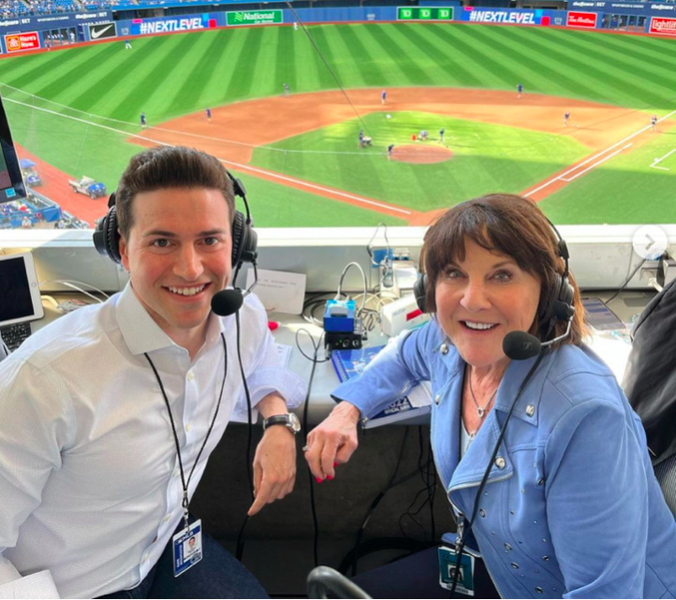
Major League Baseball is making a concerted effort to get more women into the baseball broadcast booths for both radio and TV. I don’t know if this is a DEI-inspired initiative or just a rational response to a long-lasting gender prejudice. Either way, there is no reason why a woman who knows the game, has a pleasing voice and is an experienced broadcaster shouldn’t be doing play-by-play or color commentary.
I am not used to it, however; nobody is. Baseball games to loyal fans are the voices of Vin Scully, Earnie Harwell, Mel Allen, Curt Gowdy, Harry Carey, and the rest. It didn’t help that the first prominent national baseball female broadcaster was whoever the young softball star was who was put in a three-person ESPN Sunday Night Baseball booth next to Alex (yecchh!) Rodriguez several years ago. Cheatin’ A-Rod was terrible as always, but she was embarrassing: NOW should have petitioned to have her fired. She was cute, which I suspect was the major reason she got the job, but most of the time she was giggling or laughing. She set the cause of female baseball broadcasting back at least a decade.
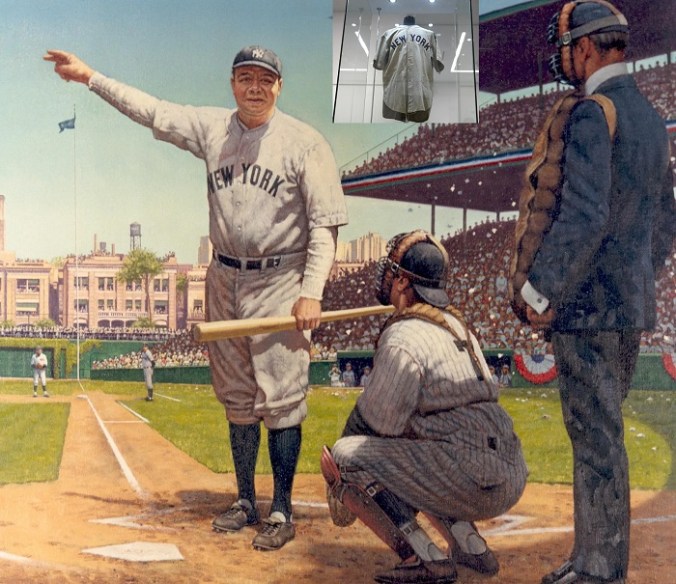
The jersey worn by baseball legend Babe Ruth when he “called his shot” in Game 3 of the 1932 World Series sold over the weekend for $24.12 million, setting the auction record for most expensive sports collectible. The previous record price for any sports collectible was the $12.6 million that a rare mint condition Topps 1952 Mickey Mantle card fetched in 2022. Babe’s jersey far eclipsed the $10.1 million a Michael Jordan Chicago Bulls jersey from Game 1 of the 1998 NBA Finals achived at auction that same year, the record for athletic attire until Babe broke it, like he shattered so many records when he was alive.
The sale raises many ethics issues, but the main one is that the exorbitant price is almost certainly based on a fabrication, a lie. It is similar to paying millions for the axe little George Washington used to cut down his father’s cherry tree.
In an earlier post that few people read (it was about baseball, see) I pointed out the excessive, virtue-signaling punishment handed down by the team on Red Sox outfielder Jarren Duran. His unforgivable offense was calling an abusive fan a “fucking fag” in a moment of temper during a game. The fan had apparent been ragging on him for the entire game from behind home plate, and the slur was picked up by the Red Sox game broadcast microphones and was audible to viewers. Duran apologized (immediately and well), but was fined and suspended for two games, which, given his status as arguably its best player, harmed everyone on the team while the Sox battle for a play-off slot. I have seen no indication that the fan taunting Duran was in fact gay, so the use of the slur “fag” was apparently just a random insult, but never mind: we are now in the world of censorship, word- taboos and hate speech hypersensitivity. I was called a fag once. I remember my response: “Is that the best you can do?” (It was.)
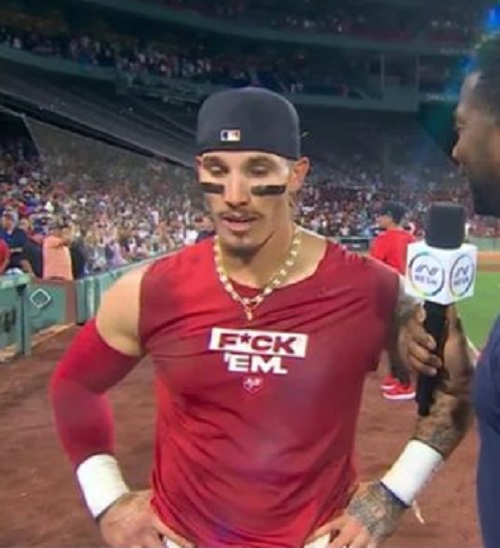
Duram served his two game suspension, but now he is on the LGBTQ Mafia’s hit list. In The Athletic today, “out” Boston sportswriter Steve Buckley goes after Duran again (no vendetta there!) because he wore the T-shirt above while being interviewed about the incident. You know, because sportswriters never use or hear the word “fuck,” and somehow the T-shirt’s legend means that Duran doesn’t take his outburst that employed a taboo word seriously enough.
The Chicago White Sox announced this morning that manager Pedro Grifol has been fired. “As we all recognize, our team’s performance this season has been disappointing on many levels,” general manager Chris Getz said in a statement within this morning’s press release. “Despite the on-field struggles and lack of success, we appreciate the effort and professionalism Pedro and the staff brought to the ballpark every day. These two seasons have been very challenging. Unfortunately, the results were not there, and a change is necessary as we look to our future and the development of a new energy around the team.”
Ya think? Under Grifol, the White Sox just finished tying the all-time American League record for consecutive losses at 21. He leaves with the third worst winning percentage of any manager in Major League history who has managed more than a single season. But believe it or not, his two and a two thirds-season tenure at the helm of the ChiSox was even worse than those stats indicate.
Last season, Keynan Middleton publicly criticized the White Sox’ clubhouse culture after he was traded to the Yankees. The pitcher said that there were “no rules” and “no consequences;” he said he knew of instances of “rookies sleeping in the bullpen during games” and players skipping team meetings and fielding drills. Veteran pitcher Lance Lynn was asked if Middleton’s comments were just the complaints of a disgruntled ex-, and he said that Middleton was “not wrong.” This year there were reports that the White Sox had a “fractured” clubhouse that wasn’t helped any when Grifol told his players that they would be remembered as the worst team in MLB history if they didn’t shape up. One player told a local sportswriter, “It’s been really tough in there. Pedro is a really good guy, just not the man for the job.”
So he was fired. That’s what’s supposed to happen to the leader of an organization that falls flat on its metaphorical face with terrible consequences. Was the White Sox losing all those games—nobody expected the team, which is a re-building mode, to be good this season, just not so spectacularly bad—as spectacular an organizational failure as, just to pick a random example out of the air, the Secret Service? Nobody has been fired for its astounding incompetence in Butler, Pa., although many culprits have been identified. Nobody has been fired from a leadership position during the entire Biden Administration, although the culture of incompetence is throbbingly obvious. (I guess Joe himself comes the closest to having been fired.)
In an essay on substack, conservative law professor and blogger Glenn Reynold sees the culture rotting from the head down:
Popular former Boston Red Sox pitcher Tim Wakefield died of an inoperable brain tumor in his 57th year at the end of last season. Wakefield was famously a knuckleballer, a rare breed in the game, and a athlete admired and loved by fans and all who came in contact with him, another rare breed. One of those admirers was Seattle Mariners pitcher George Kirby, known for being a virtuoso with pitch grips.
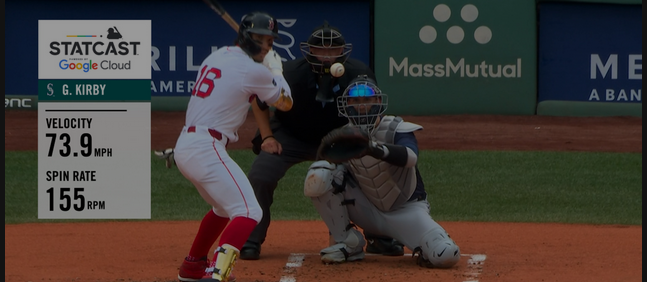
Kirby was the starting pitcher in yesterday’s afternoon game between the Mariners and the Red Sox at Fenway Park. It was an important game for both clubs, which are among those battling for a playoff slots in the American League. Statcast now reads pitches instantly, announcing whether a pitch is a fastball, curve, slider, cutter, splitter, change-up, etc. based on its database on each pitcher and the speed, spin-rate and course of the ball. When Kirby began the game by throwing his first pitch to Boston leadoff man Jarren Duran, Statcast shocked observers by stating that Kirby had thrown a pitch that wasn’t normally in his repertoire: a knuckleball.
Blue Jays rookie pitcher Yariel Rodríguez threw a first-inning 95 mph fastball that hit Baltimore Orioles back-up catcher James McCann directly in the face. Blood gushed from his nose and mouth, and he immediately dropped to the ground. Team trainer Brian Ebel began providing treatment at the plate, but McCann got to his feet, still bleeding, and went to first base. O’s manager Brandon Hyde summoned him to the dugout while the Jays were replacing their wild pitcher, but McCann was adamant that he could continue. It was the first game of a doubleheader, and McCann didn’t want the O’s young star catcher, Adley Rutschman, to have to catch both games, an invitation to injury.
“I felt like if I could get the blood to stop flowing then I could stay in the game, and that was what I was able to do,” McCann said. When play resumed, McCann went back to first, wearing a fresh, unbloodied jersey.
I watched it last night because there was really nothing else worth seeing on TV, but I hate what the All-Star game has become, and have hated it for a long time. Before inter-league play and huge contracts, the “Mid-Season Classic” was a real game, played as intensely as the World Series, for the honor of the two separate leagues. (Ask Ray Fosse how intensely.) Managers would try to get and keep the strongest possible line-up in the game: it wasn’t unusual for several stars to play all 9 innings. Starting pitchers went three innings, not just one. Players slid into bases and dived for balls. It was a real contest. In ethics terms, the All-Star Game had integrity.
For decades now, it has just been a bunch of rich guys going through the motions, joking with each other, making sure no one got hurt. The obvious objective of the managers is to get all 30 players on the roster on the field if possible, not to win. It’s a parade: viewers barely get to see a player display the skills that made him an All-Star. The event has the seriousness of a celebrity softball game…there’s no tension, no drama.
You don’t expect me to pass up a chance to chide the New York Yankees, do you? Especially when they really deserve it…and this episode has larger significance, I think, although I always think baseball has larger significance.
When I saw the video of the play above, I didn’t believe it. I don’t think I’ve ever seen a major league player loaf like that on a play. The culprit was Yankee center fielder Trent Grisham, who is no callow rookie; in fact, he has won a couple Gold Gloves for his fielding. It occurred during the ninth inning of Friday’s eventual 8-4 Yankee loss to Cincinnati; the Pinstripes have been losing a lot lately, indeed they appear to be in free-fall after a spectacular start. (Good.)
Yankee fans noticed, and booed Grisham lustily. Yankee social media commenters, already upset because of the team’s recent losing ways, piled on after the game. Best-selling author and podcaster Eric Sherman probably summed it up best, tweeting, “What in the world was [Manager] Aaron Boone waiting for there in the dugout? Trent Grisham should have been yanked from the game immediately. A missed opportunity for Boone to set an example for a team that has underachieved the last month. Wow.”
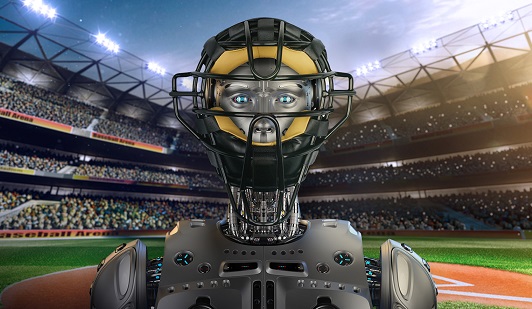
Regular readers here know about both my passion for baseball and my disgust with how many games are determined by obviously wrong home plate calls on balls and strikes. Statistics purportedly show that umpires as a group are correct with their ball/strike edicts about 93% of the time, representing a significant improvement since electronic pitch-tracking was instituted in 2008. What explains the improvement? That’s simple: umpires started bearing down once they knew that their mistakes could be recorded and compiled. In 2008, strikes were called correctly about 84% of the time, which, as someone who has watched too many games to count, surprises me not at all.
Even 93% is unacceptable. It means that there is a wrong call once every 3.6 plate appearances, and any one of those mistakes could change the game’s outcome. Usually it’s impossible to tell when it has, because the missed call was part of a chaos-driven sequence diverging from the chain of events that may have flowed from the right call in ways that can’t possibly be determined after the fact. Sometimes it is obvious, as in several games I’ve seen this season. An umpire calls what was clearly strike three a ball, and the lucky batter hits a home run on the next pitch.
Before every game was televised with slo-mo technology and replays, this didn’t hurt the game or the perception of its integrity because there was no record of the mistakes. (Sometimes it wasn’t even a mistake: umpires would punish batters for complaining about their pitch-calling by deliberately declaring them out on strikes on pitches outside the strike zone.) Now, however, a missed strike call that determines a game is both infuriating and inexcusable. As with bad out calls on the bases and missed home run calls, the technology exists to fix the problem.
Baseball only installed a replay challenge system after the worst scenario for a missed call: a perfect game—no hits, runs or base-runners—was wiped out by a terrible safe call at first on what should have been the last out of the game. The game was on national TV; the missed call was indisputable. That clinched it, and a replay challenge system was quickly instituted. I long assumed that robo-umps would only be instituted after an obviously terrible strike call changed the course of a World Series or play-off game, embarrassing Major League Baseball. For once, the sport isn’t waiting for that horse to leave before fixing the barn door. It has been testing an automated balls and strikes system (ABS) in the minor leagues for several years now. Good. That means that some kind of automated ball and strike system is inevitable.
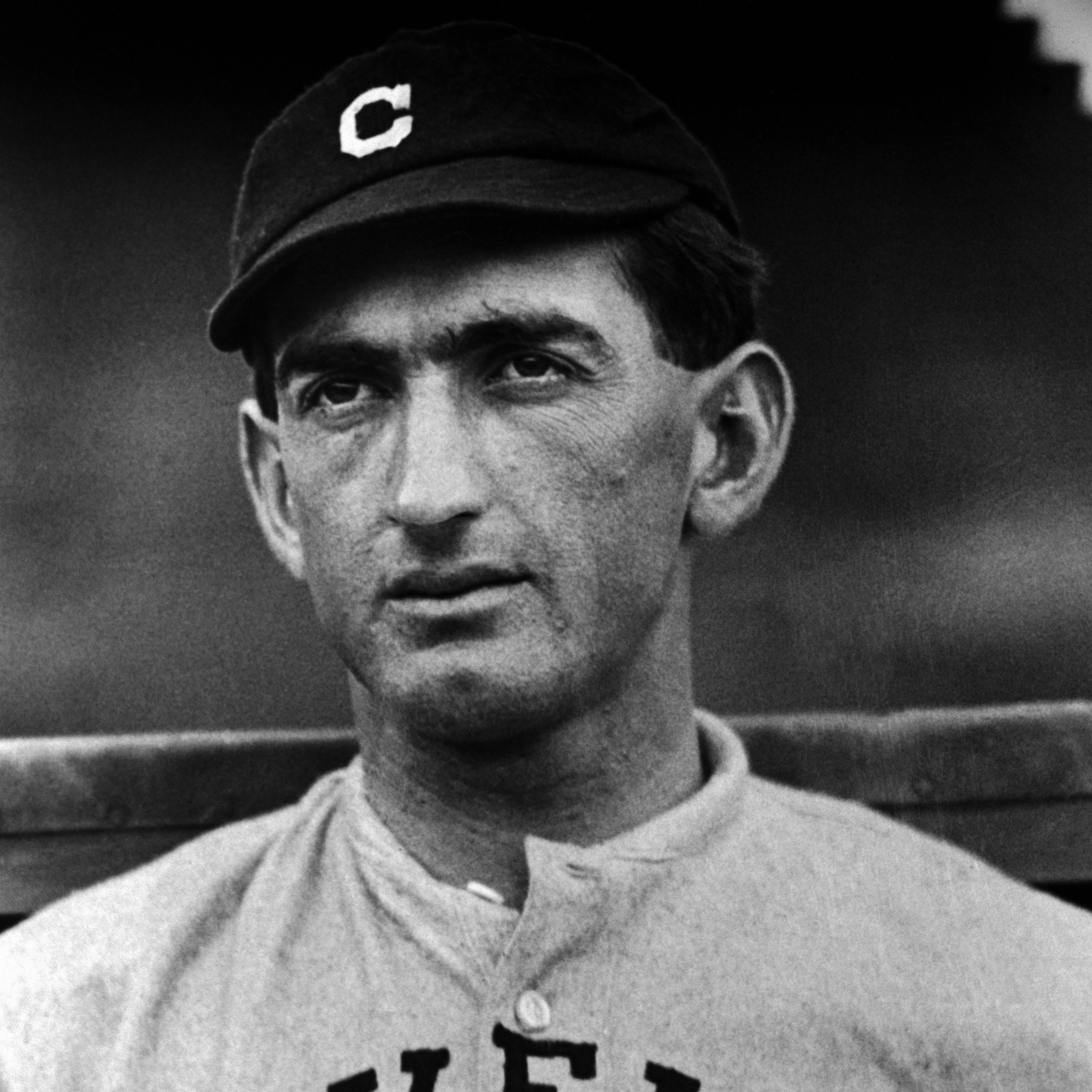
Major League Baseball, almost destroyed by a gambling scandal in 1919, with two of its greatest players, Shoeless Joe Jackson and Pete Rose (its all-time hit leader), banned from the game and exiled from the Hall of Fame for participating in baseball gambling (Jackson helped throw a World Series for gamblers; that’s him above. He was no Ray Liotta, was he?), is suddenly awash in new gambling scandals. How could this happen, you may ask? Easy. Once the Supreme Court opened the door to online gambling, all of the professional sports leaped into the money pit. Now online sports gambling outfits like DraftKings are the most ubiquitous sponsors of televised sports. In the middle of televised Red Sox games, the screen will show the odds on bets like “Will Rafael Devers hit a homerun?” David Ortiz, a lifetime Red Sox hero and icon, stars in commercials for DraftKings. The obvious message is that gambling on baseball is fun, virtuous, harmless, and…
For Major League Baseball, with its history, of all sports, to take this U-Turn was wildly irresponsible and perilous. How can the sport maintain the fan’s trust in the legitimacy of games played in an environment where billions are being wagered on them, openly and without any fear of corrupting the players?
Fay Vincent, the last real baseball commissioner (the first one was appointed because of the Black Sox scandal in 1919) told the Times, “The inevitability of corruption is triggered by the enormous amount of money that’s at stake. When you pour all this gambling money into baseball, or all the professional sports — or for that matter, even amateur sports — that amount of money is so staggering that eventually the players and I think, tragically, the umpires, the regulators, everybody is going to be tempted to see if they can get a million dollars.”
Vincent is an ethical man. The current “commissioner” (he’s the owners’ toady, just like Bud Selig, his predecessor), not so much. In a statement reacting to baseball this week banning one Major League Player for life for gambling on his own team and suspending four more for a year, Rob Manfred ludicrously said, “The strict enforcement of Major League Baseball’s rules and policies governing gambling conduct is a critical component of upholding our most important priority: protecting the integrity of our games for the fans. The longstanding prohibition against betting on Major League Baseball games by those in the sport has been a bedrock principle for over a century.”
Funny that after decades of no gambling scandals, baseball is suddenly drowning in them. What a coinkydink!


 Ethics Alarms