Ethics Dunce: Ex-Pitching Star And Big Mouth Curt Schilling

It’s been more than a month since the last baseball-related post. I fear it’s because the whole topic has left a bad taste in my mouth since the Red Sox essentially choked away what should have been a fun season right about the time I wrote the last one, which was childish of me. But I can’t ignore this ugly ethics story.

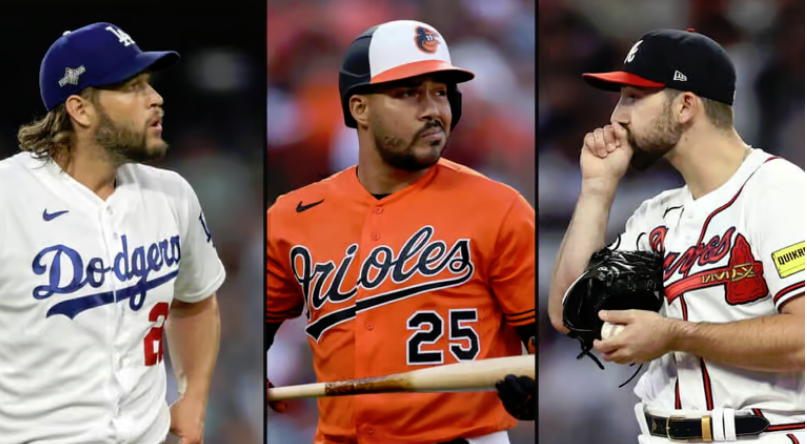
Curt Schilling, the former Orioles/Houston/Phillies/Diamondbacks and Red Sox starting pitcher justly credited as being the hero of Boston’s “Curse of the Bambino”-banishing World Series championship in 2004, revealed on a podcast last week that former Red Sox team mate Tim Wakefield is being treated for “brain cancer” and that Wakefield’s wife is being treated for cancer as well. This led to an outpouring of support for Wakefield, the knuckleball specialist who is as beloved by Red Sox Nation for his community work as much as for his always entertaining pitching as the last of the great knuckleballers. However, the Wakefields hadn’t authorized anyone to reveal their medical issues. The Red Sox felt compelled to issue a statement:

Continue reading

The “Immaculate Inning” Conundrum: A Fairness And Integrity Challenge

Yes, this perplexing ethics issue arises in baseball, but the principles it involves are applicable in other contexts. Attention should be paid.

Although there is no official definition, an immaculate inning in baseball occurs in baseball when a pitcher strikes out all three batters he faces in one inning throwing only nine pitches. This has only happened 114 times in Major League history, and been done by just 104 pitchers. The first immaculate inning was thrown by John Clarkson of the Boston Beaneaters against the Philadelphia Quakers on June 4, 1889. No-hitters, which automatically get a pitcher’s name in the Major League Baseball Hall of Fame in Cooperstown, are three times more common that immaculate innings. Throwing an immaculate inning is a career landmark for any pitcher.

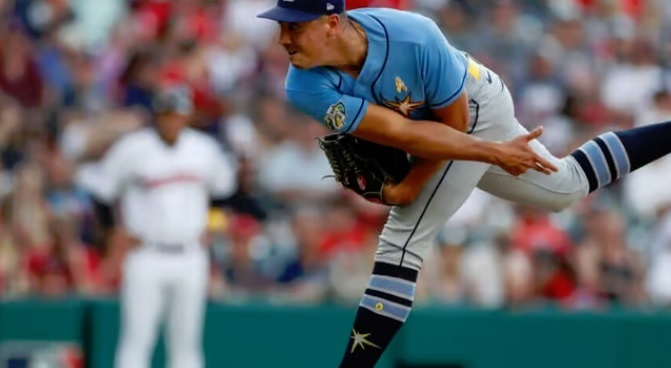
A week ago, Tampa Bay Rays reliever Robert Stephenson threw nine pitches to three Cleveland Indi—I’m sorry, Guardians batters and struck them all out on three pitches each. But whether or not this constituted an immaculate inning is still being debated. Within the controversy is a welter of ethics lessons and problems.

Continue reading

And Yet Another Baseball Great Chooses Money Over His Team, Fans, Integrity and Honor…

Over the weekend, I got to watch (again) the nauseating spectacle of Detroit Tigers firstbaseman Miguel Cabrera disgracing his own legacy as one of the greatest players of all time. A guaranteed first ballot Hall of Famer with over 3,000 hits and more than 500 career homers, Cabrera is no longer even a passable performer at age 40, and hasn’t been since 2017. That year and every year since, Cabrera has been paid an average of $30 million a season for production that the Tigers could have gotten from a mediocre minor league journeyman playing for the Major League minimum salary. All weekend, the TV broadcasters were blathering on about what a wonderful human being “Miggy” is. If he were really wonderful, he would have retired as soon as he realized he was stealing his salary and hurting his team in the process.

Cabrera has graciously announced that this will be his final season, as if he had any choice in the matter. His long term contract is up: he’s squeezed over $200 million out of it without having a single season worthy of his reputation or his salary. He has one (1) home run this season, with less than a third of the schedule to go. The year he signed his contract, he hit 44.

But Cabrera isn’t the subject of this post; I already complained about him and other greedy, fading players here. There’s a worse offender in baseball now, believe it or not. The current miscreant is St. Louis starting pitcher Adam Wainwright, who had announced before this season that it would be his last. [Wainwright, by the way, has one of the more varied and interesting Ethics Alarms dossiers among pro athletes.] He is 41, and not only are 40+-year-old pitchers who still belong in the Major Leagues rarer than star sapphires, Wainwright’s 2022 season at 40 was not a harbinger of optimism, though he still was getting batters out, albeit not as he once had. But Adam Wainwright has pitched for the St. Louis Cardinals and only them for 17 years , winning just short of 200 games along the way. He is regarded as a hometown hero to Cardinal fans, who also wanted him aboard for one more campaign because they had reason to think their perennial play-off team had a real chance to get to the World Series again in 2023, and nothing is more valued on such teams as a grizzled old veteran who has been through the wars before.

It was a good theory, anyway. Unfortunately, Wainwright was done, through, cooked, out of pitches and excuses. This season his earned run average is almost 9 runs a game, which means he is pitching batting practice to the opposition. A starting pitcher without a long-term contract and with no reputation as a team legend is usually cut if he can’t keep his ERA below 6; under 4 runs a game is good, under 4.5 is considered acceptable. But 8.78, which is what Wainwright has delivered in 15 starts? A decent college pitcher could do that well, maybe a top high school pitcher too. And for this consistent failure, Adam Wainwright is being paid $17,500,000.

Continue reading

Baseball Ethics Dunce For The Ages: Tampa Bay Rays Shortstop Wander Franco

What’s worse than Ethics Dunce? What Wander Franco, the Tampa Bay Rays sensational young shortstop, has done is so flagrantly destructive to himself and so ruinous to his team and family…and so obviously wrong and avoidable that “dunce” is an understatement.

If you don’t follow baseball, I need to tell you bit about Franco. At 22 years old, he is already in his third major league season. He plays shortstop, the most important and difficult defensive position besides pitcher and catcher, and his team, the Tampa Bay Rays, are a perennial powerhouse in the American League. He is handsome and built like a Greek statue: so clearly does everything about Franco scream “Superstar!” that the Rays took the almost unprecedented step of signing him to an eleven year contract before this season, before he has won a single batting title, Gold Glove or MVP award. He has already made just under $4 million dollars; the rest of his contract will pay him an estimated $176 million more, whereupon he will be eligible for another long-term contract as a free agent conservatively worth more than twice as much.

He has all of that before him, and that’s just the money. He is looking at being a community and national celebrity, a product spokesperson and endorser, a role model for the young, and a legend in his sport. And what did he do?

Continue reading

The Fish Rots From The Head Down: Censorship Is Catching On!

A “Nation of Assholes” nurtured by boorish conduct emanating from the White House is certainly bad, but a Nation of Censors is infinitely worse. Woke World, now in charge of one and a half of the three branches of government, is increasingly enthusiastic about the concept of stifling the communication of inconvenient or unwelcome facts. And, as the top goes, so rots what lies beneath.

The Baltimore Orioles management didn’t like the fact that play-by-play announcer Kevin Brown told a TV audience before a televised game with the Tampa Bay Rays how badly the team had done in its games against the Rays in their home stadium over the years. Indeed, the O’s, now the surprise leaders in the American League East after many seasons of abject failure, had fared exactly as Brown described. But Facts Don’t Matter, so he was mysteriously pulled off Orioles broadcasts as punishment, even though the statistics Brown cited came from the team own PR department’s pregame notes, and were accompanied by screen graphic prepared in advance.

Continue reading

Me, Baseball, And Eddie Bressoud: I Missed An Opportunity To Let Someone Who Had A Positive Influence On My Life Know, And I Botched It. Now It’s Too Late…

Not long before he died, Mickey Mantle, who had spent his baseball playing days as a fearful, bitter, anti-social drunk with low self-esteem, had an epiphany when a man, with tears in his eyes, shook his hand and told him how much Mantle had meant to him growing up. Mantle was astonished that what he had done on the baseball field affected anyone so deeply, and said that from that point on, he no longer felt his life had no meaning or worth.

There are people and subjects that have influenced the course of my life, my interests, choices and beliefs far more than any school I have attended or any pursuit I have engaged in to make money: Presidential history, for which I have Robert Ripley to thank (but that’s another story); theater and performing, for which I credit Mr. Gilbert and Mr. Sullivan; Greek Mythology, a gift from my mother; rules for living, the specialty of my dad; and, last but far from least, baseball and the Boston Red Sox.

Eddie Bressoud died a week ago, at 91. He is primarily responsible for making me a lifetime baseball fan, with all the excitement, entertainment and wisdom that roller-coaster experience has supplied.

In the winter of 1962, I was reading the Herald sports pages and read about the Red Sox trading their much-reviled shortstop, Don Buddin, to the new expansion Colt .45s for Bressoud, who had been their first pick in the expansion draft. I hadn’t followed the Red Sox closely before that, though all of my friends were big baseball fans like most normal kids in Boston, Mass. You know me: I don’t follow crowds, I avoid them. I don’t know whether it was Eddie’s name or what that intrigued me, but I watched Opening Day specifically to see the new guy play.

I learned that he was called “Steady Eddie;” that he had a Masters degree and was a teacher; I saw that he was always in motion on the field, talking to other players, pointing, intense, an obvious field leader. Bressoud got a hit and started a 14-game hitting streak, sucking me in to watching or listening to all those games to see how long he could keep it up. I was hooked: I didn’t miss a game for 8 years.

Bressoud wore #1, and backed up every catcher’s throw to the pitcher with men on base, a fundamental move coaches teach by few major league shortstops continue. Eddie had a Fenway stroke, a strange, chopping, 2/3 swing that was perfect for knocking balls off of or over “the Green Monster” in left. He also had a knack for clutch hits and doing the little things that helped score runs, like moving runners to the next base even when grounding out. Eddie hit safely in the first 20 games in 1964, setting a Red Sox record for a beginning of a season.. When the team was behind in the 9th, which was often in those days,it seemed like he never failed to get on base somehow. 

Bressoud was unusually articulate and smart: he was a teacher in the off-season, and always made it clear that his passion was education. I was the only fan I knew who was so enamored of Bressoud: Carl Yastrzemski was the rising superstar on those bad teams before the Boston miracle pennant of 1967, though the Sox manager and coaches sang Bressoud’s praises for playing the game ‘the right way” and being both intense and productive. My loyalty was a family joke long after Eddie had left the game. All three of his seasons as the regular shortstop were excellent, and he was was named to the All-Star team in 1964. He was the only position player who didn’t get into the game. I was crushed.

The next season, new manager Billy Herman took away Bressoud’s starting job before Spring Training, and then traded him to the Mets, I listened to their games on the radio so I could keep up with how Eddie was doing. He was a valuable part-timer for the Mets for two years, and was acquired by the Cardinals in 1967.  His last MLB appearance was, ironically, against the Red Sox in Fenway Park, when he ran onto the field as a defensive replacement for St. Louis in the 1967 World Series. The Boston fans gave him a nice ovation.

Baseball has given me too much pleasure and perspective to recount in the decades since Eddie retired, and I apply the lessons I have learned from the game regularly in everything I do. I designed a baseball trivia game and launched a company to promote it, leading me to my first marketing job. Baseball has given me lifetime friends, and experiences I will never forget. It allowed me to cope with personable disappointments and failures, and to not to be overly impressed with the occasional success. It taught me much about critical thinking and bias (thank-you, Bill James!), character, leadership, ordering priorities, recognizing corruption, and culture.

Continue reading

Apparently It’s Racist For Gov. DeSantis To Prefer Baseball To Basketball…Wow, That Desperate To Smear DeSantis Already?

I am having increasing difficulty figuring out what progressives and Democrats are trying to convey when they all a politician “racist.” As far as I can tell the current definition amounts to “Republican.”

DeSantis was recently asked by a CBN interviewer about his love of baseball, which he extolled as a “meritocratic” game because athletes of different sizes and skill levels can perform at a competitive level professionally, unlike basketball.”I think that there’s kind of a place for everybody in a baseball team if you’re willing to work hard, if you’re willing to practice… I kind of thought it was always a very democratic game, a very meritocratic game.” He added, “Whereas I kind of viewed basketball as like ‘these guys are just freaks of nature.’ They’re just incredible athletes. In baseball, you know, you have some guys that might not necessarily be the best athletes, but maybe they’ve got you know that slider that nobody can hit, or they have the skills that allow them to compete at the highest level.”

I would take issue with DeSantis’s suggestion that basketball players are superior athletes to baseball players: as Bob Costas memorably replied to a similar claim by another sportscaster, check out Michael Jordan’s record when he tried to play in the minor leagues, where he never got higher than AA and washed out after a single (pathetic) season.

But never mind: the main thrust of his comments is irrefutable and true. The average height of an NBA player is nearly 6-feet-7-inches, nearly a foot taller than the average American man. Players under six feet are extremely rare. Major League Baseball players, in contrast, average about 6-feet-1-inch tall, with some superstars well under that level, like Houston’s Jose Altuve and the Dodgers’ Mookie Betts. There are some freaks in the mix (2022 MVP Aaron Judge, for example) but unlike in the NBA, they are an exception, not the rule.

Continue reading

Ethics Quiz: Ethics Hero Or Insecure Spoilsport?

Former MLB player David Freese was voted by St. Louis Cardinals fans into the team’s Hall of Fame. To everyone’s surprise, he declined the honor.

“This is something that I have given an extreme amount of thought to, humbly, even before the voting process began,” Freese said in a statement. “I am aware of the impact I had helping the team bring great memories to the city I grew up in, including the 11th championship. I feel strongly about my decision and understand how people might feel about this. I get it. I’ll wear it. Thank you for always being there for me, and I am excited to be around the Cardinals as we move forward.”

He also said that he did not feel “deserving” of the honor. “I look at who I was during my tenure, and that weighs heavily on me,” said Freese, who recived the most votes of any former Cardinals player for induction in online balloting. “The Cardinals and the entire city have always had my back in every way. I’m forever grateful to be part of such an amazing organization and fan base then, now and in the future,” he said. “I’m especially sorry to the fans that took the time to cast their votes. Cardinal Nation is basically the reason why I’ve unfortunately waited so long for this decision and made it more of a headache for so many people.”

Perhaps you will not be surprised to learn that Freese has battled clinical depression his entire life, and is a recovering alcoholic.

Continue reading

Observations On Washington Nationals “Pride Night”

That’s a photo from last night’s Pride celebration at Nationals Park in Washington, D.C., as Nancy Pelosi threw the ceremonial first pitch. Many conservative wags are enjoying themselves, like “Not the Bee,” which mocked, “The Washington National’s baseball team hosted a Pride Night …of course, they had some buffoonish drag queen show up to toss the first pitch. Oh, wait- I’m being told it’s Nancy Pelosi…Fives of people applauded wildly…”

Observations:

Continue reading

Fairness, Justice, And Baseball No-Hitters

That’s Harvey Haddix about to throw a pitch above. The photo is from one of the most famous baseball games ever played: on May 26, 1959, Haddix, then a starting pitcher for the Pittsburgh Pirates pitched a perfect game—that’s no runs, hits, walks or errors, with nobody on the other team reaching base) for 12 innings against the Milwaukee Braves. It was the greatest pitching performance of all time, but because the Pirates didn’t score a run either, Haddix had to keep pitching into the 13th inning, where he lost the perfect game, the shutout and the game itself. As a result, he wasn’t even given credit for a no-hitter, which is normally when a pitcher throws nine-innings of hitless ball. That really bothered me as a kid; it made no sense.

In baseball, a no-hitter, with a perfect game being the ultimate no-hitter, has always been considered one of pinnacles of single game performance by a baseball player. A pitcher who throws one gets his name in the Hall of Fame; it’s a distinction that accents an entire career. Only the greatest pitchers throw more than one in a career; some of the very greatest, like Lefty Grove, Grover Cleveland Alexander, and Roger Clemens, never get one. (Cy Young, Nolan Ryan and Sandy Koufax, however, tossed three or more each. Johnny Vander Meer tossed two no-hitter in consecutive starts!) So being credited with a no-hitter is important; it matters.

Imagine then what it would feel like to be credited with pitching a major league no-hitter (or have your father or grandfather credited with one) and have it taken away. That’s what happened in 1991. Up until then, there had been no specific definition of no-hitter except the obvious, common sense one used by sportswriters, players, fans and baseball historians: a no-hitter was a baseball game that ended with one team having failed to get a hit. One of my favorite Commissioners of Baseball, however, Fay Vincent, the last one who wasn’t a toady for the baseball team owners (Vincent was fired for being independent, which up until then was the definition of his job), decided that the definition of no-hitter was too loose, among some other statistical anomalies. He put together a commission, and, with his influence, they redefined a no -hitter as a game that ended with one team getting no hits in at least nine innings.

Continue reading