Unethical Quote Of The Month: Christiane Amanpour

amanpour

“There are some situations one simply cannot be neutral about, because when you are neutral you are an accomplice. Objectivity doesn’t mean treating all sides equally. It means giving each side a hearing.”

——Christiane Amanpour in 1996, responding to critics who called her reporting on the Bosnian War biased.

Now THIS is an unethical quote, in contrast to the earlier one from Christiane, which I posted yesterday as an “Ethics Quote of the Week.”

I’m posting this one 20 years after it was uttered because…

1. It explains the previous quote from yesterday.

2. It tells us everything we need to know about Christiane, which is to say, she cannot be trusted as a reporter.

3. For some reason I was unaware of it.

4. It appears to have become the motto of all reporters.

5. It is unethical to the core, and

6. A lot of people, including most journalists, don’t know why. Continue reading

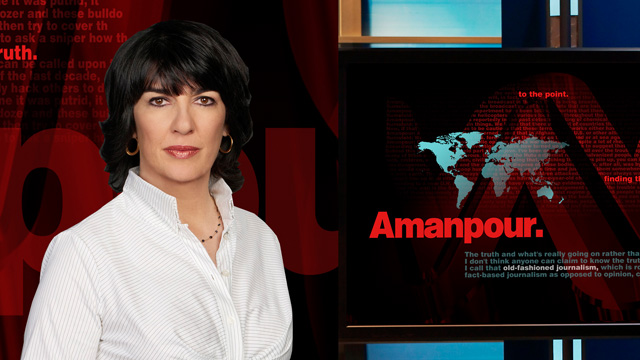
Ethics Quote of the Week: Christiane Amanpour

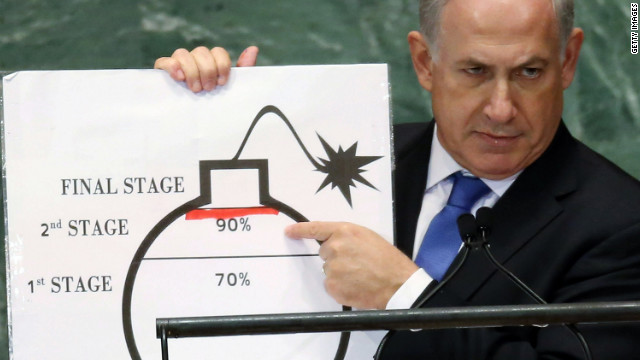
“It was a very dark Strangelovian speech painting the picture of a dystopian world, raising the spectre of a genocidal nation, a genocidal regime spraying nuclear weapons to annihilate the whole world and the whole region. Now, obviously many people are very concerned about Iran and there is a deep lack of trust, but surely the same was said of the Soviet Union all those years ago.”

—-CNN reporter Christiane Amanpour, commenting to Wolf Blizter on Benjamin Netanyahu’s controversial address to Congress.

That's funny...he doesn't LOOK Jewish...

That’s funny…he doesn’t LOOK Jewish…

This is a propitious opportunity to clear up a question I have been asked a few times, namely, “What is the distinction between the Ethics Alarms “ethics quotes” as opposed to the unethical and ethical quotes of the week or month. Sometimes, it’s a close call, like now. An ethics quote either illustrates, in a positive or negative fashion, an ethics principle or raises an ethics issue. Unethical quotes are those that are themselves harmful, dishonest, or that promote ethics misconceptions and unethical conduct. Ethical quotes are those that display ethical values or accomplish something that is objectively good.

Amanpour’s quote is, not to be overly blunt, stupid, ignorant, and disturbingly lacking in historical perspective. It raises ethics issues, but does not rise to the level, quite, of an unethical quote. It does raise the ethics issues of incompetence in the media, political bias robbing us all of IQ points, irresponsible journalism, and what happens when one is incapable of placing oneself behind another individual’s eyeball.  She is trying to be descriptive, so I would not term the quote itself unethical, just shocking. She has long been respected as a reporter on international events, but this statement is so devoid of its proper context that I think her credentials need to be reconsidered. Continue reading

The Ethics Of Netanyahu’s Speech and the Consequences Of Lost Trust

netanyahu

One of my knee-jerk progressive Facebook friends is addicted to terrible analogies. Here is his recent attempt to frame the controversial appearance by Benjamin Netanyahu before Congress today:

“At the invitation of Speaker Yuli Edelstein, President Barak Obama will appear before the Israeli Knesset on Thursday to give a major speech on the Netanyahu adminstration’s bungling of the Palestinian conflict, territorial abuse to build settlements, and allocation of US foreign aide…”

What’s wrong with that? You have three seconds.

Time’s up. That is a lousy analogy, because the positions of the U.S. and Israel are not accurately reversed as a good analogy would demand. If Netanyahu was appearing before Congress to lecture it on U.S. policies regarding illegal immigration over the Mexican border, that would justify my friend’s hypothetical. What Netanyahu is here to talk about, however, is the future of his people and his nation, not ours.

As I wrote here about a month ago, there is no question that this is a breach of diplomatic protocol, nor is there any doubt that Congress is defying tradition, separation of powers and probably the Constitution to invite the Israel Prime Minister to, in essence, lobby the public regarding the President’s conduct of foreign policy. Congress’s actions are objectively unethical, a calculated tit for the President’s equally unethical tat of using executive orders to circumvent the lawmaking process. This episode is ethically more complicated than that, however, and when the criticism is doled out, other ethical considerations and principles are relevant.

Here is the chief one: Netanyahu does not trust the judgment, motives, negotiating skill and competence of the Obama Administration. Continue reading

Brief Notes: Healthcare.gov’s Contractor, Netanyahu, and Charles Blow

life-preserver

I am drowning in important ethics topics and short of time, so I’m reluctantly employing the rarely-used (here) flotation device of briefly noting three stories that would normally warrant full posts. I’ll reserve the right to change my mind and fully explore one or more of them later.

1. Wait: who’s the journalist here?

Six days after Ethics Alarms noted the ridiculous fact that the IRS has hired—for about 5 million dollars of taxpayer money— the same group of incompetents who botched their 800 million dollar job of getting Healthcare.gov up and running, the Washington Post ran the story (on page 18). The new contract itself dates from August: I regard my nausea over it as late, but I regard the Post’s failure to report the story until now a) suspicious, b) incompetent and c) indefensible.

2. Netanyahu lobbies Congress Continue reading

Ethics Dunce: Israel

"Nothing personal, you understand. It's just your dead son we're angry at."

“Nothing personal, you understand. It’s just your dead son we’re angry at.”

Prime Minister Benjamin Netanyahu had vowed a harsh response to the recent terrorist attack on a synagogue in Israel by two Palestinians wielding meat cleavers and a pistol. Four rabbis and a policeman were killed in the attack. What does he consider “harsh”?

“I have ordered the destruction of the homes of the Palestinians who carried out this massacre and to speed up the demolitions of those who carried out previous attacks,” Netanyahu said.

Oh.

Yeah, I’d call that harsh.

Hours after his announcement, Israeli forces razed the east Jerusalem apartment belonging to the parents of another terrorist youth, Abdelrahman Shaludi, who intentionally rammed his car into a crowd of pedestrians on October 22, killing a young woman and a baby. Shaludi was shot by police at the scene and later died.
There is no indication that Shaludi’s parents were complicit in the attack, except for, I suppose, spawning him.

Israel seems to think that’s justification enough.It had used house demolitions as draconian retaliation for years in the West Bank but ended the policy in 2005 after the army decided that the tactic had no apparent deterrent effect and made violence more likely rather than less. Hmmm…I wonder where the fact that the tactic is just indefensibly wrong figured in that calculation? It obviously isn’t on Israel’s ethical radar now, as the government has reinstituted the indefensible measure.

The Netanyahu government, says commentators, feels that it must show the Israeli public that it is punishing its enemies. But human rights groups are again condemning the practice, arguing that this is unjust collective punishment targeting not the perpetrators but their innocent families…which is exactly what it is. Continue reading