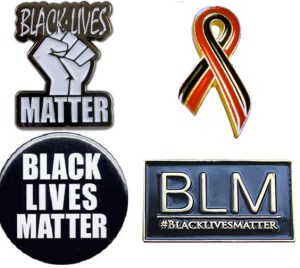
Q: Which of these can a judge ban from a courtroom? A: All of them.
Youngstown (Ohio) Municipal Court Judge Robert Milich ordered NAACP attorney Andrea Burton to remove the Black Lives Matters pin she was wearing. The attorney refused, and was declared in contempt of court.
Good.
She was.
Judge Milich sentenced the grandstanding lawyer to five days in jail, though the sentence has been stayed while she appeals the decision, as as long as she obeys Milich’s order not to wear items that make a political statement in court. When she loses her appeal, and she will, she will have to serve the five days in jail.
Milich is on firm ethical and constitutional ground, not that this episode won’t subject him to being called a racist. It is well-established that judges can ban political expressions in the courtroom, and in 1998, the Supreme Court let stand the rulings of a federal district court and the 1st Circuit Court of Appeals, in Berner v. Delahanty, that a the judge’s prohibition of political buttons was a reasonable method of “maintaining proper order and decorum” in a courtroom. In that case, the judge prohibited lawyer Seth Berner from wearing a button saying “No on 1—Maine Won’t Discriminate,” a declaration against an upcoming state referendum.
As long as a judge doesn’t allow one form of political advocacy while banning others, there is no free speech issue. Judges have gotten themselves involved in controversy when they have allowed buttons, as in the 2006 Supreme Court case of Carey v Musladin, in which Court ruled unanimously that murder trial spectators were free to wear buttons with a picture of the victim in front of the jury that convicted the defendant. The justices agreed with California prosecutors who said the buttons were a harmless expression of grief by family members at Mathew Musladin’s trial.
I really don’t like that decision. A wise judge will avoid the issue by prohibiting any advocacy in court of of any political, social or case-related opinion. Continue reading
 Ethics Alarms