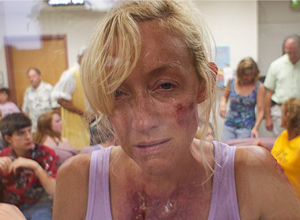
This is what the horror movie outbreak looked like. The real one? We don’t know.
In Barry Levinson’s (terrific, scary) eco-horror movie “The Bay,” slug-like sea creatures mutated by toxic waste eat their way through the faces and bodies of the residents of a Chesapeake Bay community, as medical authorities carefully keep the story under wraps from the rest of Maryland and the nation. At the National Institutes of Health Clinical Center in Bethesda last year, a different kind of monster bug was on the loose: the antibiotic-resistant bacteria known as Klebsiella pneumoniae. For six months the bacteria spread, eventually infecting 17 NIH patients, killing at least six of them. Doctors took extraordinary precautions to keep the so-called “superbug” from getting out into the population, but such measures didn’t include telling the city, county or state what was happening, or informing non-physician staff, many of whom were at risk of infection, about the bacteria outbreak. The full story didn’t come to light until August of this year, when NIH researchers published a scientific paper describing the advanced genetic technology they used to trace the outbreak. Continue reading
 Ethics Alarms