Worst Ethics Quiz Ever

 lifeboat test

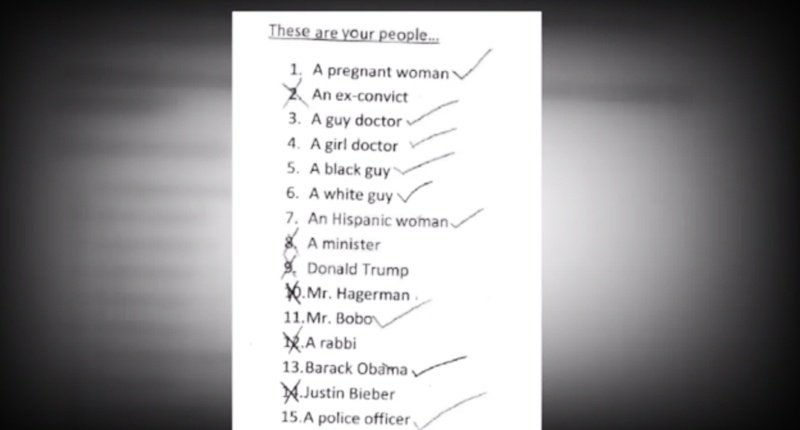
A teacher in the Hillsborough County School District gave students a “Lifeboat Quiz” asking students to choose who lives and dies during a hypothetical sea disaster.

They were told 15 people need to be saved but there was only room for nine people on the boat. They then had to choose among options including “the black guy,” “the Hispanic woman,” “the pregnant woman, ” and also Barack Obama , Donald Trump, and, uh, Justin Bieber.

The students were 11; this was the 6th grade in the Giunta Middle School in Riverview, Florida . A mother of one of the students turned this into news by claiming the test was racist—she knew the magic word, all right. It’s not racist at all. What it is is incompetent and inappropriate. Naturally, the debate has been immediately detoured into issues like diversity, which have nothing to do with what’s wrong with the test. I could imagine an excellent teacher steering the discussion of a lifeboat dilemma into a useful general discussion of bias and ethics. I cannot imagine anyone who would think this quiz could support such a discussion being skilled enough to teach such a lesson.  If the teacher told students that their choices should consider diversity quotas, she should be fired. What are the odds, do you think? Continue reading

Ethics Reflections On The Sudden Death Of Wonderful Human Being

regret

I returned from a legal ethics teaching tour to the horrible news that a friend of mine had died in a freak accident at his home. I had just seen him for the first time in many months when he showed up unexpectedly on the final weekend of my theater company, and the production I directed for it as a final bow. When I spotted him in the theater lobby that day two months ago, I shouted his name and gave him a long hug. He was one of those amazing people who just made you feel better about the world knowing that people like him were still in it.

Now, just like that, he’s gone. An e-mail from him that arrived right before my trip sits unanswered in my in-box. I didn’t rush to return it—what was the rush? Life, of course, is the rush, and this has happened to me before. Why don’t I learn? Continue reading

Why Don’t People Understand What’s Unethical About Nepotism?

Bing and family

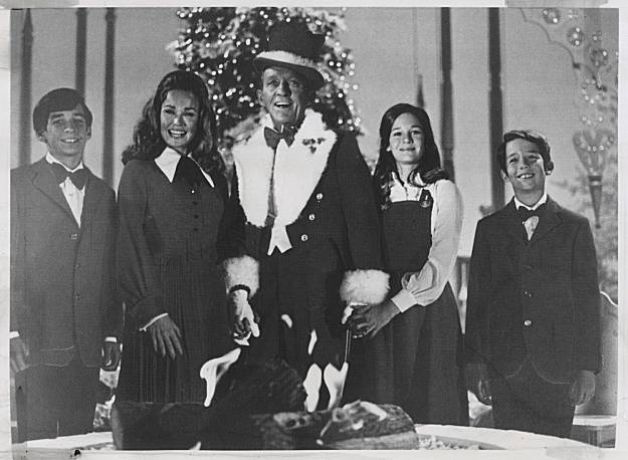
I suppose it is part of the larger problem that people don’t understand what’s wrong with conflicts of interest, and thus fall into them too easily. At its core, nepotism always, always, creates a conflict of interest for the supervisor, boss or manager, or leaves a strong suspicion of one, which is just as bad, the epitome of “the appearance of impropriety.” Nepotism simultaneously destroys the organization’s members’ trust in leadership—Was he or she objective? Was love and loyalty to a child rather than merit and the best interests of the organization behind the decision? Were there objectively better candidates? Will this bias harm me? —and the hired, no matter how good or qualified the son or daughter may be. If the organization declines and heads have to roll, the suspicion will always be that favoritism protects the offspring. If the organization is successful, there will still be a widespread belief that Sonny Boy or Darling Daughter is whispering in the parents’ ear, a mole, on the side of the parent rather than subordinates. Nepotism almost always destroys any organization’s morale, trust, and cohesion.

Why is this so difficult? It is spectacularly obvious, and the only defenses that are ever offered are… Continue reading

The Conflicted, Misleading, Incompetent Better Business Bureau

Grade inflation at the BBB!!!

Grade inflation at the BBB!!!

I don’t know who or what persuaded CNN to set its sights on the Better Business Bureau, but we should be glad it did. Its first revelation, which I knew about, was how the non-profit BBB is funded by the same businesses it purports to rank. Depending on the size of a business, the BBB demands membership fees ranging from hundreds of dollars to more than $10,000 a year. Members can also pay for plaques announcing their accreditation, BBB seals of approval for their company’s websites, and ads. This is not just a conflict of interest, but a classic one, as well as a system that creates an appearance of impropriety.

Joseph Ridout, a spokesperson for watchdog group Consumer Action, agreed that  this structure, where the BBB is “funded by the dues-paying businesses and not the consumers,” presents a “serious conflict of interest.” The BBB, however,told CNN that its membership dues have nothing to do with the ratings companies receive. Of course! And members of Congress don’t tend to vote the way their biggest donors want. Stop being so cynical! Continue reading

1. The NY Times Has A New Author Of “The Ethicist” And 2., Boy, Did He Ever Botch The Dilemma Of The Closeted College Student

"NEXT!!!"

“NEXT!!!”

The New York Times Magazine column “The Ethicist,” long authored competently by non-ethicist Randy Cohen, had lost me due to the biased and often unethical answers to his reader’s queries by his most recent successor, Chuck Klosterman. So repellent was Klosterman’s version of the column that I didn’t even notice when the Times sacked Klosterman late last year after one bizarre response too many.

[The final straw:  An inquirer  went to a Starbuck’s  wanting to buy a regular over-priced cup of coffee, but when the woman in front of the customer  ordered a pumpkin-spice latte  and received a coupon for a free drink because the shop was out of it, “NAME WITHHELD” ordered a pumpkin- spice latte to get the free coupon. Was this ethical, he/she/it asked?” Klosterman’s answer: “No. You’re a liar and a low-rent con artist. And you live in a community where pumpkin-flavored beverages are way too popular.”  Now, “No” is correct, but it’s a great question, and deserving of a serious analysis rather than whatever that was from the ex-Ethicist. The coupon was a nice gesture to someone who had come to the Starbuck’s wanting a specific beverage and was disappointed—a store should not be tantalizing customers with products they don’t have to sell, essentially setting up a bait and switch. The coupon was an ethical “We’re sorry,” but also made the employee vulnerable to anyone who decided to misrepresent his real intent in order to get a free drink later. Yes, taking advantage of this opportunity to the detriment of the store is unethical, because the inquirer took an appropriate gesture clearly intended for a specific situation and exploited it. It was not illegal, however, and was  not a con. I would compare it to the scenario where a computer glitch has resulted in an airline selling tickets online for absurdly small amounts, and travelers rush to take advantage, rationalizing that mistake or not, the opportunity is there and they can legally grab it.]

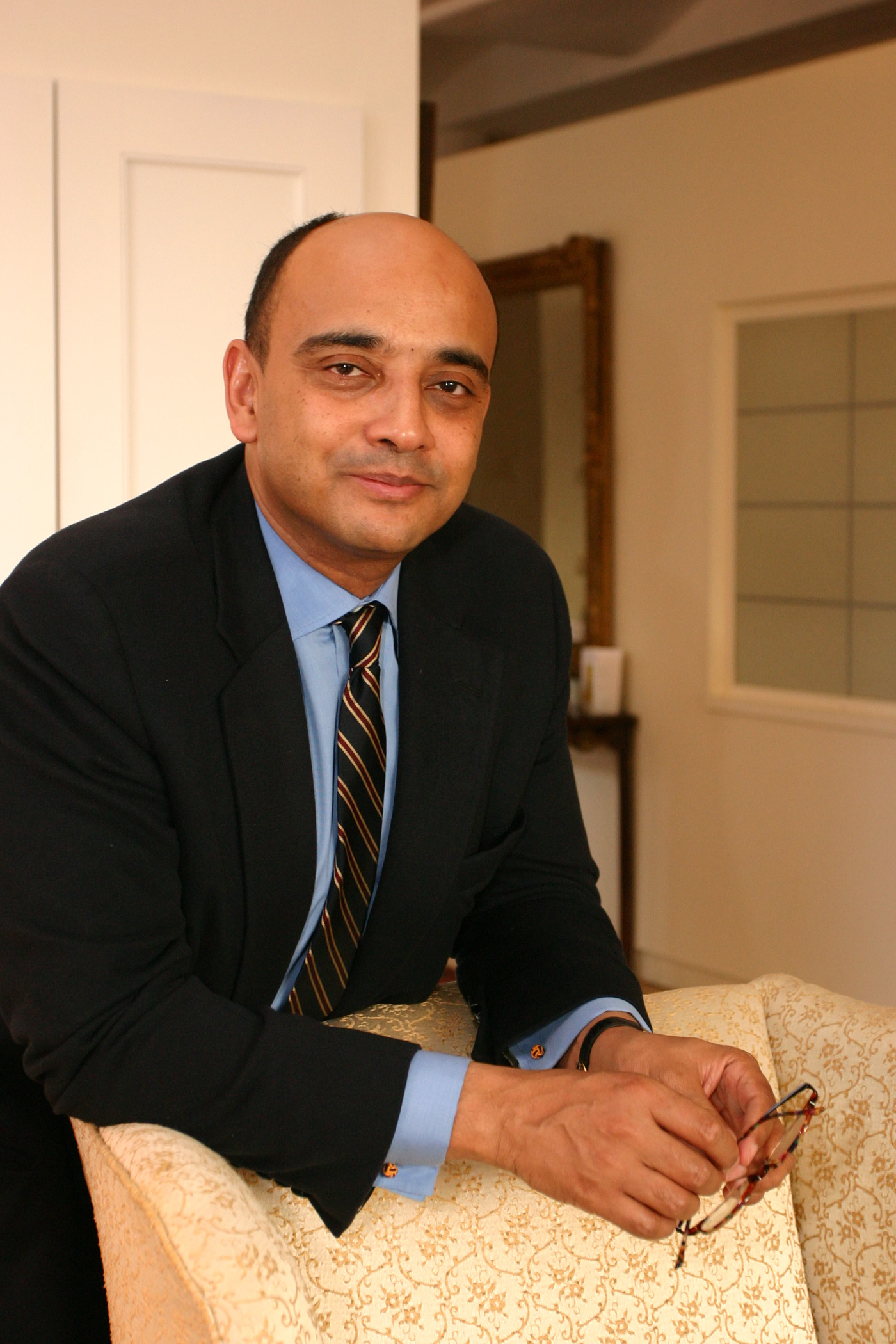
Now the Times has a new author of “The Ethicist,” after experimenting with a new format in which a podcast including him and some other commentators hashed over ethics hypotheticals and then the podcast was transcribed and published in the Sunday Times magazine. He is Kwame Anthony Appiah, who teaches philosophy at N.Y.U.  This week Appiah’s  first solo, so I would normally say that it’s too early for any fair assessment, but boy, did he ever botch the September 2 podcast. He botched it so badly that I can’t see myself paying much attention to anything else he writes. It was an ethics disaster.

A college student asked if he could ethically lie to his anti-gay father about his sexual orientation so Dad would keep paying the student’s tuition. The father is suspicious based on some clues during his son’s high school days, and has made it very clear to his son that if he is gay, he would not only withdraw all financial support but also reject him entirely. “Questions about my sexuality are inevitable whenever I come home,” the inquirer wrote. “My father has demanded I produce archives of all emails and text messages for him to review, although I have successfully refused these requests on the grounds that he has no claim to my adult communications.”

He asks, Is it ethical for me to continue accepting financial support for my education and my career that will come from it? Could I continue to lie to accept the support and one day disclose my sexuality and pay him back to absolve myself of any ethical wrongdoing?”

The correct answer is “Of course not,” and it amazes me that anyone would think otherwise. The second part of the question is an especially easy ethics lay-up: the steal now, pay back later scheme, also known as “the involuntary loan,” or “I meant to pay it back!”, is pure rationalization, and its existence proves that the writer knows damn well that what he’s doing is wrong, and just wants someone to tell him that it’s OK.

Astoundingly, Appiah and his podcast buddies (Amy Bloom, a novelist and psychotherapist, and  Kenji Yoshino, an  N.Y.U. law professor) tell the inquirer that it is OK, because, it is clear, they are advocates for gay rights and don’t appreciate anti-gay bigots. Thus they amass nothing but rationalizations  and outright unethical arguments to justify the student’s ongoing deception. As a philosopher who knows better, Appiah should have been correcting his colleagues. Instead, he enables them, because gay advocacy trumps honesty and ethics. Continue reading

Ethics Heroes: Five Democratic Economists

Senator Warren, who is always right.

Senator Warren, who is always right.

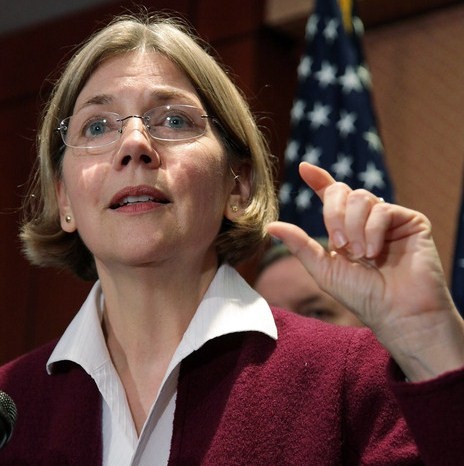
Senator Elizabeth Warren (D-Mass)  was annoyed that Robert Litan, a nonresident and unpaid economics fellow at the reliably liberal Washington think tank, the Brookings Institute, dared to author a study critical of financial advisor regulations being pushed by Warren and the White House. Thus she sent a letter to Brookings last week, challenging the independence of the study and the integrity of Litan, since the study was, as Litan states up front, “supported by the Capital Group, one of the largest mutual fund asset managers in the United States.”

Warren called the report “highly compensated and editorially compromised work on behalf of an industry player seeking a specific conclusion.”

You know, unlike the various donors to Warren’s political war chest, who are not trying to buy specific policies and votes from her.

Literally hours after receiving the letter, Brookings, knowing which side of the bread its butter was on, dutifully forced Litan to resign.

The issue isn’t whether the policy Warren wants is a good one or not; personally, I tend to agree with Warren on the need for the regulation, which would make 401(k) and 403(b) advisors as well as other compensation-related retirement plan advisors be subject to fiduciary duties. the issue is Warren’s embrace of the increasingly popular tactic from the Left of dealing with adversaries by silencing them. Continue reading

Unethical App Of The Month: Peeple

The co-founders of Peeple. I don't care which is which.

The co-founders of Peeple. I don’t care which is which.

(I’m officially adding this as an Ethics Alarms category. I don’t know why it too so long.)

The Washington Post reports that a greedy woman who never heard of the Golden Rule will be launching Peeple, “essentially Yelp for humans,” sometime in November:

“…you will be able to assign reviews and one- to five-star ratings to everyone you know: your exes, your co-workers, the old guy who lives next door. You can’t opt out — once someone puts your name in the Peeple system, it’s there unless you violate the site’s terms of service. And you can’t delete bad or biased reviews — that would defeat the whole purpose.”

Which is what, exactly? To pre-bias all future relationships by making sure they are colored by someone else’s judgment, emotions, or prejudices? Not only should no one want to be rated on such a service, no one should want to use it if they have a brain in their head. (No one should want to use Yelp, either.) Why should my standards, which are unique to me, be suppressed by the standards of other people I don’t know or respect? My ability to trust new acquaintances will be undermined by people I have no reason to trust, since a) I won’t know them and b) I won’t trust anyone so unethical as to smear someone like this.

As for positive reviews, what’s to stop someone from arranging to give positive feedback on a friend in exchange for a return rave? Nothing. The app will pave the way for sociopaths and con artists. Imagine what Bill Clinton’s reviews would look like.

Julia Cordray, one of the app’s founders, tells the Post, “People do so much research when they buy a car or make those kinds of decisions Why not do the same kind of research on other aspects of your life?”

Because it isn’t valid research, you moron. It is hearsay and opinion, neither of which would be admissible in court, for excellent reasons: they are unreliable.

The Post:

“A bubbly, no-holds-barred trendy lady” with a marketing degree and two recruiting companies”—“Trendy lady”? Great, I hate her already—“Cordray sees no reason you wouldn’t want to ‘showcase your character’ online”—I already showcase my character online, thanks. It’s called Ethics Alarms, but the difference is that I really do know myself, and I trust the standards of the reviewer implicitly. They are very close to my own…

“Co-founder Nicole McCullough comes at the app from a different angle: As a mother of two in an era when people don’t always know their neighbors, she wanted something to help her decide whom to trust with her kids.”

There we go. With any luck, there will be a few good, whopping law suits for defamation that will either reduce the user base of this App From Hell to four pranksters and a few mean and bored seniors with grudges, or drive the Trendy Lady to another scheme to make the world a little more unpleasant. Continue reading

An Unethical Photo And Caption, And The Ethics Fog Of A Baseball Fight

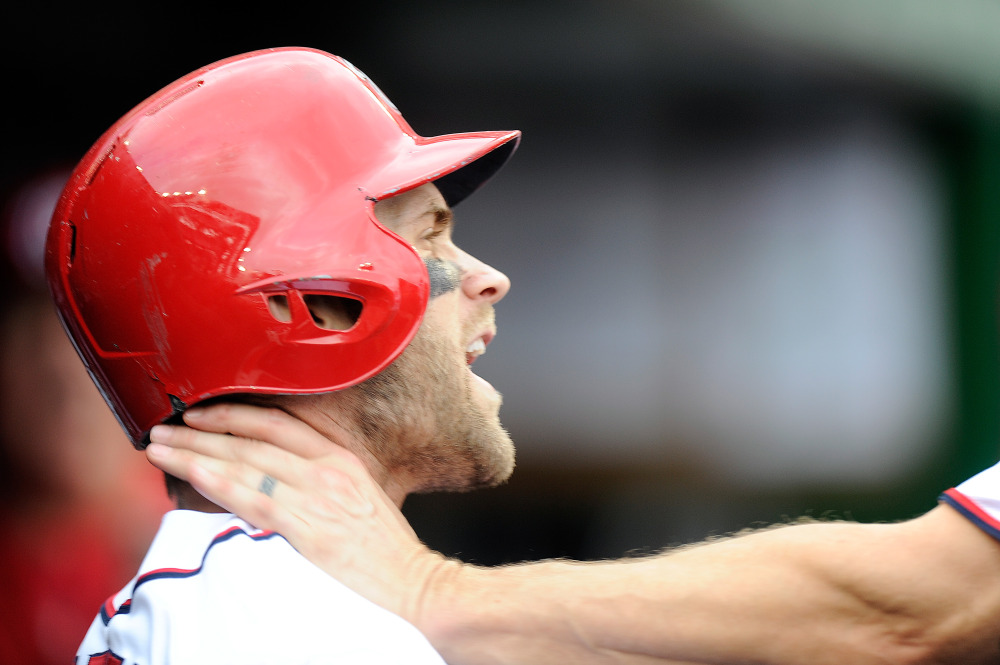
WASHINGTON, DC - SEPTEMBER 27: Bryce Harper #34 of the Washington Nationals is grabbed by Jonathan Papelbon #58 in the eighth inning against the Philadelphia Phillies at Nationals Park on September 27, 2015 in Washington, DC. (Photo by Greg Fiume/Getty Images) ORG XMIT: 538595765 ORIG FILE ID: 490330798

According to USA Today and many other reputable news sources, Washington Nationals pitcher Jonathan Papelbon “choked” team mate Bryce Harper in a dugout altercation in full view of fans and TV cameras during yesterday’s loss to the Phillidelphia Phillies. The photo above, freezing the moment in which Papelbon’s hand touched Harper’s neck, was presented full page width in the Nats’ home town paper, the Washington Post.

Now here’s the video:

Papelbon’s hand was on Harper’s throat for less than a second, as opposed to the impression given by the still, in which you can almost hear Harper gagging ACK! GAH! LLLLGGGGHHH!  The USA Today headline “Bryce Harper was choked by Jonathan Papelbon in Nationals’ dugout fight” is pure sensationalism and an intentional misrepresentation. I’m not even certain Papelbon was trying to choke Harper, but if he was, he failed immediately because Harper backed away.

This incident transcends its context for ethical interest, because it demonstrates how much context and biases influence public and media assessments of right and wrong.

First, some context: Continue reading

Ethics Dunce: Times Op-Ed Columnist Frank Bruni

Mazel tov, ass.

Mazel tov, ass.

Is this column signature significance? Is it possible that someone could write something like this and not be an utter jerk?

I was considering writing a post about Scott Walker’s withdrawal from the GOP race for the Presidential nomination.  He realized he wasn’t going to win, and maybe even that he was in over his head, so he got out. Bravo. For proud people, quitting is an act of courage. It was the right thing to do, in contrast with the increasingly loathsome Mike Huckabee, who says that he and his theocratic, anarchistic view of government are in the race til the end. Great. Asked if he believed it was reasonable to have elected officials defying the Supreme Court, Huckabee answered, “If the Court is wrong!”

Anyone who can’t figure out what’s the matter with that answer should not allowed outside without a leash, much less allowed to vote, and this dolt is running for President.

But back to Gov. Walker. I knew he was toast the first time he spoke in the first debate. This is my business, one of them anyway. I have to measure presence, because leaders, like actors, have to have it. Walker disappeared on screen. He has slack expressions and a flat voice; he doesn’t project energy or authority. You can’t be a leader if you don’t seem like a leader. Before George Washington was President and before he or anyone else know what a President of the U.S. was, there was near unanimity that whatever it was, George looked like it.

Not Scott.

A lot of this is cosmetic and technique: give me two hours with a Scott Walker and I guarantee he will be 100% better on screen.  After the first national impression is made, though, it’s too late for me or anyone else. Say what you want about the other ten candidates and even the four outcasts, they have presence. (Well, not Dr. Carson, but he came closer than Walker.) Bruni, being ignorant and biased, thinks the reason Walker sunk was because he’s stupid.

This is the general attitude of biased partyists like Bruni: conservatives and Republicans are stupid, or they are evil. Bernie Sanders can toss out economic gibberish for weeks, and the Brunis of the world—the Times has about ten of them–won’t challenge the depth of his brain pan; Hillary Clinton can say that she had no idea that using a private server for communications raised security issues for the Secretary of State, which is so stupid and ignorant that it makes my toes hurt, and never have her IQ doubted. A Scott Walker, however, is presumed stupid, because, all conservatives must be….unless they are evil. Let’s see, the conventional wisdom on the Presidential candidates from the Republican side since 1952: Continue reading

It Looks Like Ahmed’s “Cool Clock” Was A Hoax After All. Now What?

Ah, Barack, Barack, Barack.  I keep telling you that responsible leaders don’t inject themselves into local matters and trivial issues, warping attention and priorities, politicizing issues that shouldn’t be political, making things worse. But your learning curve is still, on this as regarding so much else, flatter than a Jeb Bush’s poll numbers. Why? Why?

It is increasingly looking like Ahmed Mohamed didn’t build a clock after all. Whatever he brought with him to school, it shouldn’t have gotten him arrested, and whatever got him arrested, it shouldn’t have gotten him a White House invitation when so many other worse examples of school abuse of kids, some spurred by your own excessive rhetoric about guns, didn’t even cause a momentary hitch in Obama’s golf swing. As it stands now, what may have been a  dishonest stunt by a smart Muslim kid has paid off big time, and either the kid is trapped in a lie that keeps getting worse, or enjoying the fact that he is making a lot of people look like  fools, including the President of the United States. This is increasingly looking a real life version of the famous Simpsons episode in which Bart’s practical joke involving an imaginary child named “Timmy” who has fallen down a well causes a media frenzy that traps Bart.

Ahmed is a child: his conduct can be forgiven. The adults in the episode, however, shouldn’t be.

Let’s catch up with the narrative, which I last visited here. It always looked like an example of confirmation bias gone wild, with just another example of school administrators showing no judgment and being cruel to students  appropriated by Democrats, progressives and the media to serve their agenda of framing legitimate distrust of radical Islam as racism and bigotry. Now, however, it appears that all of them were taken in by a stunt of the sort that most of us, if we think back, can recall from one or more of our own classmates: the faked science project. Continue reading