Fair vs Fair: Ethics and the “No-Tip” Restaurant

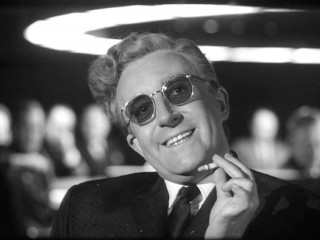
You know, this looks like a place that would believe that dishwashers deserve as much pay as waiters...or as bankers, for that matter.

You know, this looks like a place that would believe that dishwashers deserve as much pay as waiters…or as bankers, for that matter.

William Street Common is a new restaurant in Philadelphia, and is getting publicity for, we are told, experimenting with a different and (maybe?) fairer compensation model. Owner Avram Hornik  pays all of its employees, from the servers to the dishwashers, at least $15 an hour plus paid sick leave and health insurance benefits. There is a 20 percent service charge for drinks, and that goes into a common fund that makes that  $15 an hour wage affordable. Money left over at the end of a pay period is divided up among employees based on a point system related to various factors.

Hornik came up with this structure, he says, to deal with the well-debated problems of tipping. “Some people just tip the same amount, but some people base it on how quickly the food was there, whether we were out of something, whether the server was there when they wanted them to be,” he says. “So much of that is out of the control of the individual server… So why would it be fair for the service employee to be responsible for the poor decisions of management?”

Hornik argues that his model “essentially creates a guaranteed floor. But we’re also capping the ceiling,” he points out, because the tipping gets shared equally with all employees. “We didn’t think it was fair [that] in some places you have dishwashers earning 10 dollars an hour and the bartender earning 30 dollars an hour.” He also is convinced that the customers will benefit.  “That atmosphere among the employees, a sense of community and empowerment and happiness with the job, is going to translate into a better environment for customers,” he said. “By having happy staff customers are going to be happier too.”

Is this system really fairer than the current one? Progressives are cheering it, because it represents a “living wage,” or at least something close to it. OK, but it would be nice not to feel hyped: ThinkProgress, for example, had headlines that the William Street Common “got rid of tipping” and writes “tips aren’t mandatory.”

Inept reporting or lies, take your pick. A 20% “service charge” is a mandatory tip, so tips ARE mandatory. The reports don’t explain how voluntary tipping has been eliminated, or whether a server would be prohibited from keeping a ten-dollar bill that a diner hands him, saying, “You know, the food was lousy, but you were so gracious and accommodating that you single-handedly made the evening bearable. Thank you. If I ever come back, it will be because of you.” If so, is that fair?  I don’t think so. In fact, it’s exactly as unfair as a diner not rewarding excellent service, and tipping a dime. Continue reading

Ethics Observations On The Selma Celebration “Gotcha’s!”

Selma redux

1. The big controversy as of this morning involved the New York Times front page photo, which managed to be cropped exactly at the point where former President Bush could have been seen. Given the Times’ proclivities, conservative blogs and Fox News presumed the snub was intentional. If it had been intentional, that would have indeed been disrespectful and unethical photojournalism. The Times explanation, however, seems reasonable. It tells us something, though, that nobody at the Times saw this coming. I think it’s incompetence born of bias. “Where’s Bush?” “He was too far down the line, so the photo looks lousy if he’s included.” “Damn. Well, put a note in explaining that.” Bias makes us stupid, and the fact that no Times editor had this conversation is, in fact, stupid.

2. If the NAACP was setting the place cards, and I assume they were, then Bush should have been second row center, and not an MSNBC demagogue and race-hustler who owes the U.S. back taxes. Talk about biased and stupid. The NAACP claims it wants to be a unifying force in the country, but it doesn’t. It promotes divisiveness,and intentionally. It’s good for business.

3. A graceful, fair, respectful and competent President of the United States would have insisted that his immediate predecessor be in a position of prominence, as part of the message that this event was an important part of the history of America and all Americans. It would have been the right thing to do. Bush would have done the same for him. But we do not have a graceful, fair, respectful and competent President. We have an arrogant, petty, self-absorbed and divisive one.

4. …who can, on occasion, rise to give an excellent speech, which he did. Continue reading

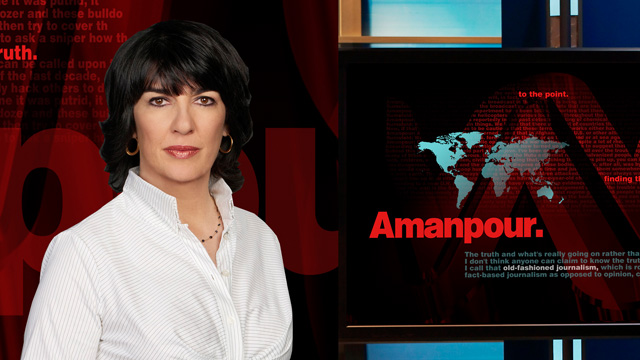
Unethical Quote Of The Month: Christiane Amanpour

amanpour

“There are some situations one simply cannot be neutral about, because when you are neutral you are an accomplice. Objectivity doesn’t mean treating all sides equally. It means giving each side a hearing.”

——Christiane Amanpour in 1996, responding to critics who called her reporting on the Bosnian War biased.

Now THIS is an unethical quote, in contrast to the earlier one from Christiane, which I posted yesterday as an “Ethics Quote of the Week.”

I’m posting this one 20 years after it was uttered because…

1. It explains the previous quote from yesterday.

2. It tells us everything we need to know about Christiane, which is to say, she cannot be trusted as a reporter.

3. For some reason I was unaware of it.

4. It appears to have become the motto of all reporters.

5. It is unethical to the core, and

6. A lot of people, including most journalists, don’t know why. Continue reading

Ethics Quote of the Week: Christiane Amanpour

“It was a very dark Strangelovian speech painting the picture of a dystopian world, raising the spectre of a genocidal nation, a genocidal regime spraying nuclear weapons to annihilate the whole world and the whole region. Now, obviously many people are very concerned about Iran and there is a deep lack of trust, but surely the same was said of the Soviet Union all those years ago.”

—-CNN reporter Christiane Amanpour, commenting to Wolf Blizter on Benjamin Netanyahu’s controversial address to Congress.

That's funny...he doesn't LOOK Jewish...

That’s funny…he doesn’t LOOK Jewish…

This is a propitious opportunity to clear up a question I have been asked a few times, namely, “What is the distinction between the Ethics Alarms “ethics quotes” as opposed to the unethical and ethical quotes of the week or month. Sometimes, it’s a close call, like now. An ethics quote either illustrates, in a positive or negative fashion, an ethics principle or raises an ethics issue. Unethical quotes are those that are themselves harmful, dishonest, or that promote ethics misconceptions and unethical conduct. Ethical quotes are those that display ethical values or accomplish something that is objectively good.

Amanpour’s quote is, not to be overly blunt, stupid, ignorant, and disturbingly lacking in historical perspective. It raises ethics issues, but does not rise to the level, quite, of an unethical quote. It does raise the ethics issues of incompetence in the media, political bias robbing us all of IQ points, irresponsible journalism, and what happens when one is incapable of placing oneself behind another individual’s eyeball.  She is trying to be descriptive, so I would not term the quote itself unethical, just shocking. She has long been respected as a reporter on international events, but this statement is so devoid of its proper context that I think her credentials need to be reconsidered. Continue reading

Case Study In Unethical Journalism And The Unethical Editors Who Spawn It: Jezebel and Editor Natasha V C

Natasha. Jezebel must be so proud.

Natasha. Jezebel must be so proud.

It is obvious that the mainstream media is determined to shoot down Wisconsin Governor Scott Walker by any means possible, because Democrats a) hate him to pieces and b) fear him. The primaries aren’t even underway, and they are already outing their own bias with over-heated criticism of his refusing to be drawn into gotcha questions about evolution and President Obama’s religion (to which he gave essentially the same answer as Hillary Clinton did in 2008: he has no way of knowing for sure), dropping subversive reminders that he never got a college degree, and already are breaching Journalism Ethics 101 principles by running bogus accusations without checking the facts. This will continue—it worked with Sarah Palin and Romney, after all—until the American public figures out what’s going on. I’ll try to help the best I can.

New York Times star columnist Gail Collins, who detests Walker with a passion that apparently obliterates all professional ethics, wrote two weeks ago that Walker was responsible for Wisconsin’s 2010 cuts to education, resulting in teacher layoffs. Walker didn’t take office until 2011. The Times retracted—six days later!—but you know how it works, and so does the Times: a fraction of the readers who read the mistake—this was a reckless, biased, embarrassing mistake—see the correction. The Times is better than Fox News…barely. Collins and her editor should have been disciplined.

Then  the progressive feminist website Jezebel printed this:

“Wisconsin Governor Scott Walker’s proposed budget—which would cut $300 million dollars out of the state’s beloved public university system—has a non-fiscal bombshell tucked in between its insane pages.Under Walker’s budget, universities would no longer have to report the number of sexual assaults that take place on a campus to the Department of Justice. Under Walker’s plan, university employees who witness a sexual assault would no longer have to report it.There are no policy recommendations in Walker’s budget how or what would replace these reporting mechanisms. The Governor simply instructs that they should be deleted.

For those of you who are unfamiliar with the bewildering force that is Scott Walker, know this: he is a small-time guy who is having a big-time moment by playing the conservative werewolf, a role Chris Christie and Jeb Bush are so far unwilling to play in their presidential bids.”

[Translation: “Small time” means “no college degree.” Ad hominem, naturally.]

The Daily Beast, which bleeds blue and has its own stable of wildly left-slanting commentators, uncritically picked up the story, as did many others. They kept it around, too, well after this was revealed: Continue reading

Jackie Robinson West Little League Baseball Team Epilogue: Who Says “Cheaters Never Prosper”?

Littel League champs

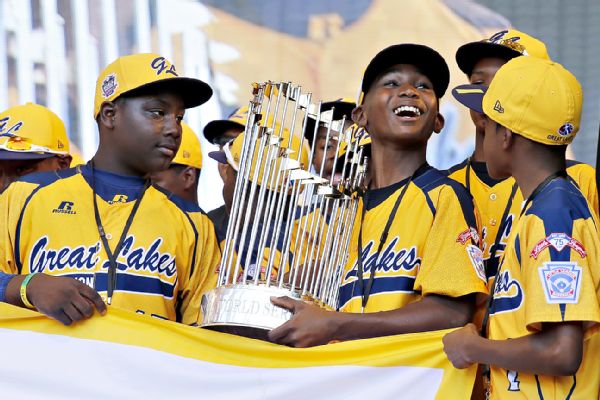
As described here, Chicago’s Jackie Robinson West Little League Baseball team was stripped of its U.S. title after Little League International found out–later than it should have— that the team’s adult leadership changed the district boundaries without permission to create what was really an all-star team. The championship, to be blunt, was won through cheating.

Since the team’s members were all African-Americans, Jesse Jackson and many of the parents immediately claimed that racism was behind the forfeit. If, however, a white team had been found to have prevailed over a black team by cheating and was allowed to keep its ill-gotten championship, Jackson would also scream racism. (This was a #11. on the Draft Ethics Alarms Race-Baiting Scale: Presumed Racism: Accusations of racism based on no other factors but the races of the individuals involved.) Jackson and Chicago Mayor Rahm Emanuel then pressured the Little League to reverse its decision, essentially allowing cheating to be 100% successful, as it often is in politics. To its credit, the organization refused to bend.

Never mind:  Emanuel is a veteran of the Obama administration, and also has a large black constituency to pander to. Thus he plans on giving the team championship rings at next month’s city council meeting. Emanuel found private donors to fund championship rings shortly after the Little League World Series. Each ring has the player’s name, jersey number and the number 42, in tribute to Jackie Robinson.  On the inside of each ring, the legend, “Who says cheaters never prosper?” is engraved in script.

Just kidding about that last part. Continue reading

Refining The Race-Baiting Scale (“The Knight Scale”)

Untitled Race cards

I am slowly updating and expanding the resources on Ethics Alarms, including adding some of the tools that I have initiated on the blog but never put on the home page to accompany the much-used Rationalization List and the Apology Scale. I thought one of these was a race-baiting scale, as I referred to one, dubbed “The Knight Scale,” here and here. I discovered, however, that I had just given numbers to a few examples of race-baiting along least bad-to-worst spectrum without specifying specific varieties of race-baiting for each.

This was a major failing, and I apologize. Race-baiting has been one of the primary features of public discourse embedded in our culture by having a black President, was well as one with so many unscrupulous race-obsessed supporters and so much evidence of incompetence and dishonesty to try to defend. Its widespread use, tacitly approved if not orchestrated by the White House, has also contributed to the vastly deteriorating race-relations in the U.S., along with the racial distrust and anger fueling it. I have stated, and strongly believe, that this will be, above all else, Barack Obama’s legacy. The tragedy this represents cannot be over-stated.

I am offering now and belatedly a revised Race-Baiting Scale, running from 1, the least offensive and significant form of race baiting, to 11, the worst and most unethical.  Two notes: 1) All entries are based on the assumption that no actual racist or bigoted conduct has occurred, and 2) It is stipulated that all actual racist conduct or bias is unethical and should be called out and condemned.

The Race-Baiting Scale

Continue reading

Brian Williams Ethics Train Wreck Update: David Brooks’ Ethics Confusion

Huh?

Huh?

David Brooks’ New York Times op-ed column decrying the widespread criticism of Brian Williams’ serial lying show us that Brooks himself is frighteningly confused regarding such basic ethical values as accountability, trust, trustworthiness and accountability. That’s good to know, don’t you think? Now the question is why anyone in their right mind would care what such an ethically muddled political and cultural analyst thinks about anything.

Yesterday, the Washington Post revealed yet another example of Williams’ fabulism: his bizarre story about roaming gangs at the local Ritz Carlton in the wake of New Orleans’ devastation by Katrina. Never mind, argues Brooks: the problem isn’t with Williams, it’s with his critics.

Brooks’ New Times column begins with a strange, exaggerated and unethically inclusive first paragraph about how  fame drives people to wrongdoing. “The desire for even more admiration races ahead. Career success never really satisfies. Public love always leaves you hungry,” he writes. “Always?” Who is he talking about, himself? The famous people being described here are emotionally and spiritually unhealthy famous people–addicts to fame, narcissists, desperate hostages to celebrity. I have no doubt that Williams fits that description,  but many prominent, accomplished and celebrated people do not. They are known as “trustworthy.” Having impugned many thousands of well-adjusted pubic figures past and present to lay the groundwork for an “everybody does it” defense of Williams (EDI is running neck and neck with the other favorite rationalization being used by Williams enablers: “It’s not the worst thing.”), Brooks attacks anyone not famous who resents being lied to:

“The barbaric part is the way we respond to scandal these days. When somebody violates a public trust, we try to purge and ostracize him. A sort of coliseum culture takes over, leaving no place for mercy. By now, the script is familiar: Some famous person does something wrong. The Internet, the most impersonal of mediums, erupts with contempt and mockery. The offender issues a paltry half-apology, which only inflames the public more. The pounding cry for resignation builds until capitulation comes. Public passion is spent and the spotlight moves on.”

This paragraph is astounding, and embarrassing too. Someone violates a public trust, and the public has the audacity not to trust him any more! What barbarism! Is Brooks even passing familiar with the concept of accountability? Not on the evidence of this drivel, he isn’t. An honorable man or woman in a position of trust who so publicly disgraced himself as Brooks has should immediately and voluntarily resign. Once, long ago, that was the natural, traditional, expected and required response to such a scandal, but this was in the days when celebrity and power was not so frequently accompanied by greed. Williams is paid about ten millions dollars a year, and that’s apparently too much to give up merely to demonstrate integrity, remorse and acceptance of responsibility for wrongdoing, especially when there are allies like Brooks out there ready to shift the blame.

There would be no need to purge someone who has proven themselves untrustworthy in a high position of trust if the individual would be accountable and courageous and purge himself, as he (or she—I’m looking at you, Kathleen Sibelius) is obligated to do. How can Brooks not understand this? The offender offers a “paltry apology,” and Brooks blames the public for correctly concluding that such an offender doesn’t understand the seriousness of what he did, isn’t really sorry, and will do it again. So the “pounding cry for resignation builds until capitulation comes.” Yes, David, that’s the way it’s supposed to work. This isn’t barbarism. This is civilization. This is enforcing standards. This is ethics, this is accountability.

Brooks doesn’t comprehend any of it, apparently:

“I do think we’d all be better off if we reacted to these sorts of scandals in a different way. The civic fabric would be stronger if, instead of trying to sever relationships with those who have done wrong, we tried to repair them, if we tried forgiveness instead of exiling.”

We’d all be better off if we let people who lie to us stay in the position that will allow them to keep lying to us? Continue reading

The Ethics Scandal Is No Longer About Brian Williams. It’s About NBC, And Journalism

"Uh, do you think we should say something to Brian?"

“Uh, do you think we should say something to Brian?”

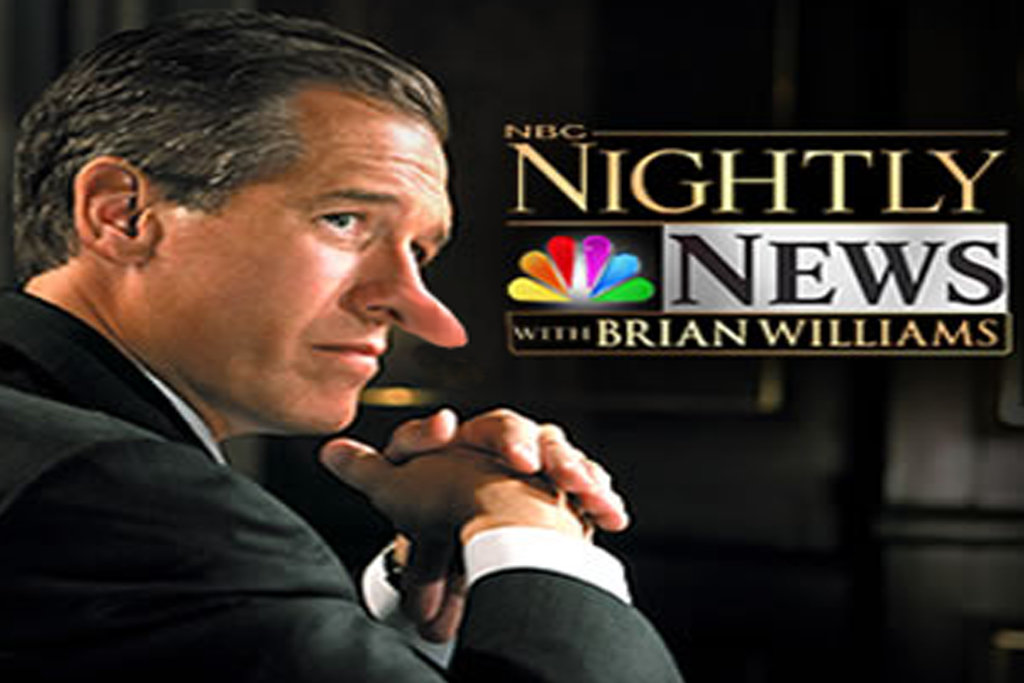
Yesterday Brian Williams announced that he was removing himself temporarily as anchor of the NBC nightly news broadcast, as NBC revealed that it was conducting an independent investigation, which certainly sounds like eyewash to me (and others.) The ethics issue, however, has expanded rapidly to the point where Williams’ fate—and at this point, I think he’s doomed—is almost incidental to the larger broadcast and news media ethics issues involved.

Maureen Dowd and others have revealed that NBC executives had been well aware that Williams was, to put it kindly in Dowd’s terms, “inflating his resume” and yet declined to stop it. In other words…

…they were aware he was lying to the public, which means that

…they were aware that he lies in public, which meant that

…their face, voice, anchor and head of their news division was a liar, indeed perhaps even a pathological liar, meaning that

…Williams was unquestionably  untrustworthy, and

…a constant risk to misinform the audience, and

…they still didn’t remove him because his ratings were good and he was making money for the company.

Continue reading

Case Study In “When Ethics Fail, Law Takes Over”: Harvard’s Prof-Student Romance Ban

Harvard_yard_winter_2009j

Harvard used to just say “it’s wrong,” but left it up to the faculty’s ethics in the school’s infinite faith in its own superior virtue. My Freshman Humanities professor, poet William Alfred, was married to a former student. As is usually the case in this matter, ethics alone often wasn’t enough to restrain the lust of  many aging, prestigious, powerful professors facing a veritable cornucopia of luscious, young, ambitious co-eds they could court using brains, worldly wiles, charm and the promise of good grades. Now the profs have more to bolster their self-control…from the New York Times:

Harvard University has adopted a ban on professors having sexual or romantic relationships with undergraduate students, joining a small but growing number of universities prohibiting such relationships. The move comes as the Obama administration investigates the handling of accusations of sexual assault at dozens of colleges, including Harvard.

The ban clarifies an earlier policy that labeled sexual and romantic relationships between professors and the students they teach as inappropriate, but did not explicitly prohibit professors from having relationships with students they did not teach.

Harvard said in a statement released Thursday that the change was made after a panel reviewing the institution’s policy on Title IX, the federal law prohibiting sex discrimination in education, determined that the university’s existing policy language on “relationships of unequal status did not explicitly reflect the faculty’s expectations of what constituted an appropriate relationship between undergraduate students and faculty members.” It said the committee revised the policy “to include a clear prohibition to better accord with these expectations…Besides banning sexual and romantic relationships between professors and all undergraduates, the policy also bans such relationships between teaching staff, such as graduate students, and the students who fall under their supervision or evaluation.

Good. Long overdue.

This is also an excellent use of Harvard’s status and leadership, as the oldest and most famous institution of higher learning. Other universities will now suddenly be responsible as well.

Gee, do you think Harvard took my advice?

Nahhh.