
The Last Word—Words, Really—On The Ridiculous Rachel Dolezal: “Signature Significance”

Rahcel-Dolezal-plagiarized-painting

From the Ethics Alarms “Concepts and Special Terms” page:

Signature Significance: The concept is the creation of baseball statistics genius Bill James, who applied it to baseball performance. Signature significance posits that a single act can be so remarkable that it has predictive and analytical value, and should not be dismissed as statistically insignificant. Thus, in James’ example, certain outstanding pitching performances can prove that the pitcher involved is an outstanding one, because average pitchers literally never reach such levels of excellence, even as a one-time fluke.  Ethics Alarms employs the term to describe an extreme ethical or unethical act that similarly reveals the true character of the individual responsible for the conduct, and that can be reliably and fairly used to predict future conduct and trustworthiness.

My immediate assumption about now-ex NAACP executive Rachel Dolezal’s charade as a black woman her conduct was signature significance, that anyone who would construct and benefit from such an audacious deception was unreliable, untrustworthy, and a likely sociopath. My posts never got into this issue, in part because I was waiting for a unanimous consensus that the woman was lying–sadly, a lot of stubborn progressives, civil rights advocates, celebrities and culture warriors either ducked the issue or, to their eternal discredit, denied that she couldn’t be black is she said she was. I was waiting for the “she just made a mistake” arguments, and the “anyone can get confused about what race they are” rationalization by playing the signature significance card, and never got to play it.

Fortunately, the Dolezal saga has become its own signature significance card. William Salatan at Slate amassed an impressive list of Dolezals many fictions, scams, fudges, deceptions, false statements and deceits here, but the best is this: Continue reading
The Sterling Backlash: Signature Significance, Racism, Hypocrisy, and Double Standards

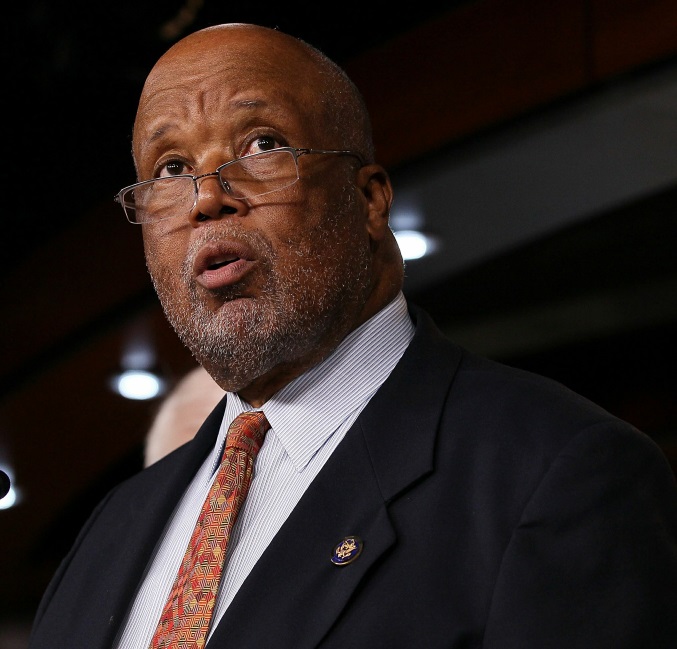
Bennie Thompson

“No big deal, he’s  just a Congressman…”

I often use the term “signature significance” in posts, and since it is a term that is not often applied to ethics, I thought today would be a perfect time to illustrate it in its original context, while clarifying the ethical murk around the Donald Sterling Ethics Train Wreck.

The original context of the phenomenon of signature significance is baseball, and I just watched an example of it. Today Red Sox left-hander John Lester beat the Oakland A’s, a very good team, by hurling eight innings in which he gave up no runs, only one hit, two bases on balls, while striking out 15 batters. If you don’t know anything about the game, let me tell you: this is extraordinarily good. Pitching performances can be measured and compared by using the “game score” method, developed by sabermetrics (that is, baseball statistics) pioneer Bill James. The best game score ever achieved was 105; the highest score in major league history for a pitcher who did not pitch all nine innings (as with Lester today) is 95, and has only been done once. (Theoretically, a game score could be as high as 145)

James also devised the term “signature significance” in the context of such games. His research showed that pitchers who were not outstanding talents never pitched a game with such a high game score even once—it simply didn’t happen. Thus, he reasoned, pitching a single game like Lester’s (the actual game he used was a similar performance by a young Roger Clemens before anyone knew what Clemens would become) was sufficient proof, all by itself, to conclude fairly and scientifically that the game was meaningful, without any other data. In cases of signature significance, he explained, the usual statistical rule that small sample sizes are not reliable indicators do not apply. Sometimes one incident, performance or episode is sufficient to make a confident verdict.

Signature significance is very useful, I have found, to rebut unethical rationalizations for unethical conduct that are used to excuse the agent of the ethical breach. “It’s only one mistake” and “Anyone can make a mistake” are the main ones. In the case of some serious kinds of bad conduct, this reasoning is misleading and false. Donald Sterling’s comments recorded and publicized by his whatever-you-call-her V. Stiviano have signature significance: they prove he’s a racist. Can you imagine any non-racist individual saying, in public or private, that he didn’t want his girlfriend being seen at his team’s games in the company of blacks?  How could this possibly occur? It wouldn’t, of course. Only those who hold racist attitudes and beliefs think and say such things. Sterling is a racist.

Stiviano, for her part, despite being the one who brought the media, the sports world and the public down on Sterling’s 80-year-old head, now says she doesn’t believe he’s a racist. Of course, she also says she’s his “silly rabbit” and that she is going to be President some day. She is an idiot. But I digress.

Other figures have made statements in the media that also have signature significance of the same sort as Sterling’s, yet the very same groups and journalists who have been whipped into a self-righteous froth over Sterling are strangely silent: Continue reading

The Bill James Effect, Or How Nature Conspires To Make Us Irresponsible

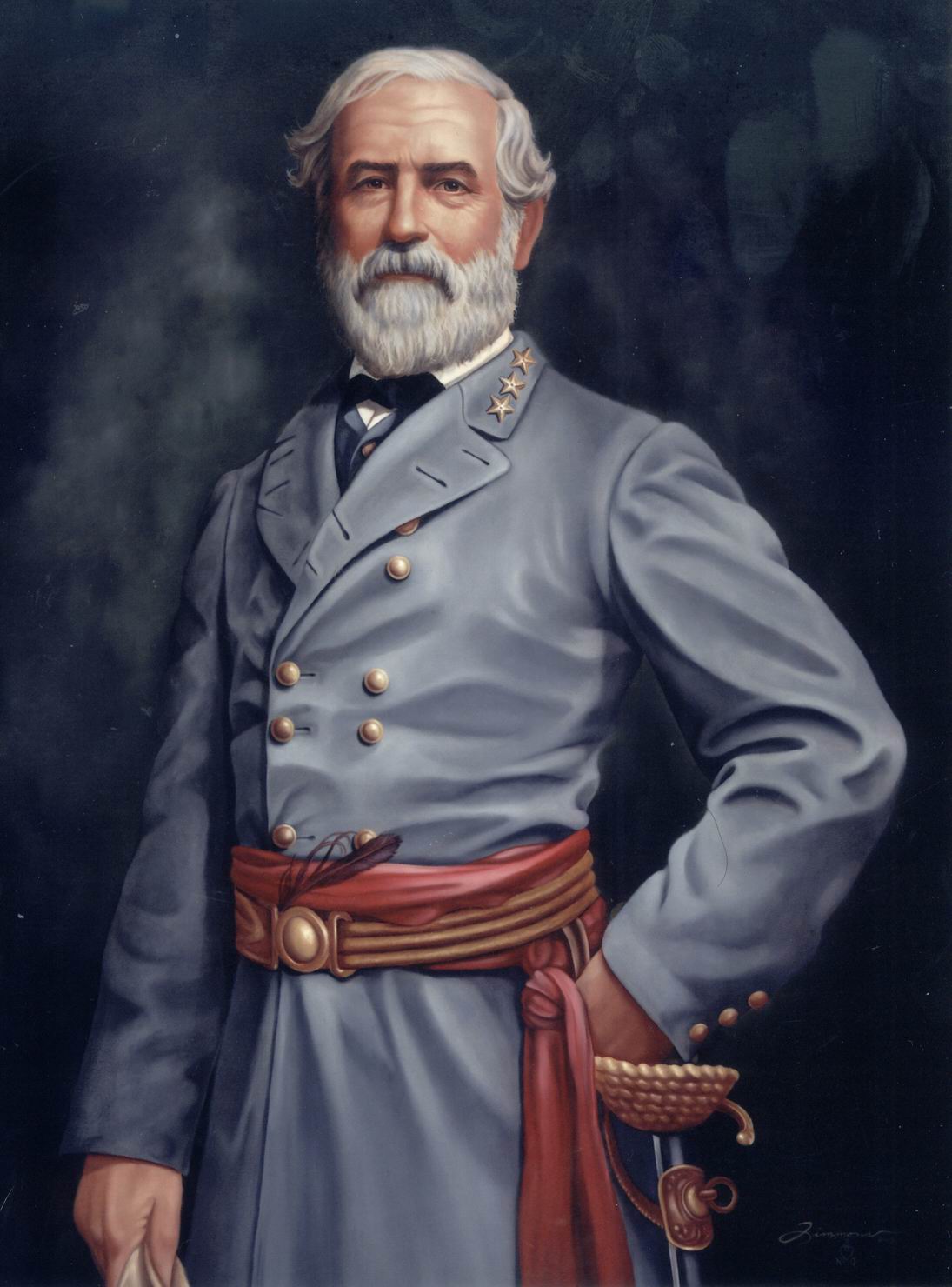
Quiz: What do Gen.Lee and Bill James have in common?

You see, our strengths do us in, sooner or later. The greater the strength, the more successful it has made us, the more dangerous it is.

In the American Civil War, Robert E. Lee was the smartest general on the field…so smart that he broke iron-clad rules of battle strategy again and again, and prevailed every time. When everyone told him how it was usually done, always done, Lee knew that he could get an edge by doing something else. You never divide your forces, his aides, subordinates and the military books told him. So Lee did, at Chancellorsville, and won an incredible victory.

Then came July 3, 1863: the final day of the Battle of Gettysburg, and Pickett’s Charge. Everyone told Lee that a massed Napoleonic assault, over an open field, into enemy artillery and a fortified line, was suicidal. But when conventional wisdom dictated a course of action, that was when Lee had always succeeded by ignoring it. So he ordered Pickett’s Charge. This time, conventional wisdom was right. The same qualities of creativity, courage, certitude, and willingness to resist the power of convention that had caused Lee’s men to trust him unconditionally had resulted in the massacre of thousands. Pickett’s Charge wasn’t bold or ingenious. It was irresponsible. Lee, because of a lifetime of success challenging what others thought was obvious, was no longer able to tell the difference. Continue reading

The Ethics of Ignorance and Apathy: Gore’s Million Degree Gaffe

I didn’t watch Al Gore when he appeared on the Tonight Show a couple weeks ago. What he said then while hobnobbing with Conan should be old news, but in fact it was no news at all, because virtually no news media gave it more than a passing mention. Then, by purest accident, I heard a talk-radio host ranting about a shocking statement Gore had made on the show, and I checked to see if he could possibly be quoting the former Vice-President correctly.

He was. Here is the exchange: Continue reading

Baseball Ethics Here!

Commercial: The 2010 Hardball Times Baseball Annual is hot off the presses, and it contains an article by me analyzing  the standards of character, integrity and sportsmanship that are or should be applied to candidates for the Hall of Fame.  Continue reading