Comment of the Day: “‘White Christmas’ Ethics Addendum: Battlefield Incompetence, Insubordination And More In The Holiday Classic”

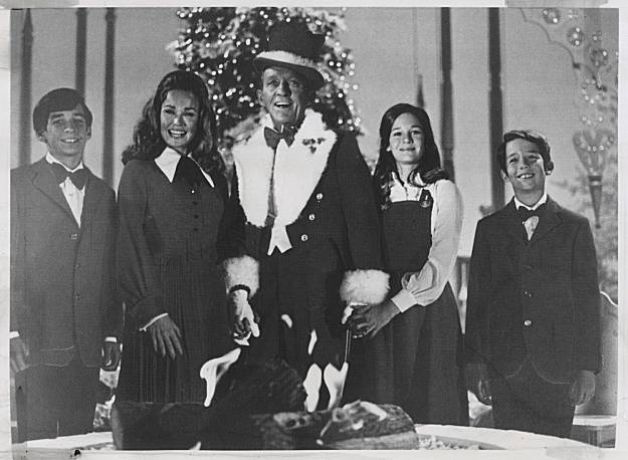
To kick off the Not-Too-Early-To-Play-Christmas-Music Season, here is a Comment of the Day that adds another chapter to the Ethics Alarms commentary on “White Christmas,” the Bing Crosby-Danny Kaye musical film that is one of the five or six most resilient of the Christmas classics. The initial ethics analysis is here.

The post that spawned the latest take was a rare guest essay by Ethics Alarms veteran texagg04.

Now comes new commenter SykesFive to provide insight into the pivotal character of General Waverly, played by Dean Jagger. Among other things, he argues that one reason the general was so beloved was that he was poor general, treating the lives of his men as more important than his mission.

Here is his Comment of the Day on tex’s post, “White Christmas” Ethics Addendum: Battlefield Incompetence, Insubordination And More In The Holiday Classic:

I have a somewhat different take on this. I sometimes think I am the only person who thinks so much about the Waverly character.

As the scene opens, Major General Waverly is being relieved for frankly the only reason American unit commanders were relieved during the war: he didn’t take the objectives. That is failure. It could be lack of aggression or poor coordination or anything else, but ultimately it is failure and the commanding officer will pay the price. He will be shuffled off to a rear area command, or maybe just left to bum around the theater, and be out of the Army by the end of 1945 because his record will be so tarnished. He will be lucky not to revert to his prewar rank.

Waverly’s age suggests he was a company-grade officer during WWI and may or may not have seen combat during that conflict’s closing weeks, then spent decades idling in the interwar army. Apart from whatever happened in 1918, Waverly has no more combat experience than anyone else in the division. He is not an experienced commander by any measure. He had the right credentials–a few articles in service journals, no serious problems on his posts, and of course a West Point Ring–but had never really been tested as a field-grade officer. Again this is a common profile.This is a very common profile for WWII US Army division commanders.

So in 1940, let’s say Colonel Waverly seemed like a likely candidate for command of an infantry division in the expanding army. He did well enough with some trial commands–all during stateside training and expansion–and was promoted to one and then two stars. He seemed competent enough when the 151st Division was formed and went through let’s say nearly two years of intensive training in Texas or California or wherever. And so the division was sent to Europe in let’s say August 1944, then spent a couple months languishing in Normandy or the Pas de Calais region, during which time Waverly was a friendly presence at other officers’ headquarters as well as around his division. Bear in mind that at this point, and really for the whole war after the breakout from Normandy, the limit on American frontline strength was providing fuel and artillery shells. There were more men and tanks than could be sustained at the front. Continue reading

“White Christmas” Ethics Addendum: Battlefield Incompetence, Insubordination And More In The Holiday Classic


A Special Guest Post by Texagg04

Ethics Alarms commenters who are honored with the annual “Commenter of the Year” title in the yearly Ethics Alarms awards have the option of joining the elite ranks of guest bloggers here. Texagg04 got the honor a couple years ago but never exercised his option. His recently posted, meticulously-researched and fascinating  multi-comment  addition to my 2012 post about the holiday film “White Christmas” seemed too extensive for a mere Comment of the Day, and I asked tex to edit it into a single post. He agreed, and what follows is the result. I recommend seeing the film (it’s on Netflix) either before of after reading his analysis. The 2015 update to the 2012 Ethics alarms “White Christmas” post is here.

—Jack

***

As the kids were watching “White Christmas” and I walked by, in passing, I noticed something amiss about the “military” feel of the opening scenes that seemed off ethically. So I copied and pasted the first website that claimed to be a script of White Christmas. I’m not sure what it was…if it was a working copy or a first draft, but it has significant differences from the actual filmed scenes. So, I’m forced to modify some of my assessment from the original three posts.

All the dialogue is transcribed *directly* from the listening to the movie, so I think I’m pretty close to word for word. The scene descriptions and action statements are modified versions of the script I got from the original website (which can be found here).

Before I go into commentary, I’ll insert the entire dialogue for perusal and familiarity. There are numbers to reference particular dialogue in my analysis at the end. Here are the opening scenes—General Waverly is played by Dean Jagger; Captain Bob Wallace is Bing Crosby, and Private Phil Davis is Danny Kaye:
Continue reading

Christmas Music Blues

Who are those guys?

Who are those guys?

At the rate things are going, I am certain that before long no pop vocal interpretations of traditional Christmas music will be easily accessible on the radio. This is a cultural loss—it’s a large body of beautiful and evocative music—and someone should have, one would think, the obligation of preventing it. But I have no idea who.

I realized this when I felt myself getting nostalgic and sad as I listened to a series of “Christmas classics.” For one thing, they all reminded me of my parents, whose absence beginning in 2011 permanently kicked my enjoyment of the season in the groin. For another, all the artists were dead. Bing: dead. Frank: dead. Andy Williams, Nat King Cole, Dean Martin, Judy Garland, Burl Ives, Gene Autry, The Andrews Sisters, Perry Como, Elvis, John Denver–dead. Long dead, in most cases. Christmas has become a serenade of dead artists. Except for the narrow range of country music stars for those who enjoy “O Holy Night” with a twang, living pop artists don’t sing these songs. OK, Mariah Carey and Michael Buble. Not many others. Sirius-AM was desperate to find living artists that it has been playing the Seth McFarland Christmas album. Seth can sing, but I’m sorry, but it’s hard to enjoy “Silent Night” while picturing “The Family Guy.”

Current pop stars are, understandably, looking for new Christmas hits that will be identified with them, and those have always been hard to come by. Bing Crosby made annual recordings of terrible entries in the Christmas song market—I just heard a station play a few of them. Gene Autry too: many of his efforts were bombs, though I rather like this weird one:

Continue reading

“White Christmas” Ethics (UPDATED)

White-Christmas

I just watched“White Christmas” again when my wife wasn’t around (she hates it), and was again struck by how entertaining it manages to be while making no sense at all and containing one ethics breach or gaffe after another. Ethics Alarms did an ethics review of the film in 2012, and reading it now, I realize I was too kind. This is an update.

Yes, I still get a lump in my throat when the old general, played by Dean Jagger, gets saluted by his reunited army unit, which has gathered at his struggling, snowless, Vermont inn on Christmas Eve to remind him that he is still remembered and loved. Nonetheless, it is by far the strangest of the Christmas movies, and also the most unethical. Though everything works out in the end, the characters in the sloppy plot spend the whole movie lying, extorting, betraying, manipulating and generally mistreating each other, always with no recriminations at all, and usually with no consequences either.

The movie starts out with guilt extortion. Army private Phil Davis (Danny Kaye) rescues his smooth-singing captain, Bob Wallace (Bing Crosby) from being crushed by a falling wall in a World War II bombing raid. (It’s not a plot feature, but the battlefield set for the entire opening sequence is itself unethical by being chintzy even by musical standards: it looks like they are filming a skit for a Bob Hope Christmas Special.  I thought it was lousy when I saw it as a kid.) Phil then uses Wallace’s debt of gratitude to coerce him into accepting the aspiring comic as a partner in Wallace’s already successful civilian act. This is obviously unfair and exploitative, but Bing accepts the ploy with good spirits, and the next we see  the new team of Wallace and Davis knocking ’em dead and rising in the ranks of stage stars. Now they have a show on Broadway, and as a favor to a mutual army buddy, they agree to watch the boonies nightclub act of “The Haynes Sisters” (Rosemary Clooney as Betty. and Vera-Ellen, of wasp-waist fame, as kid sister Judy. Did you know that in the “Sisters” number, Clooney sang both parts? ). Bing is immediately smitten with older sister Rosemary, but there is a tiff over the fact that younger sister Judy fooled them into seeing their act: she, not her brother, had sent the letter asking for a “favor.”

This is the first revealed of many lies woven into the script. This one is a double beach of ethics: Judy uses her brother’s name and contacts without his permission or knowledge, and lures Wallace and Davis to the night club under false pretenses.

Bing dismisses Judy’s cheat by noting that everyone “has an angle” in show business, so he’s not angry. Rosemary is, though, and reprimands Bing for being cynical. That’s right: Vera/Judy uses their brother’s name to trick two Broadway stars into watching their little act, and Rosemary/ Betty is annoyed because Bing/Bob (Bing’s bandleader, look-alike, sound-alike brother was also named Bob) shrugs off the lie as show business as usual. True, Betty is technically correct to flag the Everybody Does It rationalization, but shouldn’t she be grateful that Bob isn’t reaming out the Haynes sisters and leaving the club in a huff? OK, nice and uncynical is better than nice and cynical, but Bob is still giving her and Judy a break.

As we soon find out, however, Betty is prone to flying off the handle.

Continue reading

Why Don’t People Understand What’s Unethical About Nepotism?

Bing and family

I suppose it is part of the larger problem that people don’t understand what’s wrong with conflicts of interest, and thus fall into them too easily. At its core, nepotism always, always, creates a conflict of interest for the supervisor, boss or manager, or leaves a strong suspicion of one, which is just as bad, the epitome of “the appearance of impropriety.” Nepotism simultaneously destroys the organization’s members’ trust in leadership—Was he or she objective? Was love and loyalty to a child rather than merit and the best interests of the organization behind the decision? Were there objectively better candidates? Will this bias harm me? —and the hired, no matter how good or qualified the son or daughter may be. If the organization declines and heads have to roll, the suspicion will always be that favoritism protects the offspring. If the organization is successful, there will still be a widespread belief that Sonny Boy or Darling Daughter is whispering in the parents’ ear, a mole, on the side of the parent rather than subordinates. Nepotism almost always destroys any organization’s morale, trust, and cohesion.

Why is this so difficult? It is spectacularly obvious, and the only defenses that are ever offered are… Continue reading

Remembering Christmas Music

nativity

It is slowly dawning on me that Christmas music, one of the annual joys of my childhood and perhaps yours, is in a perilous state, both culturally and aesthetically. The best of the songs musically are religious in nature, which means that schools won’t pass them along to their charges as happened routinely when I was a child, and even playing them on the radio is likely to be regarded as a religious statement. I just loved the music, as I think most kids would if they ever got the chance before they were brainwashed into believing the ancient songs were subversive.

A full court cultural press is underway to make those songs as rarely heard outside of church as hymns, and I don’t see the trend as reversible. One obvious bar to a comeback: current pop stars don’t have the pipes to sing most of them without causing a sound pollution emergency. Or, if one of the few singers who could actually hit the notes dared to cover a carol like “O Holy Night,” he or she would feel required to apply flourishes of the sort that make every rendition of “The Star Spangled Banner” at a major sports event an invitation to PTSD.

Even for the more secular Christmas repertoire, the clock is running out. The most listenable versions, and the definitive ones in most cases, are by performers of the past who are not just dead, but also long forgotten by the current culture. An hour of classic Christmas recordings on the radio is now a reminder of how old I am and close to joining great singers like Bing Crosby, Judy Garland, Andy Williams, Nat King Cole, Jo Stafford, Burl Ives, Gene Autry, Frank Sinatra, Dean Martin, Elvis—dead, dead, dead. I guess Brenda Lee is still alive, so “Rockin’ Around The Christmas Tree” is a little less depressing, but it’s a minor classic at best. It’s gotten so bad that when I hear “The Little Drummer Boy,” I find myself wondering if the whole Harry Simeone Chorale is dead too—Harry died in 2005, and the recording is 56 years old, after all.

Meanwhile, our post-modern culture is sneering at the whole idea of Christmas songs, and Christmas itself. Most modern Christmas songs either are making fun of Christmas, about sex, or just lousy. The tradition is being undermined in more creative ways, too: this week I watched a 2012 straight-to-video movie called “12 Disasters of Christmas,” based on the loopy premise that “The Twelve Days of Christmas” was really a coded recipe for stopping the 2012 apocalypse predicted by the Mayan calendar. “The Mayans knew that the knowledge would have to be preserved for centuries, so they devised a song that would carry the secret and would be passed on and learned by children for generations,” explains the old codger who’s figured it all out. (But why would they choose such a monotonous and stupid song?) Come on, guess: How does the “Chosen One” stop the end of the world? [Answer below.]*

The movie is on to something, though. The Christmas songs that have the best chance of persevering though this age of  cynicism and cultural illiteracy may be those that either tell a story  or that have an interesting one related to their creation. The simple and beautiful tune of “Silent Night,” for example, as one of those films they used to show in school assemblies every year before some anti-religious hysteric sued, was composed for guitar in response to a Christmas Eve crisis for a small church in the Austrian alps in 1818: the church organ wasn’t working.  I have found that Irving Berlin’s “White Christmas”  affects me far more deeply since I learned that the Berlins’ infant son died on Christmas day, and that while his children celebrated Christmas as a cultural holiday, Berlin and his wife did not. They spent each Christmas after their son’s death in mourning. The song is a wistful remembrance of a happier time that the composer will never experience again.

Maybe another Christmas song will persevere if its origins are remembered; I was reminded of its history this week as a result of the thaw in U.S. relations with Cuba. Though my wife hates it, the song is one of my favorites, perhaps because it brings back warm memories: I watched the song’s first national broadcast with my sister and parents, and the Marshalls bought the recording the next day.

It was 1962. Noel Regney and Gloria Shayne were a husband and wife songwriting team of modest success. They were saddened by the lack of any spiritual content in popular Christmas songs then; imagine what they would think today.

Like all Americans, they were petrified during the thirteen days of the Cuban Missile Crisis, when the world stood on the brink of nuclear annihilation. As the crisis intensified, Regney found himself inspired to write down a simple poem with a Christmas theme. (Later, the couple would say that neither of them could ever sing the song through, because of the strong emotions it recalled.) When the nation could finally take a deep breath of relief as the threat ended,  Gloria devised a melody for her husband’s words, though he had always been the composer when he and wife wrote songs together.

The result of this unique variation on their collaboration was recorded before the end of 1962, but it wasn’t until the following year, when Bing Crosby sang the team’s creation live on ABC’s  “Hollywood Palace,”  that it became widely known. The song written during the Cuban Missile Crisis became a best-seller, Crosby’s last hit Christmas record, and also the last popular Christmas song to have a religious theme.

It was, and remains, a prayer for peace.

____________________________

* By finding and wearing FIVE GOLDEN RINGS, of course!

Before Christmas Gets Away: A Brief Note On The Most Insidious Christmas Song Of All

Drummer Boy

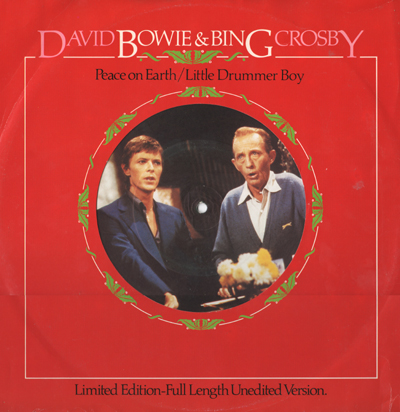
In response to my post about the decline of Christmas which included some comments on  the dearth of new religion-themed Christmas songs over the last half-century, some readers, on and off site, have pointed me to the 1977  duet between Bing Crosby and David Bowie from Bing’s last (and posthumously broadcast) TV Christmas special, where Bing sang “The Little Drummer Boy” (yechh) and Bowie sang some doggerel about world peace in counterpoint. Aesthetically, as one who yields to no one in admiration for the copious talents of Der Bingle,  I found the song atrocious when I saw it. Philosophically, politically and ethically, however, it is even worse.

Here are the lyrics of Bowie’s section: Continue reading

Heeding the Christmas Season Ethics Alarms

Yes, it has come to this. The period between Thanksgiving and Christmas season is a pre-unethical condition, getting worse every year. (Pre-unethical conditions are situations that experience teaches us deserve early ethics alarms, since the stage is set for habitual bad conduct.) The financial stresses on the public and the business community in 2010 will only fuel the creeping tendency to ignore the moral and ethical values that are supposed to underlie the winter holidays—charity, gratitude, generosity, kindness, love, forgiveness, peace and hope—for the non-ethical considerations that traditionally battle them for supremacy: avarice, selfishness, greed, self-pity, and cynicism. Combine this with the ideological and political polarization in today’s America and the deterioration of mutual respect and civility, and the days approaching Christmas are likely to become an ethical nightmare…unless we work collectively to stop that from happening. Continue reading

Halloween Ethics! Facebook Ethics! Political Ethics! Blackface Ethics! It’s Tennessee’s Aunt Jemima Affair, the Ethics Controversy That Has Everything!

It’s just after Halloween, and followers of the ethics wars know what that means: somewhere, somebody is in trouble for their choice of costume.

Actually, in this case it’s someone in trouble for her choice of someone in costume to pose with: Tennessee Republican state Rep. Terri Lynn Weaver posted a picture on the Internet of her standing with her pastor, who had dressed up as Aunt Jemima—of syrup fame and black stereotype infamy— for some Halloween festivities. Her caption to the photo:

“Aunt Jemima, you is so sweet.”

Weaver has apologized, swearing that when she posed for the picture with her pastor, she did not know the photo would upset anybody. “It was fun, done in innocence. My friend is dressed up as syrup. He wife was going to be a pancake,” said Weaver. “I never intended to offend anyone. I took the picture off my Facebook. I apologize if it ever meant to offend anyone.”  Weaver,who apparently has lived in a cave since 1957,  also said she was not aware that Aunt Jemima represented black stereotypes to many people, and was unaware that wearing blackface was also considered offensive to the vast majority of Americans. Yes, she really did. (Note: I know Aunt Jemima as a brand of pancake mix; I did not think the logo  gracee any syrup containers. I assumed Weaver confused confused the good Aunt with her white rival. Mrs. Butterworth, who is a syrup brand. Aunt Jemima obviously hangs out with pancakes, so the pastor’s wife was on firm ground, no matter what. But thanks to a syrup-minded reader, I have been set straight: there is Aunt Jemima syrup, too)

State Sen. Thelma Harper, an African-American, said she and members of the Black Caucus want to put Harper before the House Ethics Committee.“This is what we have had to live with, making a mockery of being black and copying the language that Aunt Jemima used,” said Harper.

This controversy has everything! Halloween ethics! Blackface ethics! Facebook ethics! Political ethics! Syrup ethics!

Let’s go through them, shall we? Continue reading