bitterness
A Particularly Sad Ethics Dunce: Senator John McCain
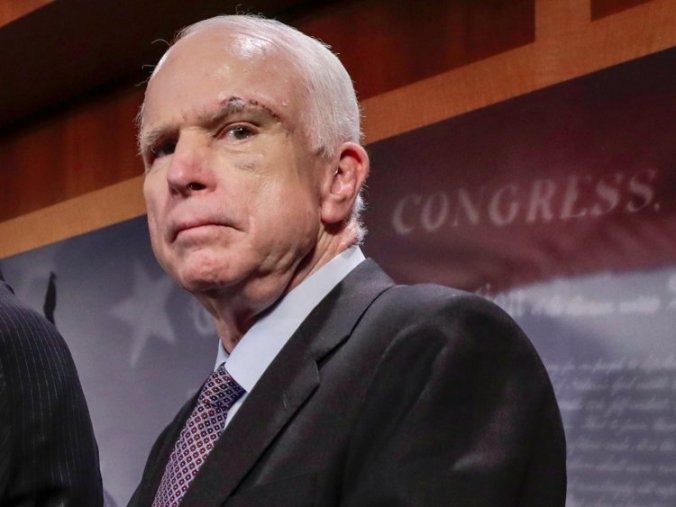
As I already have noted here more than once, Senator John McCain’s ethical course was to resign from the Senate even before he got his brain cancer diagnosis, and definitely afterward. He is a courageous and admirable man in many ways, but the one of the hardest duties in life is to give up power and influence, and say goodbye when the time comes. The senator is not alone in failing this ethics test, indeed he is in distinguished company: FDR, Babe Ruth, Frank Sinatra, Muhammad Ali, Lawrence Tribe, Clarence Darrow, too many Supreme Court justices, including a couple current ones, and lots of U.S. Senators. Nonetheless, it is a failing, and in McCain’s case the failing has been compounded by his regrettable decision to use his status as a dying man to exploit the reluctance of critics to address the wrongdoing of the afflicted. He has decided top settle old scores in his final days. The conduct is petty and erodes his legacy, as well as the respect he had earned in his long career of national service. It is too bad.
Much of McCain’s self-indulgence is directed at President Trump, whom he is now insulting with mad abandon, banning him, for example, from the Senator’s funeral in advance. This is vengeance, nothing more ennobling, for Candidate Trump’s outrageous disrespect toward McCain and other prisoners of war when Trump said that he did not regard them as heroes. McCain revenge is thus a display of the kind of non-ethics Donald Trump believes in: tit-for tat, mob ethics, hit ’em back harder. The political theme since November 2016 is that the President’s enemies cannot resist lowering themselves to his level, or in some cases, below it. Strike-backs from beyond the grave are particularly unbecoming, but McCain is seething, and apparently can’t muster the other cheek, graciousness, or statesmanship. Too bad. Continue reading
The Brutal Ethics Truth About “7 Brutal Truths That Will Make Your Life Better If You Accept Them”
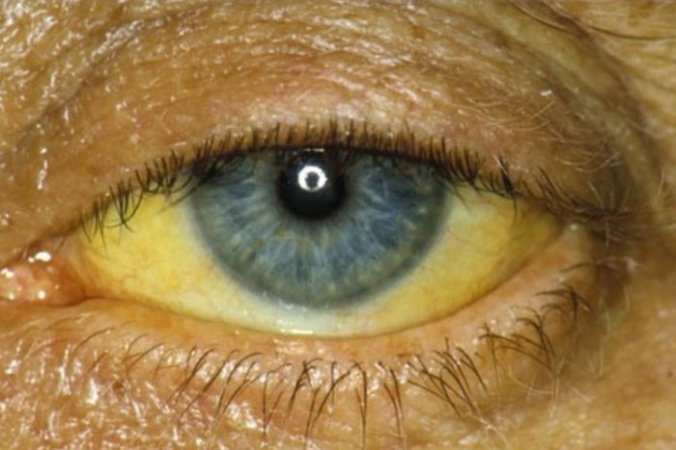
All looks yellow to the jaundiced eye.
Conservative writer John Hawkins published a post called “7 Brutal Truths That Will Make Your Life Better If You Accept Them.”
If I were as cynical as he is, I might say that a better title would be “How to Rationalize Being a Jerk,” but I’m not.
However, his post does demand some ethical perspective. Most, though not all, of his truths are really constructs to justify unethical conduct. Let’s examine them:
1. The average person cares more about what he eats for lunch than whether you live or die.
Maybe, and so what? That doesn’t mean that you should emulate them. To begin with, there is no “average person.” There are individual people, good, bad and in-between. Hawkins writes,
“You tell the average person that doesn’t know you very well that you have a fatal disease and he’ll say, “I’m so sorry to hear that.” Then he’ll forget about it in five minutes while he debates with his friends whether they’re going to Chili’s or the Mexican restaurant down the street. What that means is that everything you want out of life, you better prepare to earn without getting a lot of favors on the way. If you fall, you have to be the one to pick yourself up off the ground, brush yourself off and get your life back on track. You care. They don’t. So it’s up to you.”
But the a stranger doesn’t always react that way. Sometimes he gives you his kidney. Hawkins is supplying an excuse to be callous based on a Golden Rule Distortion: “Do Unto Others As They Would Do Unto You.” Don’t listen to him. Care about other people, and don’t hesitate to ask for help. People are better than you think: they will surprise you. In the meantime, it is your job to be as good as you would like them to be.
2. Life is not and will never be fair
I’ve written about this recently: fairness is a vague and broad concept in ethics. Life isn’t “fair” because life is often random, and nobody is tending the fairness meter. Systems either are fair or are not depending on your point of view. The mainstream conservative view about fairness is that one should play the cards one is dealt and stop complaining about it. It’s facile, though not without some truth: it is better to spend time trying to overcome obstacles than to bitch about them. On the other hand, each of us has an obligation to make the world better for those who follow us. Genuine unfairness, in systems, institutions, the culture and society, should be exposed, attacked, and fixed if possible. Hawkins’ approach would have left the U.S. with slavery, second class citizenship for women, Jim Crow, straight-only marriages, age discrimination, brutal monopolies and unchecked consumer fraud. His #2 is a license to be callous.
3. Most people are shallow
What an elitist and ignorant thing to say. If one has spent any time talking to and getting to know a wide range of people, it becomes clear that the opposite is the case. Again, assuming that most people are shallow provides Hawkins with an excuse to ignore them, or treat them with contempt. Most people will tend to behave as if they are shallow because they are rushed, stressed, distracted and focused on short-term exigencies. Give them time to think, a reason to consider a topic carefully, and the respect they deserve, and frequently unexpected depths will reveal themselves. “Most people are shallow” is a crippling bias for anyone to adopt. Expect the best of people: you will often be disappointed, perhaps, but you will also allow validations of your faith in humanity to bloom.
Writes Hawkins:
“So, use the shallowness of other people to your advantage. Learn to dress like a successful person. Pay attention to how you look. Find ways to give off the appearance that you are doing well. Don’t be a phony—be you, but also take advantage of the fact that a superficial appearance will be the reality to most people.”
Let’s see: pretend to be a successful person, but don’t be a phony; be you, but try to fool people by not revealing who you are. What?
People don’t assume that people who dress well, speak well, have manners and behave in a civilized fashion are successful because they are shallow. They assume that because they have learned from experience that certain traits both aid success and result from it. Hawkins is the one revealing shallowness. Continue reading
Comment Of The Day (A Deft Rebuttal!) : “Comment of the Day: ‘From The Signature Significance Files: Trump And The Teleprompter. Seriously, How Can You Even Consider Voting For A Guy Like This?”’

I posted Fattymoon’s lament regarding the state of America’s culture, politics and prospects late last night, and yet another deserving Comment of the Day arrived in record time, this morning at 8:41 PM.
Here is Tim Hayes’ rebuttal to FattyMoon’s Comment of the Day in response to “From The Signature Significance Files: Trump And The Teleprompter. Seriously, How Can You Even Consider Voting For A Guy Like This?”
(THE MANAGEMENT FULLY AGREES WITH AND ENTHUSIASTICALLY ENDORSES THE OPINION EXPRESSED HERE.)
“To this very day I call for armed revolution and don’t give a fuck who knows it. Maybe Homeland Security will make me a return visit at one in the morning. But, this time, I ain’t inviting them in. Ain’t got no guns”
This statement, right here? This is the symptom of so damn many of the problems facing our country right now. I’m not saying that to attack FM as an individual, here, but rather to reject a representative of a mentality that provokes the gnashing of teeth and tearing of hair. So please, when reading this post, understand that all directed comments towards a “you” are directed towards anyone sharing that mentality, not at a specific individual.
You call for armed revolution, but you don’t have arms with which to join one.
You call for changes to who is elected to office, but you then say “but I only voted twice” with the clear implication that you’re not to blame for how things are.
Comment of the Day: “From The Signature Significance Files: Trump And The Teleprompter. Seriously, How Can You Even Consider Voting For A Guy Like This?”
I am behind in my Comment of the Day postings by two or three, and was trying to decide which to post first. After the previous post, the answer became obvious.
Fattymoon is a teacher, an idealist, an activist and an intellectual as well as an honest, sincere and occasionally bitter and disillusioned man. We met here on the blog back when I was criticizing a movement he strongly supported, Occupy Wall Street. Like a few other regular visitors to Ethics Alarms—not nearly enough—who have remained civil, provocative and predictably adversarial at the same time, he has been a font of thoughtful lateral thinking with a heavy dose of whimsy.
I was startled that his response to one of my posts about the ethics black hole that is Donald Trump sparked this reaction from Fatty:
Me, I’m watching this farce unfold from the sidelines and I’m laughing my ass off.
To which I replied,
How, exactly, are you on the sidelines? Doesn’t it bother you, accepting for the hell of it that such a thing is possible, that an entire generation is on the way up and the nation and world isn’t on the sidelines?
Here is Fattymoon’s response, and the Comment of the Day, to the post, From The Signature Significance Files: Trump And The Teleprompter. Seriously, How Can You Even Consider Voting For A Guy Like This:
No, it doesn’t bother me one iota, Jack. I lost all faith in presidential politics, and politics in general, when Obama failed to live up to his promises/my expectations. I consider him a traitor of the first magnitude. I would rather have seen him stand up to Wall Street and other Bush atrocities and pay for it with his life than what actually went down during his presidency. At least he would have died an honorable man.
World Series Ethics: He Tipped His Cap
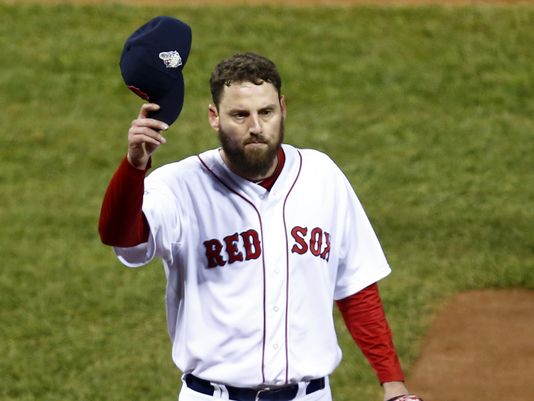
What would Ted Williams have done? We know the answer to THAT question…
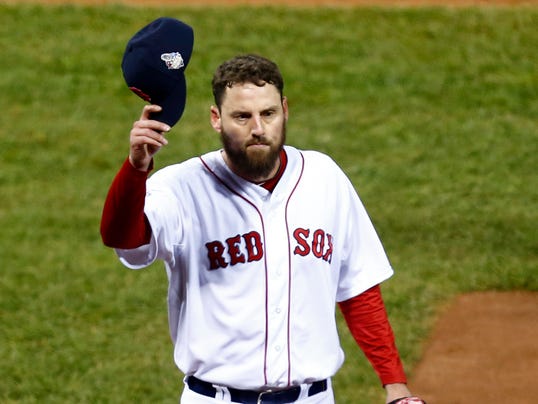
The Boston Red Sox won the World Series last night, making me happy. Something else happened too.
Some background is in order. The great Ted Williams used to give Boston baseball fans the biggest hat tip in baseball as they cheered him after a home run. This was when he was first known as “the Kid’ and indeed was one, as his Hall of Fame trajectory was obvious from the moment he stepped on a major league field in 1939 at the tender age of 19. Gradually but rapidly, a vicious local press and some ugly incidents in response to a few jackasses in the stands caused the Kid to sour on the admission-paying mortals who booed him when he struck out, and he decided to ignore their cheers, refusing to extend the traditional courtesy of a hat tip to the fans as he rounded the bases after a home run—which, since he was Ted Williams, happened frequently. Williams spent his whole career in the city of Boston playing before those fans who offended him in his twenties, but right up to and after his final home run, which he hit, famously, in his last at bat, the Red Sox fans got no hat tip from Ted. He rounded the bases the final time as they cheered themselves hoarse, and never looked up or acknowledged their praise. Screw ’em.
That was Red Sox pitcher John Lackey’s attitude toward the current generation of Fenway fans, for similar reasons. He had been signed to a rich, long-term contract in 2010 to be a Red Sox mound ace, but arrived in Boston with his arm deteriorating and his abilities diminished. 2010 was a disappointing season for Lackey and 2011 was worse, as he pitched in pain for a team that was short of hurlers. The 2011 Red Sox became infamous for their late-season collapse and underachieving starting pitchers, and no one on that team was jeered on the field or savaged in the call-in sports shows like John Lackey. He missed the entire next Red Sox season recovering from arm surgery after the 2011 collapse, and thus missed the 2012 debacle that was even worse. In 2013, however, Lackey returned with a renewed right arm, a fit body and a fierce determination to finally live up to the big contract. He did, too. He pitched well all season, and became a key factor in the Boston charge to the World Series, as they rose from last place in their division in 2012 to first.
In 2013, Lackey received nothing but cheers from the surprised and grateful Boston fans. Nevertheless, he adamantly maintained the Kid’s attitude—“Screw ’em”—all season long. As he walked into to the Red Sox dugout after being relieved in another fine pitching performance and the Boston fans saluted him, Lackey refused to reciprocate with the traditional hat tip, all season long and through the play-offs. The fans were fickle hypocrites, and their loyalty conditional. They booed him when he was valiantly pitching hurt and embarrassed in 2011, and he wasn’t going to forget it. They were going to get snubbed like they deserved, and that was the way it was going to be.
Last night the Boston Red Sox won their third World Series in the last ten years. It was the first time the home team fans had been able to witness the deciding game since 1918 (as the Fox announcers informed the presumably senile audience over and over and over again), and John Lackey was the pitching star for the home town team. The night was a love fest for Boston baseball fans, as they cheered every move of their frequently star-crossed and quirky team, and no Red Sox player was cheered more loudly than John Lackey, as he walked off the field for the final time in 2013 in the 7th inning, with his team safely ahead by five runs. They stood and applauded and chanted his name, as he moved deliberately to the Boston dugout, head down, grim, just like Ted on that gray day in 1960 when he hit homer number 521.
It was a small thing, the smallest really, only a gesture and for most players, most of the time, an automatic one…except that it symbolized the ethical virtues of grace, forgiveness, gratitude, humility and fairness. This memorable, wonderful night for the Boston Red Sox and the grand old city it represents—my home town– was no time to let bitterness and resentment prevail. Unlike Ted Williams (who wouldn’t make his peace with Boston fans until years later, when he returned as an opposition manager), John Lackey found the strength and decency to let it go.
It was, as I said, a small thing. But it took character, and it was the right thing to do.
______________________________
Graphic: USA Today
My Field of Dreams
 Yesterday, an Off-Broadway musical closed that I launched on its remarkable run nearly 12 years ago. The show had productions in four states, D.C. and London; it had over 450 performances; it became the cornerstone of one very talented (and very nice) actor’s career, and an important opportunity for several others. It gave a dear friend immense pleasure, satisfaction and recognition in the final decade of his life, and probably saved my theater company from bankruptcy. Most important of all, perhaps, is that it entertained thousands of people. If I got bopped by a trolley tomorrow, the show would undoubtedly stand as one of the major accomplishments of my entire strange, eclectic, under-achieving life.
And yet…feeling good about the unlikely saga of the show, now that it has finally (probably—it has risen from the dead before) seen its last audience, takes considerable effort for me, and has from the beginning. My satisfaction is more intellectual than emotional, because I know that I personally benefited less from the show in tangible ways in proportion to my contribution to it than anyone else involved. Although I restructured the script, re-wrote, added and cut lines, wrote new lyrics to one song and added two others to the show, including the finale, I’m not credited as a co-auther. I own no part of the property, and never received a dime in compensation. Those closely connected with the original production know all of this, but the extent of my role in the creation and success of the show has been invisible to audiences for over a decade. Continue reading
 Ethics Alarms
I am bumping Steve-O-in-NJ’s reaction to the depressing drama of Senator John McCain spending his last days in anger and bitterness up in the queue of pending Comments of the Day, which is long right now. The reason is that his analysis fits neatly into a post I was about to write, but will summarize here as a preface.
The impulse to defend McCain’s recent conduct, notably disinviting President Trump from his funeral in advance, is one more in a long line of signature significance moments, definitively identifying late stage sufferers of anti Trump hysteria. (Trump Derangement Syndrome just isn’t an accurate diagnosis, because it suggests equivalence with the more unhinged critics of Presidents Clinton, Bush and Obama. There is no comparison. It is like comparing a bad cold to the bubonic plague.) The grotesque theater of a public figure choosing, rather than to end his life with grace, forgiveness and unifying good will, choosing to emulate the mad Ahab, screaming,
He has gone full-Ahab. You never go full Ahab. But because the equally mad haters of the elected President relish the thought of any insult, attack or indignity hurled Trump’s way, the can’t perceive the obvious. Defending McCain’s prospective snub is as clear a symptom of anti-Trump hysteria as a dog recoiling from water signals rabies.
My usual course is to make an ethics analysis and then check the opinions of analysts who I trust as generally fair and perceptive. Here was Ann Althouse’s take, in part:
Those who respect and care about McCain want him to stop. Those who hate Trump so much they are willing to see a war hero and former Presidential candidate embarrass himself to deliver one more divisive insult just regard him as a means to an end.Here is Steve-O-in-NJ’s Comment of the Day on the post, A Particularly Sad Ethics Dunce: Senator John McCain:
Continue reading →