Comment Of The Day: “Wait, I’m Confused: I Thought Racial Segregation Was BAD….”

america-flag-damaged

I have been writing for some time that the most disappointing and damaging failure of Barack Obama’s leadership has been the marked deterioration in racial trust, respect and communication during his administration. I raised the alarm regarding trends that began making themselves evident during the 2008 campaign, before Obama was elected. The use of race-baiting to silence political adversaries and critics. The shift of the news media, in its efforts to get the first black President elected, pound on racial fault lines while openly dismissing John McCain, a decent man, as old and white, and therefore irrelevant. Obama’s close ties to the racist Rev. Wright, and his self-evidently disingenuous denials that his “spiritual advisor’s” bigotry had any effect on his own views about America raised additional suspicions. After Obama’s election, his overtly and intentionally racialist Justice Department repeatedly signaled that racial neutrality was not a goal, with predictable resentment following from many white citizens, as it should have. The tactic of tarring his critics as motivated by racism continued, with the tea party, conservatives and Republicans being routinely compared to racists for levels of critical rhetoric that were neither excessive nor undeserved.

Then came Obama’s disastrous comments on the Trayvon Martin killing, as he chose to take sides as an angry family, race hucksters and an irresponsible press claimed that white men with guns were stalking and hunting down young black men and “children” like Trayvon because they were black. Obama, who had run for election on the promise of healing divisions, had through his leadership incompetence—no, I do not believe he intended to tear the nation apart along racial lines–sent race relations hurtling backward. So much societal carnage has resulted, including the cataclysmic candidacy of Donald Trump, the rise of Black Lives Matter,  and a frightening explosion of anti-white racism and advocacy for segregation on college campuses. That this has happened during Obama’s Presidency, of all Presidents, is nothing less than a tragedy.

Naturally, the liberal mainstream media adamantly refuses to confront this, even after manifestly absurd statements by Obama that he believes race-relations have improved. Conservative critics, for their part, have no credibility on the topic, since they are presumed to be blind to Obama’s virtues. They are also too gleeful about the President’s failure; for example, conservative pundit Glenn Reynolds posts this old tweet routinely…
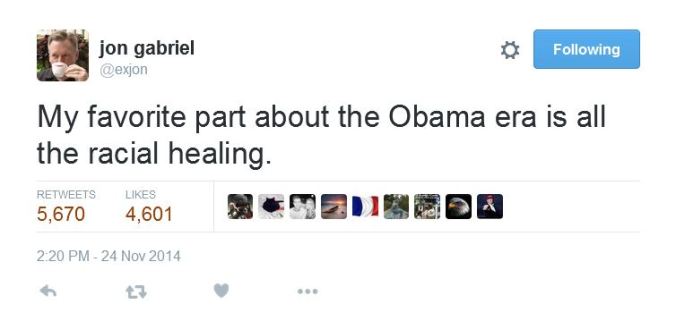
exjon_racial_healing_12-17-15

…it’s mordantly amusing in its irony, but still not funny. Again, this is tragic.

Many readers here, including African Americans and Obama supporters, vehemently object to my assessment, which is undeniable on the facts and impossible to rebut. After a recent post, “Wait, I’m Confused: I Thought Racial Segregation Was BAD….”,  about black activists demanding campus spaces that are “safe” from whites while enabling, guilt-racked white administrators give such racist arguments legitimacy that would never be tolerated were the colors reversed, commenter Zoltar Speaks! authored this Comment of the Day in response to a protest by another veteran reader.

Here it is:

I’ve heard some of my nearly life-long black friends opinions shift in dramatic ways that I never would have expected, and it’s all happened since Obama was elected President. The change in attitude and rhetoric has been absolutely astounding. I think I’ve had no less than a dozen of my black friends unfriend me on Facebook for reasons that they never would have 10-15 years ago, and some others have just ceased to communicate. Some of these people have been friends from 25 to nearly 50 years – yup long before Facebook and computers when people had real face-to-face conversations and shared our lives offline. I still consider these people to be my friends and I miss their company, but some of them have built impenetrable walls between us and gone to a very dark place – racism is a very, very dark place.

Continue reading

Observations On The University Of Houston’s Anti-Free Speech Oppression

zipper on mouth

Prelude

I gave an ethics training session for a local non-profit yesterday. At the end of the two hours, a staffer who was pursuing U.S. citizenship was obviously stimulated by the various issues and principles we had discussed and had many provocative questions, which he struggled to articulate in his second language, for he was Sorth Korean. “Why is it right for me to pay taxes to assist illegal immigrants?” he asked. “In Sorth Korea, they say we are decades behind the US is democracy, but Korean laws are enforced no matter who the law-breaker is. I see that law-breakers in the US who are rich and powerful or famous get special dispensations from the law. Doesn’t that mean that Korea is ahead of the U.S., at least in that respect?” (Gee, I wonder who he was referring to…)

He had insightful observations, as recent immigrants to the U.S. so often do. Finally he said, “Do you agree that political correctness is a great threat to liberty and democracy?”

Yes. Yes I do. I thought so the first time I heard the term “politically correct” in the Seventies, and was so certain that the concept’s loathsomeness (and the parallel loathsomeness of its advocates, frankly), ensured that it would be a short-lived phenomenon.

Which shows how smart I am…

***

Shortly after the July 7 massacre of  five police officers in Dallas, Rohini Sethi, the vice-president of the University of Houston’s Student Government Association, posted this on Facebook:

BLM tweet

The student governing body suspended her from her office and the group.

From the Houston Chronicle…

Student body vice president Rohini Sethi has been suspended by the SGA and is temporarily barred from participating in group activities. She is also due to attend a “diversity” workshop per the ruling….The University of Houston issued a statement this week that said the move is not a university action and doesn’t impact Sethi’s academic standing. “The University of Houston continues to stand firm in support of free speech and does not discipline students for exercising their constitutional rights,” the statement said.

The action came after minority student groups on campus condemned her statement as racist or “insensitive,”and demanded her removal. The accommodating president of the SGA complied. For her part, Sethi apologized and agreed to take a three-day cultural sensitivity workshop, though she wrote several Facebook posts defending her actions. Ultimately she was brought to heel, made a public statement along with the SGA head, and like a brain-washed prisoner of war, grovelled..

“I have chosen to take these steps on my own because of the division I’ve created among our student body. I may have the right to post what I did, but I still should not have. My words at the time didn’t accurately convey my feeling and cause many students to lose their faith in me to advocate for them. I will always continue to learn and be ready to discuss these issues.”

Observations: Continue reading

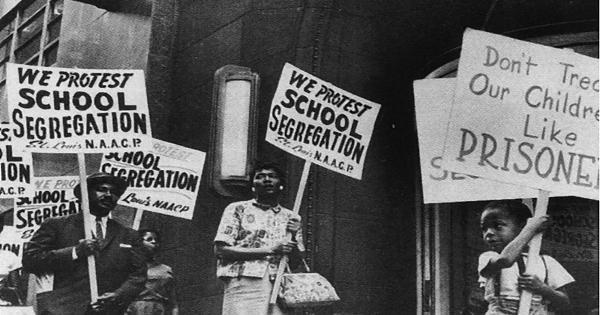
Wait, I’m Confused: I Thought Racial Segregation Was BAD….

segregation

Two of these stories in one week—something’s  happening here. What it is ain’t exactly clear, however.

I’m sorry, I start channeling old Sixties songs at times like this.

Not one but two colleges have advocated segregation in their policies this week:

  • Hampshire College explains on its website that it allows students to reside in “identity-based” housing communities, provided they have a “unique social identity” that has “historically experienced oppression,” arguing that such residences “give support to members of our community with social identities that have been historically marginalized in this country, and strive to counter systemic oppression.” The Massachusetts school’s confident  promotion of such living arrangements “arises from our commitment to fostering diverse, socially just, and inclusive communities.” An  informational booklet explains that “identity-based housing is an institutional structure designed to assist members of historically oppressed groups in supporting each other,” and “helps to create an added level of psychological comfort and safety for those who choose to live in those spaces, often providing the foundation for those students to be able to engage fully in the greater community.”

Translation: Black students don’t want to live with whites, but prefer “their own kind,” because whites are viewed as potentially dangerous. And that’s okay! Continue reading

The Democratic National Convention Presents The Most Unethical Use Of Mothers Yet

Mothers

The Republicans exploiting the grief of Patricia Smith, the mother of a young man slain in the 2012 Benghazi attack, by putting her on the party’s convention program was irresponsible and ethically revolting, especially from a party that (correctly) labelled Cindy Sheehan a grief-addled nuisance when she was protesting the Iraq War. Smith’s emotional rant against Hillary Clinton was pure grief porn, and expanded the sensationalist  trend in the news media (and legislative hearings) to use the most conflicted and biased figures imaginable—the loved ones of victims of tragedy—to frame a controversial issue in complex events.

Naturally, the Democratic Party’s allies in the media returned the hypocrisy many-fold. Maureen Dowd of the Times, who had pronounced Sheehan as someone with “absolute moral authority”—because having one’s son killed instantly makes you an authority on foreign affairs, at least when a Republican President is in office—was silent about Smith’s moral authority as she was attacked by critics, including the Washington Post, Chris Matthews, and a GQ writer who wrote that he wanted to “beat her to death.”

Foolishly, I took these attacks as  a hopeful sign that the Democrats and progressives were maturing ethically, and had rendered the proper ethics judgment that by prioritizing emotion over reason, it was unfair, misleading, exploitive and irresponsible to use grieving mothers this way. No, it wasn’t hypocrisy. It was ethical growth. Democrats, unlike Republicans, now knew this was a cheap and tawdry tactic, and they would no longer stoop so low.

Boy, am I gullible.

It was hypocrisy, and the Democrats wouldn’t stoop as low as Republicans, they would stoop much, much, much lower.

Among those who appeared on the Hillary Clinton coronation stage last night were members of Mothers of the Movement, an offshoot of Black Lives Matter. Though the message spoken by these women appeared to be about police brutality, unjustly killed black men and the need to ban guns, their commonality was only this: all of them were mothers of African Americans who died violently, and all of them blame whites, police, guns, the justice system or the United States of America, regardless of evidence, the findings of juries, and investigations. That is a fair description.

Let’s look at the women who appeared on stage: Continue reading

Wearing Black Lives Matter Pins In The Courtroom Matters To This Judge

Q: Which of these can a judge ban from a courtroom? A: All of them.

Q: Which of these can a judge ban from a courtroom? A: All of them.

Youngstown (Ohio) Municipal Court Judge Robert Milich ordered NAACP attorney Andrea Burton to remove the Black Lives Matters pin she was wearing. The attorney refused, and was declared in contempt of court.

Good.

She was.

Judge Milich  sentenced the grandstanding lawyer to five days in jail, though the sentence has been stayed while she appeals the decision, as   as long as she obeys Milich’s order not to wear items that make a political statement in court. When she loses her appeal, and she will, she will have to serve the five days in jail.

Milich is on firm ethical and constitutional ground, not that this episode won’t subject him to being called a racist. It is well-established that judges can ban political expressions in the courtroom, and in 1998, the Supreme Court let stand the rulings of a federal district court and the 1st Circuit Court of Appeals, in Berner v. Delahanty, that a the judge’s prohibition of political buttons was a reasonable method of “maintaining proper order and decorum” in a courtroom. In that case, the judge prohibited lawyer Seth Berner from wearing  a button saying “No on 1—Maine Won’t Discriminate,” a declaration against an upcoming state referendum.

As long as a judge doesn’t allow one form of political advocacy while banning others, there is no free speech issue. Judges have gotten themselves involved in controversy when they have allowed buttons, as in the 2006 Supreme Court case of Carey v Musladin, in which Court ruled  unanimously that murder trial spectators were free to wear buttons with a picture of the victim in front of the jury that convicted the defendant. The justices agreed with California prosecutors who said the buttons were a harmless expression of grief by family members at Mathew Musladin’s trial.

I really don’t like that decision. A wise judge will avoid the issue by prohibiting any advocacy in court of of any political, social or case-related opinion. Continue reading

Ethics Alarm: In Memphis, Facts Are Now Racist

Infamy. I hope.

Infamy. I hope.

This truly upsetting story is in part about headlines, and I had a hard time deciding on one for the post. It makes my head explode—I am trying out a new Swiffer now—but it really shouldn’t have exploded, considering recent developments. I could name Commercial Appeal’s editor Louis Graham (left) an Ethics Dunce, which he certainly is (in addition to being a fool, a coward, and a disgrace to journalism), but that doesn’t do him justice. I thought about making his editorial apologizing for stating facts in a headline as an Unethical Quote of the Month, but this was worse than a bad quote. This was surrender.

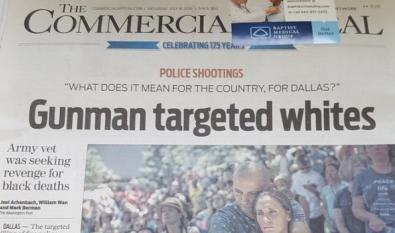
The Memphis, Tennessee newspaper the Commercial Appeal, a Gannett publication, headlined its front page story about the attack on police in Dallas “Gunman targeted whites.” Here it is:

memphiscom headline

Indeed, African-American gunman Micah Xavier Johnson specifically said that his objective was to  kill white police officers. Nonetheless, protestors attacking the paper for publishing a “racist’ headline gathered outside the paper’s office in downtown Memphis last week. Black Lives Matter signs were in evidence.

Commercial Appeal editor Louis Graham met with protesters, and apologized with a front page editorial titled “We got it wrong.” He wrote in part… Continue reading

Two Critical Integrity Questions For African-Americans, University Administrators, Democrats, Civil Rights Advocates, Progressives And Social Justice Warriors

Seperate-but-Equal

First question: 

Are you prepared to rationalize this?

From the Wisconsin State Journal:

UW-Madison’s Multicultural Student Center separated attendees by race to discuss a violent week of news that stirred debates about racism and law enforcement, prompting criticism from conservative news outlets that the arrangement amounted to segregation.

Campus officials said the decision to hold separate meetings Monday for white and minority students, faculty and staff was made to ensure people of color had a place to discuss their concerns, and said the rules were not meant to exclude participants.

“No one was turned away from any session,” UW-Madison spokeswoman Meredith McGlone said in a statement.

A post that has since been deleted from the Multicultural Student Center’s Facebook page described the meetings as a place where students and UW employees could emotionally process the prior week, which included fatal police shootings of black men in Minnesota and Louisiana, followed by the targeted killing of five police officers in Dallas.

Two of the meetings were for white students and UW employees, according to the post, while two meetings were for people of color.

The Daily Caller, a national conservative news site, wrote about the meetings Monday night, posting a story that included a historic photo of a segregated waiting room sign. The site Right Wisconsin also wrote about the meetings.

McGlone said participants wanted “a space to express feelings without the fear of being judged.”

“Our students of color often find such spaces hard to come by,” McGlone said. “It is a best practice in student affairs to allow quiet and reflective space for those who request it.”

Still, McGlone said, the intent behind the different meetings “could have been communicated more clearly to avoid any impression of exclusion.”

McGlone did not respond to a followup question asking whether the Multicultural Student Center would use a similar structure for meetings in the future…

Here is a handy link to the Ethics Alarms Rationalizations List, so those of you choosing to try to justify this have all the necessary arguments in one convenient place..

The second question:

If you are not prepared to rationalize it, do you have the courage and integrity to condemn it?

Continue reading

The Black Lives Matters Effect, Part 2: Purdue’s Free Speech Chill

Perdue letter


So powerful is the desire to be seen as on the “right” side  in an era where race trumps everything that a major university is harassing a student because he dared to be critical of Black Lives Matter. This is another, more sinister aspect of the Black Lives Matter Effect. A racist hate group that claims to promote virtuous objectives as cover, Black Lives Matter causes well-intentioned progressives-in-denial to equate well-earned attacks on the group to rejection of racial justice.

This episode is especially troubling. Purdue University Northwest student Joshua Nash received an ominous letter summoning him to a “required Administrative Meeting” scheduled by a campus administrator to discuss Nash’s personal Facebook comments. This is as appropriate as a letter demanding a student’s appearance before authorities because there was a complaint about his off-color toast at a wedding reception.

Nash says he isn’t certain which Facebook post was deemed worthy of threatened discipline, but it was probably the one where he states “Black Lives Matter is trash because they do not really care about black lives. They simply care about making money and disrupting events for dead people.” According to Nash, that comment was reported to Facebook, with removed it and suspended his account for 30 days. Nash also claims that a campus official said his social media comments could result in his expulsion.

I assume that FIRE will soon be in Nash’s corner, and maybe, just maybe, the ACLU, depending on what its integrity level is these days. This is campus suppression of free speech. I think the threat of expulsion–for a Facebook post?—is too ridiculous to be taken seriously, but the letter is bad enough. All students need to know is that a politically incorrect Facebook post will get them hauled into a “meeting,” a.k.a. inquisition, and their speech, with the exceptions of a few wilful martyrs, civil libertarians, and rebels, will be effectively muzzled. Continue reading

The Black Lives Matters Effect, Part I: The Tenor And The Blogger

Singing the right lyrics also matters, you boob...

Singing the right lyrics also matters, you boob…

One thing you have to say for Black Lives Matters: it is good at making people make asses of themselves. “Late Night” host Seth Myers was yesterday’s example, but there are oh-so-many-more, and much worse.

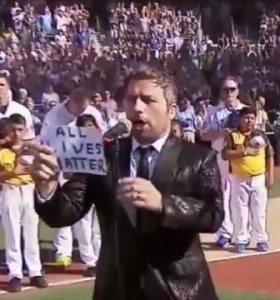
For example, in the pre-game ceremonies of the Major League Baseball 2016 All-Star Game in San Diego, a Canadian tenor, apparently driven to distraction by the reverential treatment given to a group that promotes race hatred and a color-based standard for law-enforcement, snapped while performing the Canadian national anthem. Remigio Pereira, a member of  the vocal group The Tenors tapped to sing the anthem, held up a handwritten sign that read “All Lives Matter” altered the lyrics in the line “With glowing hearts we see thee rise. The True North strong and free” to “We’re all brothers and sisters, all lives matter to the great.”

This doesn’t fit the music, and is even worse than the real lyrics, which is quite a feat. Of course, Remigio was unethical to do this, expropriating an event that had nothing to do with Black Lives Matter, nor race, nor politics to make his own grandstanding statement (come to think of it, baseball does have something to do with grandstands. The stunt was disrespectful of everyone—his hosts, Major League Baseball; San Diego; the captive audience in the stadium, the TV audience, Canada. It was also a breach of trust that directly and perhaps fatally wounded his group, which immediately suspended him (Can we say F-I-R-E-D, Tenors? Sure we can) and issued an abject apology.

The statement was not unduly disrespectful to Black Lives Matter, however, which has shown itself to be unworthy of respect, as all divisive hate groups are.

The Black Lives Matters effect is wide-ranging, however, as this episode shows. It not only makes Canadian tenors irresponsible, but sportswriters too. Over at NBC Sports online, baseball blogger Craig Calcaterra couldn’t perceive the unethical nature of a performer hijacking a paid gig for his own purposes, but lectured his readers on the sin of using the term “All Lives Matter,” writing,

This may not seem terribly controversial to some, but in the context of the Black Lives Matter movement that has risen over the past few years, “All Lives Matter” has come to be seen as a reactionary response which fundamentally misunderstands — often intentionally — the purpose of the Black Lives Matter movement. And is used to belittle and marginalize the Black Lives Matter Movement. The phrase “black lives matter” does not mean that “black lives matter more than any other lives.” If it did, sure, maybe “All Lives Matter” would be a reasonable response. But “Black Lives Matter” is a response to a society and, particularly, police, which treat blacks as lesser persons and who do not face repercussions for harming and in some cases killing black people through excessive force. It’s “black lives matter too” — a necessary statement, sadly — not “black lives matter more.”

Sigh. Continue reading

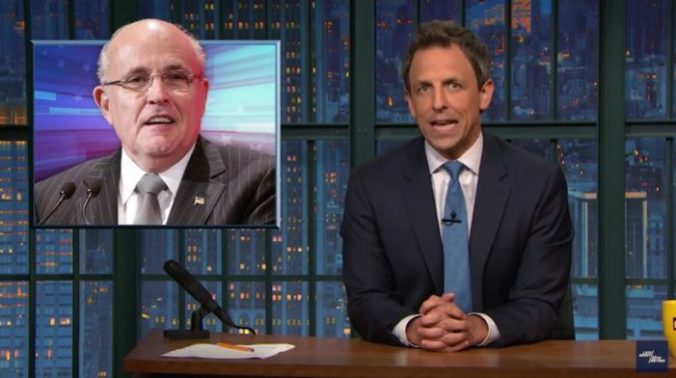
Ethics Dunce: “Late Night” Host Seth Meyers

meyers-giuliani

Seth Meyers is a comedy writer and performer, and his job, on the show following the Tonight Show, is to be funny, not to use the program as a platform for his political views. His predecessor twice-removed, David Letterman, increasingly ignored that line as time went on and he moved to CBS. This stratified his audience, and abused his role, but massaged Letterman’s massive ego. (Meyers’ immediate predecessor, current Tonight Show host Jimmy Fallon, may not always be funny, but he knows his place.) Meyers is relatively new to the job, and this week went much, much farther than Letterman ever went, while being supremely smug about it. Here were his hilarious comments last night:

MEYERS: So there were some incendiary and counterproductive responses to the tragedy in Dallas, but there were perhaps no worse response than that of former New York City mayor Rudy Giuliani, who complained, in perhaps the most galling and offensive way possible, that those peacefully protesting for police reform should shift their focus.

RUDY GIULIANI (on video): If I were a black father and I was concerned of my child, really concerned about it, and not in a politically activist sense, I would say, “be very respectful of the police. most of them are good. some can be very bad. and just be very careful.” I’d also say, ‘Be very careful of those kids in the neighborhood and don’t get involved with them, because son, there’s a 99% chance they’re going to kill you, not the police.’

MEYERS: Okay, first of all, don’t ever start a sentence with the phrase, “if I were a black father.” If you are black father, you don’t need to say it. And if you’re not, you should probably just shut the fuck up. And if Giuliani’s willing to say that some police can be very bad, you would think he’d see the value in the Black Lives Matter protests. But instead, he condemned them.

Observations: Continue reading