Your Baseball Ethics Lesson of the Week…The Buck Weaver Story

Baseball season starts next week, bringing me memories of my happy childhood in Arlington, Mass. and how I would pass the golden summers there metaphorically glued to my transistor radio for all 162 Red Sox games except for the very few that I attended or saw on TV. My team’s games were broadcast on WHDH 850 AM in those days, with Curt Gowdy doing the play-by-play. Right before each game was a favorite feature on that station: “Warm-up Time,” a 5 minute story from baseball’s rich and often strange history. “It’s Warm-up Time!” each segment began, “Your baseball story before every Red Sox game! Don Gillis reporting for Atlantic Refineries!” Don had a great voice and a rich delivery, and taught me a lot over the years.

Don introduced me to the strange and tragic saga of the 1919 Black Sox, the fixed World Series, the bizarre aftermath, and how baseball Commissioner Kenesaw Mountain Landis banned for life all eight of the players alleged to have participated in the plot to make the American League champion White Sox to throw the Series to the vastly inferior Cincinnati Reds.

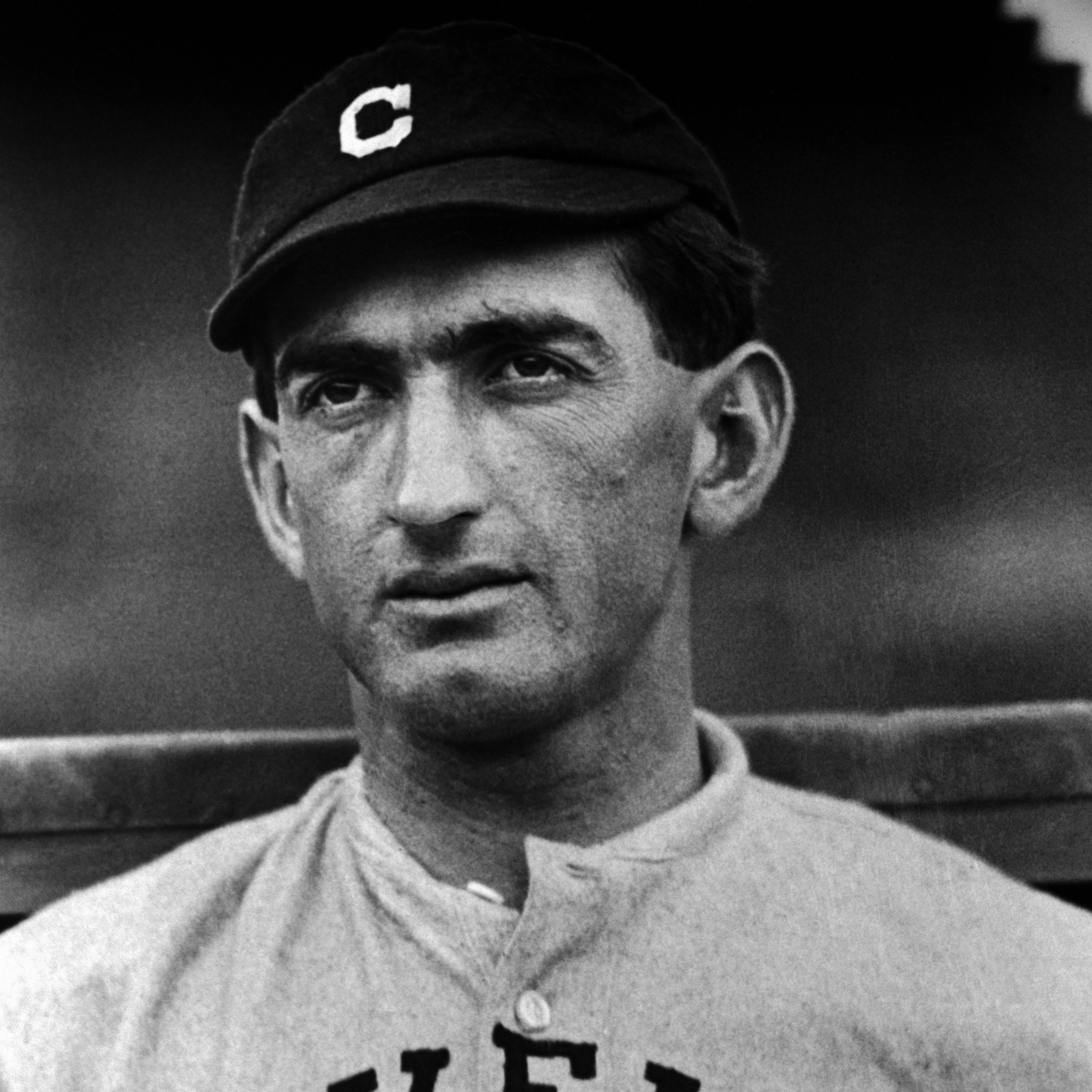
Among the banned: superstar “Shoeless” Joe Jackson, whose supporters argue that he should be allowed into the Hall of Fame to this day. Joe was glamorized in the movie and novel “Field of Dreams.” His defense was that he accepted money from gamblers to throw the Series but still played his best—hardly an ennobling theory, but plausible, since by all accounts “Shoeless” was an illiterate dolt. His familiar story was featured on “Warm-Up Time,” but I was always interested in another one of the banned eight, third baseman George “Buck” Weaver, sympathetically played by John Cusack in the movie “Eight Men Out.”

Continue reading

This Isn’t a Baseball Ethics Post, It’s a “Money Makes Organizations Forget Their Core Values” Post

Gee, what a surprise.

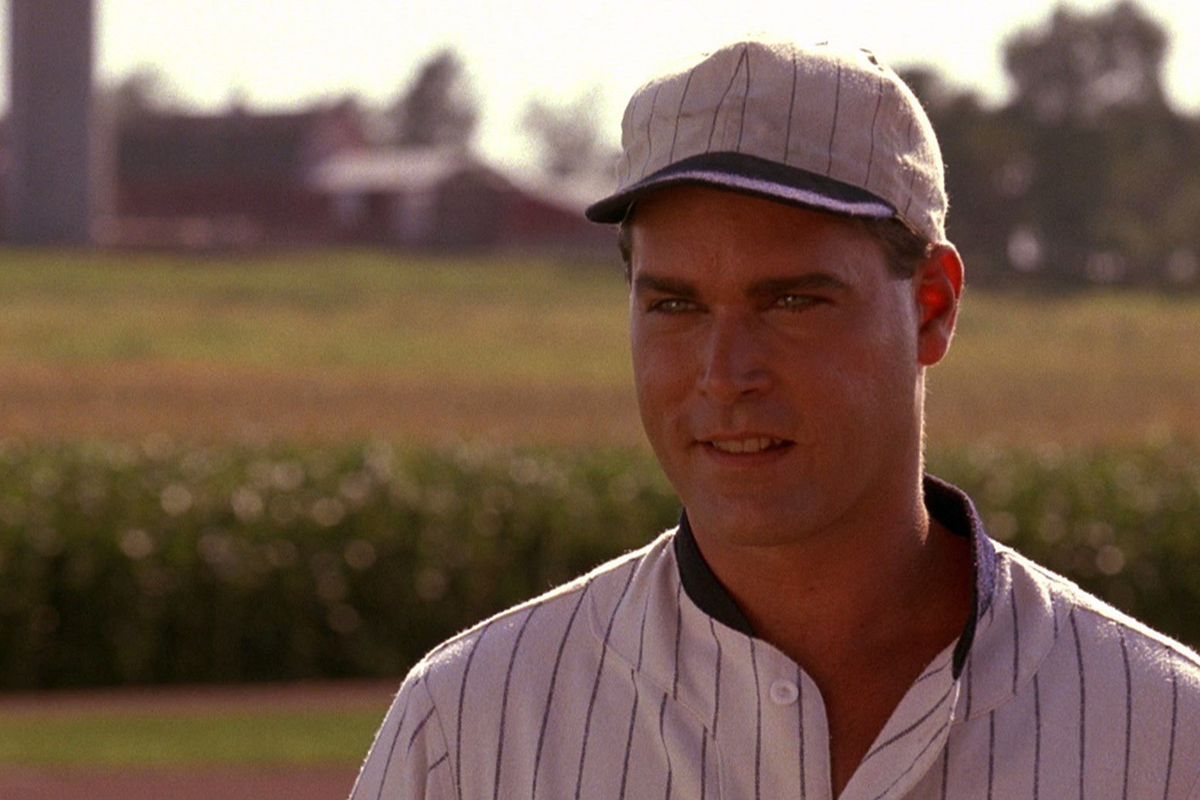
Major League Baseball, almost destroyed by a gambling scandal in 1919, with two of its greatest players, Shoeless Joe Jackson and Pete Rose (its all-time hit leader), banned from the game and exiled from the Hall of Fame for participating in baseball gambling (Jackson helped throw a World Series for gamblers; that’s him above. He was no Ray Liotta, was he?), is suddenly awash in new gambling scandals. How could this happen, you may ask? Easy. Once the Supreme Court opened the door to online gambling, all of the professional sports leaped into the money pit. Now online sports gambling outfits like DraftKings are the most ubiquitous sponsors of televised sports. In the middle of televised Red Sox games, the screen will show the odds on bets like “Will Rafael Devers hit a homerun?” David Ortiz, a lifetime Red Sox hero and icon, stars in commercials for DraftKings. The obvious message is that gambling on baseball is fun, virtuous, harmless, and…

For Major League Baseball, with its history, of all sports, to take this U-Turn was wildly irresponsible and perilous. How can the sport maintain the fan’s trust in the legitimacy of games played in an environment where billions are being wagered on them, openly and without any fear of corrupting the players?

Fay Vincent, the last real baseball commissioner (the first one was appointed because of the Black Sox scandal in 1919) told the Times, “The inevitability of corruption is triggered by the enormous amount of money that’s at stake. When you pour all this gambling money into baseball, or all the professional sports — or for that matter, even amateur sports — that amount of money is so staggering that eventually the players and I think, tragically, the umpires, the regulators, everybody is going to be tempted to see if they can get a million dollars.”

Vincent is an ethical man. The current “commissioner” (he’s the owners’ toady, just like Bud Selig, his predecessor), not so much. In a statement reacting to baseball this week banning one Major League Player for life for gambling on his own team and suspending four more for a year, Rob Manfred ludicrously said, “The strict enforcement of Major League Baseball’s rules and policies governing gambling conduct is a critical component of upholding our most important priority: protecting the integrity of our games for the fans. The longstanding prohibition against betting on Major League Baseball games by those in the sport has been a bedrock principle for over a century.”

Funny that after decades of no gambling scandals, baseball is suddenly drowning in them. What a coinkydink!

Continue reading

Finally, The Evidence That Proves “Shoeless Joe” Wasn’t Just An Innocent Dupe (And That Hollywood Has Been Glorifying A Creep)

Don’t you love it when new evidence is discovered that casts new light old historical controversies, or better yet, show that the popular version of history is dead wrong?

A long-buried trial transcript that has been withheld from public consumption for almost a century has finally been published. The case was Joe Jackson v. Chicago American League Baseball Club, a two week trial held in Milwaukee in early 1924. “Joe Jackson, Plaintiff, vs. Chicago American League Baseball Club, Defendant—Never-Before-Seen Trial Transcript” thoroughly disproves the popular image of Shoeless Joe Jackson, the greatest player among the eight Chicago White Sox players who were banned from the game for life after accepting money from gamblers to throw the 1919 World Series.

According to “Field of Dreams” (which also has the .400 batting left-handed hitter hitting right-handed) Joe is wise, passionate, and dedicated to the game. “Eight Men Out” the 1988 film about the scandal, based on author Eliot Asinof’s 1963 book, shows Jackson as an illiterate scapegoat who was not involved in the planning of the scheme and who only agreed to participate after the fix was in, The movie shows a conflicted Jackson telling “Black Sox” manager Kid Gleason that he does not want to play in the first game of the Series. Gleason orders Joe onto the field.

Continue reading

The Cheater’s Rationalizations

cheatingI was in Boston recently, and naturally the topic of Tom Brady and Deflategate came up often. I kept hearing the same defenses of Brady with a growing sense of déjà vu. Yes, many of the rationalizations on the Ethics Alarms Rationalizations List raised their ethically-muddled heads in Beantown, all-purpose classics like “Everybody does it,” “It’s a bad law/ stupid rule,” and “No harm, no foul,” but there were others that clearly came out of some secretly published “Cheater’s Handbook.”

These are going to enter the list as a group, like #6,The Biblical Rationalizations. They will be trotted out for other purposes, no doubt, but no set of excuses better defines the unethical mindset of a cheater’s defenders than these three.

59. The Cheater’s Rationalizations Continue reading

A Federal Court Reinstates Tom Brady’s Suspension For Cheating

Good.

What Brady doesn't get: When people think you cheated, the smirk is does as much damage as the conduct.

What Brady doesn’t get: When people think you cheated, the smirk is does as much damage as the conduct.

The U.S. Court of Appeals for the Second Circuit appeals court reinstated the NFL’s four-game suspension of New England Patriots quarterback Tom Brady yesterday. This overturned last year’s ruling by U.S. District Judge Richard M. Berman, who had nullified the league’s suspension of the superstar quarterback. The three-judge panel of the appeals court wrote…

“We hold that the Commissioner properly exercised his broad discretion under the collective bargaining agreement and that his procedural rulings were properly grounded in that agreement and did not deprive Brady of fundamental fairness.”

It is important to note that the Court only ruled on whether NFL Commissioner Roger Goodell had the power to suspend Brady and did not violate the player’s rights as a players union member by doing so. The NFL’s current deal with the players gives Goodell the kind of power Major League Baseball gave to its first commissioner after the 1919 Black Sox Scandal, when gamblers fixed the World Series. Goodell, like Landis, can use his discretion to punish a player for “conduct detrimental” to the game and the NFL. They did this because a disturbing number of NFL players were getting headlines for doing things that don’t comport with what the public expects of its paid heroes, like sucker-punching women, shooting people, getting in bar fights, and engaging in assorted felonies. The game also has a very successful coach, Brady’s coach, in fact, who has made it very clear that he will cheat whenever he can get away with it..

I’m not going to rehash the “Deflategate” incident: I wrote enough about it when it occurred. Nobody knows for certain if Tom Brady in fact did conspire with Patriots employees to cheat when his team was behind in a crucial play-off game, but we know this: Continue reading

Observations On The News That Pete Rose Bet On Baseball As A Player After All

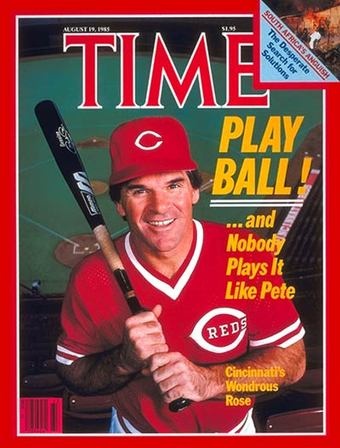
Rose Time cover

The story is here.

To summarize for those new to this story and its various issues:

Because the 1919 World Series fixing scandal nearly toppled the sport, any player, manager or coach who bets on baseball games will be automatically banned from the game for life and from the Major League Baseball Hall of Fame for perpetuity. Pete Rose, the all-time hits leader as a player and a certain Hall of Fame admittee under normal circumstances, was shown to have bet on baseball while a manager, after his playing career. For many years he lied, denying that this was true, then came clean in time to hawk his autobiography.

Rose has always had a lot of sympathy from fans and players, in part because he was such an exciting player, in part because he played with the innocent enthusiasm of a child and  he is a child, at least emotionally, and mostly because it was believed, since Rose insisted that it was true—yes, I know that sounds strange, given Rose’s record of serial dishonesty—that he never gambled on baseball while he was a player.

This season, public sentiment had been building to finally pronounce Rose forgiven. He had even progressed to the stage that some advertisers were using him in TV commercials. Baseball has a new Commissioner, and he had signaled that he would give Rose’s long-standing and ignored petition for reinstatement due consideration.

All of that is gone now, presumably forever.

Some last thoughts on Rose, as with any luck this is the last occasion I will have to write about him: Continue reading

Tales of “The King’s Pass”: Pete Rose and Jeremy Clarkson

King

The King’s Pass has been much in the ethics news of late—Brian Williams, Bill O’Reilly, David Petraeus, Hillary. Let’s review, shall we?

11. The King’s Pass, The Star Syndrome, or “What Will We Do Without Him?”

One will often hear unethical behavior excused because the person involved is so important, so accomplished, and has done such great things for so many people that we should look the other way, just this once. This is a terribly dangerous mindset, because celebrities and powerful public figures come to depend on it. Their achievements, in their own minds and those of their supporters and fans, have earned them a more lenient ethical standard. This pass for bad behavior is as insidious as it is pervasive, and should be recognized and rejected whenever it raises its slimy head.  In fact, the more respectable and accomplished an individual is, the more damage he or she can do through unethical conduct, because such individuals engender great trust. Thus the corrupting influence on the individual of The King’s Pass leads to the corruption of others…

1. The BBC just demonstrated how the King’s Pass should be rejected—with courage and gusto.

Jeremy Clarkson, the main host of the popular BBC auto show “Top Gear,” spent March misbehaving. He got in a shoving match with a producer, verbally abused staff and was recorded trashing the network. When Clarkson topped it off with a physical altercation with a show staffer, the BBC decided not to renew his contract. BBC head Tony Hall said in a statement:

It is with great regret that I have told Jeremy Clarkson today that the BBC will not be renewing his contract. It is not a decision I have taken lightly. I have done so only after a very careful consideration of the facts…I take no pleasure in doing so. I am only making [the facts] public so people can better understand the background. I know how popular the programme is and I know that this decision will divide opinion. The main facts are not disputed by those involved.

The BBC is a broad church…We need distinctive and different voices but they cannot come at any price. Common to all at the BBC have to be standards of decency and respect. I cannot condone what has happened on this occasion. A member of staff – who is a completely innocent party – took himself to Accident and Emergency after a physical altercation accompanied by sustained and prolonged verbal abuse of an extreme nature. For me a line has been crossed. There cannot be one rule for one and one rule for another dictated by either rank, or public relations and commercial considerations… Obviously none of us wanted to find ourselves in this position. This decision should in no way detract from the extraordinary contribution that Jeremy Clarkson has made to the BBC. I have always personally been a great fan of his work and “Top Gear”…The BBC must now look to renew Top Gear for 2016. This will be a big challenge and there is no point in pretending otherwise. I have asked Kim Shillinglaw [Controller of BBC Two] to look at how best we might take this forward over the coming months. I have also asked her to look at how we put out the last programmes in the current series.

The show, without Clarkson, is toast, and Hall knows it. Nonetheless, he had the guts to do the necessary and ethical act: not allowing its indispensable star to abuse his power and popularity . Once Clarkson did that, “Top Gear” was doomed anyway; firing him now just minimizes the carnage. Although Hall has no responsibility to other networks and organizations, his decisive handling of the episode has saved other programs even as it destroys his own. It is a precedent and a role model for employers refusing to allow themselves to be turned into enablers  by stars assuming the King’s Pass works. When they say, “You can’t fire me, I’m irreplaceable! There’s no show without me!”, the response now can be, per the BBC: “If there’s no show without a jerk like you, then there’s no show. Bye!”

2. Once again, Pete Rose is sucking the ethics right out of people’s brains.

Ah, Pete Rose. He was the topic of the first ethics post I ever wrote, way back in 2004. Then, in 2007, he became my first and only Ethics Dunce Emeritus.

The Pete Rose case is simple. Baseball has an absolute, no exceptions rule that demands a lifetime ban of any player, coach or manager who gambles on major league baseball games. Such banned players can’t be hired by major league teams for any purpose, and cannot be considered for Hall of Fame membership., ever, even after they are dead. Everyone in baseball knows why this rule exists—baseball was nearly destroyed in 1919 when gamblers bribed the Chicago White Sox to throw the World Series—and the rule is posted in every clubhouse. Rose bet on baseball while a major league manager, and also bet on his own team. Thus he is banned.

The significance of the fact that he is, as a player, the all-time hits leader and was the face of the game is that it led Rose to believe that the game would never ban him, and that if caught, he would be treated with special leniency. His excellence on the playing field doesn’t mitigate his conduct, or justify minimizing the ban it earned, at all.

The New York Times published a story about Rose’s efforts to get baseball to lift the ban, now that a new Commissioner, Rob Manfred, is in office. You can read the article here, which is remarkable for the many jaw-droppingly unethical arguments put forth by the baseball people the article quotes, contrasted with the occasional quote that shows that a speaker comprehends the concepts of consequences, accountability, and why letting stars break the rules is suicidal to any culture. It would be an excellent ethics exam.

Here are the quotes; my comments follow in bold. Continue reading

Ethics Dunce: Skechers

http://www.youtube.com/watch?v=GYEGUzV-tOs

Do you know who the very first Ethics Dunce was? It was Pete Rose. This was in January of 2004, on the newly launched Ethics Scoreboard, and Pete had just admitted that he did indeed bet on baseball while managing the Cincinnati Reds, even though he had been loudly denying it (and smearing the reputation of Bart Giamatti, the baseball commissioner who banned him from baseball and entry into the Hall of Fame for it) for 10 years.

Now another decade has past, and Pete still doesn’t really get it. Helping him make money for not getting it is the “relaxed fit footwear” people, Skechers, with  jaw-dropping TV spot showing Pete in his own home (supposedly), padding down a hallway festooned with his many trophies, Silver Bats and other symbols of his days as “Charley Hustle,” as he revels in the comfort of his Skechers and the joys of being in “the hall.” Then his wife or girlfriend (with Pete, it’s hard to keep up…if she’s his wife now, then someone else is his girlfriend)) sticks her head out of a doorway and tells him, “Pete, you know you’re not supposed to be in the hall!”

HAR! What a hoot it is, being disgraced in your own sport for undermining its integrity! Pete has never quite comprehended what all the fuss is about—after all, his bets were always in favor of his team, never against it, and never affected his management decisions! He says. And why wouldn’t everyone believe him about that, just because he knowingly broke baseball’s biggest taboo (Pete can tell you Shoeless Joe’s batting average down to the 5th decimal: believe me, he knows all about the Black Sox), lied about it everywhere and often, and got himself thrown in jail for cheating on his taxes?

What would make anyone, in any company, think that an unapologetic lifetime sleaze like Pete Rose being associated with their product would make people run out and buy it? Continue reading

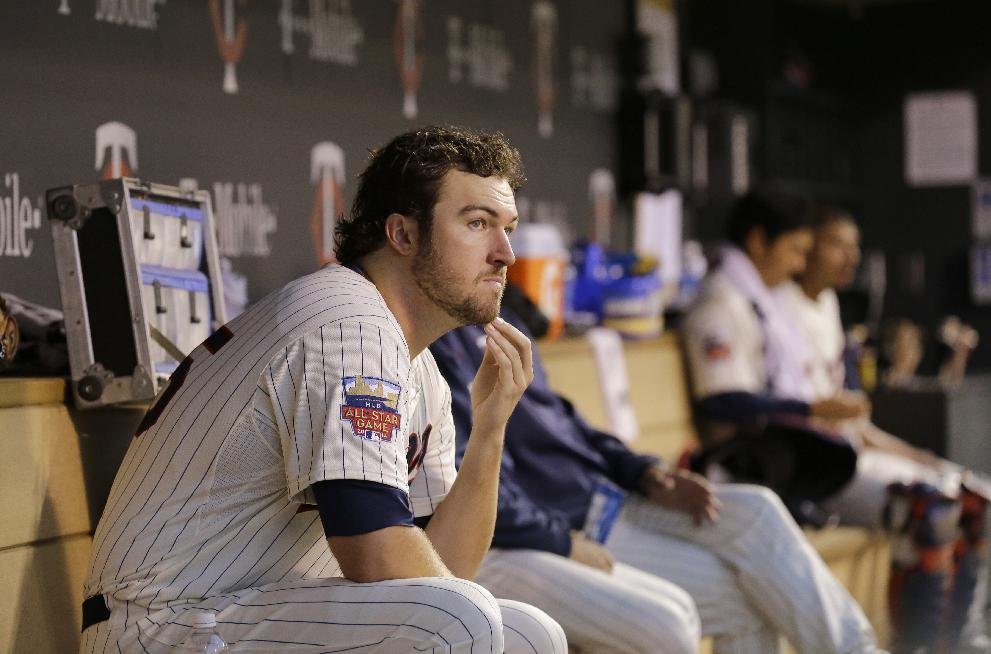
Ethics Hero: Minnesota Twins Pitcher Phil Hughes

Phil Hughes

This is the final day of the regular baseball season, and an appropriate time to salute a major league player who placed principle over cash….even if I disagree with him

Phil Hughes was a bargain pick-up during the off-season for the Twins, a failed pitching phenom for the Yankees widely viewed to be on a fast slope to oblivion. He surprised everyone with a wonderful season for the otherwise woeful Minnesota team this season, potentially setting the all-time strikeout-to-walk ratio record, and began his final start of the campaign needing to throw eight and a third innings to reach 210 and trigger a $500,000 bonus in his contract.He would have made it, too, pitching eight dominant innings against the Diamondbacks and allowing just one run.  Then there was a downpour, with Hughes needing one more out to get the  extra $500,000.

After more than an hour’s rain delay, the game was resumed, but as is the practice in baseball, Hughes did not return to pitch: too long a delay, his arm too cold, too much risk of injury, especially after throwing so many pitches.  Hughes accepted the bad luck without complaint or rancor, saying that “some things aren’t meant to be.” Continue reading