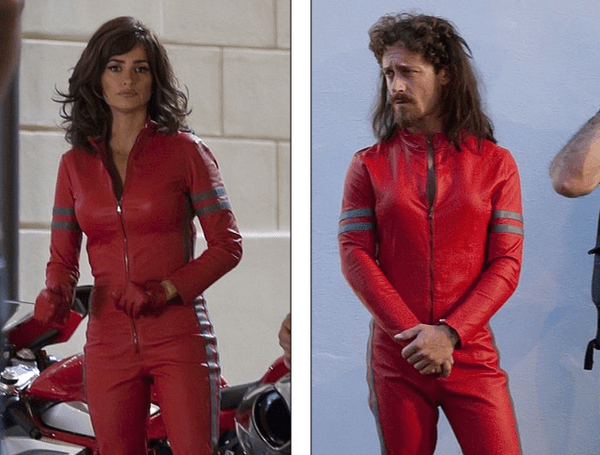
Penelope Cruz and her stunt double. Works for me!
To recap: This month, we have already debated a wide range of casting ethics controversies…
- The political correctness insanity of a black actress being accused of using “blackface” for darkening her skin and using a prosthetic nose to better resemble the real person she is portraying…
- The absurdity of a film being criticized because it cast non-Afghan actors as Afgans.
- The condemnation of casting non-Hispanic actors as Hispanic characters and Historical figures.
The position of Ethics Alarms is identical in all three controversies. The only consideration in casting a role should be the director’s artistic assessment of who will do the best job meeting the artistic and commercial demands of that role, under the constraints of the project, which can include budget, locale and workplace conditions. Ethnicity, race and off-screen appearance should be secondary, and better still, irrelevant. Efforts to substitute political, diversity or affirmative action goals for artistic ones undermine the integrity of the work, and are unfair to the audience as well as the work itself. Make-up is a tool of the performing arts, and is unrelated to blackface, which was a convention designed to denigrate African Americans. Confounding make-up used to allow a performer to play a character of a different ethnicity, race or skin shade with minstrelsy and blackface is intellectually dishonest or ignorant.
Now comes a new issue in this spectrum: the use of white, male stunt performers to substitute for black or female stars.
This article, in The Telegraph, begins with the assumption that the practice is inherently unethical:
“For decades, white stunt performers would paint their faces and bodies black to double for black stars. Similarly, it was not uncommon for stuntmen to put on heels and wigs to double for women. This was not happening in a vacuum: all the while, black and female stunt performers were pressing for recognition and the right to work in the jobs for which they were best suited….There is an understanding within the studios that such incidents don’t look good and need to be kept hush-hush.”
If, as the article and the Hollywood activists it interviews assert, the practice of “blacking up” white stunt performers is designed to exclude qualified black stunt performers from working, then of course it is unethical. Given the close-knit stunt performer community, described as a white, male, “old boys network” in the essay, this is certainly possible, even likely. Nevertheless, the assertion that there is anything intrinsically unethical, unfair or wrong with using a disguised white stunt performer to substitute for a black star, a male stunt performer to substitute for a female star, or any other variation imaginable is, as with the Hispanic and Afghan complaints, based on non-existent ethical principles. Continue reading
 Ethics Alarms