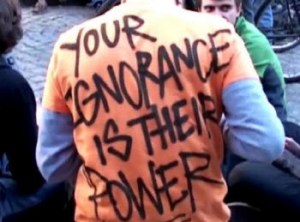
 In the Washington Post’s weekly crank section “Free For All,” a reader chastised the paper for not quoting more extensively from Bob Dylan’s works in its piece about his Nobel Prize, writing:
“It may come as a shock to the young people who now write and edit the paper, but there are many of us who are not familiar with the lyrics of “popular” music.”
Granted, in respect to Dylan, the complaint makes no sense. “Blowin’ in the Wind” was written in 1963; I’d expect “young people” to be more unfamiliar with Dylan than seniors. How old IS this guy? Still, the letter raised a crucial ethics point related to life competence, an ethical obligation for all of us. Being willfully ignorant of current popular culture is as much of an ethical lapse, and as great a threat to societal cohesion, as young people not bothering to learn about “Moby-Dick,” minstrel shows, Will Rogers, Stephen Foster, Babe Ruth, Charlie Chaplin, Fred Astaire or Lee Harvey Oswald.
In 1987, University of Virginia English professor E.D. Hirsch wrote “Cultural Literacy,” making the argument that nations require common cultural reference points for generations to communicate with each other. He argued—correctly— that teaching this cultural vocabulary was a primary duty of the schools, in part because cultural literacy is an inextricable element of individual autonomy and power. Since then, the problem of the fracturing of society and the breakdown in communications between segments of the population has worsened considerably, its deterioration propelled by the loss of common information sources and the rise of the internet. Continue reading →
 Ethics Alarms