Morning Ethics Warm-Up, 3/29/18: Baseball Opening Day Edition, Plus Earlobes, Insults, And Tampons…

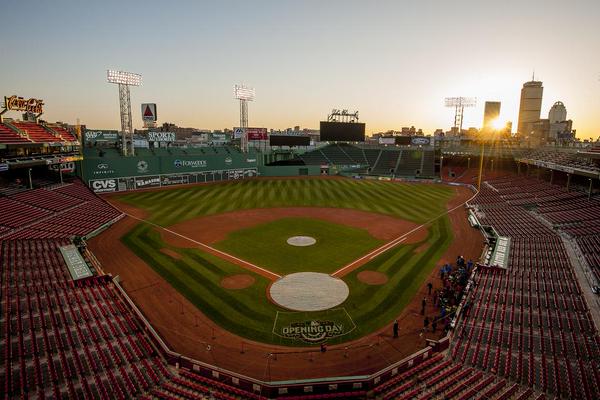
Good Morning, And Play Ball!

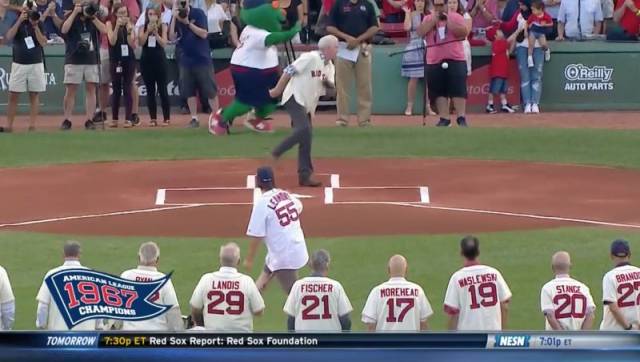
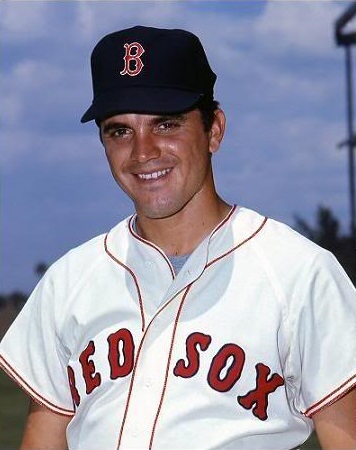
1. To Tony C.  This is always a happy day for me, but I want to mute my joy a bit by dedicating this baseball season to the late Tony Conigliaro. Since my teens, he has been my constant inspiration to live every day to its fullest, because no matter how bright and promising the future seems at any moment, everything can change in the blink of an eye, or an errant pitch from Fate right into your face.

That’s what happened to Tony C. on a cruel August night in 1967. He was playing right field and batting clean-up for his home town baseball team, in a season that would see them win a miracle pennant. He was young, handsome and incredibly talented. He had become the youngest player ever to hit a hundred home runs,  and was in his fourth big league season at the tender age of 22.Then everything changed. Tony’s existence was swept up and placed on a new and dark road that ended with a fluke heart attack and stroke at the age of 37, and a lingering twilight half-death in brain damage until he mercifully passed away eight long years later.

All we can do now is remember a beautiful young man and a brilliant athlete who gave his home town many thrilling moments to savor in the brief time allotted to him, who had everything, and then lost it without reason, warning or justice…and also remember that every day should be lived right, and well, with the determination to be the best we can be, because we may never have a chance to be any better.

Yes, this baseball season is dedicated to you, Tony.
For me, I guess they all are.

2. No, this isn’t The Onion. This is a real tweet from the Democratic Party, authored by Congresswoman Grace Meng:
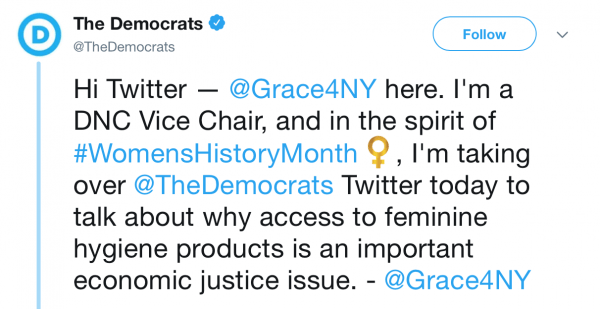
She continues

“Women deserve equal access to our economy, not punishment for their gender. That’s why I’ve been working with my fellow women to fight for more access to tampons, pads, and the full range of menstrual products since 2015. …I’ve introduced legislation to make these products more affordable — because leveling the playing field and stopping period-shaming give women, especially low-income women, a better chance to succeed in our economy…What else would give women a better chance to succeed? Electing more women to fight these fights with me — because we need leaders who understand the experiences of those they represent. ..Head to and commit to vote in 2018 and beyond, because women can’t wait for economic fairness any longer.”

I hope I don’t have to explain what is wrong with this, and I eagerly anticipate being able to parry any brain-melted partisan who reads something like this and says, “Hey, what a good idea!” Yet obviously millions of people are in thrall to this kind of slippery slope progressivism: if a gender, or a race, or a nationality or any other tribe has a unique need or problem, then all of society must help pay for it, or life is unjust. Was a virus released into the water system of certain major cities.? What else can account for such abdications of personal responsibility being accepted as fair and reasonable?

Hey! Why doesn’t the government pay for my electric razor? Continue reading
Morning Ethics Warm-Up, 3/19/18: Unethical Wedding Gifts, The Fairness Conundrum, What Really Makes Students Unsafe, And More

Good Morning!

1 A Not Exactly Hypothetical… A family member is getting married, and the social justice warrior spouse has decreed that no gifts should be sent, just contributions in the happy couples’ name to designated charities and causes, all political, partisan, and ideological. Does this obligate guests to give money to causes and organizations they object to or disagree with? One might be tempted to teach a life-lesson in abuse of power, and pointedly give a contribution to, say, The Family Research Counsel, the NRA, or Paul Ryan’s re-election campaign, but that would be wrong. Wouldn’t it?

2. “Progressive fines” poll update. The percentage of readers who regard so-called “progressive fines” as fairer than fining all law violators the same amount regardless of resources is about 6%, in contracts to 40% who think this is less fair. As I suspected, the schism is driven by the long-standing (and resolvable) arguments over what constitutes “fair” government policies, and whether it is the government’s job to try to make life less unfair. Is it “fair” to treat everyone the same, when we know that life doesn’t treat everyone the same? Are those who argue that life’s unfairness should be addressed by individuals, not society, taking that position because they are winners in life’s chaotic lottery? Can society and governments be trusted to address “unfairness” and inequality without being influenced by the conflicts and biases of the human beings making and carrying out laws and policies. I don’t generally care to spend a lot of Ethics Alarms time or space on abstract ethics questions, but some of them can’t be avoided. You can take the poll, if you haven’t already, here.

3. On the topic of fairness, here is a study that will make you bang your head against the wall: Following on the heels of this discouraging study I posted about on March 3 is this report by researchers at Stanford, Harvard and the Census Bureau, as described here by the New York Times. A taste sufficient to ruin your day: Continue reading

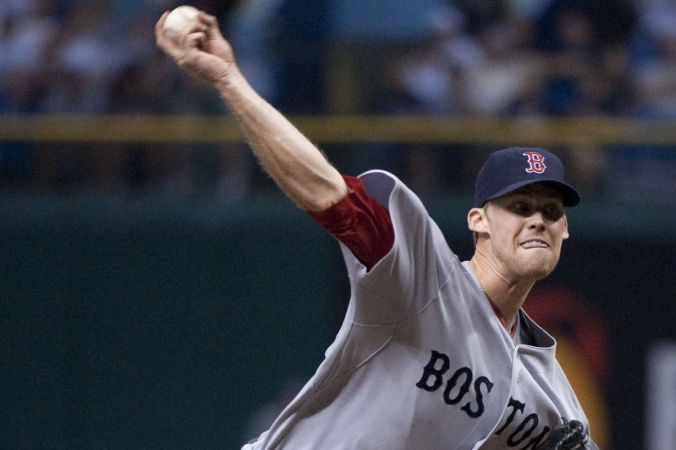
Grace In Disaster: Daniel Bard, Ethics Hero

It’s freezing, and I’m sick, so naturally my thoughts travel to warm summer nights at Fenway Park. Daniel Bard just retired. It gives me something different, and inspiring, to think about.

If you’re not a Red Sox fan or a dedicated baseball follower, you have no idea who Bard is. He was a relief pitcher, a set-up man, who could throw nearly 100 mph in the days, not long ago, when almost no pitchers did. Through August of 2011, his third major league season with Boston, Bard had appeared in 181 games with  a 2.42 ERA, and .186 batting average against him. The Red Sox went 123-58 in the games in which he pitched. In 186 innings, Bard struck out 202 of the batters he faced. A young man in his mid-20s, Daniel Bard could look forward to stardom, glory, celebrity, and millions and millions of dollars.  Then, suddenly in September of that year, he lost it all.

Nobody took special note, even though his ineffectiveness down the stretch was major reason for the epic Red Sox collapse that shook the franchise and led to the exodus of the team’s popular manager Terry Francona (now the very successful manager of the Cleveland Indians) and its boy genius GM, Theo Epstein, now the architect of the suddenly championship caliber Chicago Cubs. Bard was just tired, everyone assumed. There was no apparent injury; nothing had changed. But the next season, Daniel Bard couldn’t throw as hard consistently as before, and more alarming still, he couldn’t get the ball over the plate. Suddenly, he wasn’t a good or even a barely acceptable major league pitcher any more; indeed, he was a dangerous one, hitting a batter or two almost every inning, along with lots of wild pitches and walks.  By June, he was back in the minor leagues. Bard’s control got worse, and he sunk lower and lower into the low minors. Boston papers would report outings with unbelievable line scores: 2 innings, eight walks, four hit batters, five wild pitches, or worse. Bard tried surgery, meditation, mental coaches,, psychologists, changing his delivery.  He was still young, so team after team gambled that they could get him back to his All-Star form–Texas, the Mets, Pittsburgh, St. Louis and the Cubs. Bard kept trying, and failing. Continue reading

Morning Ethics Warm-Up, 9/16/17: Amazon Purges Reviews For Hillary, Equifax Must Die, Making Literature More Diverse, And The Red Sox Get Away With It…

GOOD MORNING!

1 “It would be wonderful, wouldn’t it?”

This is the response that the widow of writer Roald Dahl to a reporter’s suggestion that Charlie, the hero of Dahl’s “Charlie and the Chocolate Factory” (aka “Willy Wonka and the Chocolate Factory:) should be made black in a future “reworking” of the book. Recently Mrs. Dahl has claimed that Charlie was originally supposed to be black, but that her husband changed the character before the book was published. She blames his agent, who was, she says (none of this is more than hearsay) afraid that the book wouldn’t sell as well in American with a black hero. She blames “American sensibility.”

No, it wouldn’t be wonderful to start changing the races (and inevitably, genders and sexual orientations) in “reworkings” of literary classics. It would be unethical and irresponsible, as well as a defilement of the author’s visions and creations. Whatever the reason was, and we cannot know it regardless of what Mrs. Dahl now claims, Charlie was white in Dahl’s book. If he had wanted his book to be about a black child, or a little girl, or a Muslim transsexual, the author would have made it so. If someone obsessed with tribal identity politics wants to write a new adaptation under their own name so we can jeer and mock him or her, swell. But it isn’t any more “wonderful” to “rework” Dahl’s own story this way than it is to make Bob Cratchit black, or Captain Ahab black, or Bigger Thomas in “Native Son” Asian-American.

Of course, a stage or film adaptation of the book can cast it any way it chooses.

2 The major business ethics story this past week has been that data security breach by credit giant Equifax. An estimated 143 million Americans now face identity theft for the rest of their lives because the company wasn’t competent to be in the business it was in. It’s that simple. The ways in which Equifax blundered into allowing all this data to be hacked are legion, with more revelations almost daily. My personal favorite is that it neglected to install a patch that would have made its files more secure, delaying for months for no good reason.

Business analysts point out that despite this massive demonstration of ineptitude, the company is not likely to suffer more than the cost and inconvenience of a class action lawsuit or five. The companies that pay Equifax weren’t harmed by the breach, just the lives of the credit-seekers who they use Equifax to check. Nobody seems to think that even this massive misconduct will put Equifax out of business.

The company has dumped some executives, and will probably dump some more, reorganize, and padlock that barn door securely now that the horse has fled. TooLate. The company is untrustworthy, and more than that, companies like Equifax that gather personal information about innocent citizens need to be scared sick about what will happen to them if they can’t keep the information from falling into malign hands. Equifax needs to be put out of business. Its leaders and management need to be imprisoned, fined so severely that they are reduced to eating cat food, or blacklisted so their future employment is limited to bait shops and traveling carnivals. Continue reading

Morning Ethics Warm-Up, 9/14/17: Reed College…Fired For Mentioning Grits?…Stupid Protests…The DNC Lies To Democrats…And The Times Clarifies Its Double Standards

Hi there!

1 There is another one of those hybrid ethics stories coming out of Oregon. Cross oppressive political correctness with racial-offense hypersensitivity with Lena Dunham-like totalitarian-minded progressives itching to report “wrong-thinkers” to authorities with organizations punishing individuals for private speech they did not intend to make public and what monstrosity do you get?

This: a white conductor and festival artistic director fired by a music festival after he was overheard talking to a black friend in a fake Southern accent and saying, “Do you want some grits?” or words to that effect.

I’m not going to explain in any detail what and who are unethical in this fiasco, because I shouldn’t have to. Halls is a victim. The woman who reported him after eavesdropping is worse than merely unethical: she is an evil-doer, someone who sets out to hurt other people to feel powerful. She either never heard of the Golden Rule or doesn’t accept it. (Maybe she IS Lena Dunham!) The festival’s conduct is unfair, uncaring, cowardly and irresponsible. It deserves to have its artists boycott the festival in support for Halls, but since artists tend to be leftists of the knee-jerk variety, addicted to virtue-signaling and with the depth of analysis exhibited by the typical dachshund, I wouldn’t expect any colleagial  support if I were the conductor.

If you have functioning ethics alarms, it will be obvious that the episode was disgusting and unjust, and why. If the festival’s conduct  makes sense to you, then I’m afraid you’re hopelessly corrupted.

2. Morning Warm-Up may yet morph into “stories that are so irritating I can’t stand writing full posts about them.” Take this one, for example: at small liberal arts school Reed College,  a mandatory humanities course on ancient Mediterranean civilizations was canceled after student protesters kept  interrupting the class to protest “Eurocentrism.” Western culture has been, like it or accept it or not, the beacon of world civilization, and even those who (idiotically) choose to deride or reject it need to understand the history and forces that brought us to where we are today—where we are today being a time when weak and incompetent college administers refuse to assert the indispensable fact that students are there to learn, not dictate to their elders.

My favorite part of this story: to accommodate protesters, the Reed administration agreed to allow adverse students to stand surrounding lecturers in the course. “The general understanding was that the protesters would be allowed to continue as long as they didn’t interfere in the lecture period”…as if forcing lecturers to teach under such circumstances isn’t inherently interfering, as well as intimidating to the teachers and other students.

Colleges and universities that cannot respond more effectively and professionally to such unethical bullying by extremists don’t deserve to exist at all. If you don’t want to learn about Western civilization, go to another school, probably in California. If you disrupt the learning experience of other students, you should be expelled. Continue reading

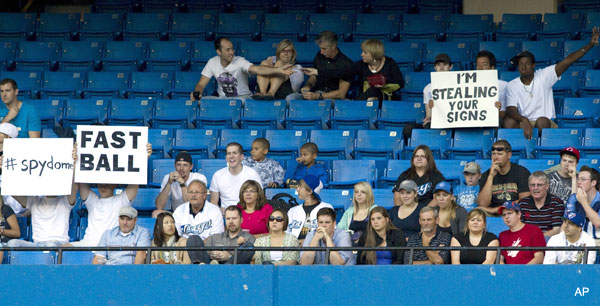
Ethics Alarms Baseball Ethics Special Report: The Boston Red Sox, Sign Stealing, Technology, And Cheating [UPDATED]

[I got the news about Major League Baseball’s announcement that the Boston Red Sox had admitted that some of the team’s employers and players had engaged in illegal sign-stealing about an hour before the Sox-Blue Jays game was scheduled. My intent was to write the post about it last night after the game. The game, however, went 19 innings and lasted 6 hours. (The Sox won, and absent this scandal, it would have been a big news story itself, one of the most important victories of the year and one that set several team records.) So the post didn’t get written, and believe it or not, I have occasional priorities and commitments that take precedent over my profit and income free ethics blog. Thus I consider the multiple e-mails and Facebook messages I have received accusing me of ducking the issue less than amusing, an unwarranted attack on my integrity. To all of those individuals, most of whom barely read the news reports, I say, “Bite me.”]

Yesterday afternoon the New York Times broke the following story, which reads in part:

Investigators for Major League Baseball have determined that the Red Sox, who are in first place in the American League East and very likely headed to the playoffs, executed a scheme to illicitly steal hand signals from opponents’ catchers in games against the second-place Yankees and other teams, according to several people briefed on the matter.

The baseball inquiry began about two weeks ago, after the Yankees’ general manager, Brian Cashman, filed a detailed complaint with the commissioner’s office that included video the Yankees shot of the Red Sox dugout during a three-game series between the two teams in Boston last month.

The Yankees, who had long been suspicious of the Red Sox’ stealing catchers’ signs in Fenway Park, contended the video showed a member of the Red Sox training staff looking at his Apple Watch in the dugout. The trainer then relayed a message to other players in the dugout, who, in turn, would signal teammates on the field about the type of pitch that was about to be thrown, according to the people familiar with the case.

Baseball investigators corroborated the Yankees’ claims based on video the commissioner’s office uses for instant replay and broadcasts, the people said. The commissioner’s office then confronted the Red Sox, who admitted that their trainers had received signals from video replay personnel and then relayed that information to Red Sox players — an operation that had been in place for at least several weeks.

As reported by ESPN, Baseball Commissioner Rob Manfred said in a statement,

“We actually do not have a rule against sign-stealing. It has been a part of the game for a very, very long time. To the extent that there was a violation of the rule here, it was a violation by one or the other [team] that involved the use of electronic equipment. It’s the electronic equipment that creates the violation. I think the rule against electronic equipment has a number of policy reasons behind it, but one of them is we don’t want to escalate attempts to figure out what a pitcher is going to throw by introducing electronics into that mix.To the extent there was a violation on either side, we are 100 percent comfortable that it’s not an ongoing issue, that if it happened, it is no longer. I think that’s important from an integrity perspective going forward.”

This is a complicated story, and part of not one complicated ethics category, but several: technology ethics, baseball ethics, cheating, and general ethics. In the interests of clarity, I’m going to cover the story in a series of short observations, each with a heading. At the end of this post, I have posted a long published essay I authored about baseball ethics within the culture of the game. Those who are not familiar with these issues, which are fascinating, might want to read that first. it is helpful background information.

Points and Observations:

  • Traditional sign-stealing in baseball is not regarded as cheating. This seems counter intuitive because of the word “stealing.” Sign-stealing refers to teams decoding the signals given by the catcher to the pitcher (regarding what kind of pitches to throw and where ), and the coach or the dugout to a batter or baserunner (in bunt and hit-and run plays). Theoretically, knowing the other team’s signals provides an advantage, as to a batter who knows that the next pitch will be a curve rather than a fastball. Usually, signs from the catcher to the pitcher are in jeopardy when there is a runner on second base. He can see the catcher’s signs as well as the pitcher can. Catchers use finger-signs in various combinations to ask for various pitches, and position their gloves to indicate where they want the balls thrown. If the runner at second can signal to the batter what the catcher has told the pitcher to throw, the batter may have an advantage.

This is why catchers often go to the pitching mound when a runner is on second base. They change the signs. The second baseman will often join them, because it is his job to know what pitch is being thrown so he can signal (usually behind his back, using his hand) to his team’s outfielders. An outside fastball makes it unlikely that the batter will pull the ball, for example.

Sign-stealing on the field, using just eyesight and hands, is what players call “the game within the game.” Joe Girardi, the Yankee manager, said in an interview yesterday that he just assumes every team is trying to steal signs, whether they are or not. Continue reading

Morning Ethics Warm-Up, 9/6/17: Comey’s Premature Draft, Obama’s Golden Rule Breach, Newspapers “Protecting Us,”And Thank-You, Boston Red Sox


1 I want to sincerely thank the Boston Red Sox for giving me, the sole baseball ethicist on the web who also devotes a disturbing amount of his time, energy and passion to following the team, the challenge and opportunity to address a major cheating scandal involving the organization and institution I love. Seriously, guys, thank you. This is exactly what I needed to face after staying up past 1 AM watching the Sox pull out a 19 inning, 6 hour game on Hanley Ramirez’s bloop single to center.

I’ll cover the issue in the next post. Ugh.

2. Ironically, just as the anti-Trump news media was hyperventilating over the fact that the Special Counsel was examining a draft letter by the President regarding his reasons for firing James Comey (draft letters have minimal probative value if any, but you know: Trump), it came to light that in May of 2016, Comey had drafted a statement declining to charge Hillary Clinton or her staff in the State Department e-mail scandal, months before key witnesses (like Clinton herself) had been interviewed or much of the evidence had been reviewed. President Trump, of course, tweeted that this proved there was a “rigged process,” but Comey’s draft is no more incriminating that Trump’s draft. (Now, Loretta Lynch’s meeting with Bill Clinton might suggest a rigged process, but that’s another story.)

Supreme Court Justices have drafted opinions before oral argument; that doesn’t mean they can’t change their minds. It is certainly odd that Comey would have drafted a statement that Clinton would not be indicted so long before the investigation was completed. It is odder still that Hillary’s interview was not under oath, that it wasn’t videotaped, that there was no transcript, and that she was allowed to have representing her as an attorney at the session a top aide who was also a potential witness.

Professor Turley, in a column at The Hill, agrees that the early draft doesn’t implicate the integrity of the investigation, but raises a related issue:

While I am inclined to accept assurances from Comey that he did not finally decide on charges until after reviewing all of the evidence, the details from the Clinton investigation hardly support a view of a robust and dogged effort in comparison to the type of investigation of people like Paul Manafort.

In pursuing Manafort, special counsel Robert Mueller has now enlisted an army of investigators, reached a cooperative relationship with staunch Trump critic New York Attorney General Eric Schneiderman, and actively pursued tax and financial dealings far afield of the original Russian collusion allegations. He also ordered a heavy-handed (and unnecessary) “no knock” search in the middle of the night on Manafort’s home.

The Clinton investigation looks like Club Fed in comparison. Clinton and her staff refused to cooperate with State Department investigators seeking confirm any damage to national security. Key laptops were withheld and only turned over after Comey’s staff agreed to destroy the computers after their review, despite the relevance of the evidence to congressional investigations. Comey then cut five immunity deals with key Clinton staff members, including former State Department staffer, Bryan Pagliano, who set up a server in Clinton’s home in Chappaqua, N.Y., and worked for her at the State Department.

Pagliano refused to cooperate after invoking his Fifth Amendment right against self-incrimination and destroyed evidence after being given a preservation order. Those deals raised the concern over a type of prosecutorial planned obsolescence, making a viable case less likely.

The amusing part is that all of this circles back to Comey’s firing, which was justified by his handling of the Clinton investigation regardless of any other factors.

3. The New York Times today reviews a festival play called “___hole.” That’s not really the title, however, although “___hole” was printed twice as the play title before the Times made this clear. A comment by the reviewer noted that the real title couldn’t “get past the editors.” Continue reading

From The “Grandstanding Ingratitude” Files…Ethics Dunce: Boston Red Sox Owner John Henry

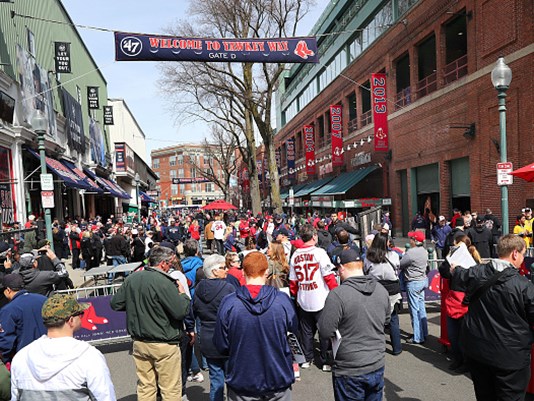
Ah, Ethics Alarms heaven! The statue-toppling mania issue has collided with the Boston Red Sox, just two days after my pilgrimage to Fenway Park!

ESPN reported yesterday that Red Sox owner John Henry wants Boston to change the name of  the street that borders the legendary park, Yawkey Way, and he is trying to exploit the   current political correctness mania that has cities pulling down statues of war heroes in the dead of night to accomplish his goal.

That’s my characterization, of course, not ESPN’s.

Henry told the Boston Herald that he is “haunted” by the racist legacy of previous owner Tom Yawkey, who led the team from 1933 to 1976. Because he is haunted, he thinks that it is fair and right that the man who beyond question saved the team, ran it as a Boston institution and public utility, and is as responsible as anyone for the fact that Henry owns one of the prestige franchises in all of sports, should be dishonored and shunned because he wasn’t enlightened about civil rights long before Martin Luther King began marching.

Such disgraceful moral grandstanding and self-righteous ingratitude is seldom seen. But I guess if anyone should be able to grandstand, its someone who owns a baseball park.

For those who mock the idea that the desecration of Robert E. Lee’s statues leads directly to George Washington, now hear this; for the Boston Red Sox, Tom Yawkey is George Washington.

The only owner any one remembered before Tom Yawkee bought the team was Harry Frazee, consigned to Beantown Hell for selling Babe Ruth (and many other stars) to the New York Yankees in 1919. From that moment on, the team was a perennial loser, often in last place, while New York won pennant after pennant and sneered at its proud rival on the Bay. In 1933,

Tom Yawkey , a lumber tycoon and baseball enthusiast, bought the team and poured money and love into it, buying other team’s stars (Left Grove, Joe Cronin, Jimmy Foxx) and turning the team into worthy challenger to the Yankees.  From the beginning, Yawkey paid no  attention to the bottom line as he tried to build a champion out of the franchise, or as he put it, “to bring a championship back to the fans of Boston.” This was during a period when teams had permanent control over player contracts, and most owners used that leverage to pay players pathetic wages. Not Tom Yawkee. He was criticized for over-paying players–hilarious now, when we’re talking about his paying a utility infielder $15,000 when others of his ilk were making just $8,000, and current utility players make a couple million dollars a season. Sportswriters in Boston called the Red Sox a country club, and blamed Yawkee for “falling in love with his players.” In 1960, Ted Williams had to ask Yawkey to cut his salary, because he felt embarrassed after a bad year, his only one.

Was Yawkey a racist? He was born in 1903, and grew up during the Wilson Administration, when Jim Crow really took of. Sure he was a racist, along with about 95% of the whites in the nation.  Continue reading

Ethics Dunce: Anyone Who Ran This Story

On my way home from my seminar today, I saw that my cab’s in-ride video featured, along with three Jeopardy! questions from Alex Trebek, a Jimmy Kimmel feature (his “Pedestrian Belly-Flop” competition) and the weather, and a video from the ceremonies I had just returned from witnessing in person at Boston’s Fenway Park. The headline was-HAHAHAHA!—“First Pitch Goes Horribly Wrong!” and showed Mike Andrews, the ex-Red Sox second baseman from the 1967 “Impossible Dream Team,” receiving a pitch from the ceremonial first pitch tosser, who then heaved the ball far beyond Mike’s reach into a group of photographers, hitting one of them—it’s important to note that he is male–right in the crotch. The clip was attached to an ad for the local ABC affiliate here.

I thought that the mocking video was an ABC product, and it might be, since other ABC affiliates have distributed it. But the same video with similar mockery of the pitch in the commentary is elsewhere, and on its way to going viral. Here is the attached story used by ABC Channel 15 in Arizona:

A photographer and University of Arizona alum was the unfortunate victim of one of the worst first pitches in MLB history on Wednesday night.

Before the Boston Red Sox hosted the St. Louis Cardinals at Fenway Park, the gentleman who tossed out the first pitch threw it juuuuuust a bit outside — and right into a sensitive spot for Tony Capobianco, a photographer and page designer for The Eagle-Tribune who graduated from UA in 2013.

Fortunately, Tony reported he’s OK. Way to Bear Down, sir.

That “sir” is a triumphant cancer survival and success story by The Jimmy Fund, the Dana-Farber Cancer Institute’s ‘s research drive to cure cancer in children that the Red Sox  made the organization’s affiliated charity since Ted Williams became passionate involved with the project in the late 1940s. His pitch was the climax of the ceremonies honoring the 50th anniversary of  the storied pennant winning team, in part because that team became the first to ever award a full World Series share to cancer research, and in part because Andrews had followed his playing days with 25 years as the Jimmy Fund’s executive director. Continue reading

Morning Ethics Warm-up: 8/17/17

Good Morning!

1. I got back late last night from my pilgrimage to say thanks to the Impossible Dream team, and now I’m on my way out to teach an ethics seminar for D.C. government attorneys. I haven’t caught up with the comments yet; I’m sorry. Things should be back to normal hear by this afternoon. Here are the surviving members of that 1967 Red Sox team that changed my life:

Incredibly, the Red Sox barely promoted the event, and had no memorabilia, not even a T-shirt, available at the souvenir stands. I asked one of the sales people, who said the team had given them nothing, figuring that the typical fan was too young to remember or care.

And people wonder why I object to tearing down statues…

2. …which the unethical Mayor of Baltimore ordered to be done yesterday in the dead of night. From the Times:

It was “in the best interest of my city,” Mayor Catherine Pugh said Wednesday, as she explained why she ordered Confederate monuments removed under the cover of darkness, days after violence broke out during a rally against the removal of a similar monument in neighboring Virginia.

“I said with the climate of this nation,” Ms. Pugh said later, “that I think it’s very important that we move quickly and quietly.”

With no immediate public notice, no fund-raising, and no plan for a permanent location for the monuments once they had been excised — all things city officials once believed they would need — the mayor watched in the wee hours on Wednesday as contractors with cranes protected by a contingent of police officers lifted the monuments from their pedestals and rolled them away on flatbed trucks…

David Goldfield, a professor of history who studies Confederate symbols at the University of North Carolina at Charlotte, said the removal of the monuments in Baltimore was likely to be part of a “rolling cascade” of cities and states ridding themselves of, or at least relocating, similar statues.

”You’re going to see another wave of these removals.” Mr. Goldfield said. “The fact that it’s done fairly expeditiously is not surprising because if you do it quickly the opposition can’t build up, and the confrontations that we’ve had, not only in Charlottesville but elsewhere, will not materialize.”

By all means, move quickly and without notice or due process so lawful protests and expressions of public opinion “can’t build up.” “It was in the best interests” is such a versatile rationalization for unilateral government action.

Democracies don’t undertake controversial actions in the night. Dictatorships do. Pugh and others nascent fascist of the left are as responsible for “the climate of this nation” as much or more than anyone else, and now want to exploit the dangers of that climate to stifle dissent.

Perfect. Continue reading