Ethics Quiz: Replacing The Sideline Babe

Before and After

Before and After

In a nakedly cynical effort to appeal to male TV audience members, most of the major league baseball teams employ “sideline babes” in their local broadcasts—young, lovely, shapely women who impart little nuggets of “behind the scenes” information about the local team during lulls in the action, of which baseball has many. It often seems like these women can’t tell a ball from a bat, but who cares? Hubba hubba!

The Boston Red Sox however, have had a string of bad luck with their lovelies. The last two became romantically involved with Red Sox players, in one case a potential scandal (the player was married), and in the most recent, as sideline babe Jenny Dell began dating Sox third baseman Will Middlebrooks, a conflict of interest in the view of NESN, the Red Sox network. Who would have guessed that having fold-out ready young women roaming  dugouts filled with rich young male athletes would lead to this?

This season, the Sox sidelines have a different look. The game broadcast cutaways now lead to a large, handsome, undeniably male member of the broadcast squad, Gary Striewski. (That’s Gary on the right in the photo above, Jenny on the left.)  Coincidence? I think not. I think NESN got tired of the off-field whoopee, and decided to go in a different direction that minimized the risk. Assuming this is true (and recognizing that it may not be), your Ethics Alarms Ethics Quiz is this:

Does choosing to have a male sideline reporter to avoid romantic conflicts with the players constitute unfair and unethical gender discrimination?


Pineda-Pine Tar, Part II: Baseball Clarifies Its Bizarro Ethics Culture

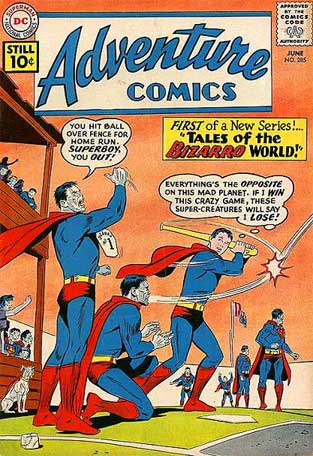
bizarro_world-baseballYou shouldn’t have to appreciate, care about or even understand baseball to find illumination in its latest ethics controversy, which shows how cultures can go horribly wrong, precluding exactly the values that any functioning entity must embrace to remain viable and healthy. For someone like me, to whom Baseball is Life, the whole thing just makes me want to jump out the window.

You will recall that a couple weeks ago, the sport embarrassed itself by making excuses and accepting lies regarding New York Yankees pitcher Michael Pineda being allowed to break the game’s rules against pitchers applying foreign substances (in this case, pine tar) on the baseball while pitching to the Boston Red Sox. I wrote about it here. I interpreted the post-incident consensus of the game and its pundits as “everybody does it, so let’s not make a big deal over a little infraction on a night when it was abnormally cold and hard to grip the ball.”  That’s unethical enough, but the truth, as revealed in Part II, is far worse.

Last night, fate had Pineda on the mound against the Red Sox again. Baseball’s ethics had already begun falling apart in chunks when Sox manager John Farrell, asked about whether he expected Pineda to cheat again (for that is what using pine tar on baseballs is—cheating. Official Rule 8.02 states: “The pitcher shall not apply a foreign substance of any kind to the ball.” ) answered that hopefully, if he did, he would be more discreet about it. Huh?

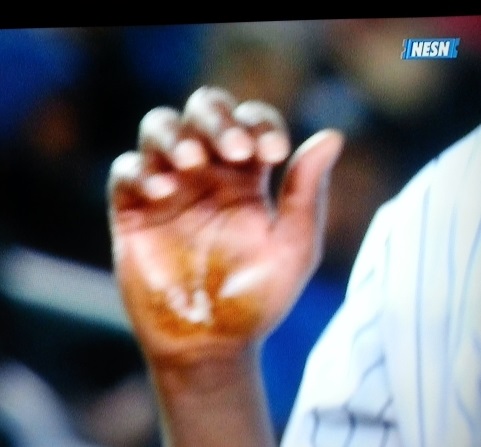
But Pineda was not discrete; in fact, he could not have been more obvious, or ridiculously so. After a rough first inning in which he gave up two runs, Pineda emerged from the dugout with a large, brown, greasy gob of pine tar on his neck. On TV. In nationally broadcast game. Against the same team that he was caught using pine tar against before. In that team’s home park.

In the Red Sox dugout, Manager Farrell and the team were laughing and rolling their eyes. Farrell finally shrugged, and walked out to complain to the home plate umpire, for it is an automatic ejection for a pitcher to be caught doctoring the ball. The umpire dutifully walked out to the mound—he had to have seen the offending gob before Farrell complained—and to add to the foolishness, checked Pineda’s glove, cap and jock strap before looking at the huge brown smear on his neck. Finally he did so, said, “That’s pine tar!” (in the previous game, Pineda told the press it was “dirt”) and threw him out of the game.

In subsequent interviews with Farrell and others, the explanation that emerged was this gibberish: “everybody” uses something to grip the ball better when it is cold (and often when it isn’t); hitters don’t mind because they don’t want to get hit. Pineda’s offense wasn’t that he used pine tar, but that, as Farrell suggested before the game, that he was “blatant” about it. That gave Farrell no choice, you see….even though his own pitchers also use foreign substances to grip the ball (in unequivocal violation of a baseball rule), and this sets his team up for “retaliation.”

I feel like I’m going crazy. Continue reading

The Abysmal Quality of Ethical Reasoning in Baseball: A Depressing Case Study

"Dirt."

“Dirt.”

The first bona fide ethics controversy of the 2014 baseball season has erupted, and it involves the team of my youth, the Boston Red Sox. It is not the controversy itself that is so noteworthy, for it is an old, old one: pitchers using foreign substances to doctor the balls so they dip, curve, and sing “Take Me Out To The Ball Game.” What is noteworthy is the reaction to the incident by players and the sports media, which has me feeling that as an ethicist, I need to think about following another sport. The ethics reasoning, or lack of it, is truly depressing.

What happened was this: During last night’s Red Sox-Yankee game in Yankee Stadium, the Boston broadcasting team of Don Orsillo and Jerry Remy noticed a glossy brown substance on New York starting pitcher Michael Pineda’s pitching hand. It was very obvious, especially once the NESN cameras started zooming in on it.   “There’s that substance, that absolutely looks like pine tar,” play-by-play man Don Orsillo said. “Yeah, that’s not legal,” color commentator and former player Jerry Remy replied.

Indeed it isn’t.  According to rule 8.02(a)(2), (4) and (5), the pitcher shall not expectorate on the ball, either hand or his glove; apply a foreign substance of any kind to the ball; [or]  deface the ball in any manner.

The Red Sox, who probably knew about the gunk on Pineda’s hand, didn’t complain to the umpires, and just went about their merry way, losing the game. Asked about the stuff on his hand, Pineda demonstrated the full range of body language indicating that he was lying his head off. “It was dirt,’ he said. Later, when the ick appeared to be gone,  Pineda explained, he had just sweated his hand clean. Right. Whatever was on his hand—beef gravy, crankcase oil, chocolate syrup…the majority of pundits think pine tar—it wasn’t “dirt.” Pineda’s manager, Joe Girardi, was brazenly evasive.

The Yankee pitcher was cheating. This isn’t a major scandal, but cheating is cheating: sports shouldn’t allow cheating of any kind, because if a sport allows some cheating, however minor, it will encourage cynical, unscrupulous and unethical individuals on the field, in the stands, and behind keyboard to excuse all other forms of cheating, from corked bats to performance enhancing drugs. Cheating is wrong. Cheating unfairly warps the results of games, and rewards dishonesty rather than skill. Cheating undermines the enjoyment of any game among serious fans who devote energy and passion to it. Any cheating is a form of rigging, a variety of lying.

And yet, this clear instance of cheating, caught on video, primarily sparked the sports commentariat, including most fans, to cite one rationalization and logical fallacy after another to justify doing nothing, and not just doing nothing, but accepting the form of cheating as “part of the game.” I’ve been reading columns and listening to the MLB channel on Sirius-XM and watch the MLB channel on Direct TV since this episode occurred. Here are the reactions, my comments in bold:

  • This isn’t a new phenomenon. Show me the statute of limitations on ongoing misconduct, please. Also not new: torture, rape, adultery, incest, bribery and embezzlement. So what? That makes these things all right? Excuses society from trying to reduce their occurrence?

Continue reading

Case Study: Rationalization #2

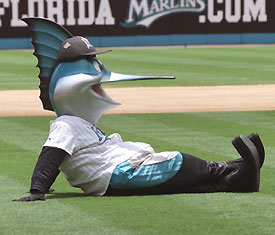
Also, the team's mascot is this thing...

Also, the team’s mascot is this thing…

Note to all you baseball haters and National Pastime illiterates: This case study arises out of baseball, but it’s not a baseball ethics post. I’m in Boston, it’s Spring Training—give me a break.

A clear-cut rules violation by the Boston Red Sox has been nearly universally dismissed by fans and media alike by one of the most egregious uses of #2 on the Ethics Alarms Rationalization list. In case you don’t have your rationalizations memorized yet—and you should, because when you hear them in your head, you are about to do something unethical—this is the one, and it’s second on the list only to “Everybody does it” for good reason. It’s one of the most popular and destructive rationalizations of all:

2. The “They’re Just as Bad” Excuse,

or “They had it coming”

The mongrel offspring of The Golden Rationalization and the Bible-based dodges a bit farther down the list, the “They’re Just as Bad” Excuse is both a rationalization and a distraction. As a rationalization, it posits the absurd argument that because there is other wrongdoing by others that is similar, as bad or worse than the unethical conduct under examination, the wrongdoer’s conduct shouldn’t be criticized or noticed. As a distraction, the excuse is a pathetic attempt to focus a critic’s attention elsewhere, by shouting, “Never mind me! Why aren’t you going after those guys?”

Its other familiar, equally absurd but even more corrupting manifestation is the “They had it coming” variation. This argues that wrongdoing toward a party isn’t wrong because the aggrieved party doesn’t deserve ethical treatment because of its own misconduct. But the misconduct of a victim never justifies unethical conduct directed against that victim. Continue reading

Ethics Hero: Boston Red Sox Pitcher Ryan Dempster

ivory-billed woodpecker

With a guaranteed contract that would pay him $13.25 million this year, all Boston Red Sox starting pitcher Ryan Dempster had to do was fail to make the team or be relegated to the disabled list to collect it all. Dempster felt, however, that his physical condition would not allow him to contribute to the team’s efforts to defend its 2013 World Championship, and that under the circumstances, decided that it would be better for all concerned if he didn’t play in 2014 and spent the year with his family. Thus, while not retiring, Ryan Dempster announced that he would forfeit the money owed to him.

Dempster made $13.25 million last year, and had made millions for many years before that; he certainly doesn’t “need” the money. Nevertheless, for a professional athlete to handle himself this way is about as rare as an ivory-billed woodpecker sighting.  “I could have had a choice of trying to spend the entire season trying to work through those and trying to be able to pitch,” he said in his statement, delivered at the Red Sox Spring Training camp where the team is about to begin training. “But I just felt like it’s something that’s preventing me from doing the job I want to do, and I’m not going to go out there and put my team at a disadvantage or me at a disadvantage by not being able to compete the way I’m able to compete.”

Ryan Dempster, professional athlete, just placed team, family, integrity, and fairness above $13.25 million dollars.

Ethics Hero.


Tom Yawkey, J. Edgar Hoover, Political Correctness and Gratitude

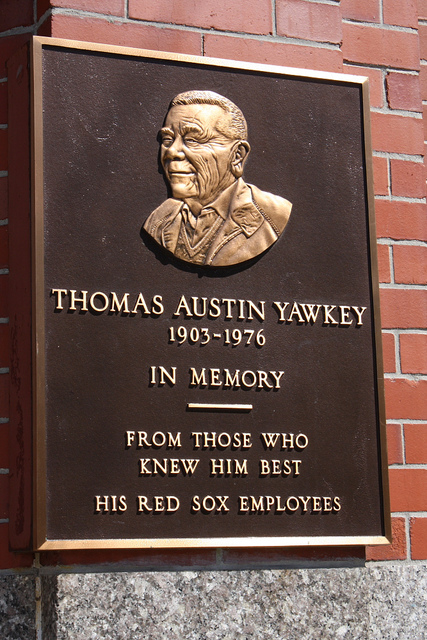
Yawkey TributeIt’s not often that I am called upon to rebut a web post that relies on one of my articles for its unethical conclusions, but that is the position that Ron Chimelis has placed me in with his recent essay, Why the Boston Red Sox should rename Yawkey Way.

To catch you up quickly: Tom Yawkey was a lumber tycoon and baseball enthusiast who owned the Boston Red Sox from 1933 to 1976, making him the longest-tenured team owner in the sport’s history. Yawkey was almost certainly a racist; if he was not a racist, his team’s policies certainly were for many years. The Red Sox were the last major league team to integrate, and blacks did not have a significant place on the team’s roster until the late 1960s, two decades after Jackie Robinson broke the color line. From the beginning, Yawkey ran the Red Sox as a public utility, paying little attention to the bottom line as he tried to build a winner out of the franchise that had been a perennial loser since selling Babe Ruth to the Yankees in 1919. After his death, Yawkey’s wife Jean continued the family tradition, running the Red Sox, except for a few years, until her own death in 1992.

When Tom Yawkey died, the City of Boston re-named Jersey Street, which runs past the entry to Fenway Park where the Red Sox play, Yawkey Way in his honor.

In the unerring clarity of hindsight bias, Chimelis argues that Tom Yawkey is undeserving of any recognition by the city that he devoted much of his life to representing, enhancing, serving, inspiring and entertaining because racism is the ultimate crime, and anyone possessing that vile state of mind should be consigned to shame forever. It is a common point of view, and an unfair one. Continue reading

The Unforgivable Conflict of Interest: Sports Agents, Robbing Their Ignorant Clients

The ethical course is to choose.

The ethical course is to choose.

Sports agents are rich, powerful, and ethically handicapped by inherent conflicts of interest. The first two qualities so far have insulated them from dealing fairly and openly with the second. This is wrong, and has got to stop. For it to stop, it would help if the players, their unions, the sports leagues and the sports media didn’t either intentionally pretend not to see the obvious, or weren’t too biased and ignorant to realize what’s going on.

Four years ago, I wrote about this problem in a long piece for Hardball Times, a baseball wonk blog of consistent high quality.  The specific agent I was writing about was Scott Boras, the king of baseball player agents, but the egregious conflict I flagged isn’t confined to that professional sport; it’s present in all of them. In the article, I argued that Boras, a lawyer, is engaged in the practice of law when serving as an agent and was therefore violating the legal ethics rules, which prohibits having clients whose interests are directly adverse to each other, specifically in the so-called “Zero-Sum Conflict” situation.

A lawyer can’t assist two clients bidding for the same contract, because the better job he does for one, the worse his other client fares. A lawyer can’t sue a defendant for every penny that defendant has on behalf of one client when he or she has another client or two that have grievances against that same defendant—if the lawyer is successful with the first client, he’s just ruined his other clients’ chances of recovery. There is some controversy over whether the legal ethics rules automatically apply to a lawyer-agent like Boras, but never mind—whether he is subject to the legal ethics rules or not when serving as an agent, the conflict of interest he is blithely ignoring still applies, still harms his clients, still puts money in his pockets, and still should not be permitted. Continue reading

World Series Ethics: He Tipped His Cap

What would Ted Williams have done? We know the answer to THAT question...

What would Ted Williams have done? We know the answer to THAT question…

The Boston Red Sox won the World Series last night, making me happy. Something else happened too.

Some background is in order. The great Ted Williams used to give Boston baseball fans the biggest hat tip in baseball as they cheered him after a home run. This was when he was first known as “the Kid’ and indeed was one, as his Hall of Fame trajectory was obvious from the moment he stepped on a major league field in 1939 at the tender age of 19. Gradually but rapidly, a vicious local press and some ugly incidents in response to a few jackasses in the stands caused the Kid to sour on the admission-paying mortals who booed him when he struck out, and he decided to ignore their cheers, refusing to extend the traditional courtesy of a hat tip to the fans as he rounded the bases after a home run—which, since he was Ted Williams, happened frequently. Williams  spent his whole career in the city of Boston playing before those fans who offended him in his twenties, but right up to and after his final home run, which he hit, famously, in his last at bat, the Red Sox fans got no hat tip from Ted. He rounded the bases the final time as they cheered themselves hoarse, and never looked up or acknowledged their praise. Screw ’em.

That was Red Sox pitcher John Lackey’s attitude toward the current generation of Fenway fans, for similar reasons. He had been signed to a rich, long-term contract in 2010 to be a Red Sox mound ace, but arrived in Boston with his arm deteriorating and his abilities diminished. 2010 was a disappointing season for Lackey and 2011 was worse, as he pitched in pain for a team that was short of hurlers. The 2011 Red Sox became infamous for their late-season collapse and underachieving starting pitchers, and no one on that team was jeered on the field or savaged in the call-in sports shows like John Lackey. He missed the entire next Red Sox season recovering from arm surgery after the 2011 collapse, and thus missed the 2012 debacle that was even worse. In 2013, however, Lackey returned with a renewed right arm, a fit body and a fierce determination to finally live up to the big contract. He did, too. He pitched well all season, and became a key factor in the Boston charge to the World Series, as they rose from last place in their division in 2012 to first.

In 2013, Lackey received nothing but cheers from the surprised and grateful Boston fans. Nevertheless, he adamantly maintained the Kid’s attitude—“Screw ’em”—all season long. As he walked into to the Red Sox dugout after being relieved in another fine pitching performance and the Boston fans saluted him, Lackey refused to reciprocate with the traditional hat tip, all season long and through the play-offs. The fans were fickle hypocrites, and their loyalty conditional. They booed him when he was valiantly pitching hurt and embarrassed in 2011, and he wasn’t going to forget it. They were going to get snubbed like they deserved, and that was the way it was going to be.

Last night the Boston Red Sox won their third World Series in the last ten years. It was the first time the home team fans had been able to witness the deciding game since 1918 (as the Fox announcers informed the presumably senile audience over and over and over again), and John Lackey was the pitching star for the home town team. The night was a love fest for Boston baseball fans, as they cheered every move of their frequently star-crossed and quirky team, and no Red Sox player was cheered more loudly than John Lackey, as he walked off the field for the final time in 2013 in the 7th inning, with his team safely ahead by five runs. They stood and applauded and chanted his name, as he moved deliberately to the Boston dugout, head down, grim, just like Ted on that gray day in 1960 when he hit homer number 521.

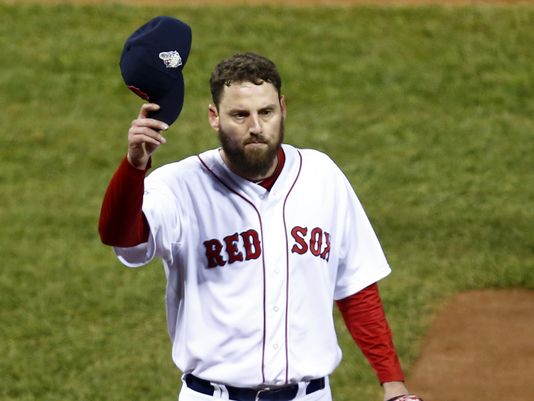
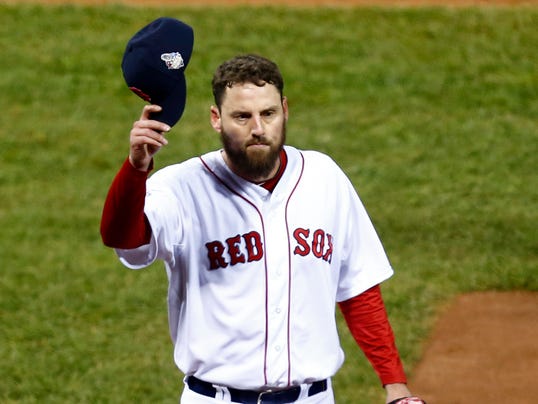
Then he tipped his cap.

It was a small thing, the smallest really, only a gesture and for most players, most of the time, an automatic one…except that it symbolized the ethical virtues of grace, forgiveness, gratitude, humility and fairness. This memorable, wonderful night for the Boston Red Sox and the grand old city it represents—my home town– was no time to let bitterness and resentment prevail. Unlike Ted Williams (who wouldn’t make his peace with Boston fans until years later, when he returned as an opposition manager), John Lackey found the strength and decency to let it go.

It was, as I said, a small thing. But it took character, and it was the right thing to do.

______________________________
Graphic: USA Today

Ethics Hero: Umpire Jim Joyce…Again

Obstruction play

Last night, a close and exciting Game #3 of the baseball’s World Series ended in the most unsatisfying manner possible, especially for Boston Red Sox fans. The winning run in the bottom of the ninth inning scored because of an obstruction call at third base, made by umpire Jim Joyce, giving the victory in a tense battle to the St. Louis Cardinals. Although fans saw baserunner Allen Craig tagged out at home for the final out of the frame, sending the game into extra-innings, or so they thought, Boston third baseman Will Middlebrooks was ruled to have obstructed Craig from getting up and scoring from third on an errant throw, though both runner and fielder were caught in a tangle after a collision at third due to no fault of their own. The relevant rule says that if in the umpire’s judgement a fielder, regardless of fault or intent, impedes a runner trying to reach the next base, and that the umpire also concludes that the runner would have reached the base safely without the fielder’s impediment, then the runner will be awarded the base. This meant that Craig was awarded home plate, his team was awarded the winning run, and the game was over.

The obstruction was clear and undeniable, but in many sports, such a technical call would never be permitted to decide a crucial or championship game, and even in baseball, there are umpires who might not have the courage to make such an unpopular call. Rules, however, are rules, and a sport that suspends or alters its rules for entertainment value lacks integrity.

Baseball was fortunate to have an umpire at third base who has proved his integrity before, veteran Jim Joyce. Millions of Boston fans hate him ( though not quite as much as they hated umpire Larry Burnett, whose failure to make an interference call in Boston’s favor cost the Red Sox Game #3 of the 1975 Series) this morning, but the game they care about so passionately, in my view, has never looked better.

_____________________

Pointer: Craig Calcaterra

Facts: NBC Sports


Case Study: The Botched DP, Baseball, Ethics Evolution, and “Getting It Right”

manager-mike-matheny-argues

I know this is a long essay.

Yes, it involves baseball.

Bear with me. I think it is worth your time.

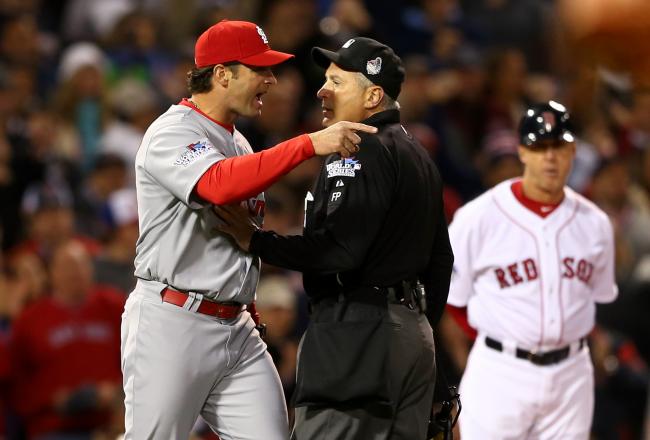
Last night, in Game 1 of the 2013 World Series, embarrassingly kicked away by the St. Louis Cardinals and won handily by some team called the Boston Red Sox,  an intricate ethics drama appeared, allowing us to see the painful process whereby a culture’s ethical standards evolve and change in response to accumulated wisdom, altered attitudes and changing conditions. An obviously mistaken umpire’s call was reversed by the other umpires on the field as the Cardinals manager argued not that the original call had been correct, but that reversing it was a violation of tradition, established practice and precedent….in other words, doing so was wrong, unfair, unethical because “We’ve never  done it this way,” a variation of the Golden Rationalization, “Everybody does it.”   You should not have to appreciate baseball (but if you don’t, what’s the matter with you?) to find the process illuminating and thought-provoking. Continue reading