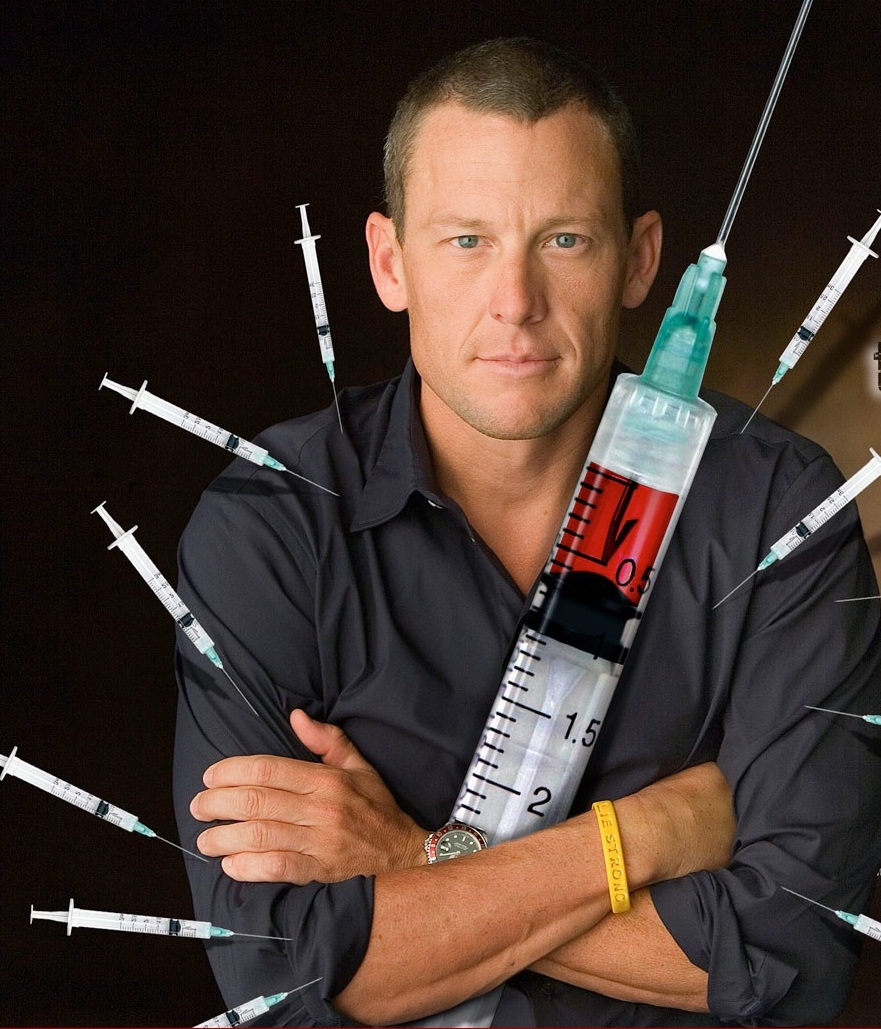
Don’t worry, Lance. Braden Allenby understands you. You were just ahead of your time, that’s all.
There are many things to learn from Prof. Braden Allenby’s Washington Post essay, “Lance Armstrong’s fall: A case for allowing performance enhancement,” none of which have anything to do with Lance Armstrong. Among the lessons:
- “Everybody does it “really is the most seductive and sinister rationalization for unethical conduct.
- Someone really shouldn’t write about sports ethics when they know nothing about sports.
- If you only understand an author’s bias after reading the short biographical sketch at the end of the article, then he wasn’t responsibly correcting for his bias in his article.
- When someone uses the worst of all rationalizations, the deplorable, “It’s not the worst thing,” neither their judgment nor their argument can be trusted.
- Some ethics experts have appalling judgment in regarding ethics.
Allenby’s essay takes the position that all sports should allow athletes to take whatever performance enhancing drugs that become available, beginning with the tragedy of Lance Armstrong’s final disgrace as a cheater and corrupter of his sport. Seldom do you see an argument clothesline itself so quickly: here is Allenby’s opening sally:
“In the past month, cyclist Lance Armstrong has been stripped of his seven Tour de France titles. His commercial sponsors, including Nike, have fled. He has resigned as chairman of Livestrong, the anti-cancer charity he founded. Why? Because the U.S. Anti-Doping Agency and the International Cycling Union say he artificially enhanced his performance in ways not approved by his sport and helped others on his team do the same. This may seem like justice, but that’s an illusion. Whether Armstrong cheated is not the core consideration. Rather, his case shows that enhancement is here to stay. If everyone’s enhancing, it’s a reality that we should embrace.” Continue reading
 Ethics Alarms