The Estefanía Isaías Scandal: See, This Stuff Shows The Ethics Rot In Our Government, And We Don’t Even Notice It

You have no idea who this woman is, do you?

You have no idea who this woman is, do you?

On December 4, the New York Times reported this:

MIAMI — The Obama administration overturned a ban preventing a wealthy, politically connected Ecuadorean woman from entering the United States after her family gave tens of thousands of dollars to Democratic campaigns, according to finance records and government officials.

The woman, Estefanía Isaías, had been barred from coming to the United States after being caught fraudulently obtaining visas for her maids. But the ban was lifted at the request of the State Department under former Secretary of State Hillary Rodham Clinton so that Ms. Isaías could work for an Obama fund-raiser with close ties to the administration.

It was one of several favorable decisions the Obama administration made in recent years involving the Isaías family, which the government of Ecuador accuses of buying protection from Washington and living comfortably in Miami off the profits of a looted bank in Ecuador.

The family, which has been investigated by federal law enforcement agencies on suspicion of money laundering and immigration fraud, has made hundreds of thousands of dollars in contributions to American political campaigns in recent years. During that time, it has repeatedly received favorable treatment from the highest levels of the American government, including from New Jersey’s senior senator and the State Department.

Amidst the swirling controversies over police shootings, grand jury decisions, race-baiting, fake rape allegations, Obama’s unilateral reversal of U.S. Cuba policy, ISIS, the Sony hack, Jonathan Gruber and more, not to mention the holidays, this story received almost no dissemination, yet in its own, slimy way is more important than any of the rest. For it is the quietly growing tumor of government corruption, allowing money to confer special privileges on the wealthy and policy that undermines the rule of law, that saps the nation of its public trust, and that creates the cynicism that eats away at our democracy’s vitality and strength.

Why did this story avoid media and public attention? It was a perfect storm of factors that make a news story unattractive to journalists and unfathomable to the public: Continue reading

Unethical (and Cynical) Donation Of The Year: The St. Louis Rams’ Forgiveness Bribe To The Backstoppers

"Agreed, then: you can call us racist murderers, as long as you keep the donations coming...."

“Agreed, then: you can call us racist murderers, as long as you keep the donations coming….”

Let us be undiplomaticly clear about what the five St. Louis Rams players did when they came onto the field at the start of a Monday Night Football games with their hands in the air like the fictional, idealized, sanitized, imaginary and politically useful version of Michael Brown—you know: the angelic young college-bound African-American male who did nothing whatsoever to cause the circumstances of his own death.

The players were saying, on national television, with millions of people watching, that Officer Darren Wilson executed Mike Brown in cold blood; that the St. Louis police do such things, want to do such things, and will do such things, because they routinely target young black men for harm; and that police generally, around the nation, are virulent racists. That’s what the gesture meant, and that is what it was devised to convey. Continue reading

“The Firm” Ethics: Mitch Should Have Known What He Was Getting Into

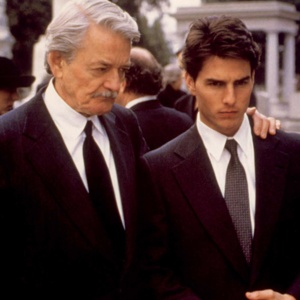
I was just watching “The Firm” again after many years—my old friend and the terrific actor, the late Bart Whiteman, played “Dutch”—to get the ick of “Cabin Fever 3” out of my head. (It was part of last night’s Halloween triple feature at my house.)

Pay attention, Tom...

Pay attention, Tom…

In an early scene in the film, Harvard Law student Mitch McDeere (Tom Cruise) is being courted by big law firms offering perks and cash. Then a small Memphis firm he never heard of —later, he learns that it is run by the Mob— blows him away with an offer he can’t refuse. The firms partners tell him that they wanted him so much, they bribed the clerk at Harvard’s placement office to learn what salaries the other firms had offered Mitch, then matched it plus 20% more. Tom is impressed, and flattered, and greedy, and takes the offer, even though the firm had openly revealed itself as unethical and proud of it.

He should have seen this as signature significance of a dangerously unethical culture in a profession with high ethical obligations, and walked out the door. A young lawyer with well-maintained ethics alarms would have. Who knows? Maybe this was a test the corrupt firm used to weed out ethical associates.

I always thought Mitch was just unlucky, but in the film, at least, he ended up in a bad firm because an ethics alarm wasn’t working.


Betrayal of Trust: The Turncoat Virginia State Senator

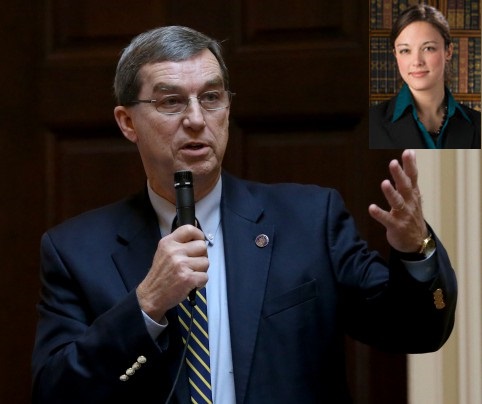
Senator Puckett and daughter: 'Anything for little girl...even screwing over my constituents...'

Senator Puckett and daughter: ‘Anything for my little girl…even screwing over my constituents…’

Virginia Republicans are preparing for a show-down with Democratic Governor Terry McAuliffe over the state budget and the expansion of Medicare to handle uninsured Virginians under the provisions of the Affordable Care Act. Unfortunately for them, Democrats hold the majority in the state Senate, or did, until some smoke-filled room maneuvering persuaded a conflicted Democratic state senator to resign, giving the GOP control of the chamber, at least for a while. Democratic Sen. Phillip P. Puckett ’s unexpected departure gives Republicans a 20-to-19 majority.

The Washington Post reported that Puckett (D-Russell) will announce his resignation from the Virginia Senate, effective immediately, paving the way for his daughter to continue as a district judge and for Puckett to take the job of deputy director of the state tobacco commission. Rationalizations for the move are flying, particularly as it affects Puckett’s daughter. Martha Puckett Ketron is already a Juvenile and Domestic Relations District Court judge. Circuit Court judges in Southwestern Virginia gave her a temporary appointment last year while the General Assembly, which approves judicial appointments for the state, was in recess. The Virginia House of Delegates approved her appointment to a six-year term when it reconvened earlier this year, but the Senate rejected the appointment because of its standing policy against appointing the relatives of active legislators to the bench. (It’s a good policy.) Thus, you see, Daddy’s resignation directly benefits his little girl, though it stabs his party and his constituents right in their backs.

This is known as a conflict of interest. The soon-to-be ex-senator needs to bone up on the concept and its ramifications.The ethical way to handle this conflict would be for Puckett to refuse to do anything to influence the resolution of his daughter’s appointment whatsoever.

“It [that is, the resignation] should pave the way for his daughter,” said Republican Delegate Terry Kilgore, who sure looks like the architect of this smelly deal.  “She’s a good judge. . . . I would say that he wanted to make sure his daughter kept her judgeship. A father’s going do that.”

Not if he’s ethical, he won’t. The spin Republicans are putting on this is that Puckett is resigning for his daughter, and after that decision was made, Kilgore, who serves as the chairman of the state tobacco commission, offered him the post of deputy director. Not as a quid pro quo, mind you. Because he was qualified for the job.

Right.

Even if this was the actual sequence, and I doubt it, it has the appearance of impropriety and undermines public trust. That makes it the kind of transaction legislators are bound to avoid. The Huffington Post’s headline on the story is “GOP Straight Up Bribes Democratic Senator In Effort To Block Obamacare,” which is stating one interpretation of an ambiguous sequence of events as fact….lousy and unethical journalism, but as I said, this is the Huffington Post.

It could be that Puckett, on his own or even at the behest of his daughter, resigned so he could stay a judge, and then, realizing that Republicans would benefit and that he would be a pariah in his own party, negotiated the deal that got him his new job. It could also be that the Republicans, seeking a Senate majority, cooked this up, offered Puckett a package he couldn’t refuse (because he’s a corrupt and disloyal public servant), and thus it really was a quid pro quo deal. Note that Huffpo, biased as it is, frames this so the GOP is the villain.

This is not technically bribery, which is a crime. This is slimy, nauseating politics, but classic sausage-making: the Affordable Care Act owes its very existence to these kind of deals and worse. The question isn’t whether these maneuvers are ethical–they are not— but whether politics can exist without them, and whether one can have a functioning adversary party system without them. My guess is no. If you like the results of such old-fashioned hard-ball politics, then this is utilitarian: “Lincoln” showed how the 13th Amendment was passed by Lincoln’s operatives and lobbyists picking off weak and conflicted legislators like lions targeting wounded water buffalo. If you object to the results, well then, it’s dirty politics, and an unethical display of “the ends justify the means” at its worst.

But one man, had he integrity and proper respect for the job he had been entrusted by his constituents to do, could have made the whole matter academic by just performing the job he had been elected for, and subordinating his daughter’s career aspirations to his duty. Instead, Phillip P. Puckett betrayed his party, his post, his constituency and his state.

And one more thing: if his daughter were ethical, as judges are supposed to be, she would refuse to keep her judgeship this way.

__________________________

Sources: Washington Post, Huffington Post

The Circus, The Animal Lovers, And The Saint’s Excuse

Ringlings_Elephant

Animal rights groups just paid a large price for falling prey to #13 on the Rationalization List, The Saints Excuse, which is described in part thusly..

This rationalization has probably caused more death and human suffering than any other. The words “it’s for a good cause” have been used to justify all sorts of lies, scams and mayhem. It is the downfall of the zealot, the true believer, and the passionate advocate that almost any action that supports “the Cause,’ whether it be liberty, religion, charity, or curing a plague, is seen as being justified by the inherent rightness of the ultimate goal…The Saint’s Excuse  allows charities to strong-arm contributors, and advocacy groups to use lies and innuendo to savage ideological opponents. The Saint’s Excuse is that the ends justify the means, because the “saint” has decided that the ends are worth any price—especially when that price will have to be paid by someone else.

And thus it was that  in 2000 a former Ringling Brothers circus worker filed a lawsuit claiming that the circus’s elephants were abused, just as animal rights groups have long claimed. It was later determined that he had been paid at least $190,000 by the animal rights groups, including the Humane Society, the Fund for Animals and the ASPCA, to back their charges. This is illegal. This is unethical. After a 2009 trial found that the abuse allegations could not be proved, the circus sued for legal fees. The ASPCA paid Ringling Bros. $9.3 million in a settlement in 2012, and now the other groups will have to cough up $16 million. They got what they deserved. Continue reading

The Case Of The Extorted Critic: THIS Is A Good Ending?

"You want to give my store a bad review? Huh? You do? Ok, you do that! And Just wait until you see what I am going to do to YOU!!!"

“You want to give my store a bad review? Huh? You do? OK, you DO that! And just wait until you see what I am going to do to YOU!!!”

Washington Post writer Ron Charles sure has some funny ideas about what constitutes a happy ending, which is especially strange, since his is the Post’s fiction editor. (Insert joke about the role of such an editor at the Post here.)

He tells the story of a Brooklyn writer named D. Foy, who was awaiting the publication of his first novel and also  preparing to be married. He contacted a New York tailor shop, with the intention of having a custom suit made for the big day. The men’s shop wouldn’t accommodate his efforts to make an appointment, and in frustration, he left the following complaint on the consumer site, Yelp, quoting the shop’s promotional boasts:

“This is not ’24-7 white glove service.’ This is not ‘unparalleled service,’ nor anything close. Contract this ‘business’ at your own risk, ladies and gentlemen.”

This aroused the torpid tailor, who sent Foy a ominous e-mail: “I was just made aware of your Yelp review. We wanted to answer your questions but felt you were more interested in a fray. When your book comes out on Amazon, I will personally make sure our entire staff reviews in kind.”

Translation: “You dared to criticize our lousy service, and now we’re going to hurt you!”

Continue reading

In Connecticut, A Surrogate Mother Triggers An Epic Ethics Train Wreck

Crystal Kelley and...somebody's baby

Crystal Kelley and…somebody’s baby

There is no field of ethics more murky or subject to conflicting interpretations than bioethics, and few issues in bioethics are as confusing as those involving surrogate mothers who decide that they should have some say regarding the fate of the child that grows in their bodies. CNN has reported on the most perplexing such scenario I’ve every encountered, so perplexing that I can’t unravel the ethical rights and wrongs of it.  I wonder if anyone can with confidence. I’ll just summarize the main features and some of the issues raised; you will need to read the whole, stunning story to fully appreciate this train wreck’s sweep and carnage.

I. Crystal Kelley, a single mother who had endured two miscarriages, wanted to help another couple conceive, but mostly wanted the $22,000 fee since she was out of a job. She contracted with a couple seeking their fourth child, and was implanted with two previously frozen embryos. One survived. Ethics issue: Did Kelley tell the parents about her miscarriages?

2. Five months into her pregnancy, tests showed the baby Kelley was carrying had serious medical problems, though the child had a chance at survival. The couple said that they wanted Kelley’s pregnancy terminated because they didn’t want the baby to suffer. Ethics issues: Is that a valid reason to take an unborn child’s life? Was it the real reason? Was the real reason that they were unwilling to pay for and endure all the necessary medical treatmenst, or that they wanted nothing less than a “perfect” baby? Does it matter what the real reason was? Continue reading

The Last of Lance

The Lance Armstrong Fan Club writes to the US Anti-Doping Agency to protest its witch hunt.

Lance Armstrong has announced that he will no longer fight doping allegations, meaning that the Anti-US Doping Agency will effectively ban him from cycling and strip him of his titles. “If I thought for one moment that by participating in USADA’s process, I could confront these allegations in a fair setting and — once and for all — put these charges to rest, I would jump at the chance,” Armstrong said in a statement. “But I refuse to participate in a process that is so one-sided and unfair.”

It’s a shrewd move. Now Armstrong fans and admirers who refuse to acknowledge what is overwhelmingly likely bordering on certain—that he is a cheat, a liar and a fraud—can argue that poor Lance is a victim, and never was “proven guilty.” Of course, poor Lance has made millions of dollars and lived the life of a celebrity and hero for more than a decade, and he not going to forfeit any of that, or his freedom, no matter what rational people think of him. Like Barry Bonds, baseball’s most successful steroid cheat, he pulled it off, exploiting his sport, deceiving the public and taking advantage of a “look the other way” culture that corrupted bicycle racing even more thoroughly than steroids corrupted baseball. Continue reading

The Economic Meltdown: Accountability Check

The shoe fits both Parties.

The ethics story of week was the dropping of the missing shoe in the “Friends of Angelo” scandal that helped drive Democratic Senator and party leader Chris Dodd into retirement. (More here.) It fell like this:

WASHINGTON (AP) — The former Countrywide Financial Corp., whose subprime loans helped start the nation’s foreclosure crisis, made hundreds of discount loans to buy influence with members of Congress, congressional staff, top government officials and executives of troubled mortgage giant Fannie Mae, according to a House report.

What the report indicates is that the bribery of regulators and members of Congress to allow the sub-prime mortgage con-game to continue was far worse and for more widespread than anyone realized. Countrywide offered special loan deals to dozens of influential government officials to stave off regulations that might have avoided or greatly lessened the mortgage collapse that triggered the current long-term economic crisis: 

“Documents and testimony obtained by the committee show the VIP loan program was a tool used by Countrywide to build goodwill with lawmakers and other individuals positioned to benefit the company,” the report said. “In the years that led up to the 2007 housing market decline, Countrywide VIPs were positioned to affect dozens of pieces of legislation that would have reformed Fannie” and its rival Freddie Mac, the committee said.

More: Continue reading

Ethics Chess Lesson: The Tale of the Kidney and the Ungrateful Boss

Ethics chess is complicated, but ignore it at your peril!

Ethics chess is the process by which one considers the likely chain of events that follow from an act, and tries to predict the ethical dilemmas that may result before they occur. Debbie Stevens and Jackie Brucia didn’t play ethics chess. This is what happened to them.

When  Stevens was exploring the possibility of returning to the Atlantic Automotive Group, where she had worked previously, she met with Brucia, her former and potential boss, and somehow got on the topic of Brucia’s health problems. She needed a kidney transplant, and had found a donor, though it was not yet certain that the kidney would be hers. Stevens said that she might be willing to contribute her own kidney if that donor didn’t work out.

Later, Stevens was hired by Brucia,and two months later, in January of 2011,  Brucia called Stevens into her office and told her that she had lost her organ donor. “Were you serious when you said you would be willing to give me one of yours?’ Brucia asked.  “Sure, yeah,” Stevens says now. “She was my boss, I respected her. It’s just who I am. I didn’t want her to die.’’ It wasn’t exactly a direct donation, but Stevens donated her kidney to a stranger who matched up well with it so Brucia could be advanced on the list and get a better matched kidney from another source. Nonetheless, Brucia got a healthy kidney because Steven’s gave up one of her own. Continue reading