The House Ethics Committee Sends A Message: “Keep Your Corruption Within The Loopholes, And You’re Still ‘Ethical'”

"We just want to be friends."

“We just want to be friends.”

Let us stipulate that when a body’s ethics committee shows itself to be hopelessly confused about ethics, the chances that the body it is supposed to enlighten will be anything other than habitually, shamelessly and irreparable unethical are somewhere between Frosty’s chances of surviving in Hell, and the likelihood of me doing an infomercial for Wen Hair.

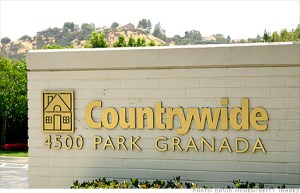
Remember the “Friends of Angelo” scandal? This was the so-called  “VIP program” that former Countrywide founder and CEO Angelo Mozilo used, not to be unkind, to bribe lawmakers into assisting Countrywide’s predatory mortgage loan practices, or at least to look the other way. In June 2008  it was revealed that key policy makers, including former Senate Banking Committee Chairman Christopher Dodd  (D-Conn.), and current Senate Budget Committee Chairman Kent Conrad (D-N.D.) received special terms on mortgages from Countrywide.

In 2009,the House Oversight Committee began investigating the program and learned that similar sweetheart loans were extended to almost a dozen lawmakers, executive branch officials, and other employees of Congress, the White House, Fannie Mae, Freddie Mac, and other government agencies. Countrywide also allowed some VIP program participants “free floats,” which meant that if interest rates fell during the time when loans were being processed, the company allowed applicants to take the lower rate at closing, something it does not typically do.

Let’s be clear: these are bribes. No matter whether they fall within or without specific laws or regulations, they are bribes. This is a large corporation providing special benefits to legislators and others in the government that it did not make available to the general public, in order to make “friends” with them. Why would a financial company like Countrywide want policy-makers indebted to it, to “like” it? Use your imagination. This is called creating a conflict of interest and warping independent judgment. We should expect our officials and elected representatives to recognize such transparent corruption, and avoid it. But they didn’t, and don’t.

One reason they don’t is that voters refuse to hold them accountable. Another is this:

From the LA Times:

“The House Ethics Committee has found no rules violations by  lawmakers and staffers who used a VIP loan program from Countrywide Financial Corp. saying the allegations of special treatment fell outside the panel’s jurisdiction. The committee’s leaders said its investigation largely led to the same conclusions as the Senate Ethics Committee, which determined in 2009 that there was “no substantial credible evidence” that Sen. Kent Conrad (D-S.D.) and former Sen. Christopher Dodd (D-Conn.) had broken rules by accepting loans through the special program…”

“The House Ethics Committee statement said that people in the VIP program appeared to be offered ‘quicker, more efficient loan processing and some discounts.’ But the committee said there was evidence showing those discounts “were not the best deals that were available at Countrywide or in the marketplace at large.” Because participation in the program “did not necessarily mean that borrowers received the best financial deal available either from Countrywide or other lenders,” it was not a violation of House rules to participate, according to the Ethics Committee.” Continue reading
Ethics Hero: Grand Hotel Dallas

This is how it is done: the perfect way to handle organizational misconduct.

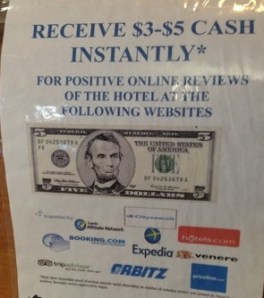
hotellobbysignConsumerist blew the whistle on the Grand Hotel in Dallas for blatantly attempting to bribe patrons into posting  favorable reviews of their stays there online. A reader had alerted the consumer hawk website to a sign displayed in the hotel’s lobby offering $3 to $5 to guests who wrote raves on travel sites like Expedia, Priceline, and others. The sign required “immediate proof of review,” said the bribe amount would vary according to the number of websites that posted it, and noted that all must be “positive, favorable” reviews” approved by mgmt.”

The web site soon learned that the whole scheme had never been “approved by mgmt.” The hotel’s representative sent this e-mail to Consumerist: Continue reading

Elmo and the One Recant Rule

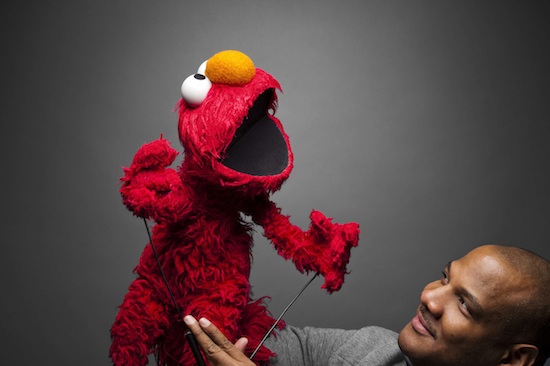
When we last left the sad saga of Kevin Clash, the Muppets puppeteer whose voice and hands give cute little Elmo his panache, the 23-year-old man who had accused Clash of having underage sex with him had recanted, agreeing with Clash’s defense that their relationship was consummated later, when both were consenting adults. I opined that this would do little to rescue Clash’s career, as the most innocent Muppet on Sesame Street could not survive being operated by a man who was now associated with gay sex, consensual of not. This likely result seemed unfair to Clash, but is nonetheless a responsible decision on the part of Clash’s employers, the Children’s Television Workshop, whose duty is to their mission and core audience, not to one unmasked Muppet.

Clash’s prospects have not improved. It was revealed last week that the recant was bought and paid for by Clash, who handed Sheldon Stephens $125,000 to deny his previous accusation and never to raise it again. Needless to say, a recant induced by monetary compensation is not a reliable one, and leaves as many questions open as the original claim, if not more. In a settlement, the accuser is paid to drop any legal action, but doesn’t agree to retract the original claim. What Clash did is called “buying testimony,” or ” a pay-off.” Continue reading

“Hmmmm!”: Conflicts of Interest, Appearance of Impropriety, the National Parks Service

David Uberuaga, real estate whiz

David Uberuaga, then superintendent of Mount Rainier National Park sold his Ashford, Washington home to the owner of Rainier Mountaineering, Inc. for three times the property’s assessed value, while Uberuaga was charged with oversight of the concessionaire. Later, Park Service Director Jon Jarvis, at one time Uberuaga’s immediate boss, saw that Uberuaga was appointed the superintendent of Grand Canyon National Park. This is especially interesting in view of the fact that Jarvis’s older brother, Destry Jarvis, has been a lobbyist on behalf of motorized river runners on the Colorado River, which runs through that park.

Hmmmm.

Do you agree with that? “Hmmmm”? Because in government ethics, “Hmmmm” is enough to indicate that the appearance of impropriety threshold has been crossed. The public isn’t supposed to think, “Hmmmm.” In this case, however, how could they not? To prevent “Hmmmm,” Jarvis needed to remove himself from any decision affecting a National Park that is being lobbied by his brother. To prevent “Hmmmm,” Uberuaga can’t have business transactions, especially mysteriously enriching ones, with a company that seeks contracts with a park that he manages. Continue reading

Wisconsin Wars: The Democrats’ Unethical Ethics Complaint

Wisconsin Democrats have filed an ethics complaint against Governor Scott Walker.

The complaint, and the filing of it, are unethical. Really, really, really unethical. Here’s why. Continue reading

Mike Haridopolos’s Book: Whatever Was Going On, It Had To be Unethical

Four years and $152,000 for THIS??

What was going on here?

It has been revealed that new Florida Senate President Mike Haridopolos was paid  $152,000 in taxpayer money to write a book on politics for Brevard Community College four years ago.
All 175 pages of the resulting tome, “Florida Legislative History and Processes,” were published exactly once. The only copy of the 175-page, double-spaced manuscript can only be found, and read, at the school. The book Haridopolos produced didn’t satisfy the original contract’s requirement for a publishable, textbook-quality look at the development of the Florida Legislature, state constitution, the governor’s office and judiciary from pre-statehood until present. But heck..what do you expect? He was only paid a lousy $152,000! What do you want, “Doctor Zhivago?” Continue reading

“He’s Suffered Enough”: Ethical Lawyering, Dubious Ethics

Attorney Barry Wilson is undoubtedly doing his job, and it is a tough one: arguing for the justice system to do less than throw the book at Boston’s disgraced former Boston City Councilor Chuck Turner, who richly deserves it. This is the lawyer’s sacred duty to a client that makes the profession the butt of jokes and the object of contempt, but it is an ethical and systemic necessity.  It also can be stomach-turning in cases like Turner’s. All Wilson has in his defense arsenal is the hoary “he’s suffered enough” argument. It is always ethically dubious, and this time it boarders on ridiculous.  Continue reading

John Avlon’s “Ten Congressmen Who Should Be Fired”: Too Short, By Far

John Avlon, a senior political correspondent at The Daily Beast and author of  the book Wingnuts: How the Lunatic Fringe is Hijacking America, has posted his list of “Ten Congressmen Who Should Be Fired.” Though Avlon’s definition of “wingnut” is too often “conservative,” and picking the ten most embarrassing members of Congress is like choosing the ten most offensive reality TV stars, it’s a reasonably good list, if far too short and only the beginning. The members on it seem to split into four main categories: outrageously uncivil, clearly incompetent, corrupt, and too outspokenly conservative for Avlon, who regards all Tea Party sympathizers, for example, as dangerous “wingnuts.”

Here’s the list, with highlights of Avlon’s reasons: Continue reading