Flashback: “What Hugo Alfredo Tale-Yax Can Teach America”

The Late Hugo Alfredo Tale-Yax

[Not many people were checking in on Ethics Alarms when I wrote this post in response to yet another example of bystanders choosing to do nothing when a human being was in peril. Some of the comments to the Alameda post, those making excuses for the 75 faint-hearted or apathetic citizens in that city who would rather gawk at a tragedy than try to stop it,  caused me to recall the essay, which explores related issues.  I wrote it, but I had nearly forgotten about the story; when I re-read it today, I got upset all over again.Here, for the second time, is “What Hugo Alfredo Tale-Yax Can Teach America.”]

The one with the premium-grade ethics alarms bled to death on the sidewalk. The people who never had theirs installed at all took pictures. Is this the way it’s going to be? Continue reading
The Death of Raymond Zack: No Heroes, Only Bystanders

50-year-old Raymond Zack waded into the surf on an Alameda, California beach and stood calmly in the 54-degree water, apparently waiting to die. His suicide took nearly an hour, but eventually he drowned, with no rescue attempts from any of the 75 San Franciscans who gathered on the shore to watch the entire tragedy.

Why didn’t anyone try to rescue the man?

Apparently it was because nobody was paid to do it. You see, stopping Zack from killing himself wasn’t anyone’s job.

The media’s focus in reporting yet another disturbing incident with echoes of the murder of Kitty Genovese has been exclusively on the inert Alameda police and firemen who witnessed Zack’s suicide. “Fire crews and police could only watch,” wrote the Associate Press.

What does the AP mean, “they could only watch”?  Were they shackled? Held at gunpoint? Were all of them unable to swim? They didn’t have to watch and do nothing, they chose to watch and do nothing, just like every one of the bystanders who weren’t police or firemen chose to be passive and apathetic when saving a life required action and risk. Continue reading

Quiz: Which Law Enforcement Fiasco Was More Unethical?

It’s Quiz Time!

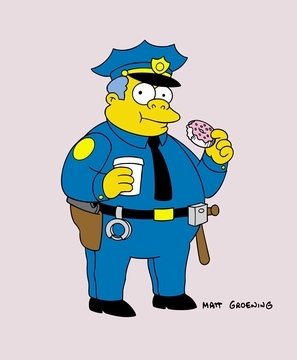
Chief Wiggum would be an upgrade.

Today’s topic: Why the public doesn’t trust the law enforcement system. Here are two horrible and true, tales of AWOL ethics involving law enforcement in New York and Tennessee. Which is more unforgivable, A or B?

A. Brooklyn, NY: The Perpetual Warrant

What is the fair limit of “the police made  an honest mistake”? Let’s say the police have a warrant to search your house, and come to your door because they got the address wrong—and it’s a mistake. At least they didn’t break down the door in the middle of the night. OK, mistakes happen. Then they come again, because they got your address in error again. Annoying, but they seem embarrassed: they aren’t trying to harass you.

And then they arrive 48 more times. Continue reading

Students Learn Why Competence Is An Ethical Duty, The Hard Way: The Case of the Illiterate Principal

Last month, Principal Andrew Buck of  the Middle School for Art and Philosophy in Brooklyn  responded to complaints about the school’s chronic shortage of textbooks by telling eachers and students that textbooks were over-rated. In an e-mail to teachers containing ungrammatical sentences, incorrect punctuation, misspellings and incoherent statements, Buck told his employees that textbooks weren’t essential to the learning process, and noted that some students wouldn’t be able to read the books anyway.

A representative sample from the letter, which you can read in more detail here (it requires registering for Google Docs): Continue reading

A Mother Dies as EMTs Munch Bagels: Why?

In Brooklyn, New York, a pregnant woman went into cardiac arrest in front of  two EMT’s having breakfast at a coffee shop. They did nothing to help her, despite entreaties from others at the shop, reportedly because they were “on break.” And she died.

You can bank on hearing a lot more about the horrific incident in the coming days and weeks. Normally an obvious example of miserable human conduct wouldn’t be mentioned here, because there is no ethical controversy to consider. This one, however, raises important questions that have to be answered:

  • What kind of cultural values are lurking beneath the surface of our society that would lead two individuals to be so callous to endangered human life when they had the skill and responsibility to act? One person could be an aberration, but two suggests a much larger problem.
  • How can people capable of such conduct be recruited and employed by any Fire Department, anywhere?
  • It will be easy to heap condemnation on the two EMT’s who preferred to finish their bagels rather than to save a mother’s life. That won’t address the more important question of what we can and must do, not just to prevent anything like this happening again, but to identify and eradicate the toxic values in our society that could allow this to happen even once.

One thing seems certain: New York’s famous Christmas spirit isn’t what it used to be.