The New York Times Legal Expert Doesn’t Understand The Constitution

Well that’s a kick in the head! Actually, the expert in question is Linda Greenhouse, the Supreme Court reporter for The Times from 1978 to 2008 and once a regular participant in those Sunday Morning network “round tables” when a talk show wanted to pretend it had a balanced and non-partisan array. Greenhouse is a strongly left-biased Democrat legal analyst, often a dishonest one, and her latest column for the Times proves again that it is propaganda and woke advocacy, not legal enlightenment, that she serves.

Once again, I wish “A Friend,” formerly our resident Times apologist, was still allowed here so I could read his tortured defense of the paper for printing this sinister crap.

Do read “Will the Supreme Court Toss Out a Gun Law Meant to Protect Women?” I wouldn’t bother to quote it if the Times didn’t make you pay for the privilege of rolling your eyes, but I will, a bit. The headline says it all, though, and by “all” I mean anti-rights, anti-due process totalitarian cant. You know, Democratic Party/progressive/ “Do Something!” stuff.

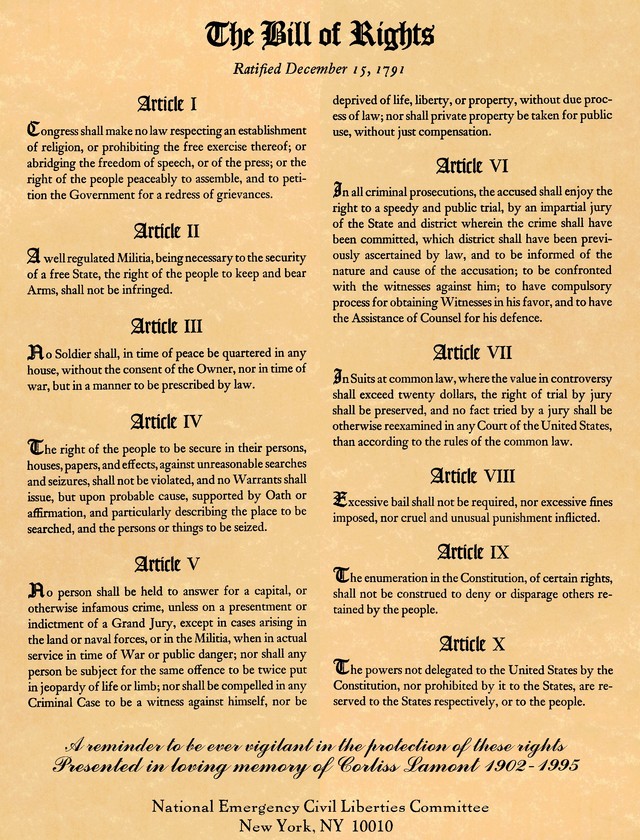
If the Constitution contains an enumerated right in its Bill of Rights, the fact that a law directly violating that right may, in the eyes of some, have some beneficial effects is irrelevant unless there is a massive, existential justification for an exception. Otherwise, the law is unconstitutional. Current progressives and Democrats don’t believe that, or rather, object to the principle. The believe that if speech “hurts” someone by making them feel bad, expresses taboo opinions or makes a sanctified group member feel “unsafe,” laws blocking or punishing that speech shouldn’t be seen as a First Amendment violation, though, in fact, they are. If the right to a fair trial has to be ignored to make sure that a cop whose knee inadvertently triggered nationwide riots and DEI craziness ends up in prison for life, well, reasons the Left, you gotta break some eggs to make a metaphorical omelette, the eggs being the Bill of Rights.

The United States Court of Appeals for the Fifth Circuit, following SCOTUS’s long-delayed and essential 2022 ruling in Bruen that the Second Amendment means what it says and is about the human right to bear arms and not militias, declared a federal law unconstitutional that prohibited a person subject to a court-issued restraining order for domestic violence from owning a gun. It was and is obviously the right decision except to anti-gun zealots who believe in pre-crime laws, red flag laws, and anything along the slippery slope to outright Second Amendment repeal. The Supreme Court is obviously going to uphold the Fifth Circuit, because its ruling was correct. The only question is whether any of the three far-left ladies on the Court will have the integrity to follow the law. I have some hope for Justice Kagan.

But to read Greenhouse, one would think, and by “one” I mean a typical American who doesn’t read SCOTUS opinions, couldn’t name five of the first ten Amendments and doesn’t comprehend what the Supreme Court’s job is, that the fact that an invalid law has good intentions should be sufficient reason to let it stand. (I doubt the law at issue even had good intentions.)

What the law allows in domestic abuse restraining orders is for judges to issue them solely on the testimony of the complainant, and that act will ban an individual from exercising his right to bear arms. Evidentiary standards are minimal; judges are inclined to grant requests for restraining orders because if there is violence against a complainant after the judge finds no cause—moral luck lurks! —the judge is going to be crucified. The other party doesn’t have a right to be present at the hearing, so the result of the law struck down would be that individuals could lose a core enumerated right without due process of law, based solely on the word of an adverse party.

Continue reading

Good: The 5th Circuit Strikes Down An Unconstitutional And Slippery Slope Gun Control Law

A three judge panel of the United States Court of Appeals for the Fifth Circuit struck down a law requiring objects of domestic violence restraining orders to surrender their guns. Good.

The law is a Federal statute. The plaintiff, Zackey Rahimi, was convicted of possessing a firearm while he was subject to a domestic violence restraining order. His convictionhad been upheld by the district court and a prior Fifth Circuit panel. Following the Supreme Court of the United States’ Bruen (2022) decision, the Fifth Circuit panel “withdrew its opinion and requested supplemental briefing on the impact of that case on this one.” After reconsidering Rahimi’s case in light of Bruen, the Fifth Circuit panel reversed itself and vacated Rahimi’s conviction.

The statute makes it unlawful…

“for any person[] who is subject to a court order that: was issued after a hearing of which such person received actual notice, and at which such person had an opportunity to participate; (B) restrains such person from harassing, stalking, or threatening an intimate partner of such person or child of such intimate partner or person, or engaging in other conduct that would place an intimate partner in reasonable fear of bodily injury to the partner or child; and (C)(i) includes a finding that such person represents a credible threat to the physical safety of such intimate partner or child; or (ii) by its terms explicitly prohibits the use, attempted use, or threatened use of physical force against such intimate partner or child that would reasonably be expected to cause bodily injury . . . to . . . possess in or affecting commerce, any firearm or ammunition . . . .

The panel consisted of Judges Edith Jones, James Ho, and Cory T. Wilson. Judge Wilson wrote: Continue reading

New York’s New Gun Law To Counter The SCOTUS Bruen Ruling Is Unconstitutional, The State’s Democrats Know It, And They Don’t Care

Conclusion: this is not a political party (nor are is progressivism an Ideology) that supports or respects democracy or the Rule of Law.

In the process of passing a restrictive law that bans legally-licensed guns in “many public settings such as subways and buses, parks, hospitals, stadiums and day cares…[and] Times Square Guns as well as on private property “unless the property owner indicates that he or she expressly allows them,” New York legislators included this language in the law:

THE APPLICANT SHALL MEET IN PERSON WITH THE LICENSING OFFICER FOR AN INTERVIEW AND SHALL, IN ADDITION TO ANY OTHER INFORMATION OR FORMS REQUIRED BY THE LICENSE APPLICATION SUBMIT TO THE LICENSING OFFICER THE FOLLOWING INFORMATION: (I) NAMES AND CONTACT INFORMATION FOR THE APPLICANT’S CURRENT SPOUSE, OR DOMESTIC PARTNER, ANY OTHER ADULTS RESIDING IN THE APPLICANT’S HOME, INCLUDING ANY ADULT CHILDREN OF THE APPLICANT, AND WHETHER OR NOT THERE ARE MINORS RESIDING, FULL TIME OR PART TIME, IN THE APPLICANT’S HOME; (II) NAMES AND CONTACT INFORMATION OF NO LESS THAN FOUR CHARACTER REFERENCES WHO CAN ATTEST TO THE APPLICANT’S GOOD MORAL CHARACTER AND THAT SUCH APPLICANT HAS NOT ENGAGED IN ANY ACTS, OR MADE ANY STATEMENTS THAT SUGGEST THEY ARE LIKELY TO ENGAGE IN CONDUCT THAT WOULD RESULT IN HARM TO THEMSELVES OR OTHERS; (III) CERTIFICATION OF COMPLETION OF THE TRAINING REQUIRED IN SUBDIVISION NINETEEN OF THIS SECTION; (IV) A LIST OF FORMER AND CURRENT SOCIAL MEDIA ACCOUNTS OF THE APPLICANT FROM THE PAST THREE YEARS TO CONFIRM THE INFORMATION REGARDING THE APPLICANTS CHARACTER AND CONDUCT AS REQUIRED IN SUBPARAGRAPH (II) OF THIS PARAGRAPH; AND (V) SUCH OTHER INFORMATION REQUIRED BY THE LICENSING OFFICER THAT IS REASONABLY NECESSARY AND RELATED TO THE REVIEW OF THE LICENSING APPLICATION.

What the hell is “good moral character”? Is any Constitutional right dependent on “good moral character”? The answer is no, because first, citizens have certain guaranteed rights regardless of their character, second, the right to bear arms is one of those rights, and third, opinions on what constitutes good moral character is subjective. For example, I think elected legislators in the United States who deliberately pass unconstitutional laws have terrible character. Could voting or freedom of speech be made contingent on a government agent’s judgment of a citizen’s character? No—it’s not even a valid question. No. Obviously no.

Continue reading

Once Again, An Analysis Of A SCOTUS Decision Is Distorted By Emotion And Ignorance

This is a problem. And I’m just talking now about the previous SCOTUS ruling that launched a freak-out yesterday. As you probably know by now, the leaked SCOTUS ruling rebuffing Roe v. Wade is no longer a leak.

The Supreme Court ruled 6-3 to strike down a restrictive “needs-based” concealed carry laws in New York State Rifle & Pistol Association v. Bruen.  Even though Justice Thomas’s majority opinion was tight and clear as well as consistent with SCOTUS precedent as well as, of course, the Bill of Rights, such worthies as President Biden claimed that, in the President’s words, the ruling contradicted “common sense and the Constitution.”

What are the odds that Joe read the opinion before declaring that? I’d say “none.” Making such a statement while carrying the presumed authority of President without knowing what the Court’s analysis was is completely unethical and an abuse of position.

David Harsanyi, writing at RealClearPolitics, accurately writes,

The modern left doesn’t even bother pretending they believe the Supreme Court has a responsibility to act as a separate branch of government and adjudicate the constitutionality of law. Rather than even ostensibly offering legal reasons for their ire, Democrats simply demand the Supreme Court uphold public sentiment (or, rather what they claim is public sentiment), even though SCOTUS exists to ignore those pressures. The fact that that attitude has congealed as the norm in one of our major political parties does not bode well for the future of the Republic.

It is particularly disheartening that the three liberal justices in their dissent stooped to fueling this distortion of the Court’s role. Their arguments were almost all irrelevant to the  constitutional issues and the Court’s previous rulings regarding the Second Amendment. Instead, Sotomayor, Breyer and Kagan took the low road of evoking recent shootings and incidents of gun violence as if current events should permit the limiting of explicit Constitutional rights. 

Continue reading