Diversity Ethics: “The Ethicist” vs. The Diversity Bullies

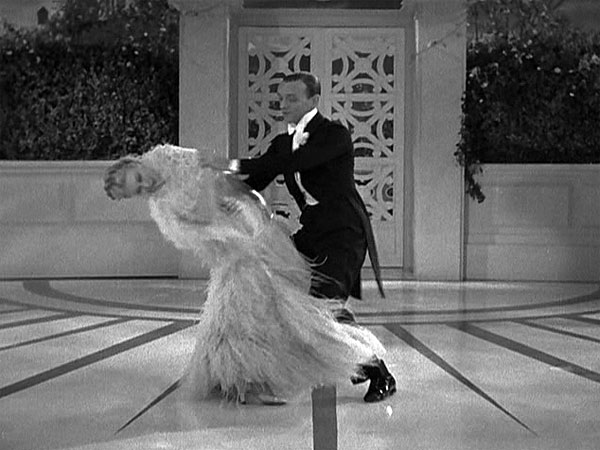
Here you are, Ariel—the perfect, diverse, five-person panel!

Ariel Kaminer, the New York Times’ author of “The Ethicist” column, is being pummeled by criticism by people other than me, for a change. Her offense? Let one of the critics, Kathleen Geier of the Washington Monthly, speak for herself:

“Ethicist columnist Ariel Kaminer has announced a contest inviting omnivores to write essays about why it is ethical to eat meat. The problem? The panel of luminaries she’s selected to judge the contest are ethicists Peter Singer and Andrew Light, food writers Michael Pollan and Mark Bittman, and novelist Jonathan Safer Foer. All, as you may notice, white dudes…for heaven’s sake, by now it should be second nature for every single person who’s in the position of hiring someone, or putting together a panel or committee, to make an effort to include women and people of color whenever possible. That’s just basic human decency.”

Then we have bioethicist Francis Keisling, who weighed in with an indignant protest to the Times ombudsman, writing in part,

“…Finally, what would we expect from the Times and its columnists and editors when a mistake is pointed out in plenty of time for it to be corrected? Does having a column in the Times mean never having to say you are sorry? Ms Kaminer knew no women of comparable stature to the men she chose. She has been clearly shown she was wrong and names provided. All she needed to do was to say woops, let me add three of four women, people of color etc. It would also seem something editors should step in and make happen.”

Welcome, Ariel, to the world of the diversity bullies! Continue reading

Ethics Hero: Jennifer McKendrick

My hero.

Jennifer McKendrick is my favorite Ethics Hero of 2011.

An Indiana County freelance photographer of sensitivity, courage and principle, McKendrick engaged in classic ethical behavior—seeing wrongful conduct that harms others, and taking affirmative action to address it. Her conduct is a template for all of us, and not merely regarding the specific problem she decided to confront: online bullying.

McKendrick had been hired to shoot the senior photos of several high school girls, then discovered that they had viciously denigrated other students on Facebook. She sent the girls’ parents this letter:
Continue reading

Ethics, Stereotypes, and Holly Golightly

"Andy Hardy, the Asian Years"

A Bronx woman, Ursula Liang, has started a petition against Brooklyn Bridge Park’s “Movies With A View” series showing “Breakfast at Tiffany’s,” the 1961 Audrey Hepburn classic that gave us “Moon River” and one of actress Hepburn’s most endearing performances. Why? Well, the movie, which has long been popular for summer screenings in New York City and elsewhere, also contains a pre-political correctness performance by Mickey Rooney as Holly Golightly’s comic Japanese neighbor, “Mr. Yunioshi.”

Rooney’s performance, in my opinion, was cringe-worthy even in 1961, one of director Blake Edwards’ not uncommon excesses in vaudeville humor, placed in a context where it didn’t belong. It is a scar on an otherwise marvelous film, but there is nothing inherently wrong with comic stereotypes. Stereotypes are a staple of comedy, and have been forever; the question is whether a particular stereotype is cruel, gratuitous, harmful, or funny. Some stereotypes are cruel and funny. Continue reading

The Offensive Battle Over “Seven in Heaven Way”

"There goes Fred, getting all religious again...."

With some hesitation, I must re-open the issue of officious inter-meddlers and grievance-mongerers who get satisfaction and empowerment from claiming to be offended by things that could not possibly harm them or genuinely infringe on their rights. The atheists are at it again.

My position has been stated here and elsewhere many times: in the absence of genuine long or short term harm, the ethical human response to a symbolic grievance is to keep one’s response proportional to the offense, which sometimes means considering how many individuals will be made miserable in order to satisfy one individual or a small group, and letting it go. Forcing a university to change the long-standing name of its football team based on a dubious argument that the name is an offense to Native Americans when most Native Americans couldn’t care less, for example, is wrong. Forcing a school to stop teaching kindergarteners to sing “Rudolf the Red-nosed Reindeer” because a Jewish parent thinks the song promotes Christianity is wrong.

Now a group of New York City atheists is demanding that their city re-name a street that was dedicated to the memory of seven firefighters killed in the Sept. 11, 2001, terrorist attacks.  Continue reading

Incompetent Elected Official of the Month: Rep. Jeff Denham (R-CA)

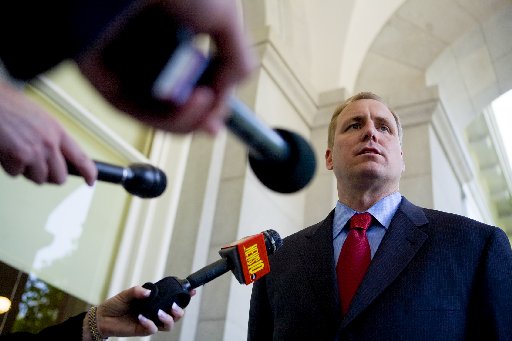
Rep. Jeff Denham: Now we know.

First the airlines are unfairly pilloried in the media thanks to an ignorant serviceman’s YouTube complaint about being charged excessive baggage fees for his gear….despite the fact that 1) the airlines already give servicemen  discounts on extra bags (though they shouldn’t) and 2) the fees charged will be reimbursed, just like my business travel costs are reimbursed by the people who hire me.

Now Congressman Jeff Denham (R-CA) has introduced a non-binding resolution in the House that threatens to use contracts between the military and commercial airlines to punish carriers that do not waive all baggage fees for deployed military personnel.

Rep. Denham’s resolution has its good side: now we know that he is unethical, a fool beyond redemption, and a bully as well. Continue reading

Comment of the Day on “Ethics Triple Dunces…”

[In his Comment of the Day, Jeffrey Field endorses the actions of both the teacher and the superintendent that I labeled “ethics triple dunces” for making students write letters lobbying for more money in school budgets, raises some other provocative ethics issues related to teacher and student conduct, and questions my indictment of the ethics of the teaching profession. I think he’s wrong on every count (you can read my response with my original post), but it’s a terrific comment.]

“When I was a 5th grade teacher teacher at Clements school in North Alabama, the all-white Limestone County School Board voted to allow students the Martin Luther King holiday, but teachers would be required to work that day. So, partially in self interest and partially in empathy of the small percentage of black teachers, I got my 5th grade class to write letters to the board asking them to reconsider. Long story short, the board reversed position and everybody got a day off.

“Yes, I used this as a writing exercise, and I offer no excuses. You see, too many times teachers have students write a paper with no real purpose in mind. In this case, my students had a real purpose in penning a persuasive letter to the people who ran the schools (btw – no one was required to write the letter, but they all did). And boy, you should have seen the smiles and heard the whoops of joy the morning the Athens News Courier ran a story saying the board had reconsidered its position. Continue reading

Ethics TRIPLE Dunces: Tramway Elementary Teacher Melanie Hawes and Lee County Board of Education Superintendant Jeff Moss

"MUST...WRITE...LETTER ....TO...DAD....

North Carolina state legislator Mike Stone is a budget hawk, and is supporting a budget-cutting proposal that could eliminate 9,300 positions in the public schools. It’s a contentious issue, and the representative has received many letters—including a plaintive one from his own third grader daughter, a student at Tramway Elementary, who was one of several students in her class directed by teacher Melanie Hawes to write to the  Republican and plead with him to save the jobs of their two teacher assistants.

“Our school doesn’t want to lose them,” she wrote. “Please put the budget higher, dad.”

Ugh. Ethics foul; in fact, three of them:

1. It is unethical for teachers to indoctrinate their students in political positions in which the teachers have a personal interest.

2. It is unethical to exploit children as lobbying tools, under the pretense of educating them.

3. It is extremely unethical to recruit a legislator’s 8-year-old daughter to carry a lobbying message. Continue reading

The Strange, Unethical Saga of Junius Puke

Junius Puke

This week seems to mark the end of a perfect storm of ethical misconduct that almost drowned a young student in legal persecution for the non-crime of exercising his First Amendment rights. An insufferable and humorless bully with a professorship collided with an irresponsible prosecutor wielding an unconstitutional law, and it has taken eight years to undo the carnage.

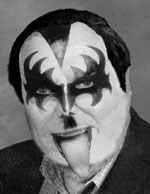
A man named Junius Peake was an economics professor at the University of Northern Colorado,  who due to his parody-inviting name and undoubtedly also the character traits that he was soon to display so prominently, found himself being lampooned in a student satire blog called “The Howling Pig.”  The editor-in-chief of the blog was facetiously identified in the newsletter as the obviously fictional “Junius Puke,” who was portrayed with an outrageous photograph of Professor Peake altered to include sunglasses, a different nose,  a Hitler-esque mustache, and, on occasion, Kiss make-up and a Gene Simmons tongue.  Junius Puke, with tongue. “Junius Puke” wrote prose like this:

“This will be a regular bitch sheet that will speak truth to power, obscenities to clergy, and advice to all the stoners sitting around watching Scooby Doo. This will be a forum for the pissed off and disenfranchised in Northern Colorado, basically everybody. I made it to where I am through hard work, luck, and connections, all without a college degree. Dissatisfaction with a cushy do-nothing ornamental position led me to form this subversive little paper. I don’t normally care much about the question of daycare since my kids are grown and other people’s children give me the willies.” Continue reading

Comment of the Day: “The Atheist, the Graduation, and the Prayer”

Tgt, the Ethics Alarms resident atheist, backs graduating high school senior Damon Fowler, voting for “hero” rather than the jerk-in-training assessment of my original posts on the topic, to be found here and here.

“I think impeding the encroachment of religion into schools is important, especially when it is unpopular to do so. While Damon is not actually hurt from school backed prayer, some of the other listeners will be: anyone who gets the impression that the school and government back Christianity, anyone who feels they must believe to fit in.

“The danger in this prayer isn’t that Damon will be hurt or his rights violated. The danger is to the weaker people unwilling or unable to stand up against this behavior. The danger is to the children not yet graduated, that they will learn in an environment that sees a place for superstition and pandering at a ceremony that should be celebratory.”

More on “The Atheist, the Graduation, and the Prayer”

Damon Fowler, School Adminstrator-In-Training?

Either by design, bias, or because I was not sufficiently clear (always a distinct possibility), a lot of readers seem to have misunderstood the central principle in my post about Damon Fowler, the Louisiana high school senior who singled-handedly bluffed his school out of including a prayer in his graduation ceremonies. Let me clarify.

The post is only incidentally about atheism vs. religion. The ethical issue arose in that context, but it just as easily could have been raised in other circumstances. The ethical values involved here were prudence, tolerance, self-restraint, proportionality, consideration, generosity, and empathy. Fowler’s actions assumed that preventing what he believed was a violation of the Constitution’s prohibition on the government favoring one religious belief over another justified ignoring all of these. They don’t, and the same conclusion applies whether we are discussing a technical legal violation, a breaching of organizational rules, or personal misconduct.

Anyone who reads Ethics Alarms knows that I believe that the culture only becomes and stays ethical if all its participants accept the responsibility of flagging and, when necessary, condemning and stopping harmful societal conduct, as well as unethical personal conduct that will be toxic to society if it becomes the norm. Nevertheless, society becomes oppressive and intolerable if every single misstep, offense, violation, possible violation, arguable violation or mistaken judgment is cause for confrontation, conflict and policing, without regard for context and consequences. Indeed, much of the challenge in ethical analysis involves deciding what kind of misconduct matters, even once the question of whether something is misconduct has been settled. Continue reading