Encore: “Ethics Call To Arms: Fight the ‘Fuck You!’ Culture”


kid fu

[This happens sometimes with 5000 posts in the bank: some topic causes me to find one that I can’t even remember writing, and I realize that I still agree with it, and if I forgot about, everyone else probably did too. The previous post led me to link to this one, and I decided that the list of steps I recommended to try to halt the culture’s slide into permanent vulgarity and incivility was worth re-posting, especially since five years ago the blog got less than a fifth of the traffic it does today. Thus I am re-posting this one, slightly edited to remove a few rhetorical excesses and outdated references, from November 18, 2010.]

“Every action done in company ought to be with some sign of respect to those that are present.”

This was the very first edict in the list of civility rules memorized by George Washington as a child, rules that shaped his character and significantly influenced not only his life and career but the fate of America. Like most of Washington’s 11o rules, the first has universal and timeless validity, pointing all of us and our culture toward a society based on mutual respect, caring, empathy, and fairness.

Recently, however, there has been a powerful cultural movement away from George’s rules and the culture of civility that they represent. Rudeness has always been with us, of course, and public decorum has been in steady decline since the Beatniks of the Fifties, to the point where it is unremarkable to see church-goers in flip-flops and airplane passengers in tank-tops. Something else is going on, however. Like the colored dots of paint in a George Seurat painting, isolated incidents and clues have begun to converge into a picture, and it is not one of a pleasant day in the park. I believe we are seeing a dangerous shift away from civility as a cultural value, which means that we are seeing a cultural rejection of ethics. Continue reading
Someone At “Cracked” Has A Good Ethics Alarm

A “Cracked” video highlights four examples of irresponsible, cruel and disrespectful conduct that have been widely cheered on the internet. It is spot on. See for yourself:

The one that most interest me is the first: the Burger King customer who was annoyed at the child whining about wanting an apple pie behind him, so he bought out all of the pies in the store and ate one in front of the kid to teach him a lesson. On a Consumerist poll, less than five percent of respondents thought the guy was wrong.

Game, set, match, “Cracked”:

1. It’s not a bystander’s job to discipline someone else’s child.

2. The guy left the mother to cope with the now thoroughly upset kid, as he walked of with the pies.

3. There might well have been several other customers who wanted one of those pies. Ah, yes, the old shotgun approach, and collateral damage to innocents be damned…

4. This was gratuitous cruelty, excessive for the transgression. What a jerk.

Of course, the story was related on Reddit, and is likely fake. Never mind: the web shouldn’t be applauding unethical conduct. That was Cracked’s point, and also mine.

What I want to know is how I missed this story, which is almost two months old. Or did I just miss one of the e-mail alerts from my invaluable scouts, Alexander and Fred? If so, I’m sorry guys. If not: how did you miss this? You catch almost everything else!

__________________________

Pointer: Tim LaVier

Burger King Ethics: What’s Unethical About Burger King’s “Tax Inversion” (And It’s Not Burger King)

BKAs you may have heard by now, Burger King is preparing to merge with the larger Canadian equivilent of Dunkin Donuts, Tim Hortons and move the company’s headquarters to Canada. As with the proposed Walgreens move to Europe that was considered and ultimately rejected, the Burger King merger was made for tax reasons, and good ones. The good ones should be clearly explained to the American public, especially voters and those with unemployed workers in their families, but they are not. Let’s  call this BK Ethics Foul #1: news media incompetence. Because the public doesn’t understand what “tax inversion” means, they are vulnerable to having it distorted and demagogued for them by unethical politicians and pundits, and so it has been. Let us designate this BK Ethics Foul #2: the anti-corporate disinformation campaign.

The United States tax rate is  a whopping 35%, more than any other large industrial nation, even more than those that tend toward socialism. There’s nothing unethical about this, necessarily, though it can be argued that it is a foolish and self-destructive policy. Did you know, however—and I wouldn’t blame you if you didn’t, because not being an international corporation myself, I didn’t know until this issue arose—that the U.S. applies that tax to all global earnings of U.S. companies. This means that the earning of U.S. companies doing business abroad are not only taxed where they earn the profits, but also in the U.S., or as this is technically called, twice. (UPDATE: I should have made it clear that the the US does give a foreign tax credit for the money paid in taxes abroad, so the effect is not completely double tax, just two taxes.) That is definitely unfair (and also bad policy), and will be called BK Ethics Foul #3: predatory taxation Continue reading

Burger King, Mary J. Blige and the Political Correctness Double-Bind

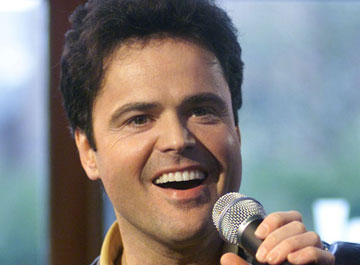
"No, let's give the fried chicken commercial to Donny Osmond. I don't think Mormons even like fried chicken..."

My theater company did a production of the Depression Era comedy “Stage Door,” about a group of young actresses  who stay in a boarding house. There are two roles for “domestics” in the play; the female of the two has quite a few lines. The director felt that it would be perpetuating a stereotype to cast African-Americans in these roles, though that is what the characters were supposed to be, so she cast white actors in both parts. The bottom line is that African-American actors were not cast because of their race, in parts written for actors of their race. No offensive stereotype..and no jobs.

This seems counter-productive and foolish to me. Another example: I was once told by the EEOC specialist at a New York law firm that he never took female associates on travel to meet with clients, because he didn’t want to be vulnerable to sexual harassment claims. “So you’re discriminating against women in your firm to avoid harassing them?” I asked. “Well, I suppose you could say that,” he replied.

Which brings us to Mary J. Blige. The singer was hired by Burger King to sing in a fried chicken commercial, and the result has been attacked as racist stereotyping by several black publications and critics. Burger King has pulled the commercial, muttering some cover-story, along with Blige, about the ad being released “prematurely.” How that would change the fact that she is singing “Crispy chicken, fresh lettuce, three cheeses with dressing!” I don’t really grasp. Anyway, Burger King has officially apologized, which, I suppose, means that just as you can’t use the term “chink in the armor” in discussing anything to do with Jeremy Lin, you can’t hire a black singer to promote fried chicken….even if a black singer wants to promote fried chicken and needs a job. Continue reading

Ethics Call To Arms: Fight the “Fuck You!” Culture

“Every action done in company ought to be with some sign of respect to those that are present.”

This was the very first edict in the list of civility rules memorized by George Washington as a child, rules that shaped his character and significantly influenced not only his life and career but the fate of America. Like most of Washington’s 11o rules, the first has universal and timeless validity, pointing all of us and our culture toward a society based on mutual respect, caring, empathy, and fairness.

Recently, however, there has been a powerful cultural movement away from George’s rules and the culture of civility that they represent. Rudeness has always been with us, of course, and public decorum has been in steady decline since the Beatniks of the Fifties, to the point where it is unremarkable to see church-goers in flip-flops and airplane passengers in tank-tops. Something else is going on, however. Like the colored dots of paint in a George Seurat painting, isolated incidents and clues have begun to converge into a picture, and it is not one of a pleasant day in the park. I believe we are seeing a dangerous shift away from civility as a cultural value, which means that we are seeing a cultural rejection of ethics. The past two weeks have presented damning evidence that this true. Continue reading