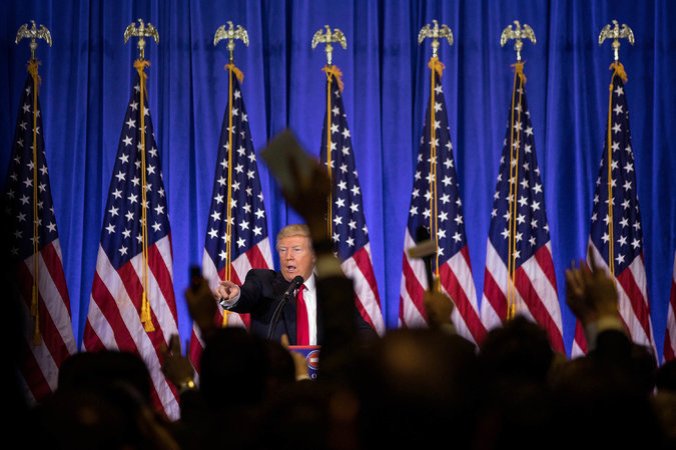
Ethics Observations On President-Elect Trump’s First News Conference

presser

1. I watched the introductions and about half of Trump’s opening remarks, and had to bail. I just had to. Not that Trump’s manner and speaking style were any worse than before; it’s just that the thought that young people will see this as acceptable public presentation and speaking clarity was too horrible to bear. Even with the verbalization-challenged Bushes, the level of basic language skills and vocabulary wasn’t nearly this bad.

I had to watch an old video of JFK wittily fencing with reporters to get the thought out of my head:

2. Thus this discussion is based on the transcript. I had to search a bit to find an online transcript that wasn’t constantly interrupted by editorial comments and “fact-checks.” These contained a lot of nit-picking and suggestions of deception (and some useful clarifications).  It seems to me that the “fact-checks” of Trump feel adversarial, while the recent fact-check of President Obama’s final speech were consistently friendly, and voluntarily refused to take issue with genuinely misleading statements. For example, Obama said, “If we’re unwilling to invest in the children of immigrants just because they don’t look like us, we will diminish the prospects of our own children because those brown kids will represent a larger and larger share of America’s workforce.”  NPR’s annotation:

“Via The New Republic: “From 2000 to 2010, a decade during which the white population as a whole grew by just 1.2 percent, the number of white children in the United States declined by 4.3 million. Meanwhile the child populations of Hispanics, Asians, and people of two or more races were increasing.”

But that’s not the fact to check. Who says that anyone is “unwilling to invest in the children of immigrants just because they don’t look like us“? That’s a straw man, and should have been called out (I threw a pillow at the TV screen) as one. Clear-thinking citizens are unwilling to invest in the children of illegal immigrants because they shouldn’t be here, and the more we “invest” in them, the more encouragement we give to foreign citizens to break our laws.

But NPR likes illegal immigration, so this wouldn’t occur to them, I guess.

3. I think it’s fair to say that no previous POTUS or PEOTUS press conference began with a frontal assault on the press for publishing fake news. That’s how this one began, with Sean Spicer attacking the already infamous Buzzfeed story. He also attacked CNN for reporting on Buzzfeed’s report. Here was NPR’s annotation, in part:

“BuzzFeed and CNN both reported on Tuesday about documents alleging that “Russian operatives claim to have compromising personal and financial information about Mr. Trump,” as CNN reported, though the two news organizations presented the information in vastly different ways. CNN mostly focused on who had seen the documents and when, citing unnamed sources and U.S. officials in different places. However, CNN said that while it had reviewed the “35-page compilation of the memos” alleging that link, it was “not reporting on details of the memos, as it has not independently corroborated the specific allegations.”

NPR’s distinction doesn’t excuse CNN. The news media does this kind of thing all the time, it’s true: it reports the fact that an irresponsible news source has reported a rumor, unsourced claim, ora lie, and thus further circulates an account that never should have been published in the first place. Later, Trump was asked about his tweet asking if we were now living in Nazi Germany. (It’s cute to see my Facebook friends fuming about that tweet, when they have been absurdly calling Trump a Nazi for months. Has anyone contacted Harry Belafonte for his comments?) Trump’s response:

“I think it was disgraceful — disgraceful that the intelligence agencies allowed any information that turned out to be so false and fake out. I think it’s a disgrace, and I say that — and I say that, and that’s something that Nazi Germany would have done and did do. I think it’s a disgrace that information that was false and fake and never happened got released to the public. As far as BuzzFeed, which is a failing pile of garbage, writing it, I think they’re going to suffer the consequences. They already are.”

Crude, but fair. It would be been nice if Trump had the wit and historical perspective to remind the assembled, and perhaps teach his audience,  what the Big Lie technique championed by Josef Goebbels was and how the Buzzfeed-CNN handoff would have pleased him. I’ve got to learned to lower my expectations. Nevertheless, the Nazi reference in that context was well-earned. It is disgraceful that the dossier was leaked by U.S. intelligence personnel. “Failing pile of garbage”  is not Presidential rhetoric (sigh) but the sentiment is correct. CNN capped a week of neon-bright biased and inaccurate reporting across the news spectrum by giving this slimy story greater visibility, thus advancing a Big Lie. CNN deserved its comeuppance, which was soon to come. Continue reading
The Unethical Ethicist And Yale: If Bill Cosby Were A Famous Ethicist, He’d Be Prof. Thomas Pogge

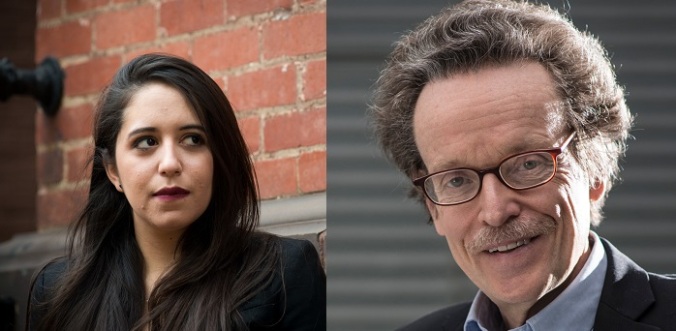
The Accuser and the Ethicist

The Accuser and the Ethicist

Here is the short version:

Yale’s Thomas Pogge is a world famous Yale professor of philosophy and ethics who is especially renowned for condemning the terrible human rights effects caused by disparity of resources between rich countries and poor ones. His books, lectures and a well-recieved TED talk argue that the power imbalance between rich countries and poor countries is so great that poor countries cannot reasonably be said to “consent” to agreements between them. Pogge has also accumulated many credible accusations of exploiting, harassing, and taking sexual liberties with his female students in multiple institutions. In the case that has led to this contrast becoming public, Yale offered a female accuser, a Yale graduate named Fernanda Lopez Aguilar, $2000 in exchange for ending the matter and keeping the story out of the news media.

The long version is here. Because the publisher is BuzzFeed, which is not widely regarded as a sterling source of trustworthy journalism (to say the least), the detailed and apparently well-researched report will be easy for Pogge and Yale to ignore and shrug off. However, other publications, including the Yale Daily News, have investigated the work of author Kaitie J.M. Baker, and so far it has held up to scrutiny.

Pogge has responded, less than convincingly, I would say, to the Lopez Aguilar allegations here. I say unconvincingly because he does not address the previous accusations made against him at Columbia University, and if there is one common characteristic of sexual harassers and abusers that stands out above all others, it is that they are habitual and repeat offenders. Anyone who has spent any time in academia (like me) is well aware that the culture permitting professors, especially male professors, to use the student body and bodies as a sexual perk of the job is widespread and only weakly restrained, if at all. Does that prove that Pogge is one of the professors who partakes in the lusty opportunities presented to him as an object of trust and admiration? No. There is, however a lot of smoke surrounding him, and the smoke has been issuing for a long time.

Yale’s institutional conduct is more than smoke. Yale appears to be another example of a trusted institution deciding that it is preferable to cover up the possible, likely or proven misconduct of a valuable employee than to risk damaging the reputation of that institution, or alienating the loyalties of other employees, by addressing it openly and decisively. I’m sure you can name other infamous examples of this phenomenon, broadly covered by the rationalizations “The King’s Pass” and “The Saint’s Excuse” on the Rationalizations List. Among the most infamous of these are the Catholic Church’s decades, perhaps centuries-long enabling of child sexual predators in the priesthood, the Watergate cover-up by the White House, and Penn State’s failure to stop a known child predator from using the school’s football program and its campus as a base of operations. Yale’s particular variety of this unethical choice is an especially unsavory one, closer to the Joe Paterno/ Sandusky and “Spotlight”scandals, because it intentionally  places future innocent victims at risk of harm.

I accept that there is a possibility that Pogee is an impeccable  professional and as pure as the driven snow, and thus himself a victim of a smear, though this seems unlikely. What I am more interested in now is to address the questions asked in the BuzzFeed piece, which relate to how we should regard unethical ethicists as well as other prominent figures who defy, in their actions, the wisdom they are celebrated for dispensing to others—the Bill Cosbys of the world.

I have some additional questions of my own, but for now I will restrict myself now to those posed in the article. Continue reading

Unethical Donald Trump Quote Of The Day: Whatever It Was That He Told The New York Times “Off The Record” That The Times Unethically And Unprofessionally Allowed Its Staff To Talk About, Putting Trump In An Impossible Bind That He Should Have Been Able To Rely On A Respected News Source Not To Put Him In…

new-york-times-nytimes-building-cc

Let me be clear: The New York Times has shown itself to be partisan, untrustworthy, and no longer fit to be regarded as the flagship of American journalism. The fact that they did this at the expense of Donald Trump, an existential danger to U.S. culture and governance, in no way mitigates the betrayal of journalistic ethics the Times’ conduct represents.

From Buzzfeed:

The New York Times is sitting on an audio recording that some of its staff believes could deal a serious blow to Donald Trump, who, in an off-the-record meeting with the newspaper, called into question whether he would stand by his own immigration views.

Trump visited the paper’s Manhattan headquarters on Tuesday, Jan. 5, as part of a round of editorial board meetings that — as is traditional — the Democratic candidates for president and some of the Republicans attended. The meetings, conducted partly on the record and partly off the record in a 13th-floor conference room, give candidates a chance to make their pitch for the paper’s endorsement.

After a dispute over Trump’s suggestion of tariffs on Chinese goods, the Times released a portion of the recording. But that was from the on-the-record part of the session.

On Saturday, columnist Gail Collins, one of the attendees at the meeting (which also included editor-in-chief Dean Baquet), floated a bit of speculation in her column:

The most optimistic analysis of Trump as a presidential candidate is that he just doesn’t believe in positions, except the ones you adopt for strategic purposes when you’re making a deal. So you obviously can’t explain how you’re going to deport 11 million undocumented immigrants, because it’s going to be the first bid in some future monster negotiation session.

Sources familiar with the recording and transcript — which have reached near-mythical status at the Times — tell me that the second sentence is a bit more than speculation. It reflects, instead, something Trump said about the flexibility of his hardline anti-immigration stance.

So what exactly did Trump say about immigration, about deportations, about the wall? Did he abandon a core promise of his campaign in a private conversation with liberal power brokers in New York?

Sure, I’d like to know. I’d love to know if the single issue that has made Trump the most unqualified and unfit Presidential nomination front-runner in U.S. history has been manipulated by him to gull his easily gullible, “poorly educated” supporters. Maybe the knowledge that he has no intention of deporting millions and building a wall would make them see him as the cynical con man he obviously is. That doesn’t matter, though. We shouldn’t know what Trump said off the record, and we shouldn’t  know that any off-the-record comments were made. That the New York Times’ staff is so undisciplined and unethical that it would gossip about such a session shows the paper’s commitment to principles of journalism ethics to be inadequate for a small town weekly rag. Continue reading

NO NO NO Children, Buzzfeed: You May NOT Do This, For It Is Creepy And Unethical

An unethical cascade...

An unethical cascade…

Before we commence, I do want to thank all of you are keeping me away from Hillary and Trump with more horrible ethics stories than I can keep up with.

Now that I’ve got that over with:

In what warped, sick universe is this kind of thing considered ethical?

Gad. It’s a veritable unethical cascade:

First, high school students takes surreptitious photos of their teachers while they should be, you know, getting educated…

Second, the students post the photos, which have not been consented to by the teachers, on Instagram…

Third, the students add salacious or otherwise provocative comments about the teachers as objects of their lust…

Fourth, the bottom-feeding website BuzzFeed picks up the photos and puts them in a feature called “13 Really Hot Teachers That Will Have You Begging For Detention.”…

How unethical is this? Let me count the ways… Continue reading

Uber Ethics: Emil Michael Has To Go

Uber logo

What a dilemma. You are a 17 billion dollar technology firm, known for developing the technology application that supports the burgeoning car-hiring business, and most recently for expanding into music streaming by partnering with Spotify. Then one of your key executives is recorded, Mitt Romney-style, as he tells a reporter at a business gathering that the company should deal with negative publicity by doing “opposition research” on reporters and exposing their private lives in retaliation. Now what?

This is where hot tech start-up Uber is at the moment. The executive is Uber Vice President Emil Michael, a key figure in the company’s growth and success.  At a private company dinner in New York, he speculated that Uber could spend $1 million to hire a team to do the equivalent of “opposition research” on journalists who were critical of Uber, to dig into their private lives and family secrets. A reporter from BuzzFeed who was a guest at the event made Michael’s off-the-cuff comments public, setting off several rounds of high visibility attacks from various quarters—Sen. Al Franken called for an investigation—and apologies from Uber management, including Michael, whose statement said…

“The remarks attributed to me at a private dinner – borne out of frustration during an informal debate over what I feel is sensationalistic media coverage of the company I am proud to work for – do not reflect my actual views and have no relation to the company’s views or approach. They were wrong no matter the circumstance and I regret them.”

I rate this a category 7 apology on the Ethics Alarms apology scale: Continue reading

How Can People Consider Voting For Candidates This Unethical? [The First In A Special Ethics Alarms Election Year Series]

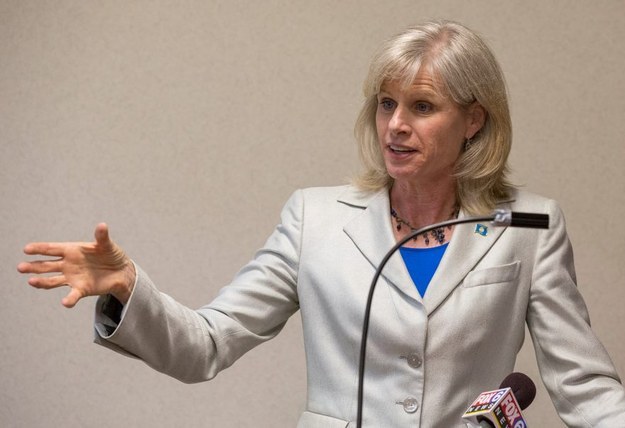
Mary Burke

Mary Burke

With this post, Ethics Alarms launches a  special limited series, “How Can People Consider Voting For Candidates This Unethical?” or HCPCVFCTU for short. My goal will be to have approximately equal numbers of Democrats and Republicans named by election day. It should not be hard. Please send your nominations and suggestions to me at jamproethics@verizon.net.

The first candidate in the series: Wisconsin Democratic gubernatorial candidate Mary Burke.

A substantial portion of Wisconsin Democratic gubernatorial candidate Mary Burke’s published jobs plan for Wisconsin was lifted directly from the plans of three earlier Democratic candidates for governor in other states

Burke’s economic plan “Invest for Success” includes virtually word for word sections from the jobs plans of Ward Cammack, who ran for Tennessee governor in 2009, Delaware Gov. Jack Markell (in 2008) and John Gregg who unsuccessfully ran for governor of Indiana in 2012. Buzzfeed has links to all of these, as well as Burke’s plan that uses them all.

Burke is blaming a campaign consultant, now fired, named Eric Schnurer. Apparently he also worked on the other campaigns, and engaged in self-plagiarism. Nevertheless, this is a pathetic excuse, and doesn’t relieve the candidate of full responsibility for trying to foist a phony plan on constituents:

  • This is supposed to be her plan, not a consultant’s off-the-shelf retreads.
  • Obviously, if it is substantially based on what was proposed for other states in plans as much as six years old, the “plan” has little to do with Wisconsin’s particular needs in 2014.
  • The “plan” proves that Mary Burke gave no thought to an important part of what she is allegedly running to accomplish in Wisconsin, and just rubber stamped something that sounded good by campaign fudging standards.
  • Is this the kind of employee Burke hires? Fakers and cheats? Is this the sort of oversight she provides? None? What is she doing, planning on running for President? Is this how much the public can trust her to be serious, substantive, attentive and trustworthy? Not one bit? It would seem so.
  • Then, when she is caught at being lazy, careless, dishonest, superficial and deceptive, Burke’s response is to deny responsibility, and blame someone else because she put her name on a stolen, recycled, vague and superficial “plan.”

How Can People Consider Voting For Candidates This Unethical?

__________________

Continue reading

Of Teenage Tweets, Politics, Fairness, and Acorns

How about scrutinizing the trees, and not the acorns?

How about scrutinizing the trees, and not the acorns?

Two GOP Congressmen are apologizing for the offensive tweets of their teenage sons, as well they should. But to what extent do the homophobic, racist and otherwise vile social network comment of a couple of high school students with famous fathers tell us anything about their legislator parents? Are such communications newsworthy? Should the kids be exposed to “Gotchas!” as if they were the elected officials, not their dads, and are their indiscretions legitimate clubs for political and journalistic foes to beat their fathers with?

I think these are difficult ethics questions, and I don’t much care for any of them.  Let’s examine the ethical conduct of some of the participants in this icky drama: Continue reading

An Ethics Hero Potpourri!

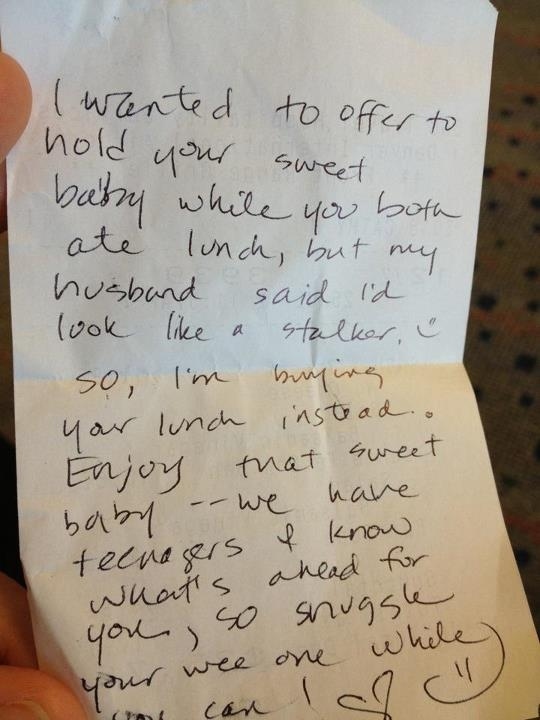
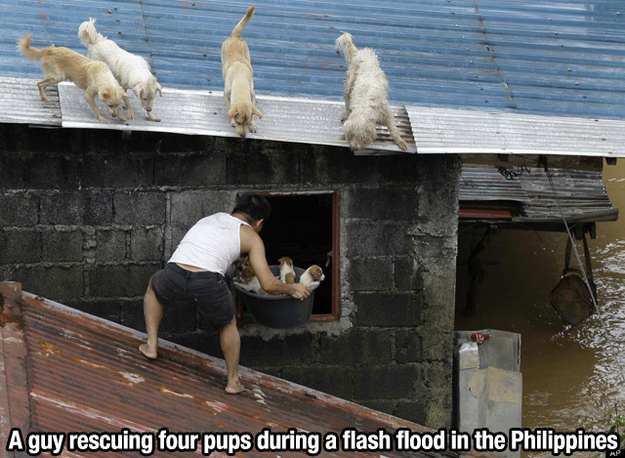
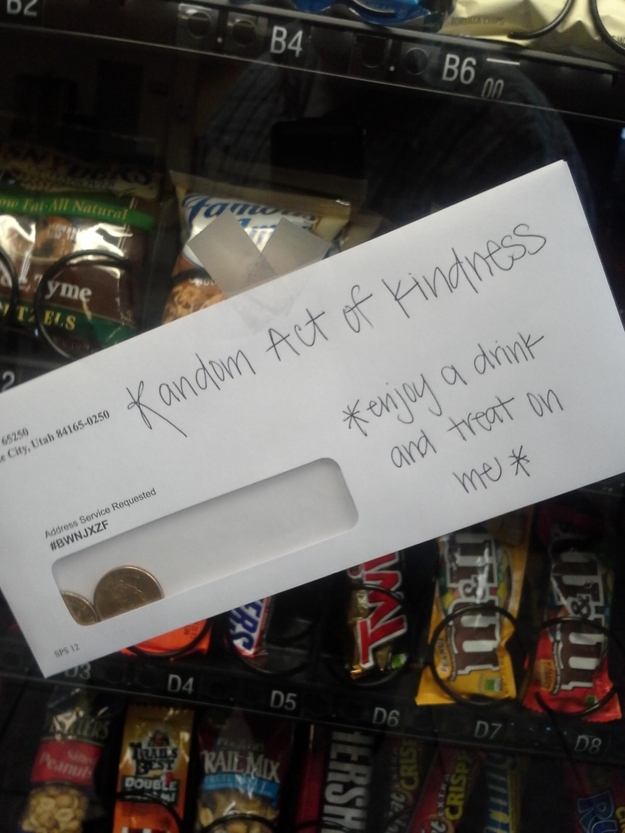
Earlier this year, Buzzfeed gathered and posted these sixteen photographic records of people being kind just because that’s how we should be. Yes, I guess one or more of them may be fake; it doesn’t matter much. It is still helpful to remember, especially in my business, that there are a lot of good people out there.

Thanks, Buzzfeed.

1.

Kindness 1

2.

Kindness2

3.

Kindness3

Continue reading