Morning Ethics Warm-Up, 7/19/2018: The All-Denial Edition

Good Morning!

On this day in ethics, 1918: Washington catcher Eddie Ainsmith claimed that he should be deferred from the draft because he was a major league baseball player. Uh, nice try, Eddie, but no,  Secretary of War Newton D Baker ruled, as he tried to suppress uncontrollable eye-rolling..

1. “California, here I come!…here I come!…here I come!…” Oh. Never mind. The California Supreme Court took a measure off the ballot that would have allowed Californians to vote on whether the state should be divided into three smaller states, like this:

In its opinion, the Court argued that the changes demanded by the ballot measure exceeded California voters’ broad authority to enact laws by initiative, established in 1911. If enacted, the measure would have in effect abolished the state Constitution and all existing laws, which would have to be replaced by lawmakers  in the three new states. The measure would also alter the laws that define California’s boundaries, amending the state Constitution. That cannot be done by initiative, but instead requires approval by two-thirds of both houses of the Legislature to be placed on the ballot.

I know that the splitting up of California was a transparent effort to hijack the Senate by adding four more guaranteed Democrats. It was also doomed, since this plot would need to pass Congress and not be vetoed by the President. Still, wouldn’t something as obvious as violating the state Constitution arise before the wacko measure was placed on the ballot? How incompetent can you get? How much more incompetent can California get?

2. THIS will end well… Facebook claims that it will be removing false information from its pages when it threatens to cause violence, before it will cause violence. Sure, we all trust Facebook as an objective, trustworthy arbiter of speech, don’t we? Don’t we? Especially since they use the ever-reliable Snopes to check. During an interview with ReCode’s Kara Swisher, Mark Zuckerberg cited Holocaust denials as the kind of misinformation Facebook would allow to remain on the platform.  “At the end of the day, I don’t believe that our platform should take that down because I think there are things that different people get wrong,” Zuckerberg told Swisher. “I don’t think that they’re intentionally getting it wrong.”

He doesn’t? I’m not sure Holocaust denial is automatically eligible for Hanlon’s Razor; on the other hand, there are good faith idiots. Speaking of idiots, Zuckerman was surprised when his ignorant shrug sparked angry attacks like that of Jonathan Greenblatt, CEO of the Anti-Defamation League, who said, “Holocaust denial is a willful, deliberate and longstanding deception tactic by anti-Semites that is incontrovertibly hateful, hurtful, and threatening to Jews.Facebook has a moral and ethical obligation not to allow its dissemination.”  Continue reading

Ethics Quiz: The Bank Robber Professor

A few weeks ago the Washington Post published the unusual story of  Shon Hopwood, a member of the D.C. Bar and  a tenure-track faculty member at the Georgetown University Law Center. He spent 11 years in federal prison for robbing banks n Nebraska—that’s banks, plural—became a jailhouse “lawyer,” got  a scholarship to law school, was somehow approved as meeting the character provisions required for bar membership, and now amuses his Georgetown law students with tales about how when he played basketball in federal prison, he had to carry a shank in case his team started to lose.

You should read his story, which I’m sure will enrich Hopwood in  a movie deal, if it hasn’t already, but you shouldn’t have to read it before you answer today’s Ethics Alarms Ethics Quiz:

Should a convicted bank robber be teaching law students?

Continue reading

Ethics Dunce: Slate Editor David Plotz

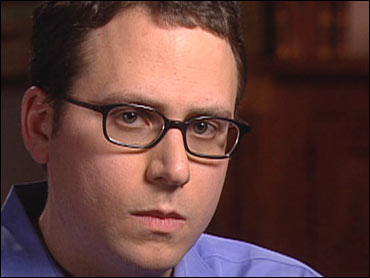
SlateDavid Plotz, journalist and editor of the on-line culture magazine Slate, takes on the California Supreme Court in an essay in his magazine, harshly criticizing the 7-0 decision yesterday to deny Stephen Glass the opportunity to practice law in the state. Glass has been attempting for almost 20 year to persuade some state that a star journalist who was exposed as a pathological liar is a trustworthy lawyer. Plotz’s attack on the opinion as smug and self-righteous says a lot more about Plotz and his field of journalism than it does about the court. It  exposes the perils of a non-lawyer delving into legal ethics without even a modicum of research. Mostly, the exercise shows how far journalism has fallen, when the editor of a prestigious on-line journalistic enterprise essentially denies the importance of professionalism. “It’s a job,” he concludes about the law, trying to bring lawyers down to the depths of his own, thoroughly debased line of work.

Not that the decision isn’t ripe for criticism, for it is. In particular, the majority reasoning continues the legal field’s strange hypocrisy of applying a far more stringent standard to the character of those trying to get their licenses that it does to those who have proven themselves unworthy of holding them. The District of Columbia, supposedly one of the toughest jurisdiction regarding legal discipline, recently administered a mild reprimand to a Justice Department attorney who had been practicing on a suspended license for more than two decades. John Edwards, whose trail of lies while deceiving his dying wife and devising schemes to hide his pregnant mistress in order to gull the Democratic party into nominating him for President, has managed to avoid any discipline at all despite the fact that his continuing leave to practice law disgraces every lawyer on the planet. And, of course, the very same court Plotz derides now recently delivered the stunning conclusion that a non-citizen who entered the country illegally and engaged in years of lies to remain here is nonetheless fit to be a lawyer. (Naturally, Plotz liked that decision.) None of these are mentioned in the post. Continue reading

Ethics Quote of The Week: The California Supreme Court

stephen_glass

“Glass and the witnesses who supported his application stress his talent in the law and his commitment to the profession, and they argue that he has already paid a high enough price for his misdeeds to warrant admission to the bar. They emphasize his personal redemption, but we must recall that what is at stake is not compassion for Glass, who wishes to advance from being a supervised law clerk to enjoying a license to engage in the practice of law on an independent basis. Given our duty to protect the public and maintain the integrity and high standards of the profession (see Gossage, supra, 23 Cal.4th at p. 1105), our focus is on the applicant‟s moral fitness to practice law. On this record, the applicant failed to carry his heavy burden of establishing his rehabilitation and current fitness.”

—–The California Supreme Court, finally rejecting the application of disgraced journalist Stephen Glass for admission the the California Bar, on the grounds of trustworthiness and poor character.

This should end Glass’s efforts to enter the new profession of law after spectacularly destroying his reputation in his former one, that of star journalist for The New Republic. After he was found to have fabricated more than 40 pieces for the magazine and gone to elaborate efforts to deceive fact-checkers. Stephen Glass  (Whom I first wrote about here) was fired in 1998. Luckily for him, he was already a student at Georgetown Law Center at the time, attending its night school, as he almost certainly would not have been admitted after his public exposure as a serial liar. Glass graduated, and beginning in 2002 commenced on this long,  difficult and ultimately unsuccessful journey to professional redemption, taking and passing multiple bar exams and being rejected, first by New York and now by California.

Upon reflection, Glass may well conclude that lying to the New York Board of Bar Examiners was an especially bad idea. Continue reading