When Business Rejects Ethics: the Sorabella Story

"So sorry about your wife's cancer, Carl. Let me know if there's anything we can do. Oh, by the way...you're fired."

I usually feel that organized labor rhetoric about cruel and heartless employers is archaic and exaggerated for political effect. This story, however, is almost enough to make me pick up a sign and start picketing.

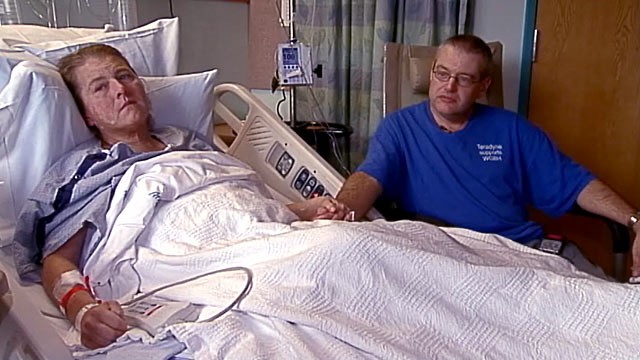
Carl Sorabella, 43, got a merit raise in November for Haynes Management,  a real estate company in Wellesley, Mass., where he has worked as an accountant for almost 14 years. Then he learned that his wife, Kathy, had been diagnosed with advanced cancer. Told that the likelihood was that she had only months to live, Carl approached his boss. Sorabella explained that his wife’s illness would require him to have flexible hours as he supported her during her tests and treatment. He assured her that he would do whatever was necessary to keep his work up-to-date and complete his duties.

She fired him anyway. Continue reading

Comment of the Day: “The Death of Ryamond Zack”

The story about the Alameda firefighters and police, as well as many citizens, standing useless on the shore as a suicidal man slowly drowned continues to receive  outstanding commentary. Here is the most recent, from Peter, doing some follow-up and pointedly critical analysis: 

“ABC asked Alameda Fire Division Chief Ricci Zombeck  whether he would save a drowning child and he said: “Well, if I was off duty I would know what I would do, but I think you’re asking me my on-duty response and I would have to stay within our policies and procedures because that’s what’s required by our department to do.”

“This quote essentially makes any indefensible defenses, or apologetics for how big and scary the victim was, moot. Perhaps they should make off-duty the new on-duty by assigning first responders to permanent off-duty roles. At least then they would go in after a drowning child. Continue reading

Flashback: “What Hugo Alfredo Tale-Yax Can Teach America”

The Late Hugo Alfredo Tale-Yax

[Not many people were checking in on Ethics Alarms when I wrote this post in response to yet another example of bystanders choosing to do nothing when a human being was in peril. Some of the comments to the Alameda post, those making excuses for the 75 faint-hearted or apathetic citizens in that city who would rather gawk at a tragedy than try to stop it,  caused me to recall the essay, which explores related issues.  I wrote it, but I had nearly forgotten about the story; when I re-read it today, I got upset all over again.Here, for the second time, is “What Hugo Alfredo Tale-Yax Can Teach America.”]

The one with the premium-grade ethics alarms bled to death on the sidewalk. The people who never had theirs installed at all took pictures. Is this the way it’s going to be? Continue reading

The Death of Raymond Zack: No Heroes, Only Bystanders

50-year-old Raymond Zack waded into the surf on an Alameda, California beach and stood calmly in the 54-degree water, apparently waiting to die. His suicide took nearly an hour, but eventually he drowned, with no rescue attempts from any of the 75 San Franciscans who gathered on the shore to watch the entire tragedy.

Why didn’t anyone try to rescue the man?

Apparently it was because nobody was paid to do it. You see, stopping Zack from killing himself wasn’t anyone’s job.

The media’s focus in reporting yet another disturbing incident with echoes of the murder of Kitty Genovese has been exclusively on the inert Alameda police and firemen who witnessed Zack’s suicide. “Fire crews and police could only watch,” wrote the Associate Press.

What does the AP mean, “they could only watch”?  Were they shackled? Held at gunpoint? Were all of them unable to swim? They didn’t have to watch and do nothing, they chose to watch and do nothing, just like every one of the bystanders who weren’t police or firemen chose to be passive and apathetic when saving a life required action and risk. Continue reading

Comment of the Day: “Schadenfreude, Ethics, and Those Fanatics Inside Us All”

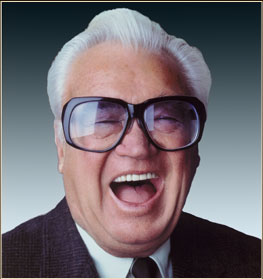
Maybe "The Broadcaster" was all Harry had inside...

Rick elaborates nicely on the theme of my post on handling those fanatic personas that reside in each of us, and in the process takes the ethical measure of an iconic baseball broadcaster whose charms always escaped me…the late Harry Carey.

“It strikes me that there’s another part of the equation, which you only hint at here, but which you have mentioned in other posts. That’s the “ethics alarm” (to coin a phrase) that goes off, or should, when the director or the Red Sox fan or whoever That Guy is says or does something unethical. Part of it is “heat of the moment” stuff: the egoism that slips out in a moment of excitement. No, of course you didn’t want Thurman Munson to die, but yes, he did play for the hated Yankees, and their team just got worse. You’re forgiven the fist-pump. Once. And provided you (Jack, as opposed to Red Sox fan) didn’t mean it.

“I was watching a Cubs game on WGN sometime in the mid-1980s when news came over the wire that Montreal Expos infielder Hubie Brooks had suffered a season-ending injury. Brooks had been a favorite of mine when he’d played for the Mets (“my team”), and I continued to follow his career with some interest, so the news was doubly sad for me: a player had been seriously injured, and that player was Hubie Brooks.

“In contrast, Cubs announcer Harry Carey proclaimed “well, if it helps the Cubs win, it’s OK by me.” I remember the exact words 25 years later. What struck me was not that they were uttered, but that no one—not Carey himself, not his broadcast partner, no one—made the slightest attempt to walk them back. That was the official verdict: a season-ending injury (Brooks was never the same again, by the way) was a good thing if it happened to somebody in a different uniform. I mentioned the incident to a couple of friends—Cubs fans—and they laughed and said “oh, that’s Harry.”

“Everyone understood that Carey was a Cubs fan first and an announcer second. That was, I am told, part of his charm—I never saw it, but others did. Still, I was sort of hoping that there would be a human being in there somewhere. On that particular day, at least, I was disappointed. We lived in WGN country for another seven years. I never watched another Cubs game without turning off the sound.”
Schadenfreude, Ethics, and Those Fanatics Inside Us All

NBC baseball blogger Craig Calcaterra recently raised the sensitive issue of sports fan Schadenfreude*, something that I have been afflicted with from time to time. The occasion was the recent injury to San Francisco Giants catcher Buster Posey in a particularly gruesome collision at home plate. His comments made me think about the obsessed and narrow personas in all of us, and how we should regard their occasional callousness.

Posey was the 2010 National League Rookie of the Year; he is also a cornerstone of the Giants’ recent success: the team is the reigning Major League Baseball World Champion. The collision with Florida Marlins’ Scott Cousins simultaneously broke Posey’s leg, ended his season, jeopardized the career of an exciting young player (players often return from such injuries permanently diminished) and dealt a serious blow to the Giants’ chances of returning to the World Series in 2011.  Reacting to a blogger who suggested that the injury caused most non-Giants fans to  give “a little fist-pump”… because “their team’s chances of dethroning the Giants as World Series champions just got a little bit better,” Calcaterra wrote… Continue reading

The Ethical Callousness of Photojournalists

Eric Kim Street Photography launched an ethics controversy by running two photographs. One, a prize-winning photo of 15-year-old Haitian Fabienne Cherisma, who was shot and killed by Haitian police after stealing two plastic chairs and three framed pictures in the chaos following the nation’s devastating earthquake last year. The other picture showed the origins of the photo and others like it, a crowd of intent photographers in a group, snapping away at the horrible scene like paparazzi trying to get a good shot of Lindsay Lohan.

Kim agreed that the initial photo is crucial news journalism, but worried that the second photo showed callousness on the part of the photographers, who appeared to be exploiting a tragedy.

Judge for yourself. Photojournalism, like medicine, law enforcement, social work, government leadership, and many other professions, is an ethically-conflicting job by nature,  because it requires dispassionate calculations in situations where non-professionals would be overwhelmed with emotion. This is purely utilitarian conduct. The pictures need to be taken. The public is served by vivid illustrations of the world and events. Competent and effective pictures require pragmatism, opportunism and professional cool that will often seem repugnant to observers. That is unavoidable, and fully justified by the importance of the work.

Verdict: the photographers are ethical.

But how they do their job sure can look awful.

Here We Go Again! The Groupon Super Bowl Commercial: No, Not Unethical

Every year one Super Bowl ad sets off an “It’s offensive!” “No! It’s funny!” debate, and this time around it was the commercial for Groupon, the new service that provides short-term discounts  for an eclectic variety of products. As we saw a stunning snow-covered mountain, actor Tim Hutton’s voice intoned…

“Mountainous Tibet — one of the most beautiful places in the world. This is Timothy Hutton. The people of Tibet are in trouble, their very culture is in jeopardy…. But they still whip up an amazing fish curry!!! And since 200 of us bought at Groupon.com we’re getting $30 worth of Tibetan food for just $15 at Himalayan Restaurant in Chicago.”

Twitter, the early warning system of our culture, immediately filled with indignant tweets, pronouncing the ad offensive. Continue reading