“Hillary Clinton’s Honesty Called Into Question In New Poll”…Wait, Why Is There Any “Question”?

 According to a recent AP-GFK poll, 61 percent of those surveyed—that’s only 61%—said “honest” describes Hillary Clinton only slightly well or not at all. Nearly four in 10 Democrats, and more than six in 10 independents agreed that “honest” was not the best word for her.

Gee, really?

This raises several important questions, such as..

1. What the heck is the matter with the 39% that would ever use “honest” in the same sentence as “Clinton”?

2. How much  is necessary to convince the nearly 70% of Democrats that unequivocal proof of habitual lying, violating signed pledges and dodging rules is indisputable indicia that one of their darlings is untrustworthy?

3. Why aren’t those Democrats embarrassed for their Party?

4. Why do they have so little respect for the nation?

5. How stupid does the  Democratic Party think voters are?

Last week, while the poll was being prepared for release, Vox, a reliable progressive mouthpiece that still has a greater capacity for integrity than 70% of their editors’ favorite political party, revealed that least 181 companies, individuals, and foreign governments gave to the Clinton Foundation and also lobbied the State Department while Hillary Clinton was Secretary of State.

After a staggering chart of all the cash that nobody can prove was part of a quid pro quo understanding but which almost certainly was, Vox concludes, “That’s not illegal, but it is scandalous.”

Of course it is scandalous.

It also violates federal law. Continue reading

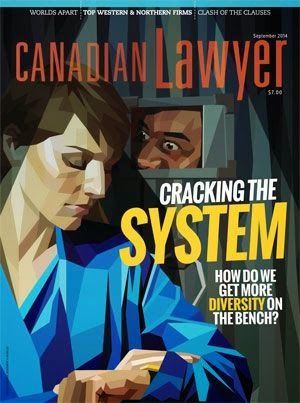
Ethics Quiz: “I Don’t Know What This Cover Means, But It Must Be Racist”

COVER-CANADIAN Law

The recent thread regarding the supposedly racist Boston Herald cartoon has prompted me to ponder how much we are obligated to know what was, is and will be considered offensive, and whether the cultural rules or guidelines regarding this are fair or clear. That post is in the works, but this one interposed itself.

The latest issue of Canadian Lawyer magazine  features a cover story about the lack of diversity on the Canadian bench. Above the Law joins outraged students, lawyers and civil rights advocates in being convinced that the cover is racist.

Your Ethics Alarms Ethics Quiz for today:

Is it?

Continue reading

Burger King Ethics: What’s Unethical About Burger King’s “Tax Inversion” (And It’s Not Burger King)

BKAs you may have heard by now, Burger King is preparing to merge with the larger Canadian equivilent of Dunkin Donuts, Tim Hortons and move the company’s headquarters to Canada. As with the proposed Walgreens move to Europe that was considered and ultimately rejected, the Burger King merger was made for tax reasons, and good ones. The good ones should be clearly explained to the American public, especially voters and those with unemployed workers in their families, but they are not. Let’s  call this BK Ethics Foul #1: news media incompetence. Because the public doesn’t understand what “tax inversion” means, they are vulnerable to having it distorted and demagogued for them by unethical politicians and pundits, and so it has been. Let us designate this BK Ethics Foul #2: the anti-corporate disinformation campaign.

The United States tax rate is  a whopping 35%, more than any other large industrial nation, even more than those that tend toward socialism. There’s nothing unethical about this, necessarily, though it can be argued that it is a foolish and self-destructive policy. Did you know, however—and I wouldn’t blame you if you didn’t, because not being an international corporation myself, I didn’t know until this issue arose—that the U.S. applies that tax to all global earnings of U.S. companies. This means that the earning of U.S. companies doing business abroad are not only taxed where they earn the profits, but also in the U.S., or as this is technically called, twice. (UPDATE: I should have made it clear that the the US does give a foreign tax credit for the money paid in taxes abroad, so the effect is not completely double tax, just two taxes.) That is definitely unfair (and also bad policy), and will be called BK Ethics Foul #3: predatory taxation Continue reading

Dear Discovery Channel: Fire Paul Lewis, Or You Will Regret It. Trust Me On This.

The Discovery Channel’s president, Paul Lewis, approved a promotional campaign for the rapidly rotting cable channel’s “Shark Week” that included a fake video, shown above,  intended to “go viral” and convince people that there are sharks in Lake Ontario. After the video prompted the Ontario Minister of Natural Resources  to warn swimmers and anxiety over the shark sighting was expressed in social media, the channel’s ad agency admitted that it was hoax. Some people still don’t believe it’s a hoax, however, because they’ve seen “Jaws.” After all, claiming a real sighting is a hoax to save the tourist season is just the sort of thing Amity Mayor Larry Vaughn would do, right?

Or that equally slimy Paul Lewis would do. Here is his despicable, ethics-free “apology”:

“We didn’t want it to be something that would negatively impact people’s summer…It’s unfortunate that some people took what we did so serious. If we upset anybody, of course I apologize for that. It would be totally counterproductive for us to go out there and upset and disturb our audience.”

First of all, how does someone become president of a communications company who uses “serious” like that? Continue reading

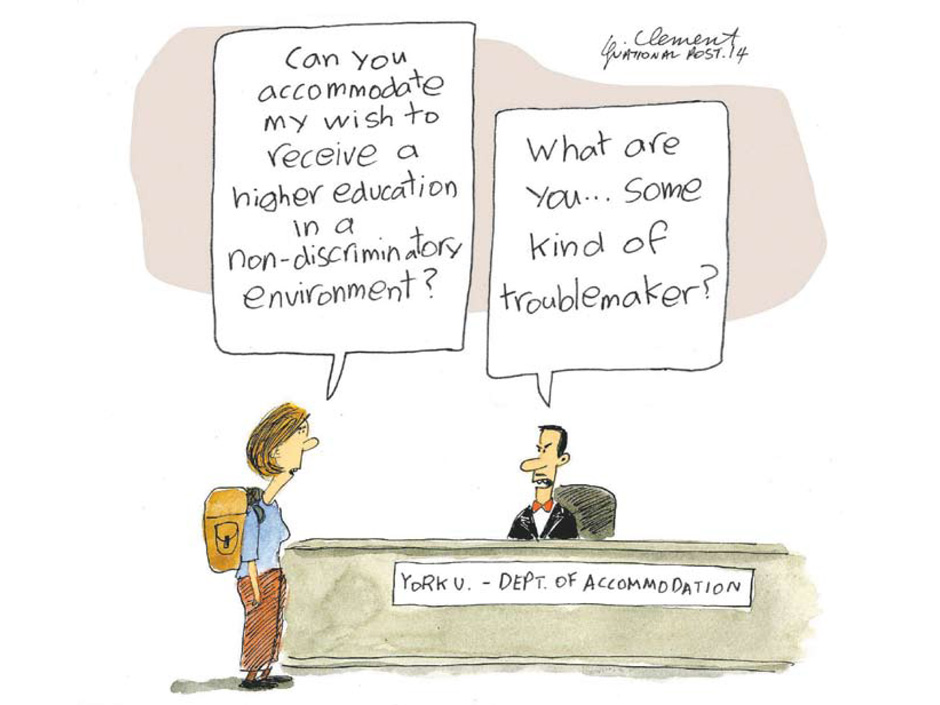
Accommodating Minority Religious Requirements vs Human Rights: Ethicist Chris MacDonald Get The Balance Right

garyclementEthics Alarms is an unabashedly U.S.-centric ethics blog, for both practical and philosophical reasons, but mostly practical: I can’t cover all the worthy ethical issues that arise in this country, much less cover the world. Obviously useful ethics problems arise outside U.S. borders, and here was one I missed until now.

Paul Grayson, a professor at Toronto’s York University, was confronted with a male student’s request for a religious accommodation in a class assignment so that he would not be required to interact with female students in his class. The professor denied the request because, he wrote, “it infringed upon women’s right to be treated with respect and as equals.” The student accepted his decision and completed the assignment, interacting with female students as the assignment required. That did not end the tale, however. The dean of York University’s faculty of arts told Grayson that the student’s request would not have a “substantial impact” on the rest of the class, and should have been accommodated. That, in turn, prompted a national debate in  media, religious and educational forums. Some, citing Canada’s commitment to “pluralism,” felt that the student’s religious beliefs should have trumped the culture’s commitment to gender equality and non-discrimination. Continue reading

Ethics Quote Of The Month: Tom Crist, Canadian Lottery Winner

“I just retired at the end of September so I was fortunate enough in my career to set myself up and my kids anyway, and there was no doubt in my mind where that money was going to go, it was going to go to charity.”

Tom Crist, of Calgary, Canada, announcing that he was giving the 40 million dollars  he won in Canada’s Lotto Max jackpot on May 3 to support cancer research.

Tom Crist, who understands what "enough" is.

Tom Crist, who understands what “enough” is.

Just in time for Christmas comes the aptly- named anti-Scrooge named Tom Crist. Christ retired as president and chief executive of the electronics company EECOL in September, and has said that he had done well enough in his career that he did not need the money.

He did not need the money. How often does anyone in this country say that, feel that, or think that? In a nation that is founded on the principles of liberty and self-determination, the freedom to make as much money as we can also imparts the freedom to say, “Ok, that’s it: enough.” Yet we do not.

Why?

Continue reading

Unethical Excuses From All Over: Time Magazine, Richard Cohen, and Toronto

escuses

Caught red-handed in unethical conduct, the right, honest, courageous and yes, practical thing to do is to admit wrongdoing, eschew excuses, acknowledge fault, express contrition, and resolve not to behave in a similar manner again. Unfortunately, this is difficult for many people, especially, it seems, those in the public eye. Another reason it is difficult is that people who engage in grossly unethical conduct tend to gravitate to unethical responses when they are called to account for it.

We are currently awash in examples of this phenomenon:

I. Time explains that its fat slur cover on Chris Christie wasn’t what it seemed.

Ethics Alarms was one of the first to call foul on Time’s unprofessional “Elephant in the room” cover on New Jersey Governor Chris Christie, and the condemnation of it was almost universal. There was no defense for this, a purely juvenile and biased insult masked as journalism. An ethical organization would have immediately responded:

‘Time used poor judgment in its language on the recent Chris Christie cover, which was gratuitously insulting to the Governor and millions of Americans. It was wrong to mock the governor because of his weight, as it is wrong to denigrate anyone based on their physical appearance. This was a failure of our editing process, by our staff, and of the entire organization, which failed to meet the high standards of professionalism, fairness, civility and integrity that Time has traditionally strived to meet, and has met in the past. We apologize to Governor Christie and our readers. Everyone should expect better of Time magazine, and we betrayed that trust. We vow to work diligently to regain it.’

But noooooooo!

What Time really did was… Continue reading

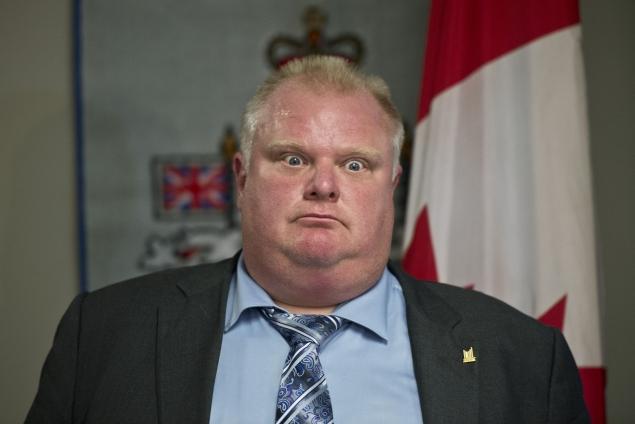
Toronto’s Pathetic Mayor: What’s The Question?

If Chris Farley had been elected mayor....

If Chris Farley had been elected mayor….

I’ve received a wave of emails from helpful readers, with links to news reports about Canada’s shame,  drunk, crack-smoking, lying Toronto mayor, Rob Ford. “Write about this!” they suggest.

Write what?

The mayor of a major Canadian city is a law-breaker, a substance abuser, an addict, and ill. When your defense to a video showing you smoking crack is “I was so drunk, I don’t remember it,” that should say it all. He initially lied about the allegations of his crack use. He calls up radio stations in a drunken state. He is caught on tape drunkenly screaming that he want to murder someone. His various public stances to keep his job have ranged from shameless appeals to pity— “I hope none of you ever find yourself” in such a state, a reverse Golden Rule tactic that amounts to arguing “Do unto others as you would want others to do unto you if you were the irresponsible, addict mayor who will do and say anything to stay in office”—to that old stand-by, Bill Clinton’s “I’m just going to concentrate on doing my job and accomplishing what the voters elected me to do,” as if they elected Ford to embarrass the city. Continue reading

Dog Owner Ethics: The Suicide and the Pitcher

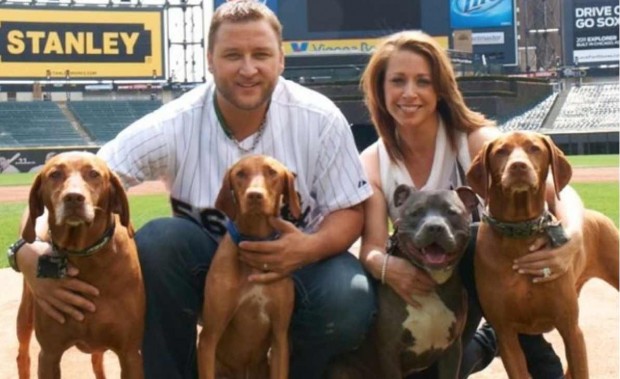
Does one of these nice creatures not belong in this picture? Ontario says yes. The correct answer is  no.

Does one of these nice creatures not belong in this picture? Ontario says yes. The correct answer is no.

Our life-changing events often become crises for our canine companions. In the news today: ethical  and unethical responses in such circumstances, by two individuals in the public eye.

The Unethical

Mindy McReady, the troubled country music star, committed suicide Sunday on the front porch of the home she shared with her boyfriend, who had recently committed suicide there as well. She apparently killed the couple’s dog before taking her own life. McReady’s friends insist that she didn’t kill the dog out of malice, but because she didn’t want to leave the dog alone. Granted, McReady deserves consideration and compassion, since her actions that day were not those dictated by a healthy or fully functioning mind. Still, I read of dog owners doing this a lot, and I’ve known a few—not committing suicide, but killing their dogs when they knew they wouldn’t be able to keep them any more, on the theory that the dog would be happier dead than with new owners. Continue reading

School Insanity: A Warning From Canada…

Jessie Sansone and his trouble-making daughter

…And the warning is: the police and schools aren’t this crazy and irresponsible in the U.S. yet, but all the signs are present. From the news in Ontario:

Police arrested a Kitchener, Ont., father outside his daughter’s school because the four-year-old drew a picture of him holding a gun. Jessie Sansone told the Record newspaper that he was in shock when he was arrested Wednesday and taken to a police station for questioning over the drawing. He was also strip-searched.

“This is completely insane. My daughter drew a gun on a piece of paper at school,” he said.

Officials told the newspaper the move was necessary to ensure there were no guns accessible by children in the family’s home. They also said comments by Sansone’s daughter, Neaveh, that the man holding the gun in the picture was her dad and “he uses it to shoot bad guys and monsters,” was concerning.

Police also searched Sansone’s home while he was in custody. His wife and three children were taken to the police station, and the children were interviewed by Family and Children’s Services. Continue reading