Morning Ethics Warm-Up: 8/28/17

Good Morning!

Ready for an ethical week?

1. In a comment thread about Joe Arpaio’s pardon, the absurd assertion was made that Chelsea Manning was “tortured” at Leavenworth. In knocking down this anti-U.S. propaganda, courtesy of the U.N. and others, I noted that even the U.N. accuser based that assessment on the weird conclusion that Manning was “never convicted of a crime.”

Translation: military courts martial don’t count. Thanks for that opinion, U.N. guy! Why don’t you start your own country?

The other part of the phony torture accusation is the assertion that being held in solitary confinement is torture. Under international law, it is considered “cruel and unusual punishment,” not torture, but… surprise! The U.S. is not governed by international law, much as the globalists wish it were!

Solitary confinement has (rarely) been found by U.S. courts to violate the 8th Amendment when it is of indeterminate duration and without good cause, but that has nothing to do with Manning, who was considered in danger as a traitor in a military prison, and was in solitary for her own protection. The Supreme Court determines what is cruel and unusual punishment in this country, not the U.N., and not international law.

2. I also (I admit it: I knew I would) triggered a freak-out here, and some unfair insults that I will gracefully ignore, by stating that I would have supported execution for Manning, who was and is a traitor. (President Obama commuted her sentence, making the anti-war Left happy but oddly triggering a fraction of the condemnation in the news media that has followed President Trump’s pardoning an 85-year old man facing a minimal jail term. ) The U.S. has been historically reluctant to execute traitors, and in the era where a cyber-leaks can give more aid and comfort to the enemy than Julius and Ethel Rosenberg could have managed in a hundred years, a re-evaluation of that kind, merciful but dangerous policy is over-due for reconsideration. Manning avoided conviction on the worst of the charges against her (then, him) because prosecutors didn’t prove intent sufficiently. Manning claimed that she was just trying to start a “conversation’ about the Iraq and Afghanistan wars, and was willing to put classified information into the hands of terrorists in order to do it. If she knew she would be facing the death penalty with some certainty, it is likely that Manning would have thought twice, at least. It’s called deterrence, and in an age where self-righteous low-level types like Manning and Edward Snowden can get U.S. intelligence personnel exposed and killed with a few keystrokes, serious deterrence is called for.

3. Remember when I asked readers to alert Ethics Alarms when the first talking head suggested that out first major hurricane in 12 years was the result of climate change? It took longer than I expected, but the first reported fool was CNN anchor John Berman. He  was interviewing  Bill Read, the former director of the National Hurricane Center, and asked,

“Is there a why to this? Why there is so much water associated with this storm? One thing we heard from scientists over the last 10 years is that climate change does impact the intensity of many of the storms that we see.”

To his credit, Read assured Berman that the heavy rains had nothing to do with climate change, and everything to do with the typical behavior of this kind of storm. The episode shows 1) how little many journalists (I won’t say all, but it is very close to all) understand the science of climate change, but promote it anyway because it aligns with their partisan politics, and 2) how they will try to generate fake news, which is what “Hurricane Harvey Deadly Rainfall Possibly Caused By Climate Change, Expert Tells CNN” would have been. If Berman was interested in promoting public understanding of the climate change controversy, he would have asked, “Climate change models and Al Gore’s documentaries predicted more and more violent storms as a result of global warming, yet this is the first major hurricane we have seen in more than a decade. How do you account for this?”

4. In the teeth of this renewed attack on U.S. history and culture during the Confederate Statuary Ethics Train Wreck, I asked how long it would be before “Gone With The Wind” was banished from the airwaves. The Orpheum Theatre Group in Memphis, Tennessee just withdrew its annual screening of the classic 1939 film  out of concern that some may find it ‘offensive’.

If no one has the courage to stand up for art, expression and history as “the offended” try to strangle cultural diversity out of existence, then Orwellian thought control will be the inevitable result. I don’t blame the “offended” for trying to suppress speech, thought and history as much as I blame the cowards who capitulate to it. Next in the line to oblivion: war movies, movies with guns, “Gettysburg” and John Wayne. Continue reading →

France And Ireland Remind Us Of Two More Reasons To Be Proud And Grateful To Be An American…

News Item:

France sought to keep a computer hack of frontrunner Emmanuel Macron’s campaign emails from influencing the outcome of the presidential election, with the electoral commission warning on Saturday that it may be a criminal offence to republish the data. Macron’s team said a “massive” hack had dumped emails, documents and campaign financing information online just before campaigning ended on Friday and France entered a quiet period, effectively forbidding politicians from commenting on the leak.

Polls have been predicting that Macron, a former investment banker and economy minister, is on course for a comfortable win over far-right leader Marine Le Pen in Sunday’s election, with the last surveys showing his lead widening to around 62 percent to 38.

…The election commission, which supervises the electoral process, warned social and traditional media not to publish the hacked emails lest they influence the vote outcome…

“On the eve of the most important election for our institutions, the commission calls on everyone present on internet sites and social networks, primarily the media, but also all citizens, to show responsibility and not to pass on this content, so as not to distort the sincerity of the ballot,” the commission said in a statement on Saturday.

“The commission stresses that publication or republication of these data…could be a criminal offence,” it said.

That’s right: withholding information from the voters because they can’t be trusted to be fair and discerning about what is relevant to their vote and what isn’t is to preserve “the sincerity of the ballot.” This is how they reason in countries without guaranteed freedom of speech, and freedom of the press. Florian Philippot, deputy leader of Le Pen’s National Front party, tweeted “Will Macronleaks teach us something that investigative journalism has deliberately kept silent?” Good question. Continue reading →

Playing Dangerous Cognitive Dissonance Games With U.S. The Supreme Court

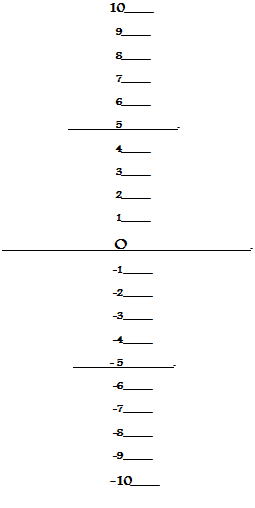
The cognitive dissonance scale, now being used to weaken a crucial U.S. institution for political gain.

The cognitive dissonance scale, now being used to weaken a crucial U.S. institution for political gain.

Of all government institutions, the U.S. Supreme Court has traditionally only trailed the Presidency in public trust and esteem. There are several good reasons for this. One is that being appointed for life, the Justices are presumed to be less subject to the personal and political agendas that make the positions of politicians suspect. Another is that the Court has often taken heroic stances that made the United States a better nation and more just culture. A third is that unlike elected political offices, that of a judge requires an education and technical expertise that the average citizen does not possess. The Justices are traditionally accorded the deference given to experts. Perhaps the most important reason we trust the Court is because we need to do so. It was made the third branch to protect the Constitution against violations of core rights, as well as to be an objective mediator when the other branches, or states, or courts, reach an impasse. Of the many ingenious devices the Founders put in place, the U.S. Supreme Court is one of the wisest.

That the Court is accorded inherent respect and trust is essential to the stability of our government. What the Court says, goes, and the culture and society, including the most furious dissenters in political parties and interest groups, must follow a ruling and constrain its efforts within those boundaries. There have been times when the Court recognized that its unique credibility obligated it to intercede in dangerous conflicts that might otherwise escalate to social unrest or worse. The 2000 Presidential election was a potentially dangerous situation because the result in Florida rested on a margin of error that the available technology was incapable of resolving with certainty.  Unlike the similarly dubious results in the 1960 election, the initial losing candidate and his party decided to plunge the nation into an electoral morass, in this case one complicated by politicized state courts, vague local statutes, confusing ballots, partisan media reports and varying standards of what constituted a vote, with the rotten cherry on top being a rare situation (it had happened only three times before)  in which a popular vote loser was  the apparent electoral vote winner. The Supreme Court stepped up and stopped it from spinning out of control, in essence declaring a winner. It was a courageous and responsible act, one that many (including me) predicted, and though it came at a high cost, one that exemplified why the Court’s public acceptance must be high—so it has some room to fall when it has to take a controversial stand.

This crisis was not the beginning of the effort by parties and activists to discredit the Court by impugning its motives and undermining the public’s trust, but it caused a permanent escalation. It was when the insinuation that a Justices nominated by Republican Presidents (or Democratic ones, depending on who’s leading the chorus of critics) see their job as bolstering that party’s policies and interests became routine. Continue reading →

Death Throes Of The Death Penalty: Dumb Expert, Dumb Advocates, Dumb Debate

“Next!”

As I recently concluded, the death penalty is beyond saving, not because it can’t be defended ethically and morally, but because the issues are tangled beyond repair.

The controversy over the legality of the so-called drug cocktails that somehow became our execution method of choice is a perfect example. The battles over capital punishment trapped policy-makers into this kinder, gentler, ridiculously complicated method of execution that has suffered snafus ranging from unavailable drugs to ugly extended deaths. The problem is the floating definition of “cruel and unusual punishment,” prohibited by the Constitution, but almost entirely subjective. Many judges think killing a killer is itself cruel by definition, and the more reluctant Western Europe becomes to execute the worst of the worst, the easier it is to make the argument that the death penalty is also unusual.

I don’t get it. I never have. India once executed condemned criminals by having the subject place his head on a stump under the raised foot of  trained elephant, which on a command would smash the head like a grape. Quick, painless–messy!—but virtually fool-proof. A pile-driver would be an acceptable equivalent.  Ah, but ick! In this stupid, stupid, intellectually dishonest debate, ick always equals “cruel and unusual,” because to opponents of the death penalty, killing people, even horrible, dangerous people, is inherently icky.

(Oddly, ripping unborn babies out of the womb is not, but I digress.)

I’ve admitted it, and I will again. (This lost Ethics Alarms Luke G., one of its best commenters the last time.*) It is obviously wrong to intentionally prolong an execution or deliberately cause pain, but if the occasional execution is botched and the condemned suffers, that should be cause for great rending of garments, nor should it be used to discredit capital punishment. As I wrote here about Clayton Lockett’s execution in Oklahoma…

“There was no question of Lockett’s guilt, and his crime was inhuman. Such wanton cruelty and disregard for innocent life warrants society’s most emphatic rebuke, and the most emphatic rebuke is death. It is essential that any healthy society make it clear to all that some crimes forfeit the continued right to not just liberty, but also life. Anyone who weeps because this sadistic murderer experienced a few extra minutes of agony in the process of being sent to his just rewards has seriously misaligned values. No method of execution will work every time, and to make perfection the standard is a dishonest way to rig the debate. If the death penalty is justified, and it is, then we should expect and accept the rare “botch.” Meanwhile, if the concern really is efficiency, reliability, speed of death and minimal pain, there are literally dozens, maybe hundreds of methods of swift execution that would accomplish this. They just won’t pass the standards of death penalty opponents, because no method will.”

Today the Supreme Court heard oral arguments on the question of whether Oklahoma’s use of the common surgical sedative midazolam did not reliably make prisoners unconscious during lethal injections, thus violating the Eighth Amendment’s protection against “cruel and unusual punishment.” It’s a ridiculous case, which arises out of the botched April 2014 execution of Lockett that sparked the post I just quoted. It is a ridiculous case because the method of execution isn’t worth arguing over. Elephant. Head. Problem solved. Why is Oklahoma fighting about which cocktail to use? This is the anti-capital punishment team’s game, and sooner or later, the result is preordained.  Continue reading →

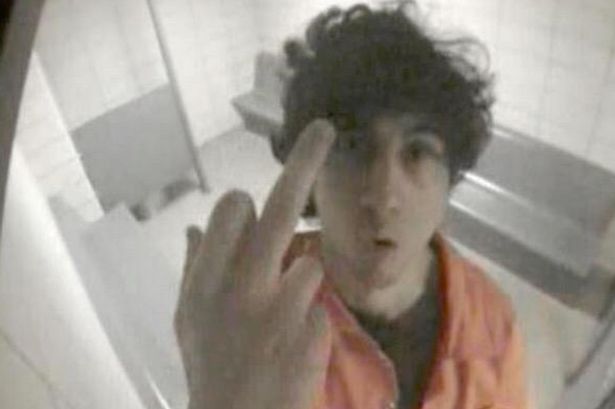
Tsarnaev’s Irrelevant Finger And The End Of Capital Punishment

dzhokhar-tsarnaev finger

I’ve stated here several times that I am in favor of the death penalty when it can be shown beyond any doubt whatsoever that an individual committed a horrific, cruel, unequivocally inexcusable murder or murders, preferably murders. One of the two Boston Marathon bombers, Dzhokhar Tsarnaev, the surviving one, clearly qualifies. Unfortunately, the public, the law and the legal profession are too confused to bring integrity to capital punishment, and I think, because of that, it can never be sufficiently fair and coherent to be ethical. Continue reading →

KABOOM! Head Exploded, Can’t Write, Don’t Need To: The FBI Forensic Scandal

Happy New Year!

This is res ipsa loquitur: “the thing speaks for itself.” If I have to explain what’s unethical about this and why, you are beyond my help.

From the Washington Post:

The Justice Department and FBI have formally acknowledged that nearly every examiner in an elite FBI forensic unit gave flawed testimony in almost all trials in which they offered evidence against criminal defendants over more than a two-decade period before 2000.

Of 28 examiners with the FBI Laboratory’s microscopic hair comparison unit, 26 overstated forensic matches in ways that favored prosecutors in more than 95 percent of the 268 trials reviewed so far, according to the National Association of Criminal Defense Lawyers (NACDL) and the Innocence Project, which are assisting the government with the country’s largest post-conviction review of questioned forensic evidence.

The cases include those of 32 defendants sentenced to death. Of those, 14 have been executed or died in prison, the groups said under an agreement with the government to release results after the review of the first 200 convictions…

Read the rest here.

President Lincoln’s Misunderstood Ethics Crisis: The Great Sioux Uprising

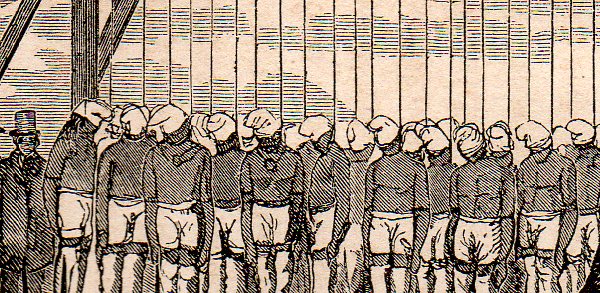
Dakota hanging

As part my so-far futile efforts to leave Ferguson in the rear view mirror, let’s revisit one of the Abraham Lincoln’s great ethical dilemmas during the Civil War, in which today’s date, December 1, was pivotal.

Minnesota’s Great Sioux Uprising, now usually called the Dakota-U.S. Conflict, was among the bloodiest Indian wars in the West, with hundreds of Native Americans, settlers and military casualties. The Sioux were defeated soundly, and the U.S. Army tried 303 Native Americans by military commission, finding them guilty of war crimes and sentencing them to death by hanging. Federal law required Presidential approval of the death sentences, and this was a problem Abraham Lincoln, the President at the time, did not need.

For it was 1862, and the Civil War was raging. This was a year full of Union defeats, indeed, disasters, like Fredericksburg, and both the war and Lincoln’s ability to lead it were in peril. Lincoln was also calculating all the political angles before issuing the Emancipation Proclamation. On top of the burdens of war and politics, he was coping with personal tragedy: his young son Willy had died nine months earlier, and Mary Todd Lincoln was teetering on emotional collapse from grief.
Now he had to decide whether to allow the execution of more than 300 Indians convicted in trials that were no better than kangaroo courts. Few Americans were concerned about the fate of the Native Americans, but Lincoln, with all of his other worries, took on the task of reviewing the trial records. What he found was manifest injustice.  Continue reading →

Hall v. Florida: The Supreme Court Opts For Ethics Over Law

On a purely ethical basis, it is difficult to argue with the majority opinion in Hall v. Florida, where the U.S. Supreme Court ruled that executing a convicted killer whose IQ had been determined to be 71 was still cruel and unusual, and thus a violation of the 8th Amendment, despite Florida law’s cut-off for mental retardation being a score of 70. On the basis of law, however, the SCOTUS decision is hard to defend. Funny, I thought the job of the Supreme Court was to interpret laws.

“Intellectual disability is a condition, not a number…,” wrote Justice Kennedy for the 5-4 majority, in which he joined the so-called “liberal wing.”  “This is not to say that an IQ test score is unhelpful. It is of considerable significance, as the medical community recognizes. But in using these scores to assess a defendant’s eligibility for the death penalty, a State must afford these test scores the same studied skepticism that those who design and use the tests do, and understand that an IQ test score represents a range rather than a fixed number.”

The problem is that the whole concept of a “condition” like intellectual disability is a subjective one. The theater company for which I serve as artistic director is presenting the Abby Mann historical drama “Judgment at Nuremberg,” and one of the most troubling scenes involves a man, the son of a Communist, sterilized by the Nazis because he was “mentally defective,”  or perhaps because of his family’s political views. The Nazi test: make a sentence out of the words hare, hunter, and field. A witness for the prosecution, the man who was sterilized fails to answer the test on the stand, just as he failed when quizzed by the Nazis. Continue reading →

No Ruth, Monica Is Still A Victim, Bill Is Still A Predator, And Why Do “Feminist” Pundits Still Make Excuses For The Clintons?

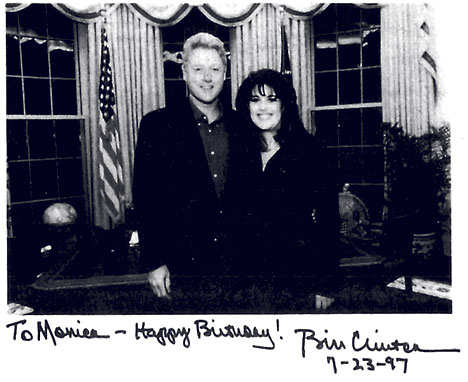
biil-and-monicaThe Washington Post’s brigade of shamelessly ideological or just plain incompetent columnists has been out in force of late, placing me in a dilemma: if I write full posts calling all of them on their deceitful and irresponsible essays, I make Ethics Alarms look like Newsbusters, and if I don’t, only the angry, equally ideological columnists on “conservative media sites” will, and what they say doesn’t matter, because they’re all mean, lying “wingnuts,” don’t you know. So I’m going to let it pass that Kathleen Parker wrote yet another of her wishy-washy, hand-wringing protests against the fact that ethical decision-making requires policy makers to make tough choices, her craven proclamation that while it is true that some criminals deserve to die, she isn’t willing to accept her part in society’s obligation to see that they get what they deserve. I will note that either she or the Post scrubbed the online version of a sentence in the print version that actually said that explicitly, but never mind. Parker is still clear in her high-minded cowardice.

And I will restrain myself from awarding the Baghdad Bob Award to Eugene Robinson, who increasingly makes me wonder how much of a role affirmative action played in his Pulitzer Prize. He submitted a certifiably batty column proclaiming that the Obama administration has been a wonder to behold, that the economy is “fixed”, that the latest jobs and economic numbers were glorious, that Obamacare is an unequivocal success, and that the Democrats should declare that all is well, because it is. Meanwhile, just about every fact-based story in his own, relentlessly liberal newspaper rebutted his words. Robinson’s an opinion columnist: a point of view is necessary. Misleading readers ( “Critics have stopped talking about a hypothetical “death spiral” in which the health insurance reforms collapse of their own weight, since it is now clear that nothing of the sort will happen,” he wrote. I was able to find several such predictions from credible analysts written within the last two weeks, and I didn’t spend much time looking. Here’s one of them…) and partisan cheerleading, however, is unethical and unprofessional. The Pulitzer just isn’t what it used to be, I guess. Sort of like the Nobel Peace Prize.

I am going to take on Dana Milbank’s description of the Benghazi scandal as a “nothingberger”—Shouldn’t referring to a coordinated, news-media-assisted cover-up of  intentional public deception by a President in the midst of a Presidential campaign as “nothing” (never mind that the incident at the heart of the deception involved the deaths of four Americans, including an ambassador) disqualify a columnist from regular publication by a respectable news source?—-but not today.

No, today the winner is Ruth Marcus, a member of the Post’s editorial staff whose column this week spun the new Monica Lewinsky Vanity Fair piece as a boon to Hillary Clinton: Continue reading →

Comment of the Day: “Clayton Lockett Is Dead, Right? Then 1) Good! and 2) His Execution Wasn’t “Botched””

capital-punishmentThere are well-established group of ethics topics that will always cause spirited debates here, because they are issues that have always divided public opinion and always will: morality vs ethics, drug legalization, abortion, war, social justice, socialism, plus various controversies involving race, sexuality and gender. I try to wade into these only when a current even beckons, as to some extent the arguments are futile and familiar, and too many people refuse to think or listen anymore, retreating to slogans and reflex positions articulated by others.

I decided to wade into one of the most polarized, of these, capital punishment, when the Clayton Lockett execution in Oklahoma sparked a national debate that seemed strange to me, and indeed driven by the unwarranted assumption, uncritically accepted by the news media, that the painlessness of executions were a crucial feature of making them ethical as well as societally palatable. It also opened the question of whether one execution that doesn’t follow the script necessarily calls capital punishment itself into question. I confess: both in my post’s title and in the tone of my responses to anti-death penalty commentators, I intentionally sought to roil the waters of debate, and was determined not to allow the nice people who usually express compassion for the pain and suffering of humanity’s worst and deadliest escape with the usual pieties.

Sure enough, this annoyed the heck out of some readers. Responding to the emphatic objections of one, Isaac delivered a personal and powerful rebuttal. Here is his Comment of the Day on the post Clayton Lockett Is Dead, Right? Then 1) Good! and 2) His Execution Wasn’t “Botched:” Continue reading →