Comment of the Day: “The Death of Ryamond Zack”

The story about the Alameda firefighters and police, as well as many citizens, standing useless on the shore as a suicidal man slowly drowned continues to receive  outstanding commentary. Here is the most recent, from Peter, doing some follow-up and pointedly critical analysis: 

“ABC asked Alameda Fire Division Chief Ricci Zombeck  whether he would save a drowning child and he said: “Well, if I was off duty I would know what I would do, but I think you’re asking me my on-duty response and I would have to stay within our policies and procedures because that’s what’s required by our department to do.”

“This quote essentially makes any indefensible defenses, or apologetics for how big and scary the victim was, moot. Perhaps they should make off-duty the new on-duty by assigning first responders to permanent off-duty roles. At least then they would go in after a drowning child. Continue reading

Toronto: Religious Bullies Distort the Alcoholics Anonymous Mission

In Toronto, two Alcoholics Anonymous groups that specifically removed reference to God and religion in their version of the Twelve Steps have been de-listed by the central organization there, a straight exhibition of the abuse of power and a breach of integrity in the pursuit of selfish ends.

Alcoholics Anonymous, as anyone who has listened to Charlie Sheen’s anti-AA rants knows, employs repeated evocations of God and “a higher power” in its formula for treating alcoholism.  But while many have successfully turned to faith in their journeys to sobriety, most individual AA chapters neither insist on religious belief nor preach it, leaving it to each member to decide what his or “her higher power” is. To many, it is a God, and to many it is the fellowship of AA itself. The point of the higher power is to help an alcoholic discover the spiritual strength and resolve to conquer a pernicious and powerful disease with no known cure. the objective of AA, however, is not to seek to strengthen religion. Continue reading

Ethics Hero: Lincoln School in Spring Valley, Illinois

Thanks to Lincoln School, this isn't me. Yet.

Thank you, oh thank you, Lincoln School in Spring Valley, Illinois! Your superb and inspiring decision has stopped me, for the moment at least, from seeking species reassignment surgery. My membership in the human race has been an embarrassment to be of late, and I had been seeking alternatives. You give me hope.

Spring Valley’s Lincoln School gymnasium held a day of appreciation this week for custodian Edward “Red” Nestler,  88, who will retire on June 30. To his surprise, Red did not receive just a free lunch, or a watch, or a jacket, or a plaque in appreciation and commemoration of his many years with the school, a journey that began when he was a student there in the 1930s. On his “day,” Red learned that the school board, responding to a petition from students and staff, had voted to name the school gymnasium in his honor. Continue reading

Comment of the Day: “The Death of Raymond Zack”

Raymond Zack

Buck Best, a Northern Virginia firefighter and supervisor, weighs in with his expert perspective and nuanced insight regarding my post on the Alameda, Cal. incident involving a suicide by drowning. His wife Lianne had another Comment of the Day earlier this week; if this keeps up, I will have to call the feature “Best Comment of the Day.”

“As an 18 year veteran of the Fire Dept. and the last ten years as the Officer of a Technical Rescue team that would be responsible for just such a rescue, let me offer another perspective to this ethical question. The Fire service much like many other organizations in recent history are governed by politics and litigation. The management of the organizations are always looking to the risk analysis of any potential situation based of the money that is available. The risk analysis is not based as much on the physical risk as it is on the financial or political risk. Continue reading

Flashback: “What Hugo Alfredo Tale-Yax Can Teach America”

The Late Hugo Alfredo Tale-Yax

[Not many people were checking in on Ethics Alarms when I wrote this post in response to yet another example of bystanders choosing to do nothing when a human being was in peril. Some of the comments to the Alameda post, those making excuses for the 75 faint-hearted or apathetic citizens in that city who would rather gawk at a tragedy than try to stop it,  caused me to recall the essay, which explores related issues.  I wrote it, but I had nearly forgotten about the story; when I re-read it today, I got upset all over again.Here, for the second time, is “What Hugo Alfredo Tale-Yax Can Teach America.”]

The one with the premium-grade ethics alarms bled to death on the sidewalk. The people who never had theirs installed at all took pictures. Is this the way it’s going to be? Continue reading

Comment of the Day: “Two Mothers, Young Love and Deception”

Lianne Best, who writes a weekly newspaper column about the challenges of a working wife and mother, weighs in with the alternative point of view regarding my post about a friend’s handling of her daughter’s boyfriend’s deception. I was afraid someone was going to write this, because I find the argument persuasive and it makes me doubt the wisdom of my advice. Still, I think I support my friend’s decision not to blow the whistle on the boyfriend, primarily because he’s 17, not 15. By 17, a child is engaged in an ongoing controversy about autonomy, trust and boundaries; the boyfriend is accountable for defying his mother, but it is his life and I would grant him the right to make his own mistakes, if mistakes they are, without my active interference. Lianne is persuasive, however…and she has a teenage daughter and son of her own:

“I like the advice … but because the horse has already left the barn far behind.

“I am actually pretty horrified that Julia is actively participating in and abetting the subterfuge. Even if she doesn’t agree with Ishmael’s mother’s rules (and let’s note they could be his father’s rules too; and maybe his church’s rules, and his culture’s rules), that doesn’t mean she should be actively plotting to subvert them.

“In this instance were it my own daughter, I would NOT take the decisive action of contacting Ishmael’s mother, but NEITHER would I allow him to spend the night there, and help my daughter make up stories and situations to enable the relationship. She’s happy? Please. Teenage female happiness is tenuous and temporary at best. (Has anyone on here LIVED with a 16-year-old girl??) It’s one year, probably less, until Ishmael is 18. So much can (and will) change in that year! Until then, group get-togethers (movie dates and parties) should be fine. Continue reading

The Death of Raymond Zack: No Heroes, Only Bystanders

50-year-old Raymond Zack waded into the surf on an Alameda, California beach and stood calmly in the 54-degree water, apparently waiting to die. His suicide took nearly an hour, but eventually he drowned, with no rescue attempts from any of the 75 San Franciscans who gathered on the shore to watch the entire tragedy.

Why didn’t anyone try to rescue the man?

Apparently it was because nobody was paid to do it. You see, stopping Zack from killing himself wasn’t anyone’s job.

The media’s focus in reporting yet another disturbing incident with echoes of the murder of Kitty Genovese has been exclusively on the inert Alameda police and firemen who witnessed Zack’s suicide. “Fire crews and police could only watch,” wrote the Associate Press.

What does the AP mean, “they could only watch”?  Were they shackled? Held at gunpoint? Were all of them unable to swim? They didn’t have to watch and do nothing, they chose to watch and do nothing, just like every one of the bystanders who weren’t police or firemen chose to be passive and apathetic when saving a life required action and risk. Continue reading

Ethics Challenge: Two Mothers, Young Love and Deception

A good friend—call her Julia— with a teenage daughter (she’s 16) recently  asked me for help with an ethical dilemma.

Julia’s daughter is quiet, seemingly conservative, and socially restrained. She has never had a boyfriend, and has been on few dates, until now. She has been seeing a young man—call him Ishmael— her own age (well, he’s 17) who seems to match her to perfection in every respect. He’s sensitive, polite, and witty,  and on top of everything, he’s really cute, the object of every one of her friends’ and rivals’ awe.

Of course, there is a problem. Ishmael’s mother is fanatically protective: he is not supposed to date until he is 18, and has to check in with her every hour when he is out of the house. The relationship with my friend’s daughter only exists through an elaborate subterfuge, involving complicit friends and relayed phone messages. Once, in order to facilitate a special date to go to a concert, Julia allowed the boy to sleep overnight (in the guest room), when he was supposedly staying a male friend’s house.

My friend wanted to know if she should tell the boy’s mother about his web of lies. A parent has a right to have his or her own rules respected, and not undermined by other parents. The Golden Rule, applied to Ishmael’s mother, yields a demand that she be told; Julia would want to be told if her child was systematically defying her.

On the other hand, she firmly believes that the mother’s restriction on her son are excessive, and she has never known her daughter to be so happy.  She is worried that informing the mother will cause a serious rift with her daughter, and perhaps worse. “What is the ethical course?” she asked me. “What should I do?” Continue reading

Comment of the Day: “Schadenfreude, Ethics, and Those Fanatics Inside Us All”

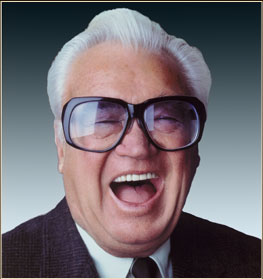
Maybe "The Broadcaster" was all Harry had inside...

Rick elaborates nicely on the theme of my post on handling those fanatic personas that reside in each of us, and in the process takes the ethical measure of an iconic baseball broadcaster whose charms always escaped me…the late Harry Carey.

“It strikes me that there’s another part of the equation, which you only hint at here, but which you have mentioned in other posts. That’s the “ethics alarm” (to coin a phrase) that goes off, or should, when the director or the Red Sox fan or whoever That Guy is says or does something unethical. Part of it is “heat of the moment” stuff: the egoism that slips out in a moment of excitement. No, of course you didn’t want Thurman Munson to die, but yes, he did play for the hated Yankees, and their team just got worse. You’re forgiven the fist-pump. Once. And provided you (Jack, as opposed to Red Sox fan) didn’t mean it.

“I was watching a Cubs game on WGN sometime in the mid-1980s when news came over the wire that Montreal Expos infielder Hubie Brooks had suffered a season-ending injury. Brooks had been a favorite of mine when he’d played for the Mets (“my team”), and I continued to follow his career with some interest, so the news was doubly sad for me: a player had been seriously injured, and that player was Hubie Brooks.

“In contrast, Cubs announcer Harry Carey proclaimed “well, if it helps the Cubs win, it’s OK by me.” I remember the exact words 25 years later. What struck me was not that they were uttered, but that no one—not Carey himself, not his broadcast partner, no one—made the slightest attempt to walk them back. That was the official verdict: a season-ending injury (Brooks was never the same again, by the way) was a good thing if it happened to somebody in a different uniform. I mentioned the incident to a couple of friends—Cubs fans—and they laughed and said “oh, that’s Harry.”

“Everyone understood that Carey was a Cubs fan first and an announcer second. That was, I am told, part of his charm—I never saw it, but others did. Still, I was sort of hoping that there would be a human being in there somewhere. On that particular day, at least, I was disappointed. We lived in WGN country for another seven years. I never watched another Cubs game without turning off the sound.”

Schadenfreude, Ethics, and Those Fanatics Inside Us All

NBC baseball blogger Craig Calcaterra recently raised the sensitive issue of sports fan Schadenfreude*, something that I have been afflicted with from time to time. The occasion was the recent injury to San Francisco Giants catcher Buster Posey in a particularly gruesome collision at home plate. His comments made me think about the obsessed and narrow personas in all of us, and how we should regard their occasional callousness.

Posey was the 2010 National League Rookie of the Year; he is also a cornerstone of the Giants’ recent success: the team is the reigning Major League Baseball World Champion. The collision with Florida Marlins’ Scott Cousins simultaneously broke Posey’s leg, ended his season, jeopardized the career of an exciting young player (players often return from such injuries permanently diminished) and dealt a serious blow to the Giants’ chances of returning to the World Series in 2011.  Reacting to a blogger who suggested that the injury caused most non-Giants fans to  give “a little fist-pump”… because “their team’s chances of dethroning the Giants as World Series champions just got a little bit better,” Calcaterra wrote… Continue reading