The Protest Ethics Check List And The Ferguson Demonstrations

APTOPIX Police Shooting Missouri

Protests are an American tradition, with protective rights enshrined in the Constitution, and a distinguished legacy that includes the Boston Tea Party and Martin Luther King’s civil rights marches and rallies. They are also perhaps the most misused and abused device in national politics. Most of them are useless, many of them are stupid, and too many of them do tangible harm.

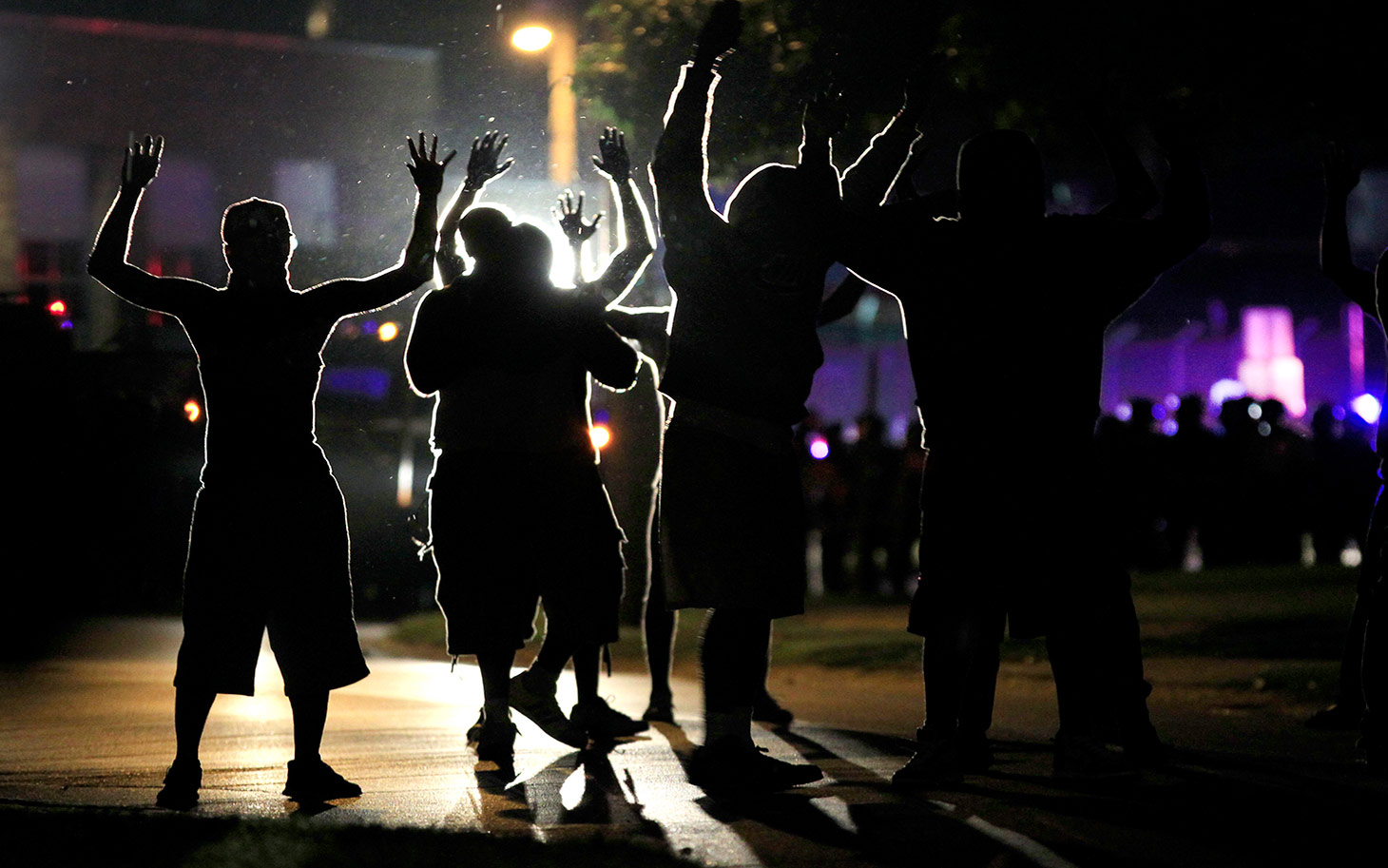
The Obama Administration’s crisis of the hour is the Ethics Trainwreck in Ferguson, Missouri, where a perfect storm arose when an an inept, distrusted and untrustworthy police force and a poor and frustrated African-American population clashed over the Rashomon shooting of an unarmed black teen. Now there are demonstrations every day in Ferguson; several people have been killed, and the demonstrations have spawned rioting and looting.

What is the purpose of all of this? It better be a good one, given its cost, and the protesters better be right. The problem is that the protesters can’t possibly be right at this point, because the facts aren’t known. We are told that the reason for the demonstrations is larger than mere anger over the shooting of Michael Brown; that it’s about police harassment, abuse and violence against African-Americans and their lack of accountability for it. That would only be a sustainable justification if in fact the death of Brown was an unequivocal, clear-cut example of the phenomenon being protested. It is not, not yet, and it may never be. So again the question has to be asked: is it ethical to be protesting in Ferguson at all? Continue reading

Unethical Quote of the Week: New York Times Op-Ed Writer David Brooks

“Besides, the legitimacy of a war is not established by how it is organized but by what it achieves.”

—-David Brooks, writing in the Times about the messy United Nations coalition now intervening in the Libyan civil war.

This is blatant consequentialism, and Brooks is incredibly mistaken to write it. Would Lincoln’s war have been “illegitimate” if it had resulted in a defeated North and two nations, one still clinging to slavery? W.W.II “achieved” virtual slavery for million of Europeans whose freedom was conceded to the Soviet Union, the frying of two Japanese cities full of civilians, the opportunity for Mao to launch the worst genocide in human history, and 40 years with a very real risk of a nuclear war that might have exterminated humanity. Was that war legitimate?

The legitimacy of a war is measured by whether its cause is just, and its objectives are both vital and beyond accomplishing by any other means. What any war ultimately achieves is determined by events and factors impossible to know when the war is commenced, as well as pure, dumb luck..

Tony C., Chaos, and the Ethics of Blame

“And then one night

The kid in right

Lies sprawling in the dirt.

The fastball struck him square—he’s down!

Is Tony badly hurt?”

Just about everyone who lived in Boston, Massachusetts in 1967 knows that bit of doggerel, an epic poem written to commemorate the Boston Red Sox miracle “Impossible Dream” pennant that year. Tony, “the kid in right,” was Tony Conigliaro, or Tony C. for short, the 22-year-old Italian stud from nearby Swampscott who was ticketed for the Hall of Fame. Tony had everything: looks, talent, an adoring hometown public and a flair for the dramatic—everything but luck. On August 19, 43 years ago today, an errant pitch from Angels starter Jack Hamilton struck him in the face, nearly killing him. The beaning began a series of events that turned “The Tony Conigliaro Story” from a feel-good romp to an epic tragedy. He was never quite the same after the beaning, though he bravely played three more seasons with a hole in his vision he never told anyone about. He quit, tried pitching, actually made a second comeback that was derailed by injuries, and quit again. He was about to become the Red Sox cable TV color man when he suffered an inexplicable heart attack that left him brain-damaged and an invalid until his death, at only 45, in 1990.

Since 1967, there has been a storyline connected with Tony C.’s beaning, and it resurfaces every year. Let’s have an enthusiastic Red Sox blogger tell the tale: Continue reading

Abortion Debate in the Senate: Inconvenient Ethics

It will be major irony if the Senate health care reform bill, an irresponsible, cynical, dishonest piece of legislation (any legislation that is 2000 pages, unreadable, and largely unread by those voting for it is, by definition, irresponsible, cynical and dishonest), fails because of its position on abortion. The bill is an abomination and deserves to fail, but not because of that. Continue reading