Presenting the Ethics Alarms Heroes’ Hall Of Honor

remember

Today, the anniversary of September 11. 2001, American minds should be occupied with thoughts of gratitude for heroes, the often anonymous and unknown people we may pass in the street every day, as well as the justly famous and celebrated, who make our lives and many others better by living their own selflessly and well. They are our salvation, role models and neighbors, and they teach us the lesson that all is never lost, and hope is always thriving, as long as there are good and courageous people who will do the right thing, no matter what the cost, when fate turns to them.

This seems like a propitious time to dedicate the Ethics Alarms Heroes Hall of Honor, the list of the Ethics Heroes Emeritus whose stories have been told here (and on this site’s predecessor, The Ethics Scoreboard.) Every current member of the Hall is now deceased, like the brave men and women who died this day, 12 years ago. Each of them, in a unique way, teaches how human beings can rise above the vicissitudes of mere survival, self-interest, personal benefits and the base desires of the species  to live  meaningful and virtuous lives. Some accomplished this over decades, some with one brilliant and transforming act of distinction.

There are currently 32 members enshrined in this virtual Hall. Obviously, it is far from complete. They are just symbolic representatives, worthy ones, of millions more who once breathed the same air we do today, and like those who perished twelve years ago, face the prospect of being forgotten over time, as we all go about the consuming task of getting from one day to another. Each one of us, I believe, is capable of emulating their example.

Here are the thirty-two members and their stories, as of this date,

September 11, 2013... Continue reading
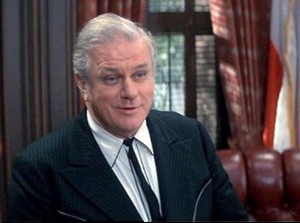
Ethics Hero Emeritus: Charles Durning, 1923-2012

Charles DurningWorld War II veterans are dying by the thousands every year now; “the Greatest Generation” is running out of members. When one of the survivors of World War II combat who became famous in subsequent pursuits leaves us, it is important to remember that their brave service to their country was probably the most important thing they did in their lives, and was their invaluable gift to all of us. In most cases, that is how the veterans looked at it too. I know my late father did.

I can’t be sure about the great character actor Charles Durning in this regard, because he generally refused to talk about his World War II experiences, which resulted in his being honored by a Silver Star and three Purple Hearts. This too is admirable. His military service was his duty, but having to kill other human beings, no matter who they are, is something that throw most ethical people into a searing conflict of values and emotions. Durning, who died today at the age of 89, preferred to discuss his acting.

He was as talented and brave at entertaining us as he was in combat. Never a leading man, Charles Durning could play drama and comedy with equal deftness, and given the chance to be in a musical, the (awful) film version of “The Best Little Whorehouse in Texas,” he proved that he could sing and dance well too. He was outstanding in such classic films as “The Sting,” “Dog Day Afternoon” and “Tootsie,” an actor who seemed incapable of seeming false or inauthentic  while never playing the same kind of character twice. Perhaps the performance that was closest to the real Charles Durning was in his Emmy-winning role on “NCIS” in the episode “Call of Silence,” in which he played an elderly Marine veteran and Congressional Medal of Honor recipient who is tortured by the belief that he had been responsible for the death of his best friend in combat.

Durning’s own military service would have made an exciting movie on its own.  His highest rank was Private First Class, and like many others, he did the most dangerous and dirtiest work of the war. On D-Day, June 6, 1944, and was among the first troops to arrive at Omaha Beach in Normandy, after overshooting  his landing zone and having to fight his way to the beach.  He was severely wounded by a German “S” Mine on June 15, 1944 at Les Mare des Mares, France, but despite suffering from the effects of shrapnel in the left and right thighs, the right hand, his head, and his chest, he declared himself fit to return to the lines, which he did just in time for the Battle of the Bulge. During that battle he was wounded again, captured, and survived the German massacre of American prisoners at Malmedy, one of the most heinous war crimes perpetrated in the field.

We should honor the memory of Charles Durning as a wonderful actor who contributed a great deal to films and popular culture, entertaining millions in the process. We should also honor him as a patriot, a soldier, a citizen, a World War II veteran and a hero, not because he was unique, but because he was not, and when we salute him as he passes from this world, we also honor all the anonymous and forgotten fighting men like him who never became famous, saved the United States and the human race, and who, like Charles Durning, refused to boast about it.


The 4th, the Crisis, and the Duty to Celebrate

The Fourth of July is less than 60 days away, and communities are looking hard at their budgets. The signs are ominous. This doesn’t seem like the right time to be throwing big parties.

This week, the Alexandria Chapter of the American Red Cross announced that it was canceling the Waterfront Festival, a summer community celebration with fireworks that it had sponsored since 1981. “We decided that responding to a fire in the middle of the night was a much better use of our resources,” said a local Red Cross’s executive director. Indeed. The total costs of the event totaled close to a quarter-million dollars. In times of financial stress, and even in better times, a service organization using resources and volunteer time to throw a community party of such magnitude seems irresponsible.

So what are we going to do about the 4th of July? Continue reading